ADAM MEMBREY

  • ABOUT ME
  • FILM
  • MUSINGS
  • BOOKS
  • DRAWINGS

THE LEFTOVERS + THIS WORD NOW: The Guiding Mysteries

June 12, 2017 by Adam Membrey

The morning after watching and absorbing The Leftovers finale, I felt a certain kind of emotional hangover. I woke up to a different life, one irretrievably changed by the show. The world outside my apartment pulsed with emboldened color and mystery. The sun shined brighter. The grass gleamed greener.

I needed something to guide me back from a place of transformation to a place of reality. My brain craved not only a better, more efficient way to gasp and gulp at life, but to put it in expressive, actionable steps.

Water wouldn’t quench my thirst. I needed something more.

Owen and Jodi Egerton’s This Word Now sat on my shelf for weeks. I even renewed it with the library twice. I meant to read it at some point, and that morning, of all mornings, felt like just the right time.

Talk about serendipity.

While the Egertons have done a fantastic job of putting truly actionable and creative steps for a writer together (seriously: buy the book; every section traps your excuses and sends them to space), the best thing it does is change the way you think.

Prior to watching The Leftovers, I had a beef with one of its creators, Damon Lindelof. In several interviews over the years, he mentioned how he liked to give every character a secret. And while it sounded like a great writing tip, in execution, it often faltered. How could we care about characters when we didn’t know what they wanted? How could we have conflict? It seemed like a non-starter. It also led to him having a hand in blockbuster movies that had no lasting impact, big, giant light shows that slid off your brain as you exited the theater.

What Lindelof seems to have learned with The Leftovers is that you can have secrets and mysteries as long as the characters are compelling. It certainly helps to have great actors and directors tell your story. But we can go a long way from home if we’re at least somewhat interested in the people we’re riding along with.
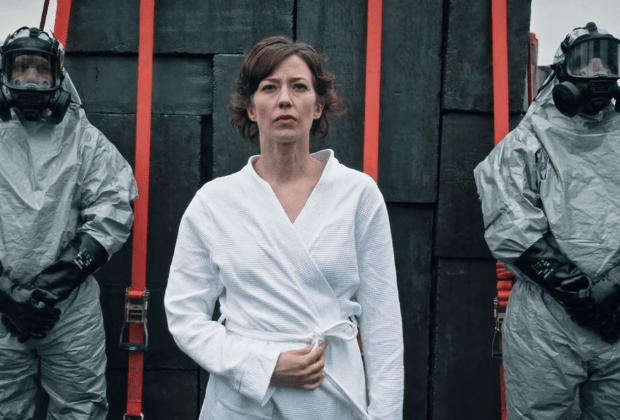
But the biggest thing The Leftovers taught me is the same thing This Word Now reminded me, over and over: that there is truth and beauty in questions, mysteries, and the abstract. The Egertons use a David Lynch (who else?) quote to anchor their point:

Ideas are like fish. If you want to catch a little fish, you can stay in the shallow water. But if you want to catch the big fish, you’ve got to go deeper. Down deep, the fish are more powerful and more pure. They’re huge and abstract. And they’re very beautiful.

– David Lynch

I would happily bet a six-pack of cold beer on a Texas summer afternoon that the quotes the Egerton’s use throughout the book are posted somewhere in their own home. They hit the truth of writing and storytelling so hard on the head you could build an entire house with those few nails.

Here is what I mean:

I wanted a perfect ending. Now I’ve learned, the hard way, that some poems don’t rhyme, and some stories don’t have a clear beginning, middle, and end. Life is about not knowing, having to change, taking the moment and making the best of it, without knowing what’s going to happen next. Delicious Ambiguity.

– Gilda Radner

I couldn’t think of a better quote to drag me from my Leftovers emotional hangover into something I can work with. Delicious ambiguity.

There are several times throughout the show that the audience wonders if something is real or supernatural or there is some explanation they have yet to consider. But Lindelof, Tom Perrotta, and company did the best thing they could have: they refrained from giving their interpretation. Whatever way you think of it, they suggested, is just as real as the way anyone else thinks of it.

They definitely went deep and hooked some big fish. They took wild risks that paid off beautifully. They threw assassins, resurrections, and the Australian Outback at us, and all of it felt real because it all rang emotionally true.

The most meaningful passage, to me, of This Word Now comes from Owen, and it literally stopped me cold. I must have stared at the wall for a solid five minutes. Owen describes a white-and-brown dog his grandparents had, which he would play with when he visited them in England in the summers. One day he came home only to be informed that Norman had passed away. Distraught, Owen went upstairs, pulled out some paper and a pencil, and wrote about it:

“Then I was done,” he wrote, “the story complete – a simple, sentimental piece. There was nothing breathtakingly brilliant about the writing. But I felt better. I breathed easier. The writing had helped, but not in the way I had expected. I was no longer sick, but I had not answered a single one of my questions. Instead the story had given my questions and confusion a place to be.” (p. 98)

 The characters of The Leftovers are all struggling in the aftermath of the Sudden Departure. There is no explanation for what happened, and it leads to a lot of questions and confusion. But what this show – and the story it told – did, is give the characters and the audience a place to let their questions and confusion be. Without judgment. Without demand for answers. Just a place for it to exist.

Some critics, like The New Yorker’s Matthew Zoller-Seitz, had an intensely personal reaction to the show. You don’t get responses like this from your average Netflix or network TV show. And it’s only because Lindelof, Perrotta, and company so relentlessly and consistently went deep-sea fishing that they were able to bring up all of the emotions and the questions that followed.

“I had written stories before,” Owen continued, “but Norman’s story was a turning point. It was born from questions.

 There are countless ways into a story or essay, but I’m drawn to the cracks made by questions. Questions that would be cheapened by answers. I am convinced that a life is defined more by the questions we return to than the answers we can temporarily embrace. Those answers change, but we circle the questions again and again.” 

The best theme song the show uses – for Season 2 and, fittingly the season and series finale in Season 3 – is Ingrid DeMet’s “Let the Mystery Be”. It summed up the point of view of the characters, the creators, and the audience. What could have become maddening became freeing. What became freeing gave way to a sense of purpose and place in a way we never expected.

Everybody’s wonderin’ what and 
where they they all came from 
Everybody’s worryin’ ’bout where they’re gonna go
When the whole thing’s done
But no one knows for certain
And so it’s all the same to me
I think I’ll just let the mystery be 

Another humdinger of a quote the Egertons include, of which slides right into The Leftovers so beautifully they cannot be separated:

Fiction’s purpose is not to explain the mystery, but to expand it.

– Tim O’Brien

So much of the show is an exploration of the stories we tell each other to give meaning to the things we cannot explain. But the most important thing, in as close to a mission statement as I imagine the show would venture, is the presence we provide each other. When Nora asks Kevin, after all they’ve been through if she believes him, he says, “Of course I do. You’re here.”

She smiles and says, “I’m here.”

Writing can be a lonely, isolating practice, but the tools we write with and the questions we have give us company. They surround us and goad us on, right until the end. They become so much a part of us that it feels criminal not to let the story out to the world. It has to come out. It has to have a place to be so the story can be passed on and envelop itself just as The Leftovers did me.

The title of the Egertons book comes from the beginning, when they inform us that we don’t need anything fancy to tell a story. We just need one word to start. And that’s it.

So when I finished This Word Now,  I felt emboldened to pursue the writing questions stuck in my head and to give them a place to be. In trying to revel in another five minutes of air-conditioning, I almost sidetracked myself before I even started. And then I remembered another quote Jodi and Owen used:

A writer who waits for ideal conditions under which to work will die without putting a word on paper.

– E.B. White

Here are the words to paper. Here is to This Word Now, a guide and mind-transformer I can’t recommend enough, and to The Leftovers, a show that merely a week later I already deeply miss.

Here’s to searching for and cycling back to the questions, and as Owen and Jodi remind us, we don’t need anything fancy. We don’t need a table or time or talent. We just need this word, and this one word to start.

Go.

Filed Under: BOOKS, FILM, MUSINGS

AN ELUSIVE VICTORY: Lebron James, Damon Lindelof, and the Perilous Road to Greatness

June 7, 2017 by Adam Membrey

It’s June 21, 2012, and LeBron James is standing amongst his teammates on the bench, the final three minutes of Game 5 of the NBA Finals ticking down. His Miami Heat have throttled a young, upstart Oklahoma City Thunder team, blowing them out in their decisive fourth win. Just as the Thunder’s championship chances deflate, a balloon hopelessly shrinking, something else grows in size and wattage: Lebron James’ smile.

A smile we haven’t seen in years, at least nowhere near a basketball court.

He jumps up and down, chanting and laughing and soaking in the moment. It is, to the crowd and the TV audience, utterly contagious. The legacy of the King, born out of the gyms of Akron, Ohio, and a weight around his neck his entire career, has finally lifted. He has defeated, at least temporarily, the narrative that has dogged him his whole career. He is free.

As someone who remembers reading that first Sports Illustrated cover in February 2002, the one calling James “The Chosen One”, even as a high school junior, I felt as though I’d followed him every step of the way. I remembered the pressure to be Cleveland’s EVERYTHING his first years there. The constant calls of “not good enough”. It didn’t matter that he drug a hopelessly overmatched Cavalier team to the 2007 Finals, and it wasn’t enough that his Miami Heat super-team had lost in the 2011 Finals the year before. The narrative became so suffocating – he had no clutch gene, that he would disappear in key moments, that he didn’t want to be a leader – that James no longer appeared to enjoy basketball. It didn’t matter the stats or how well he took care of his superhuman body; he would always be compared to Michael Jordan, an unfair and pointless comparison. It would never be enough.

In the face of all of that, I watched random Heat games on TV not as a fan of the team, but as a witness. Those who knew basketball did their best to warn us all: that James had reached new gears, ascending to the new heights of his basketball powers. I knew something special was happening. I had to see it for myself so I could tell my grandchildren one day. Still, it was never enough. The failures of the past, though not entirely his fault, would not be forgiven by anything but an NBA Championship hoisted above his head. That’s the myth the sportswriters wrote.

But when the finals seconds ticked off the clock  of that Game 5 and James finally won that championship? Pure, unbridled joy.  “You know,” James said after the game, “my dream has become a reality now, and it’s the best feeling I ever had.”

I felt the same way with Damon Lindelof as his incredible The Leftovers eased its way toward the series finale. I could tell – from the word of mouth of many television critics I greatly respected – that this show was approaching or operating on a level of greatness we don’t often see. It was something to behold. And behold it I did, soaking up 27 episodes in a less than a week, a flurry I would happily absorb again.

In between episodes and reading the recaps on AV Club, Vox, and UPROXX, memories hit me of watching those third season LOST episodes (to my memory, the best season the show had to offer) one week at a time with my college friends. We would huddle in the dorm lobby, watch with gasps, laughs, and groans, and spend the entire following week discussing what everything meant and what we thought would happen. But the mystery slow began to unravel, and we all grew weary of it. We lost faith. By the time the 6th and final season rolled around, I found myself on the outside looking in. I felt like the answers would never come. Only more questions. But I buckled in, caught up with the mysteries, and watched that finale.

I had never been more enraged at a work of art in my life.

Many people felt the same. We felt cheated. But LOST had also guided itself into a narrative corner it could not transcend, just like LeBron found himself on a Cavaliers team in 2007 that he could not possible maximize any further, leading him to take his talents down to South Beach.

From there, it felt like something of a creative stumble, a walk of penance through the desert. Lindelof took the brunt of the blame (along with co-showrunner Carlton Cuse). Still smarting from the LOST finale response, Lindelof went on to write several movies, all of which suffered the same problems as LOST: maintaining a game of mystery until the very end, at the expense of characters acting stupid and being impossible to relate to, only for the secrets to be a collective wet fart.

So my only hope with this Leftovers finale was that Lindelof would get some that same moment James had in 2012, when the clock would be ticking down, and he would feel like the veil, the dark harness, had been lifted. Just like James had become a much better, decisive, and efficient basketball player playing alongside the Big 3 and with a class organization like the Heat, Lindelof appeared to be emboldened by his collaboration with novelist Tom Perrotta and his fantastic writer’s room. His decisions had purpose. When he withheld information, he knew exactly why they were doing it. I saw confidence and wisdom in his representation of the show that I never saw with LOST.

I have no way of knowing how Lindelof feels about his show now, but I know many, many critics and viewers (myself included) loved it. It tied the show up as only it could. Even better – it pushed itself into the pantheon of all-time great finales with Nora Durst’s finale monologue, leaving the audience to guess if she told the truth or not. And while I am highly mindful that an entire writer’s room worked together to create this special, final episode of television, Lindelof’s name, fair or not, will always be associated with it.

LeBron will likely never get the credit he deserves, and neither will Damon. There will always be someone hungering to take them down, another false narrative propped up for clicks and retweets. It will never be enough.

But for now? It’s time to celebrate. Greatness, long so elusive, has been achieved.

Filed Under: MUSINGS

Do All Animators Go to the Same Bar?

January 4, 2017 by Adam Membrey

Spoiler alert: these guys chased dogs more than they drove.

This is an old post from July. Let’s pretend it’s still July 2016:

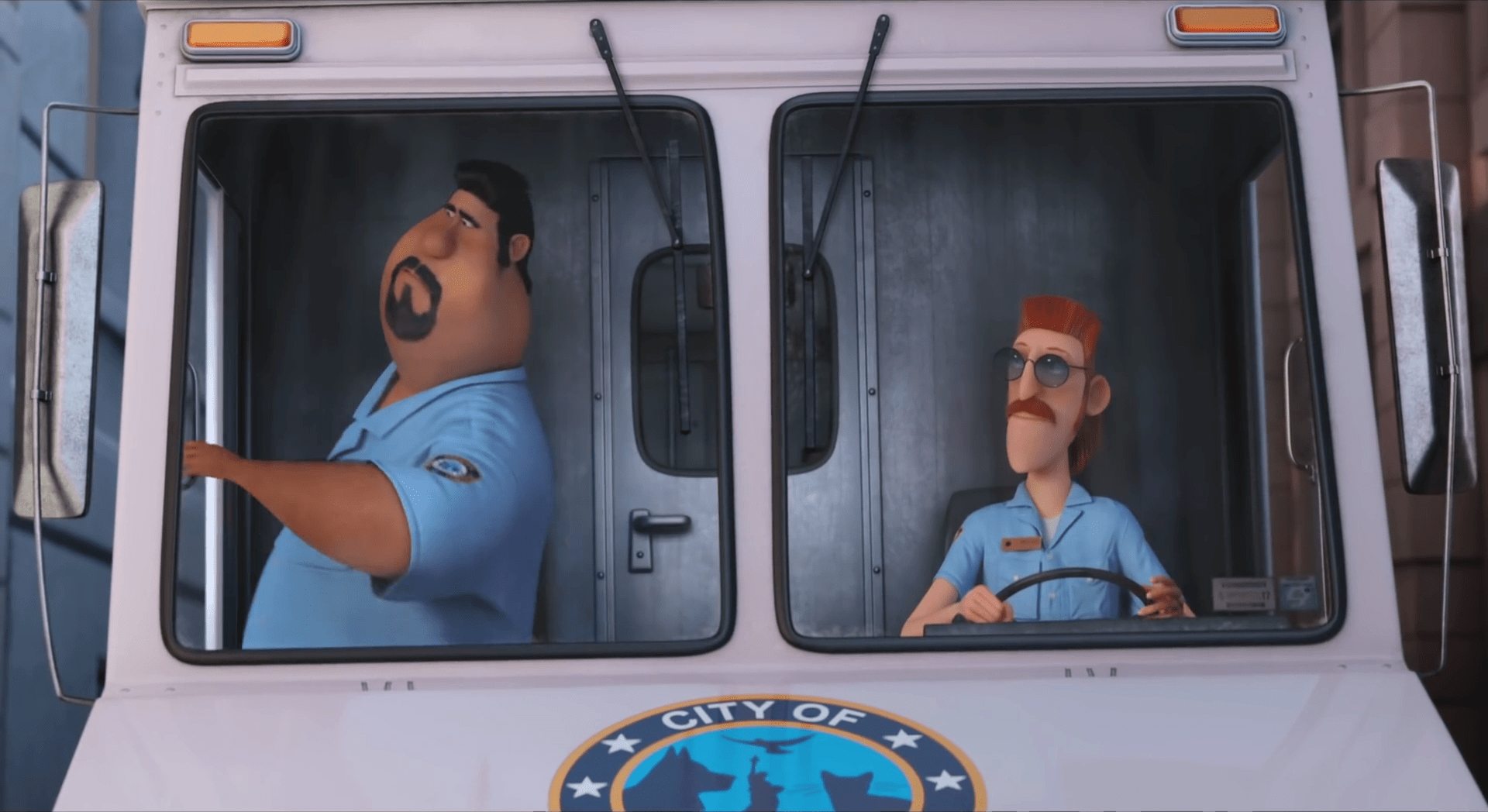
I saw The Secret Life of Pets a couple weeks ago, and as the film hurtled towards it’s big action climax, the details felt more and more familiar. Where had I seen this before? The animals are trapped in a van. They need to get out. The only option is to commandeer the vehicle. This involves lots of wayward driving – if I can accept a talking animal than I guess I should accept a driving animal, too – and leads to the van going off a major bridge and nearly plunging into the water. I say nearly because of course the van has to be suspended in its fall for just enough time before it plunges into the deeper, darker waters of New York City below. Spoiler alert: the animals make it out alive despite not having the opposable thumbs necessary to unlock things.

Another spoiler alert: this is almost the exact same ending as Finding Dory.

Boy, the really make toys for anything these days, uh?

In Finding Dory, our lovable protagonists are also stuck in a van. They’re going the wrong way  – away from their new home – and need to self-correct, so they commandeer the vehicle. Dogs driving a van is not that that far a bridge to cross (almost literally) – so obviously an octopus driving a van is just as believable. Again, there is wayward driving that sends plenty of cars flying in the wrong direction (they could softly crash-land the van from 30 feet up on the pile of insurance money that needed to be paid out for those numerous accidents) and eventually leads to the van flying back into the ocean. All the characters, despite not having opposable thumbs, hands, or even paws, make it out alive.

So my question is this: how is it possible for two major animation releases from two different studios – released less than a month apart – to have almost the exact same climax? It’s oddly specific. One happens in New York City and the other in Monterey, CA. One van falls of the bridge while the other flies off the highway before hitting the ocean. Those are about the only two differences. Additionally, everyone knows that these animated movies take a long time to make. Even if Illumination Entertainment has found a way to make their movies in a more abbreviated, cost-effective manner, you’re still looking at a 3 to 4 year project.

Illumination’s headquarters are in Santa Monica, California. Pixar’s are in Emeryville, California. That’s a separation of approximately 372 miles and at least 6-7 hours of intermittently angry driving in traffic.

A similar thing happened not long ago when Despicable Me 2 came out in July 2013 and The Penguins of Madagascar a year and a half later in November 2014. With Despicable Me 2, a key plot point involved the Minions being transformed into these purple, totally-not-cuddly rage monsters. The success of the mission depended on not only avoiding these purple nasties, but in transforming them back to their yellow, pleasantly banana-crazy selves. Not quite a year and a half later, Penguins of Madagascar had a key plot point about the cute penguins becoming hilariously ugly, somewhat violent penguins and needing to be transformed back. How did two major releases have such similar ending plots? Again, the mechanics of a slow-paced animation process make it unlikely the latter tried to copy a former’s major plot point, but is 15 months possibly juuust enough time to do so?

But this Dory and Pets situation? Freaky. I can only imagine that at some point both Pixar and Illumination found themselves stuck and unsure of just how to get their characters from one point to another in a relatively quick manner. Especially since, you know, they didn’t have the necessary opposable thumbs to pull off some badass stuff. I especially believe Pixar found themselves incredibly stuck because the amount of rampage the van causes on the highway is so mind-boggling as to not only be un-Pixar-like but to completely take me out of the film. I had no room to cry about Dory’s happy ending when my brain was crammed with hundreds of hypothetical insurance bills (and possible if not definite injuries or deaths to innocent bystanders. Can you tell I cared a lot about the insurance money? I must be a grownup now).

So what if a key story person from Pixar, frustrated and unable to poop out a great connecting plot point, took a drive to Yosemite National Park to free the mind? And what if another key story person, from Illumination, took the same trip? What if they ran into each other on the same boulder as they tried to take the best sun-soaked photo to post to their various social media apps? Seems crazy, right?

What if there is an absolutely breathtaking bar halfway between the two cities? Where people can get away and drink themselves into realizing the meaning of life?

A solid halfway point just off of I-5 is Kettleman City, CA. The best place there – according to my own rash, highly uninformed Google search –  is Bravo Farms, which not only offers great beer, but ice cream. There is also farm life around which is perfect because, really, how often do Pixar and Illumination not have animals in their movies? Maybe seeing some odd interaction between the animals will lead to a kernel of inspiration that leads to a delicious bite of storytelling popcorn.  And then you can grab a solid, delicious ice cream to reward yourself for pooping out that great, much-needed story point.

I don’t know. It’s not clear how it happened. Even weirder – at least to me – is how at some point in Secret Life of Pets two dogs have a literal sausage party of a dream, and there is an entire animated Sausage Party movie that came out just yesterday. Of course, the context of their sausage party (dogs love sausages, as the movies teach us, and they can’t stop thinking about them) is entirely, irrevocably different from the context of Seth Rogen and Jonah Hill’s Sausage Party.

But what if. What if an animator/story person from Pixar, an animator/story person from Illumination, and an animator/story person from Sausage Party‘s Nitrogen Studios (headquartered in Vancouver, B.C., Canada) went to the same animation program? They’re old classmates and they all chat over Skype whenever they’re stuck. Pixar and Illumination tend to do all the talking, stressing over the key story points without being too specific, talking about the pressures of holding up entire studios because live-action blockbusters are just so much more miss than hit these days. All of this is happening while Nitrogen, in his smug, Gilfoyle-like way sits and listens with his arms-crossed, proud of the fact that he doesn’t have the same problems they do. Nitrogen knows his shit. He knows what he’s doing. His movie is solid and subversive. It will make everyone see food in truly new and disgusting ways. And because Nitrogen tends to sit there and listen, barely getting in a word or even an idea, Illumination will wake up one morning with vague thoughts of a sausage party, laugh to himself for thinking how subversive it is to have cute dogs dream of actual sausage parties, and the rest will be history.

My point is this: animation is literally a limitless field. It can do and be anything. But it is still at its heart a tool for a great story. How these intricate moviemaking machines can have thousands of individual machinations a day and still come up with something eerily similar is not only odd, but a bit disheartening. At least they, with their ever-evolving animation, make it look good.

Filed Under: FILM, MUSINGS

Release Your Smiles: The Vortex’s Atlantis: A Puppet Opera

September 12, 2016 by Adam Membrey

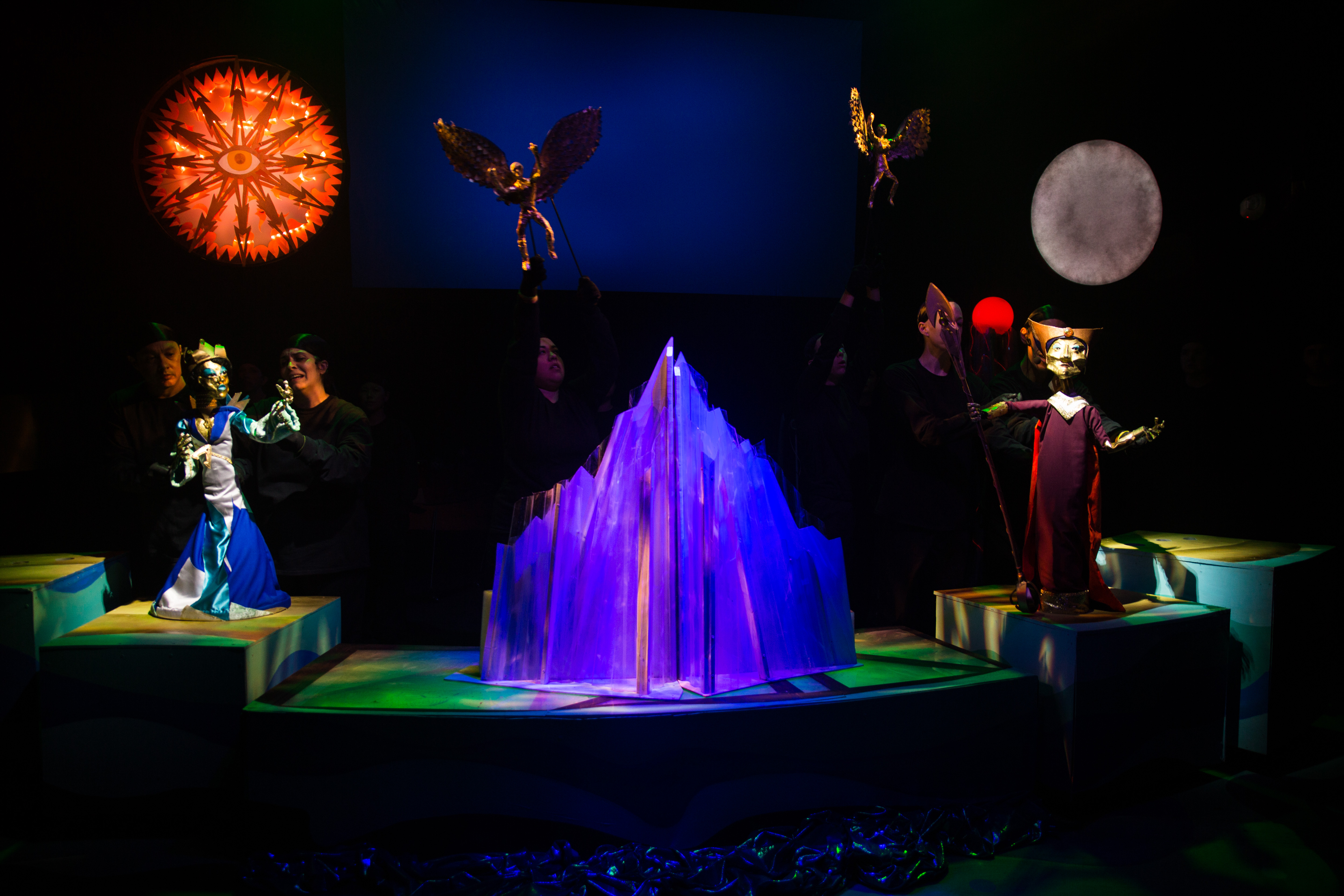
Photo by Andrew J. Friedenthal

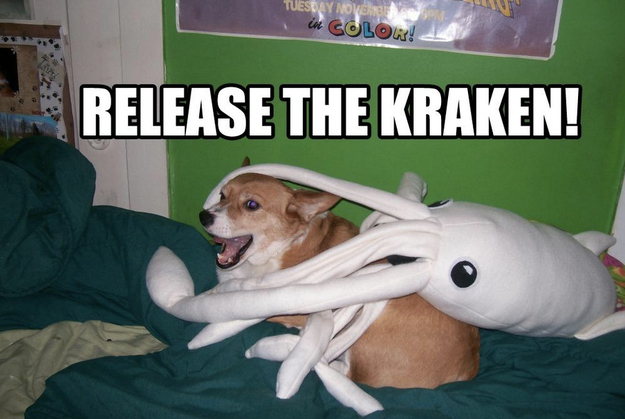
In the Spring of 2006, I found myself looking forward to the final (at the time) Pirates of the Caribbean: At World’s End for one specific reason: the kraken. Specifically, the releasing of the kraken.

release

I actually had to Google it. I had no idea what it was. I knew the name sounded like something either fun, dangerous, or a delightful combination of both. My search brought back memories of that rather terrifying beast from the 1954 Disney 20,000 Leagues Under the Sea classic. While the size and pure ferocity of it rattled me as a child, one particular thing gave me nightmares: the beak. I hate beaks. I keep a respectable distance between me and all birds – large, small, wonderful, or fake – because I know what those beaks are for and how easy a tearing opportunity my skin provides it. So, no thanks. The beak can stay.

Thankfully, when I went to see Atlantis: A Puppet Opera at the Vortex last night, a kraken was released, and it did not have a beak. It did, however, seem to be powered by the kind of childhood creativity and glee that we so rarely see these days. I hate creating a false sense of FOMO as much as the next person, but you have not truly lived until you’ve seen a small theater use all their creative brainpower to bring a truly badass kraken to life. Grown adults, with bills to pay and responsibilities to uphold, roll around on the floor in all-black outfits, each holding up and waving a long tentacle towards the puppet characters. It’s just magic.

And then, the highlight: the Atlantis prince, sporting a thick, clenched fist not unlike Hellboy, punches the kraken. The second highlight? When he jumps and kickpunches the kraken a final time. The third highlight? When, for the purpose of perspective in trying to create scale – the main characters look muuuch bigger than the tiny puppets off to the side, even though they’re theoretically the same size in the story – the Atlantis prince gives a fist-bump to a figure much, much smaller than him. It’s so weird and yet so beautiful.

I can tell you all of these things about this play – that the music is fun and skillfully, passionately sung, but that the lyrics may be difficult to understand; that the production design gives every color under the sun a day job; that watching the puppeteers gives you a great sense of the teamwork that goes into making a puppet move – but the best way to sum it up is with a couple I could not take my eyes off of.

They sat in the front row, just off to the side. The wife, on the right, sat there with a permanent WTF face. She either couldn’t believe it, didn’t like it, didn’t understand any of the lyrics, or just simply could not stop her brain from screaming WTF inside her head. But her husband? His face was the vision of unbridled joy. You could not wipe the smile off his face, even with a graffiti cleanup crew. You could see him recognize all of the things that adulthood had told him he should maybe put away. You could see that long-disconnected feeling of creating something with your own hands, regardless of how pretty or lopsided it looks, and doing something because doing it yourself is a stage of cool that we too often forget we can – at any time – pull ourselves up to.

It does not matter if I didn’t pay attention to the story because I was so fascinated by the music and the puppets. It does not matter if the story is surprisingly simple. It does not matter – and I recognize I say this as a Deaf/HH man – if the singing is on point or sounds more like shower singing with a techno beat. Making something worthwhile is not about making it perfect; it’s about making something that helps us separate the signal from the noise. It helps us hear the note too often drowned out. It helps us remember the possibilities we can create for ourselves and our potential audience if we just roll up our sleeves and let our imagination be a part of the process again.

Go see the play while you can, release the kraken and, as you should, release the smile you’re holding back.

Filed Under: MUSINGS

Is Godzilla Our Spirit Animal?

March 20, 2015 by Adam Membrey

Drawing with 'Enterprise' filter from Camera+; Text overlay from Over.

There was a time when social networks were almost entirely involuntary. You had to make that phone call. You had to go to your friend’s house and somehow get that baseball card back. You had to tell your little brother he wasn’t cool enough to join. You had to tell your co-worker why his failure to clean up his own coffee spills impacted your work performance.

If there was conflict, you had to deal with it. You had to pretty consistently attempt these gross, uncomfortable things called human interaction. You had to take something difficult and make it something tolerable. Sometimes it was simple; sometimes it was something much more complicated.

But now? Nearly all of our social networks are voluntary. If you don’t want to go to that party – you don’t have to. If you don’t want to respond to that text – you don’t have to. If you have issues with your coworkers, you can just do what we all do and talk about them behind their back – you don’t even have to confront them! When any social network – whether it be home, work, school, family, your recreation sports team – doesn’t work for you, you almost always have the option to either opt out or talk around it.

So what is the result of all this change? I feel like we’re all becoming our own Godzillas. This wireless world we live in is not unlike that nuclear matter the Lizard King came into contact with, causing us to grow in size each time we refuse to address the conflict in our lives. It gets to a point where we are so big and unwieldy, so cumbersome in our movement, that we can’t help but squash a few things when we make a move.

Sometimes it’s our dignity. Sometimes it’s our friendships. Sometimes it’s the bridge we needed to cross some day in the future.

I say all this as someone who admits to being a part of the problem. We are becoming a nation of complainers. It doesn’t take long to scroll through your Facebook and see everyone jumping on a new issue. It doesn’t take long for people to say really ugly things on comment boards that they would never have the balls to say in person. We choose to air our grievances around the problem, allowing the stress and frustration to slowly build us up into something we don’t even recognize. We can’t remember the things we love to do anymore. We kinda forget what a joyful moment feels like.

So let’s unplug once in a while. Let’s make eye contact longer than a couple fleeting seconds. Let’s find a way to have those icky, uncomfortable situations sooner, offering them out into the open and watching them transform into something far less threatening. Let’s make our world something we aren’t constantly trying to get away from.

Let’s find a new spirit animal. Something that builds us up rather than tears us down. Something that allows us to remember what joy feels like, in its most pure and unbridled of forms.

Let’s be the answer to the question we ask every day. Let’s be a new King of the Monsters, one who has slain the destructive forces before it, ready to take on the inevitable.

Let’s create social networks we want to be a part of. Let’s reward others not for being an asshole, but for that extra effort to be a good person.

The world is here, guys. Let’s make it something we want to be a part of.

Filed Under: MUSINGS Tagged With: Godzilla, SOCIAL NETWORKS, WIRELESS

  • « Previous Page
  • 1
  • …
  • 6
  • 7
  • 8
  • 9
  • Next Page »

Subscribe to Blog via Email

Enter your email address so you can get each post to your inbox. FRESH!

Join 20 other subscribers

Recent Posts

  • Adam’s Top 10 Films of 2024
  • Adam’s Top 10 Films of 2023
  • Adam’s Top 10 Films of 2022
  • Adam’s Top 10 TV of 2022
  • INKTHINK #30: Slither
  • INKTHINK #29: Patch
  • INKTHINK #28: Crispy
  • INKTHINK #27: Spark

Copyright © 2026 · eleven40 Pro Theme on Genesis Framework · WordPress · Log in

  • ABOUT ME
  • FILM
  • MUSINGS
  • BOOKS
  • DRAWINGS