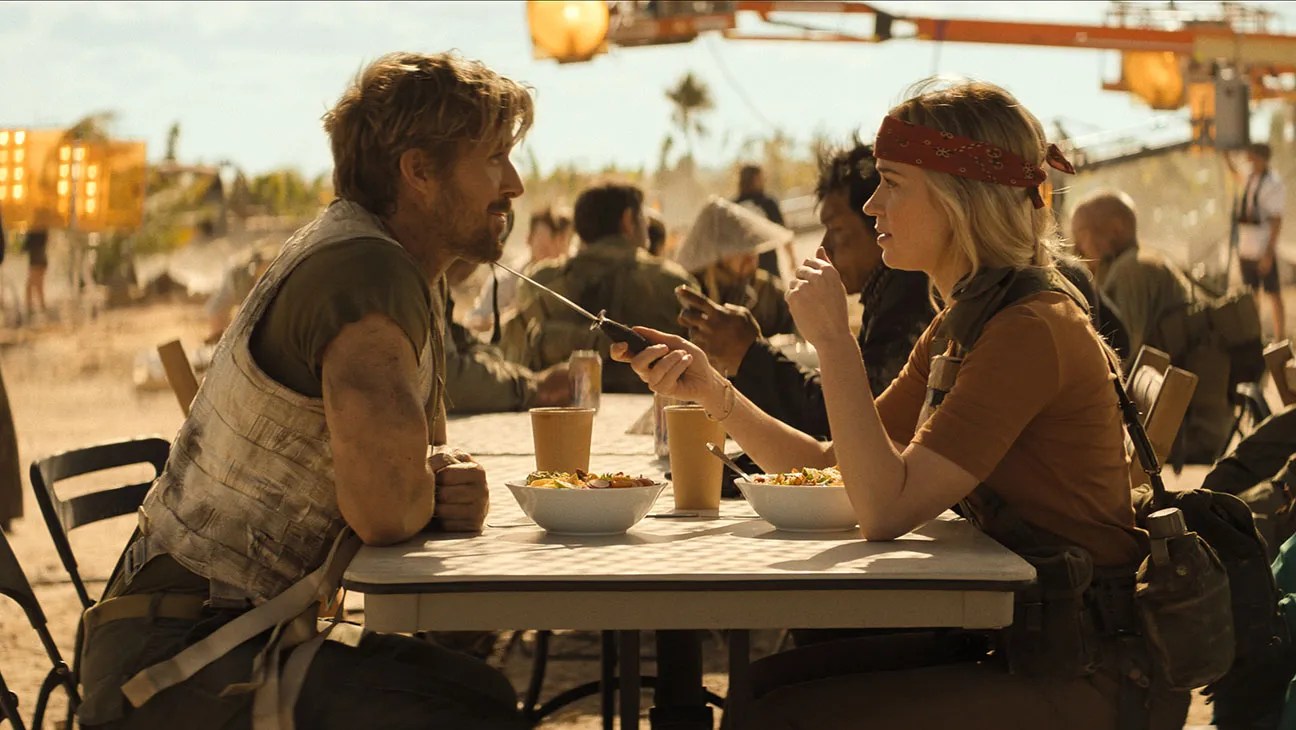
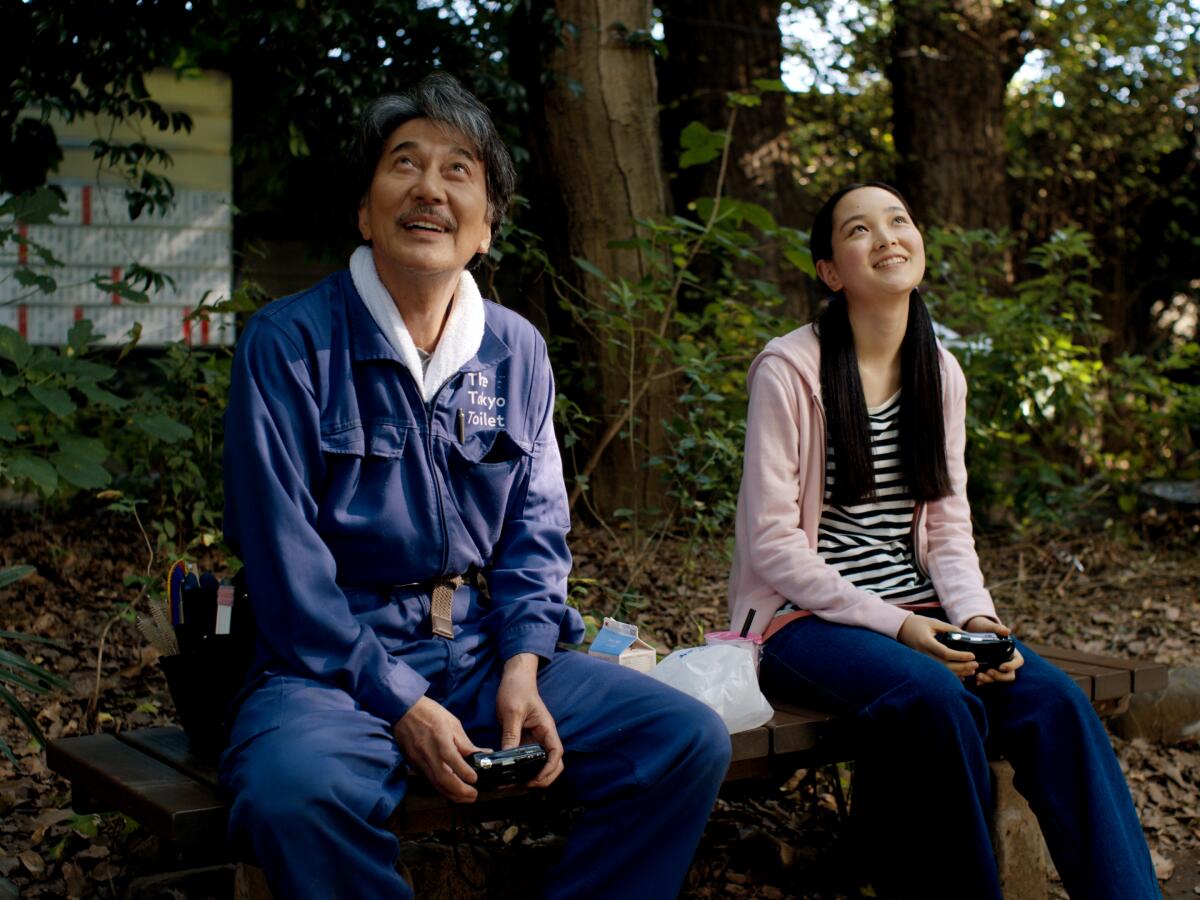
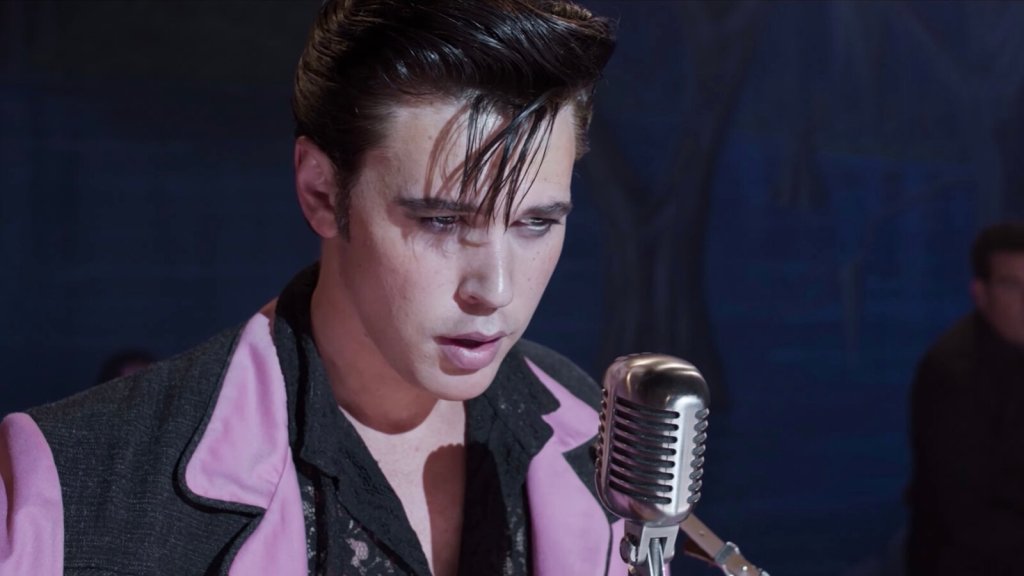
ADAM MEMBREY

  • ABOUT ME
  • FILM
  • MUSINGS
  • BOOKS
  • DRAWINGS

Adam’s Top 20 Films of 2025

August 23, 2026 by Adam Membrey Leave a Comment

Time. If there’s a theme that jumped out at me all year, it’s this one: time. When I first became a parent, I was told, “The days are long, but the years are short.” And that’s true. But that’s also just life. I can’t remember where I read it, but there’s a comment I haven’t been able to shake: when we look at kids and remark at how quickly they’ve grown, what we are actually feeling – whether we are ready to admit it or not – is just how fast time is going for us. Ten years is a long time. But ten years, when it’s in your rearview mirror, feels far shorter.

There’s a scene in Sorry, Baby when Agnes pulls her car over, barely able to breathe. An older man, seeing her and deeply worried, comes over to try and help Agnes deep breathe her way back into equilibrium. He then offers her a sandwich from his shop. And as they’re sitting there, he asks some questions. Agnes admits something really bad happened to her. And because she swerved while breathing hard in her car, he asks if it’s something that happened recently. “No, like three years ago,” she said, almost embarrassed at her ability to still not quite shed the weight of it all. “That’s not very long,” he says. “I mean, it’s been a long time. But it’s not that long at all.” And there’s a way you can hear that at 25 and scoff, because your mindset is still distorted with degree-brain, only seeing your life in 2 and 4 year spans. But when you’re in your late 30’s, it hits different. When you’re at your newly 5-year old’s birthday party and are told congratulations for being a successful parent for 5 years, a perspective that never occurred to you? You can feel the accordion of time collapse into a sound only dogs can hear.

Anyway. This year had so much to offer across the film spectrum. While I usually do an annual Top 10, this particular year of 2025 gave me plenty of reason to expand to 20. It also took me 7 and a half months into the new year to complete. It takes a little longer to finish each year, and this year’s version is already being published a month later than 2024’s list. I will be generous to myself and view this more as a sign of wanting to do the year justice. And since we’re talking so much about time and its elasticity, it makes perfect sense to start with something pretty prehistoric.


Mutant Mayhem: Jurassic World: Rebirth
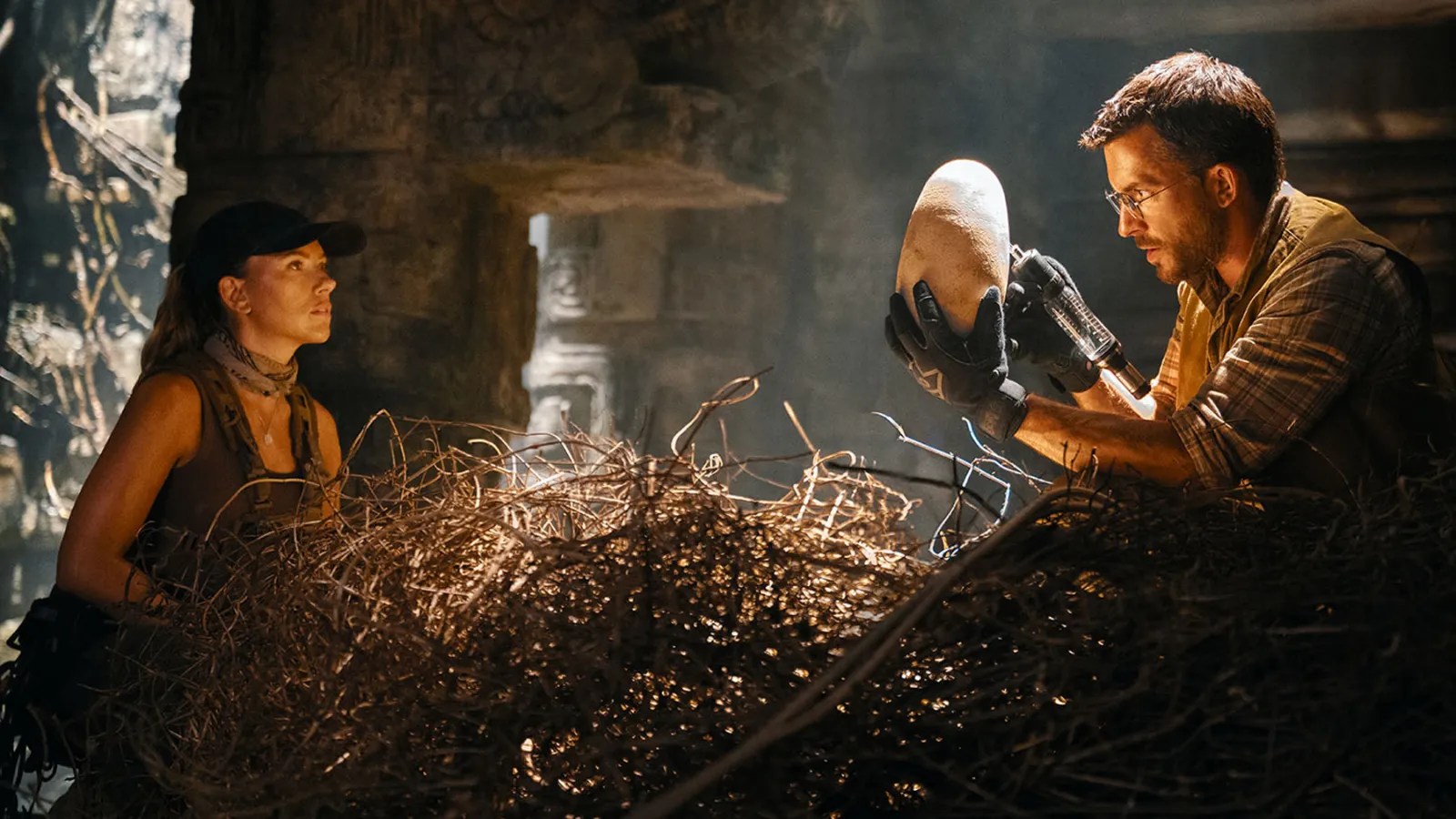
“You know, intelligence is massively overrated as an adaptive trait.” – Dr. Henry Loomis

Look, I have long accepted that if they’re going to be making a long-running franchise out of Jurassic Park, my favorite movie of all time, they’re going to have to find a way to mix a bit of intelligence with a lot of questionable decisions. So Rebirth stacks the deck in its favor with a handful of nice choices. It leads with a brighter palette, 35mm film, and vintage anamorphic lens. It collects a group of great actors who can act with a wink in Scarlett Johansson, Mahershala Ali, Rupert Friend, and Jonathan Bailey. It brings in a Gareth Edwards, a director known for scale within the camera frame and within the apparatus of a VFX-heavy big budget blockbuster. Most importantly – for me, at least – it brings back the writer of the first two films, David Koepp. 

Even if you’ve just come off of writing three films with Steven Soderbergh (Kimi, Presence, Black Bag), you’re not going to ignore the call from the other Steven, Mr. Spielberg himself, for another dino dip. This is a writing job that’s hard to pass up and even harder to survive. So of course the original subtitle Koepp gave this film is Survival. A chance to see how these dinosaurs survive human interference just as we the humans try to survive dinosaur interference.

Koepp is a very smart dude who can make hard things look easy. He sets up new characters that echo elements of the series before while being their own thing. These are people who will make decisions that may baffle but will at least have some emotional logic to them. The plot of extracting DNA samples from the largest avian, aquatic, and terrestrial dinosaurs for life-saving heart medicine may sound a lot like a video game mission, but it’s actually based in some paleontological science. Having the dinosaurs who once roamed free at the end of Dominion migrate towards the only hospitable living area around the equator? I like it. Having Dr. Loomis nerd out about hoping to die in shallow water so that silt can overcome him and give his body the best chance of fossilization? I love it. And Koepp peppers in little bursts of humorous and meta dialogue to keep the whole thing light its feet.  

If the hybrid dinosaurs of the most recent trilogy didn’t do it for you, here they go one step further and bring out some experiments that went awry. But anytime you mess around with DNA splicing, you run the risk of a mutant gene. So, of course, the seventh (!) installment in this franchise is going to play around with its own DNA, cutting, pasting, and rearranging to try and make something refreshingly new. Rebirth doesn’t just bookend the film with mutant dinosaurs; it ends up being its own mutant in unintended ways. 

Now, I’m no geneticist, but let’s take a look at this graphic: 

You can say that when Rebirth‘s two main narrative strands first intersect nearly forty minutes in, the film’s momentum diverges and frays just as much as the story itself before loosely finally coming back together for the finale. But the double helix nature of the story is baked in from the start. In the film’s opening minutes – a delightfully nasty little prologue – we see the camera move through a secretive lab. Experiments are clearly being conducted. We know this because everyone is running around with Hazmat suits and we can see young dinosaurs encased in amber fluid. Not only that, but they’re two-headed mutants. A mutadon, a velociraptor, and a brachiosaurus, each with a duplicate head looking at the other like they can’t decide which should take the lead. 

Rebirth follows suit, offering us competing questions about just what this film is about. Is it about the dangers of mutant dinosaur gene splicing or is it about a team on the hunt for the DNA of the three largest purebred dinosaurs? Is it about a family surviving a disastrous just-before-oldest-daughter-goes-to-college sailing trip or is it about mercenaries motivated by a job that will reward more money than they’ve ever seen? It doesn’t quite seem to know what it wants to be about as much as the conversations it wants to have. And this can make it very engaging as the film goes on! A very heated argument between billionaire Martin Krebs (Rupert Friend’s 2nd best performance of 2025) and Loomis in the middle of the film could easily be an argument between a studio head and a writer struggling with purpose. Minutes later, that same ongoing argument shifts to be about the survival of humans versus the planet and dinosaurs themselves. There are so many engaging thoughts, but this film is very much a mutated gene. Strands that intrigue on their own but are not held together firmly enough to form one unified, sustainable thing. 

And then just when you think the movie is about to be over, when the mercenaries have packed the third and final DNA sample for this soon-to-be-groundbreaking heart medicine, you’re reminded of those mutant dinosaurs from the beginning. The film then makes the most uncommercial decision possible: they end the movie with a big bad dinosaur that is decidedly not cool. To be clear: I genuinely appreciate their commitment to the concept. This is a mutant dinosaur, a result of genetic splicing, of trying to move past the old stuff into the new, that does not work out. He looks positively pissed to be alive. Just full of pain and anguish and, if his digits were a little more cooperative and recording studios were the size of distribution center warehouses, would probably record and release the best emo album since My Chemical Romances’ The Black Parade.  

The film wants you to understand the D-Rex as a sign of how far we’ve strayed from God and that some things need to be left alone. Edwards and his VFX team said the design inspiration for this was the OG T-Rex, the H.R. Giger Xenomorph alien, and the Rancor from Return of the Jedi – three very different film franchises thrown into a blender. But the Distortus Rex doesn’t escape from the lab because he’s an eyesore mutant; he escapes because of pure human error, a bold decision to break workplace rules in pursuit of satiating a sweet tooth. And there are few things more Jurassic Park than a good time on an island going completely awry because of a selfish human decision. Therefore: I do think that they could have salvaged this into something highly memorable, mutant gene story structure aside, if they had leaned back into the past a little bit more.

(Stay with me here. There’s a point. Promise.)

Back in June 1998, hot off the heels of The Lost World, a Jurassic Park toyline called Chaos Effect hit stores. The idea was tantalizing and clearly expressed in the trademarked phrase on the cover of each package: genetically mutated dinos gone bad! These would be brightly-colored hybrid dinosaurs that escaped the lab, leading into a Saturday morning cartoon series in which each episode would have a team of badass dino experts hunting down and surviving the latest mutant escapee. Honestly: a pretty fun idea for a show and something that I would have absolutely been intrigued by in the fog of my early Jurassic Park fandom. But then the toys sold poorly, with only 10 of the 18 dinosaur designs ever released, and the TV show was cancelled before ever making it to production.

Now, why do I bring this up? Because a little research revealed two possible reasons for the poor sales: new dinosaur designs that clashed with the ones that came from the previous films, and the fact many of these dinosaurs were repaints of previously unsold toys. You could get really meta here – just like Rebirth loves to do throughout – and say that this is what ultimately has tripped up the film franchise, that sometimes these films have ideas that are incompatible and better off for a cartoon TV show (like the highly enjoyable Camp Cretaceous and Chaos Theory), and you could also argue some these films are just unattractive repaints over the plot structures of what came before (you can especially say this about the recent trilogy I’ve already memory-flushed). 

But what I really want to point out is digesting Rebirth led me down a Reddit rabbithole and into this one particular unreleased Chaos Effect toy design: Ultimasaurus. It’s a mixture of Tyrannosaurus Rex, Triceratops, Velociraptor, Ankylosaurs, and Stegosaurus aka some of the most culturally popular and well-liked dinosaurs you’ll find. And honestly? Just badass. Imagine if, in those first moments of Rebirth when it’s really clear something is going horribly wrong and the containment cell that’s never supposed to open is suddenly opening, you saw the head of this Ultimaurus instead of a very pissed off, six-footed beluga whale? Imagine if this mutant looked like an actual dinosaur? Can you imagine how these things would fly off the shelves? 

You would absolutely pay a tithe each month to worship at the altar of this dude, even if his red and black colors lead others to believe you’re dabbling in Satanism. 

Now, I am a strong believer that you should judge a film based on what it’s trying to do and not what you want it to be. But the characters in this wild franchise can’t help themselves from playing God, so a mere mortal like me can dream: I wish we had something like this Ultimasaurus. We can still have the human error of a wayward Snickers bar. We can still have a commentary on mutant dinosaurs gone too far. And we could have an iconic onscreen design that would help us forget how truly divergent the films narrative strands are. We, most of all, would have some fun.

This isn’t a film that suffers from a lack of intelligence so much as cognitive entrenchment, of digging deeper in one direction without taking a breather to look up and see if better options are possible. There are so many ever-moving parts in these large blockbusters and every successful one is its own kind or miracle. But when you think about it, the danger of cognitive entrenchment is the same as wayward genetic mutation. It requires making stubborn decisions that seem smart in a vacuum but when released to a wider audience? Well, the results can be quite mixed. There can be mutations that are hard for any story to survive. 

Best Child Performance: Hamnet

For me, I understand my children best in medium close-up. When they’re far away from my eye’s frame, much like Jessie Buckley and Paul Mescal are for a good chunk of this film, it feels distant. Impossible to really feel anything. And when my children are too close up, like Buckley is in her character’s most understandably hysterical moments, I want to back up a few steps to understand it better. All of this to say that I love actors, and I love it when they’re acting. But I do not love to see the sweat of it all. The one actor who has the most power in his medium close-up? Jacobi Jupe. I connected to him right away.

There’s a scene late in the film when William Shakespeare himself (Paul Mescal) is listening to the rehearsal of his play, to dialogue between two actors. He’s pacing back and forth, seemingly out of it. Until he hears something that doesn’t sound quite right and he corrects them on the spot. It’s a subtle thing, but it’s an especially bruising scene for any parent who’s had to listen to their children transition from playful to argumentative and intervene to snap it back in the right direction. Or for anyone lost in the grieving process who suddenly finds it incredibly important to get one specific, seemingly extraneous detail right as if correcting that detail – and only that specific one – is what holds the balance between a world of control and utter chaos. This is the kind of thing I wish the film had more of. And when the entire theater crowd reaches out at the end, completely beside themselves, mourning a child that is not their own but feels all too familiar, I could feel the bumps of this Hamnet’s path. I know what Chloé Zhao and her team are trying to do. I’m just not entirely sold on how they do it. 

But Jacobi Jupe? He almost makes me believe. Somehow he has been airlifted from another film, from a story I wholly find myself invested in. For every stretch I emotionally checked out of this film, Jupe almost single-handedly brought me back in. And so when he – spoiler alert! – dies, the film has nothing to re-energize it until later when they bring Jupe back, standing tearfully behind a veil of which we want to push past but cannot. It almost reminds me of last year’s Deadpool vs Wolverine, when Hugh Jackman gave the film a gravity-shifting performance that somehow made you believe. I don’t think Hamnet ever imagined or wanted to to be in the same sentence as the third Deadpool movie, but here we are.

Bicoastal Misalignment: The Roses
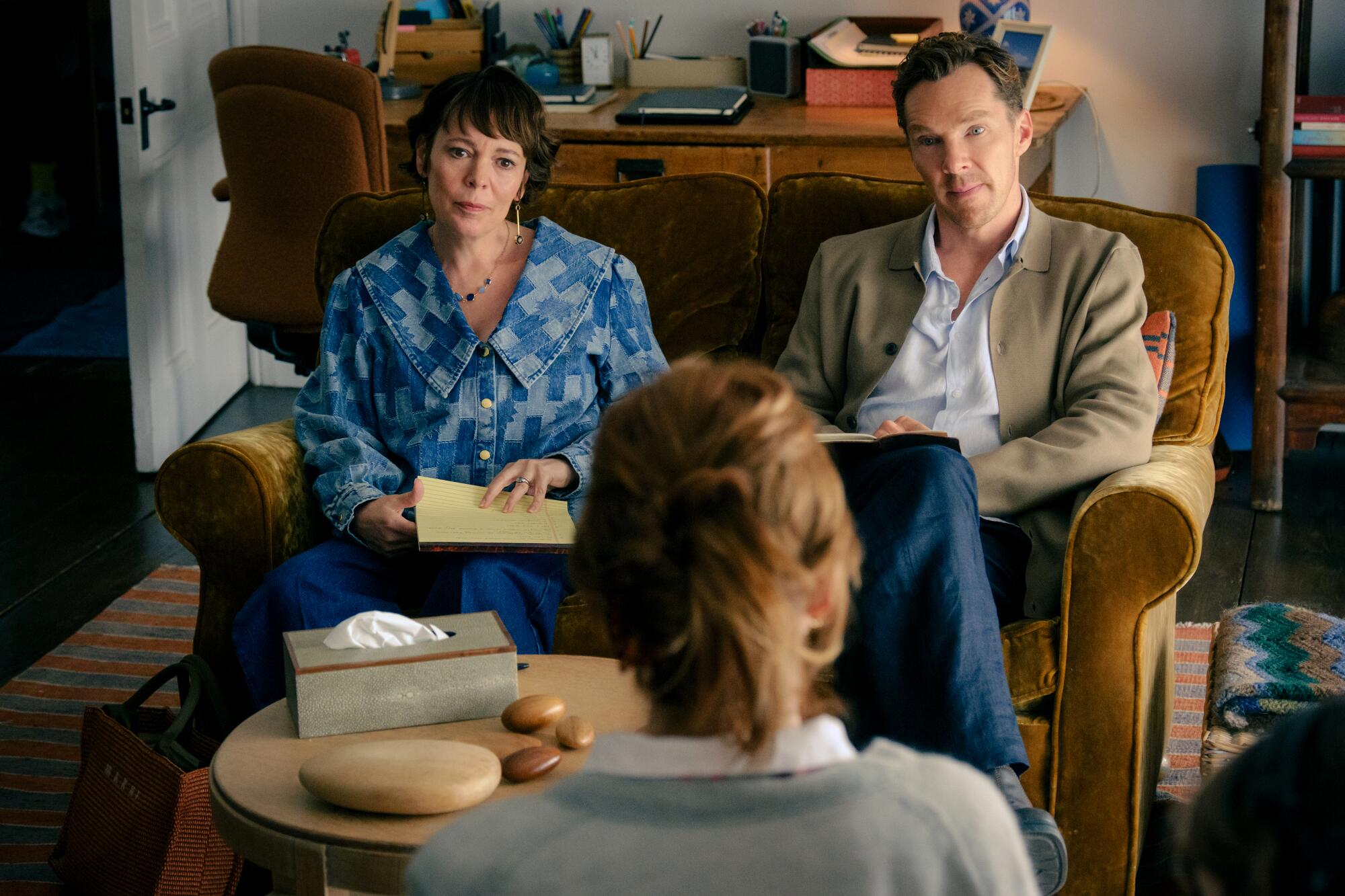
What a fascinating little misfire of a film. This is a case where I think the script itself, adapted from 1989’s The War of the Roses and given a fresh take by Tony McNamara – a writer I truly adore – is better than the resulting film. The structure of the story makes total sense. We understand where Theo Rose (Benedict Cumberbatch) and Ivy Rose (Olivia Colman) started and how they possibly ended up where they are now. The individual lines are full of wit and wisdom. But here, a very British script – you can see it in the speed the dialogue demands, in the dry wit required – is being directed by Jay Roach, the man behind some of the broadest American comedies (Austin Powers trilogy, Meet the Parents). Yes, Jay has also done political thrillers. He is a very experienced, very smart dude. But there is just something to how this film is shot and edited where it feels like a complete tonal mismatch of director and writer. It doesn’t feel too groovy, baby.

(Late in the film, Benedict, a depressed architect, spends unspeakable amounts of Colman’s money to build a dream house on the Pacific coast. It becomes more and more sophisticated – meaning: expensive – and no longer believable. It’s mean to show the resentment Benedict, draining all this family’s money. But it still feels too comfortable. It’s not quite ready to draw blood. It’s all hot air and fuss without the actual bite.)

Now, Cumberbatch and Colman are outstanding actors in their own right. They truly give the film their best, especially when the fighting turns inward and increasingly brutal. Just watch the moment when Theo turns on Ivy late in the film, after a wild whale rescue (yes, a whale rescue), and accuses her of being the most awful person he knows; it is astonishing at how quickly and believably Colman can communicate that deep hurt. As John Lovitz would say: acting! But for all their excellent performances over the years, I can’t quite buy them as truly hating each other. There just isn’t enough believable bitterness between them to truly believe they would do all the awful things they attempt to do to each other. 

As Cumberbatch and Colman continue to give this film their sweaty best, it all culminates in an epic fight that only rich people can indulge in, when the priciest of things get broken as if they all know it will be replaced the next morning. They are two children playing house: look at us fight! But then they eventually collapse inwards towards each other and it looks like they might actually be able to find a way out of this mess. Maybe they’ll stumble back upon something like love. They embrace. They fall asleep. And they fail to realize that their house has been slowly leaking gas throughout, a realization that will ignite quite the explosion as the screen cuts to black. It’s kinda shocking. It’s kinda delicious. It’s a commitment to the bit I can’t help but admire and applaud towards. So maybe this film is a misfire? But, much like the ending, a misfire worth remembering. 

A Fascinating Adaptation: Train Dreams
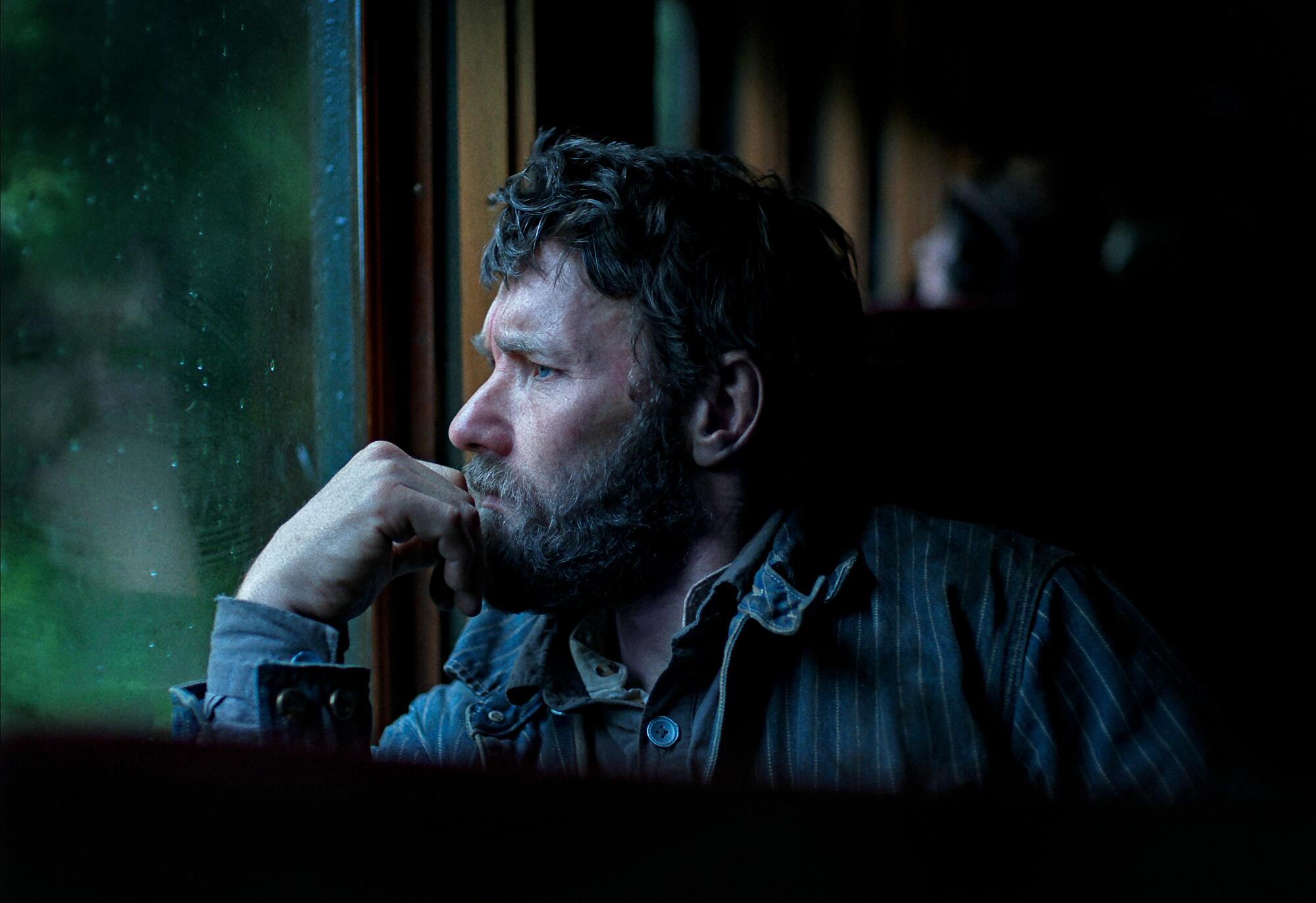
On paper, this film looked like something made just for me. A script written by the writers of one of my favorite films of 2024 (Sing Sing). Lush, picturesque cinematography around the Pacific Northwest. A lead actor I adore in Joel Edgerton. Several references to my beloved hometown of Spokane, WA. The math had to math, right? 

And while I did enjoy the cinematography, appreciated the screenplay’s structure (now, that is a helluva midpoint in a story), and delighted at seeing Kerry Condon onscreen again (even in a thankless role existing to only push Edgeteron’s Robert Granier to speak), I didn’t fully feel anything until the film’s final moments, when Granier is flying in a biplane high above the sky. It’s in those final moments, those final lines of narration from Will Patton, that it all clicked for me: this weightlessness in Granier’s stomach as that plane took a deep dive is the same feeling I’ve felt in so many of the biggest moments of my life: of pure, levitating excitement of falling in love with my future wife, of fear my daughters will walk too close to severe injury, of the unknown that comes with each new step in life. It felt like a profound feeling. And yet, at the same time, it also felt like I was projecting my own feelings on Train Dreams in a slightly desperate attempt to extract meaning from it all. 

So I decided to read the book’s source material: Denis Johnson’s Train Dreams. 

Adaptations should be able to exist on their own, yes, but after reading the novella, I found myself almost crackling with frustration at the film that resulted. Johnson’s story is so much weirder, darker, funnier, and full of life without requiring me to bring the profoundness to it. It exists on the page already. I can understand why some of the changes have been made: events shuffled around, sadder and thornier passages excised. I get it. But it effectively sands down the edges that give Johnson’s story its grip. And as a result, it relies entirely on montage and a fantastic Edgerton to make it work. I get why it enraptured audiences. But for me? I chalk it as one of the most interestingly divergent adaptations I’ve ever seen. 

I Feel Alive: Minecraft 

Look, I am a simple man. I once thought Jared Hess’ Napoleon Dynamite was the single greatest cinematic achievement of my young lifetime, sticking it out at the theater without any captions, indulging in the desert-dry weirdo humor. I am also exactly the kind of person to appreciate Hess working with Jack Black again and to see Jason Momoa untangle about 30% of the world’s toxic masculinity with his committed performance alone. Throw these guys together for a couple months of filming in New Zealand. Let them cook. 

I’m not sure I can say that Minecraft is a good movie. What I can say is that I had a complete fucking blast watching it. From the moment Jemaine Clement (again, New Zealand buddies!) talks onscreen with a pretty slick Southern accent and pleadingly negotiates to hang out with Jason Momoa’s try-hard guy? I was sold. This is a film about what happens when you take a really bizarre, hard-to-adapt property that’s befuddled Hollywood for 20 years and make it halfway around the world, where it’s a little too far for people to be paying close attention. That’s how you get Rachel House’s utterly delightful Molgosha performance. That’s how you get an epic song like “I Feel Alive” – which I have since sang out aloud nearly as much as anything from the K-Pop Demon Hunters soundtrack.

I just know that in a movie I took my oldest daughter to see upon her request, I was the one laughing the entire way through. Something about mixing Jared Hess’ oddball approach with New Zealand and a totally-game Jason Momoa just warped this movie’s DNA so much that it could pass whatever bullshit detector I thought I had in place. Did I feel alive? I absolutely did.

Best Pickup Basketball Game: The Phoenician Scheme
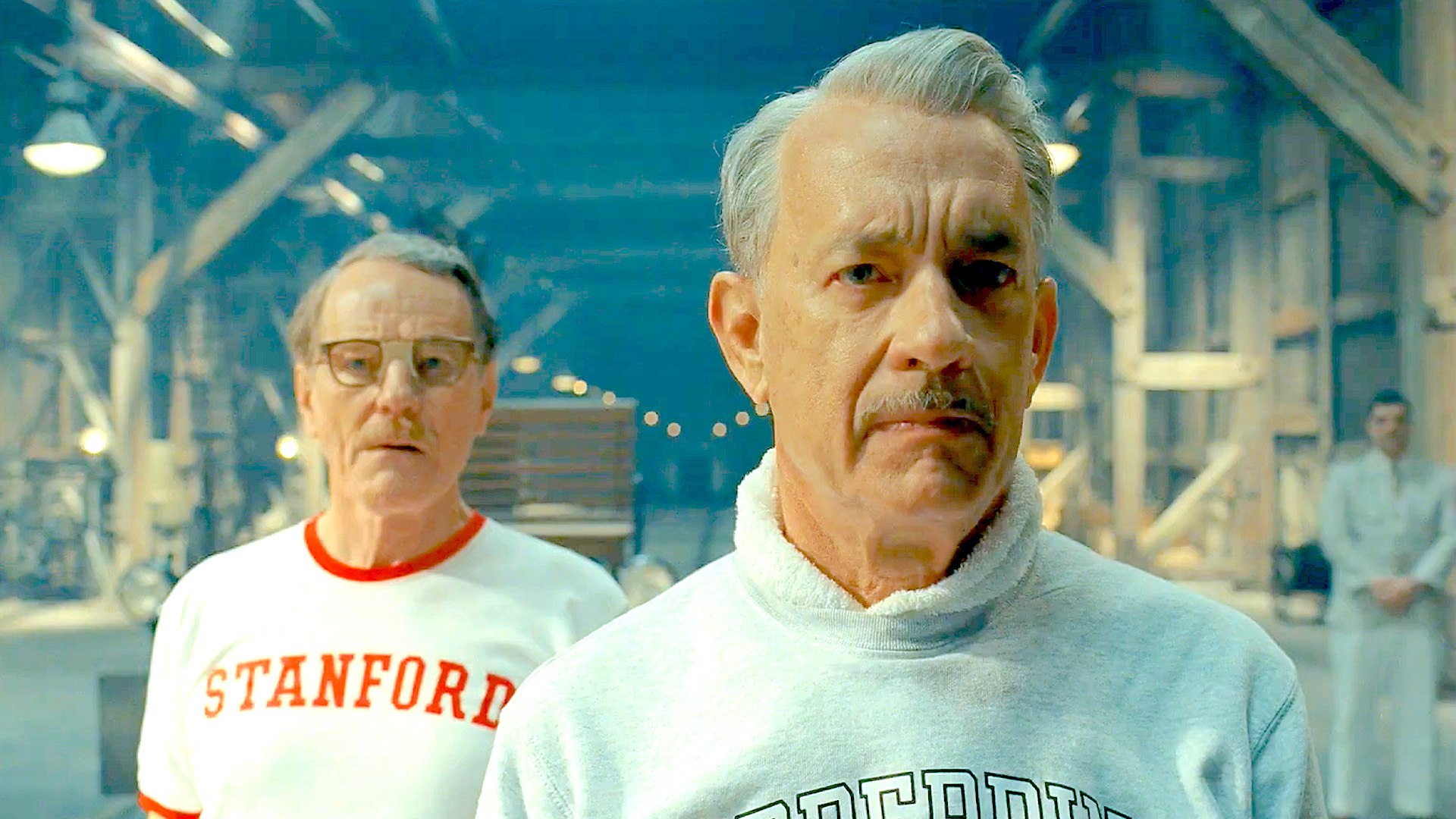
The question has been around since the invention of basketball: who, dead or alive, would you play a pickup basketball game with? If you’re willing to extend that conversation to fictional characters – and you should, because why pick hairs in this economy – then 2025 gave me my definitive answer: Tom Hanks’ Leland and Bryan Cranston’s Reagan. 

2024’s Asteroid City remains one of my favorites of the decade, so I admittedly found myself a little flummoxed with Wes Anderson’s latest. I know the treasures are there – the always-impeccable production design, the big actors playing delightfully small parts, the thousand other decisions that only someone like Anderson and his team would make. Time will treat this film well. But for now: I found my ballers, and all I wanna do is get some knee-high socks on and find a safe underground tunnel to get some shots up. 

Justice for Amanda Seyfried: The Housemaid

Look, this is meant as no diss towards Jesse Buckley, the 2026 Best Actress Oscar winner, who I adore, or the other four Best Actress nominees. But in a more just world, Amanda Seyfried’s performance in The Housemaid would have been in all the awards conversation. If only camp thrillers were as revered as Oscar bait. If only! Instead, I can only encourage you to see out Paul Feig’s latest film, an adaptation of Freida McFadden’s bestselling novel, and just watch Seyfried absolutely cook. She is the best thing every second she’s onscreen and the film loses its steam in her absence.

The tricky thing with this film is that it tips the balance of the story so strongly in one direction – the perfect husband with a psychotic wife – that you know a movie billed as having tons of twists and turns is going to pull a semi-predictable 180. It’s like they moved all the furniture to one side of the room and all you can see is the other half; you know where it will go and it’s just a matter of seeing their final position. For some: this is entirely engrossing. But for me? I just wanted Seyfriend back onscreen. And when you see where the twists and turns are taking place, you will understand just how incredible the whole of her performance is.

The Housemaid has an undeniably fantastic sequel hook in its closing moments. It’s a genuine bummer it does not appear to involve Seyfried’s Nina Winchester. But I’m glad we at least have this performance committed to celluloid.

New Game, New Moves: Superman (2025)
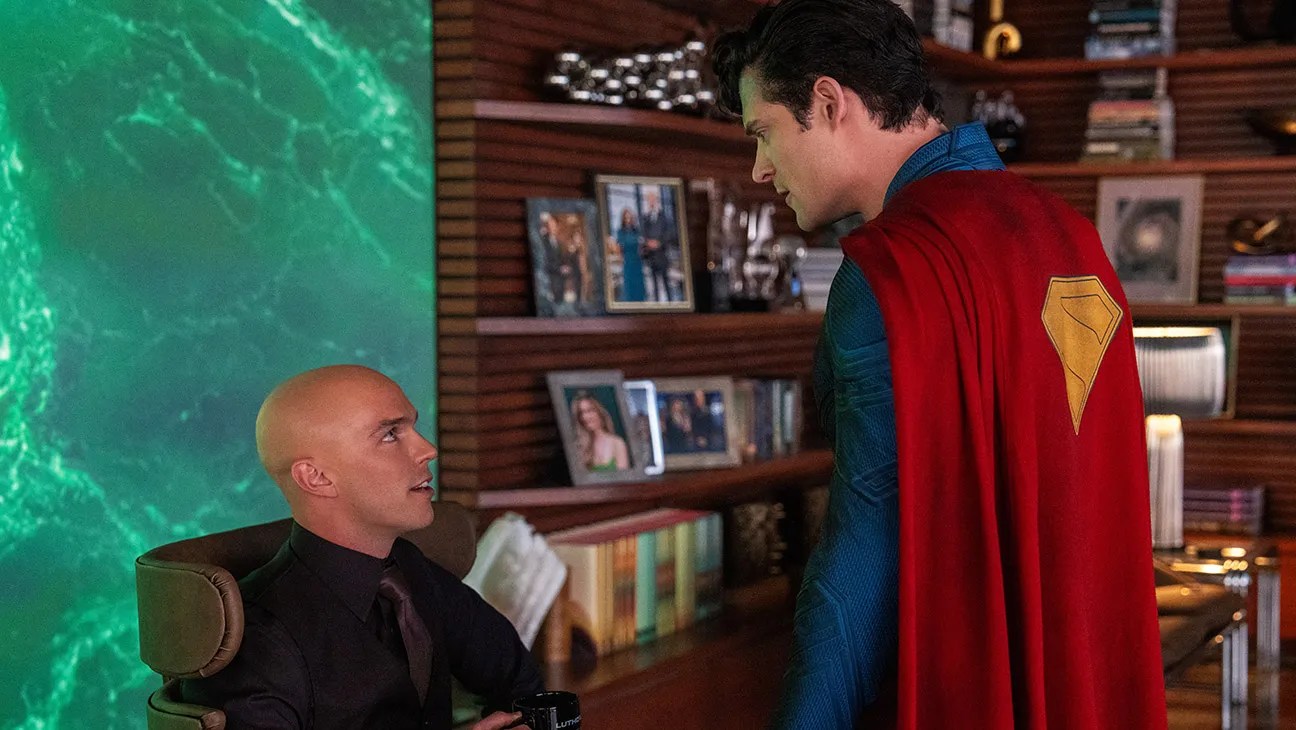
There is much to like about this new version of Superman. He thinks kindness and caring about things is punk rock. He has an annoying dog he can barely stand. And he genuinely can’t understand why we would be okay with anyone dying, let alone a squirrel in the middle of a kaiju fight. In many ways, this is the Superman we want: someone who sees value in us all and cares for our well-being. David Corenswet finds a way to make this genuine approach feel legit and never too sweet or a tad too false. 

Director/writer James Gunn, now firmly in the DC Universe, fills out the rest of the film with a number of amusing characters, including Skyler Gondry’s Jimmy Olsen, who just can’t get this soon-to-be-important lady to leave him alone, and Nathan Fillion’s Green Lantern with one of the more impressively bad superhero haircuts. There’s even a great back-and-forth interview between Corenswet and Rachel Brosenan’s Lois Lane that you can absolutely tell is Gunn’s favorite scene in the movie. At the end of the day, the final battle felt far too much like a rehash of Gunn’s Guardians of the Galaxy 2’s Ego vs Star-Lord battle – a remix too sprawling and exhausting to be fully impressive.

Lex Luthor (Nicholas Hoult) is meant to be a character who’s often one step ahead of Superman, and Gunn finds a really impressively unique way in doing this. In major fights, surrounded by his embedded tech team, Luthor shouts out combinations of letters and numbers, like a Rubik’s Cube solver at a rapid-fire auction, and we suddenly get it: it requires a level of brainiac to remember all these moves and know what to call and when. As a result we get a much more cinematically cebebral version of the punch-ups we’ve come to expect. And hopefully, if all goes well, a sign of the creative juice coming to next year’s Man of Tomorrow.

Not Phoning It In: Zootopia 2 

I, as a rule, hate the use of “2” in sequel names. I get it. It’s marketing. Name recognition. Et cetera, et cetera. But it feels so cheap tacking a number onto the original title. If you’re gonna spend $150 million on a sequel, why not spend a fraction to come up with a cooler title? 

It’s easy to get frustrated with sequels, especially when they come nearly ten years after the original. But animation is an entirely different beast (and especially when you understand much of the same team worked on the stellar Encanto in-between these films). Production can go as long as five years. Story elements are storyboarded and scrapped and storyboarded again. All this to say: these sequels don’t have to be as creative and adventurous as they are. And yet! 

There are even more animal puns this time around. There’s a counseling session of mismatched partners that is both hilarious and illuminating. There’s an incredibly clever new area in Marsh Market, where animals live under and above water. There’s genius casting like Patrick Warburton as the Fabio-like horse mayor (My daughters and I definitely quoted his iconic “It’s a snake!” yelp about five too many times). And a quite deep, brutally honest argument between Nick Fox and Judy Bunny that feels ripped from someone’s couples therapy session. Again: it doesn’t have to go this hard! But these are people who take pride in their work, in telling a (very timely) story, and giving audiences something to savor. So as much as I hate that “2”, I can’t deny that everyone involved gave anything but their best. 

David Koepp’s Finest Hour: Black Bag 
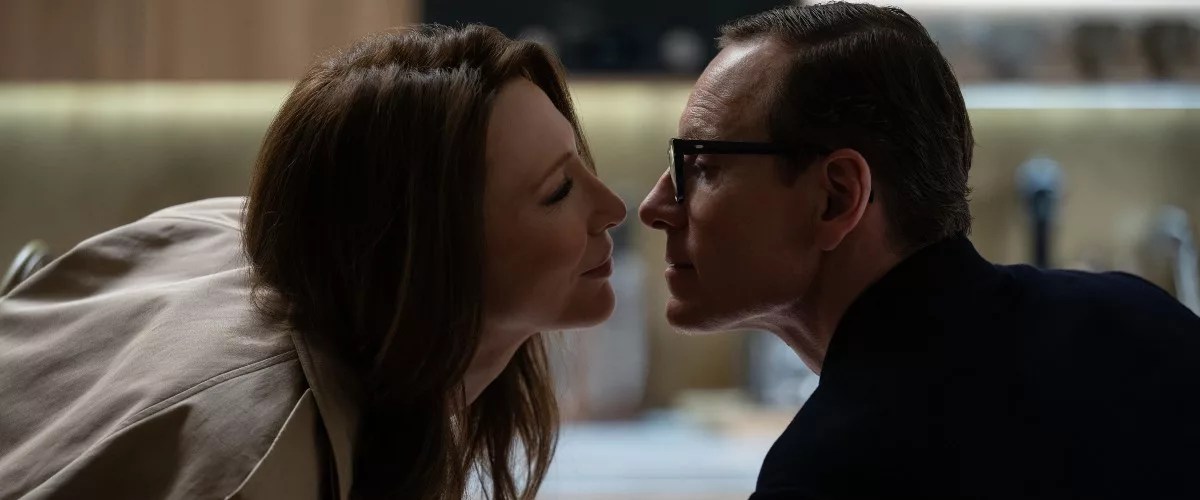
“Not everyone aspires to your flagrant monogamy, George”

The Summer of 2025 turned out to be the David Koepp Reclamation Tour for me. First, I read his debut novel, Cold Storage, a delightful, contained little blast of a comedic thriller. Then, I absorbed many of the press interviews he did for his involvement with Jurassic World: Rebirth (and wrote over 7,000 words about that film that didn’t even make the Top 20 list, all so I could find that more empathetic outlook in Koepp’s favor). And then, to top it all off, I went back to finally watch Steven Soderberg’s Black Bag.

What’s really funny about doing these things together is being reminded that as excellent a writer Koepp is, he is still a writer. And by that, I mean, he will 100% recycle a really dope idea he finds. I don’t fully understand how this piece of technology works, but watching Black Bag use the opening and closing of a satellite window in a very similar way to Cold Storage and even the recent Disclosure Day (though for very different means) really made Koepp seem the right level of human to me. Bonus: Scarlett Johnanson and Rupert Friend’s first dialogue scene in Rebirth feels like Koepp shrugging off the spy garments of this film before slipping into his dinosuit.

But what’s so fantastic about Black Bag is how effortless it feels when you know it’s not that simple. Soderbergh and Koepp expertly set up a dinner table scene that will be returned to later, and with quite the consequences attached to it. In between, we see a married couple deal with their strongest moment of doubt yet. Fassbender and Blanchett absolutely sell it like the pros they are. And the rest of the cast (especially Pierce Brosnan with a prosthetic nose!) make it sing. One of the finest scripts of the year.

20. Bugonia
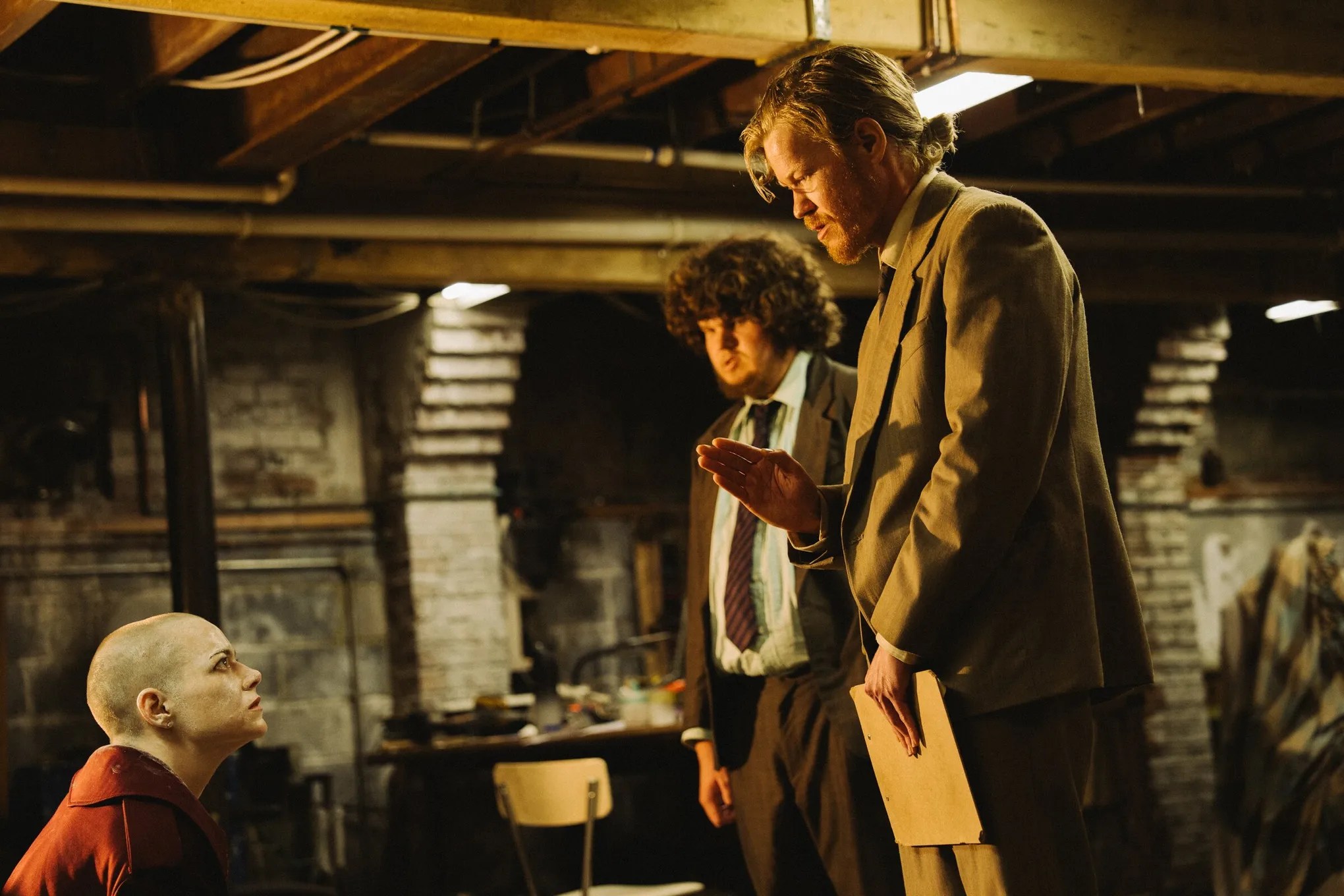
I know I can always count on Yorgos Lanthimos to zig when we expect him to zag. The man, after all, used to be a professional basketball player! Juking out an audience is practically in his muscle memory. But here? The story head-fakes in such a way that I immediately assumed it had to be a remake of something (sure enough: it is). 

Jesse Plemons, an actor I’ve adored since his Friday Night Lights days (Season 2 storyline, you can’t hurt me!), gets to truly remind everyone what an onscreen stud he is. Everything that comes out of his character’s mouth is 100% conspiracy theory syrup, before you can even add the carbonated water to the fountain drink. And yet: Plemons makes you believe his sweaty desperation and how much sense his twisted worldview makes. Emma Stone, clearly Yorgo’s ride-or-die, meets Plemons toe to toe throughout, as thrilling an acting matchup I’ve seen this year. 

Truly, I coasted along on the incredible performances until the movie shifts into a gear that feels like it came from a different vehicle. I certainly won’t forget those last 10-15 minutes anytime soon. It doesn’t completely add up to the story that came before, but it almost doesn’t matter; so rare is the bird that flies this high and this brazenly. 

19. Eephus

I have always been drawn more to the mythology of baseball than the game itself. I still think, at least once a week, about the evergreen line from Bull Durham: “Sometimes you win. Sometimes you lose. Sometimes it rains.” If you think a little harder, you can easily come up with more lines from films like Field of Dreams, or A League of Their Own, or Moneyball, or even Angels in the Outfield, with a young Joseph Gordon Levitt. It’s a sport that hypnotizes with imagery. A pastime that’s always outside of time. 

Eephus is unusual title for a film until you learn it’s the name of an actual pitch. It’s a particular pitch that moves so slow that you’re almost hypnotized by it, your body unable to detect any sense of urgency, until you whiff hard upon its approach and hear the sound of the catcher’s mitt. By then: it’s too late. As soon as this pitch was described in the film, I could only smile at the idea of director Carson Lund and his co-writers kicking themselves for coming up with this perfect little metaphor. This is a film that sneaks up on you, much like the pitch itself, and then it’s off to the next scene.  

I have come to believe Eephus is the film I wanted Train Dreams to be.

For a while, I wasn’t quite sure what I was getting into. A bunch of guys of various ages and stages in life gathering for a final baseball game before the field gets demolished for a new elementary school? Okay. I kept waiting for some kind of story structure to kick in, for something to ignite this film’s sleepy, small-town vibe. Until I realized that’s exactly the point. This is a movie about life. You think you got a ton of games ahead of you until you don’t. You think you got enough light to properly judge balls and strikes until you don’t. You think you know what’s coming next until you realize you have not the slightest clue. Life is one eephus pitch after another. 

There are so many lines in this film, thrown out like high-flying balls for anyone to look into the sun and try and catch: 

The in-the-park double: “Is there anything more beautiful than the sun setting on a fat man stealing second base?”

The sobering last-minute out that began as a home run: “All the arguing in the world can’t change the decision of the umpire.”

The home run with the final word: “I’m looking around for something to happen. Then poof, the game’s over.” 

18. Together

I love a story that takes a premise and commits. And you could argue that, for most of the runtime, this film commits more than Millie (Alison Brie) and Tim (Dave Franco) do to each other. They want to be together. They wanna make their relationship somewhat more official. But there’s a gap between them they can’t quite bridge. So they do what any stuck couple would do: they move into a beautiful house in a tiny town, looking for a fresh start. 

If you’ve watched movies with me enough, you know I love to look for the midpoint in the story, the point of no return. It’s almost always right in the middle. And yes, this means I will pause movies (when not in theaters) just to check the math on the timestamp. Sometimes that midpoint is pretty predictable. But here? I positively cackled at the absurdity of this film’s midpoint and how thematically perfect it is. Seriously: one of my favorite scenes of all of 2025. It’s horrifying, it’s hilarious, and you may suffer from first degree burns of secondhand embarassment. From there, the film just continues to surprise as the story gets creepier and goopier and stickier, ending with a truly chilling ending that I could only stand up and slow clap for. 

Brie and Franco are both fantastic here, and there’s something extra special about seeing a real life couple this willing to go this crazy together, to be seen as weirdos doing deeply weird things. I’m sure they were laughing their asses off throughout all of filming. Truly: #relationshipgoals. 

17. It Was Just An Accident
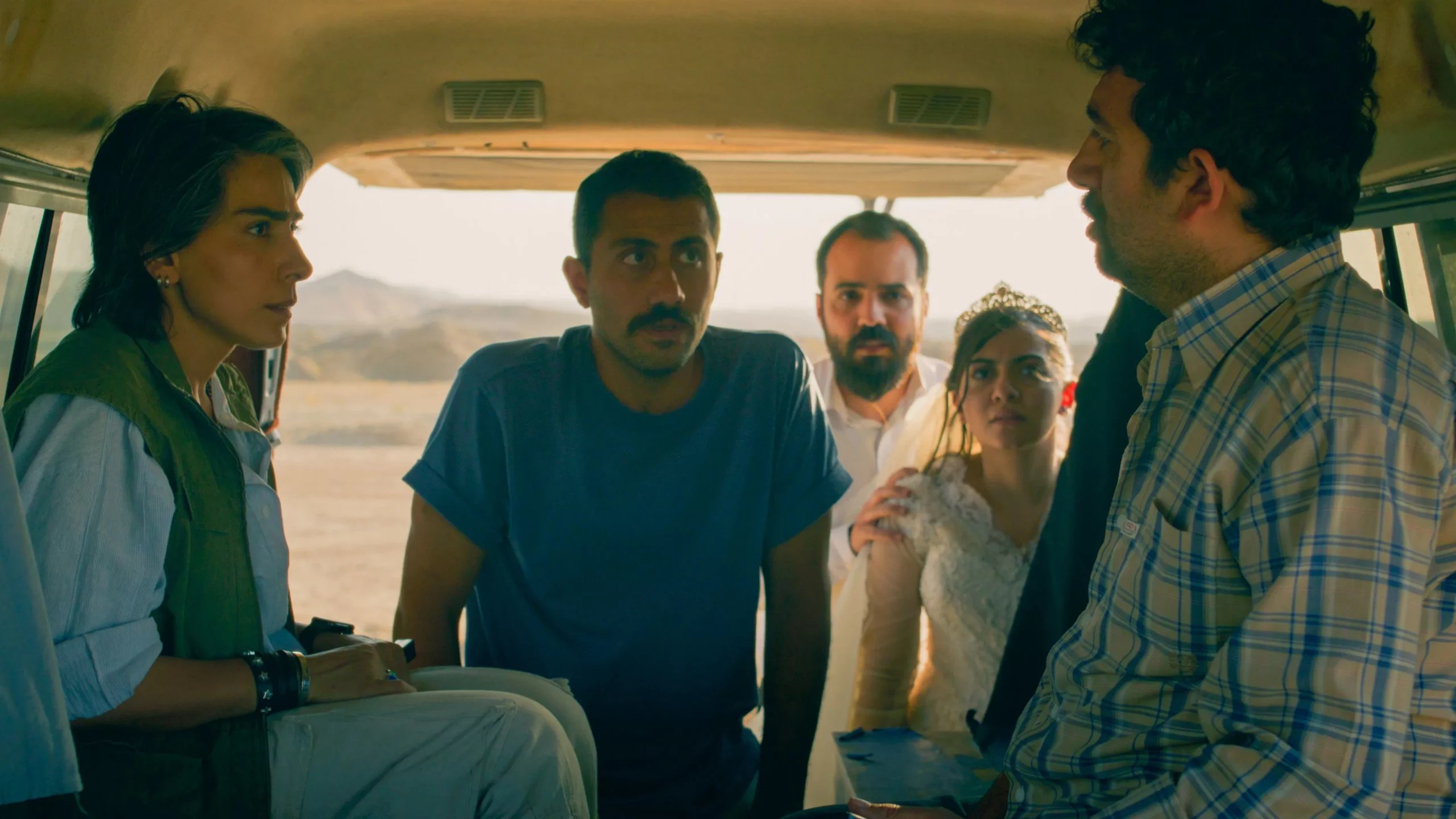
Back in college, in the midst of phrase of renting entire rows of foreign film DVD’s (the most reliable subtitles!) from my local Hastings, I came upon Alejandro González Iñárritu and Guillermo Arriaga’s Amores Perros. The three stories felt electrifying in their own right, even before seeing how they would connect. Coming from the relative safety of American cinema, it felt almost like flying under the radar, sneaking into unknown territory in the darkness of night. But the final story of the triptych is the one that has stuck with me since. It’s the story of El Chivo, a homeless hitman (yes, really), and his final job. There are a number of elements going on with this story, including a trying relationship with his daughter and a bed full of dead dogs, but the most important thing is the way El Chivo subverts what is presumably his last hit. He brings the target to his own home and ties him up. And then he invites the man calling for the hit for a visit, offering a gun and forcing him to commit the crime himself.

It blew my mind.

And it made me realize how many atrocities are carried out because the ones calling for them don’t have to deal with the mess. They only see the absence. They don’t feel the pain or struggle or dark nights of the soul. They are making a simple transaction at the Bank of Life and Death. Throughout It Was Just An Accident, this is all I could think about. Here, a man (Vahid Mobasseri) stumbles upon a former oppressor and torturer. He manages to track him down and tie him up in his van. He drives around town to find those who can not only confirm he is that awful man. And the rest of the movie is an exploration of just what to do with this awful man, the one they have confirmed to be the figure behind so much pain and trauma in their lives. Watching this rather odd group slowly move from vengeful anger towards a clearer understanding of what kind of energy they want to put out into the world is a beautiful, goosebump-inducing arc to behold. But what makes it sting, what I suspect will make me think about it just as much as I did the adventures of El Chivo, are in the film’s final moments, when we don’t know if the sound heard is real or not. It invites the questions we all struggle with and have few answers for. An electrifyingly relevant film.

16. Wake Up Dead Man
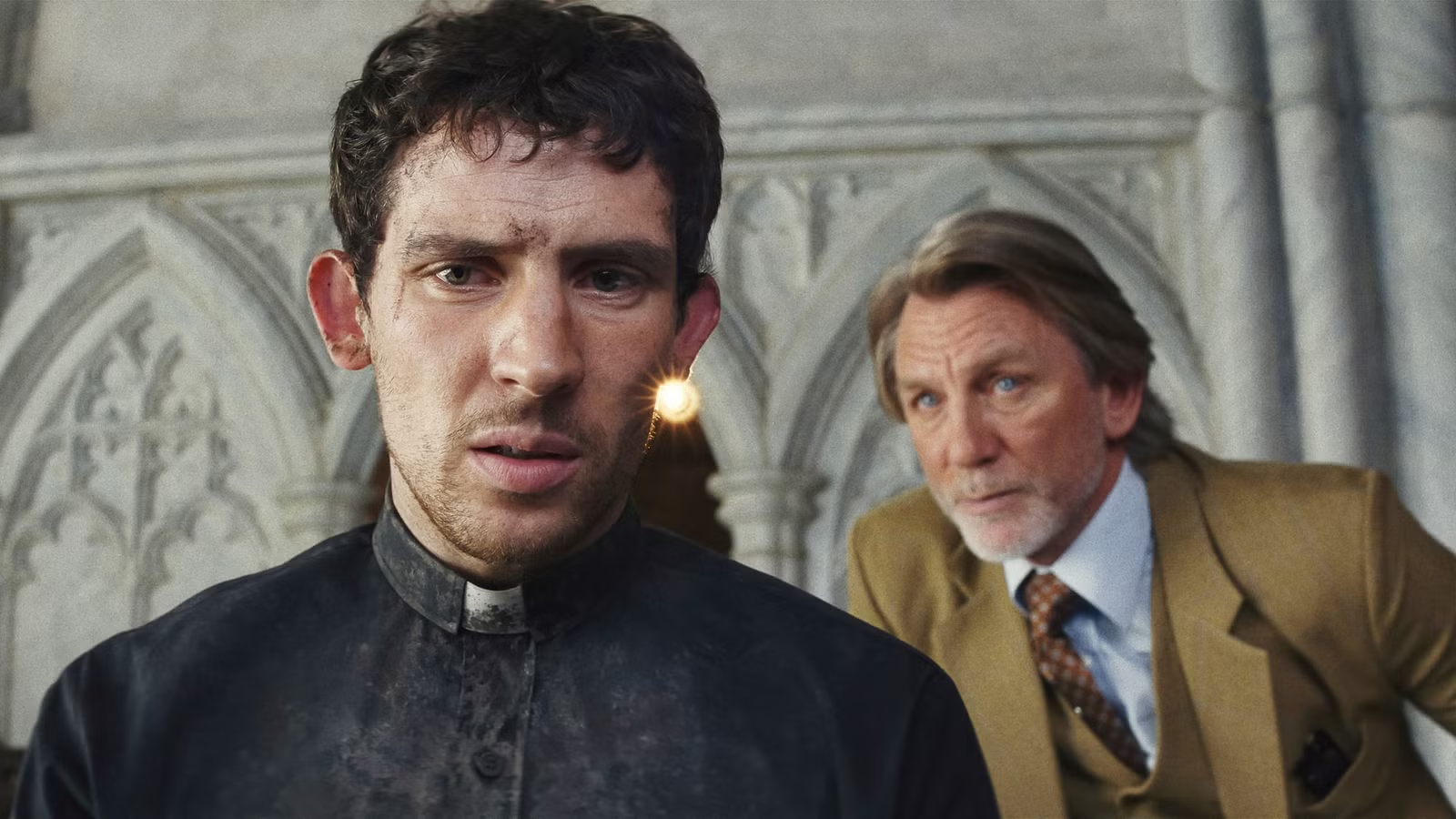
I have worshipped at the altar of Rian Johnson films for years. Brick, Brothers Bloom, Looper, The Last Jedi – all bangers, no filler. And while I enjoy these Knives Out movies and his ongoing working relationship with Daniel Craig, it can sometimes feel like Rian is developing an intricate Russian novel of a story that becomes almost too clever for its own good. Johnson has been very upfront that the least interesting part of the murder mystery is the actual killer. A story dependent on that reveal often ends up being too load-bearing to fully work beyond the initial shock. So he beautifully writes in misdirects and one-liners and heady thoughts, layer upon thoughtful layer. It always feels worthwhile. But it doesn’t always make me feel. 

Here, Johnson seems to have caught onto his own game. There’s still a cast of colorful characters surrounding the story. There’s still a clear reminder of how much of writer Johnson is with all the talk about the impossibly perfect murder. But what makes this Knives Out tale stick with me in a way the others quite didn’t is how he uses Father Judd (a perfectly-cast Josh O’Connor). Johnson takes his time letting us into the mindset of Judd – of how he arrived at the Church and how quickly he clocks the hateful hypocrisy burnished in this dwindling congregation. Blanc doesn’t show up until late in the movie, in what feels like a truly fresh move, and the dialogue and hypothesis come fast and furious, the mystery fully kicking into momentum until-

A phone rings. Judd answers. It’s a congregant. She’s been struggling. She’s not sure just what to do. And the beauty of casting Bridgett Everett in this scene is that it’s easy to initially see it played for laughs, as someone who’s been stuck at the office and desperate to talk to anyone. But if you’re like me – you know what a powerhouse performer Everett is. The conversation turns. You can hear the fear and desperation in Everett’s soft, shattering voice. Judd recognizes this murder mystery craziness is not his true gig, not his calling. He goes back into his office and shuts the door for what we can safely assume is hours. Duty called: his profound empathy answered. 

Now, Johnson has said before in interviews how much of a surprise this scene ended up being for him. And if you’re a writer, you know how powerful those moments are. You’re type-typing out these scenes as you’re maybe following your little beat sheet and then suddenly, The Muse – the one that only shows up when your ass is in a seat – arrives and the surprise energizes your story in a way you never would have expected. Credit Johnson for following the lead of that little surprise. It’s by far the best moment in the film, and possibly the whole Knives Out series. 

The film continues from there, building out more and more misdirects and surprises and one-liners, culminating in possibly my favorite final shot of any film in 2025: a reveal of a diamond being hidden within the chest of Christ, the place that the hateful hypocrites will never bother to look. Hallelujah.

15. Companion
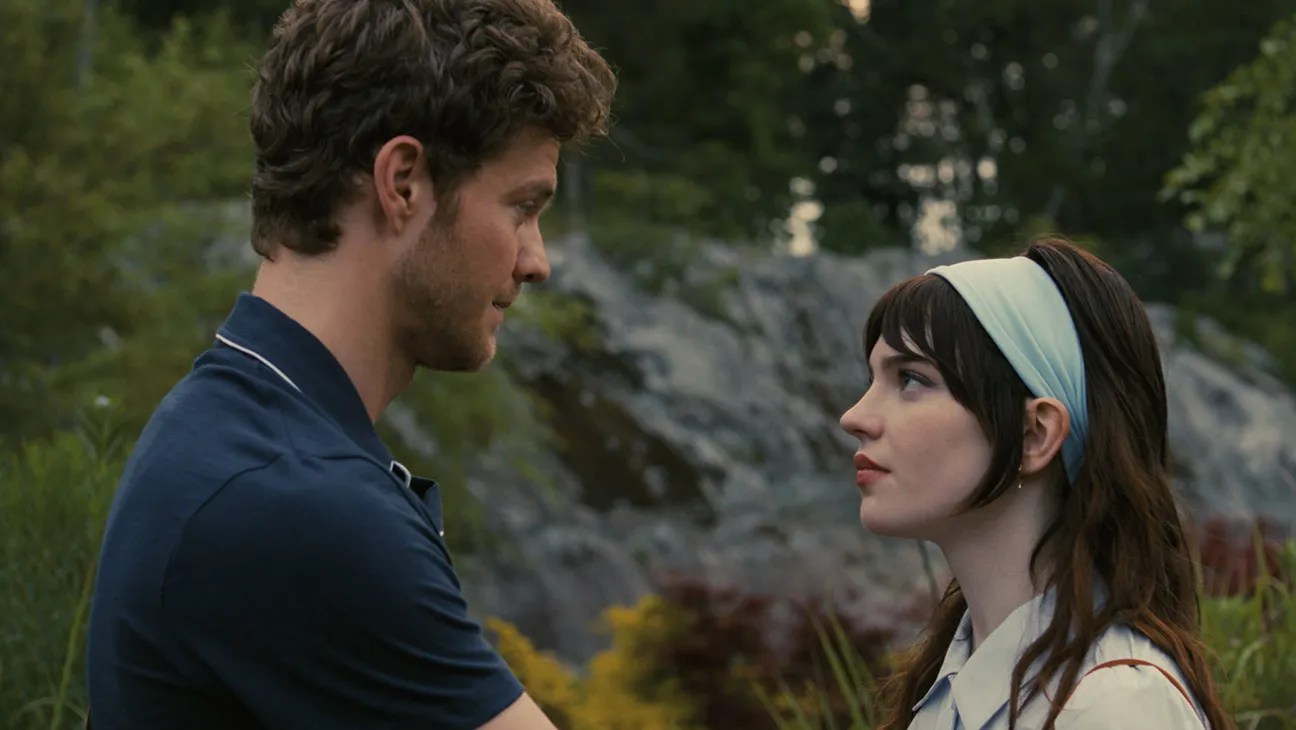
A recent writing tip I’ve stumbled upon is that it’s better to see characters acting smart yet morally dubious than morally straight and really dumb. This movie is a fantastic example of that. The zigs and zags only clarify the real story at the heart of it, the real sadistic plan for inarguable wealth. Each decision respects the intelligence of the characters and allows them space to make pretty fucked up decisions that we would rather convince ourselves we’d never make. 

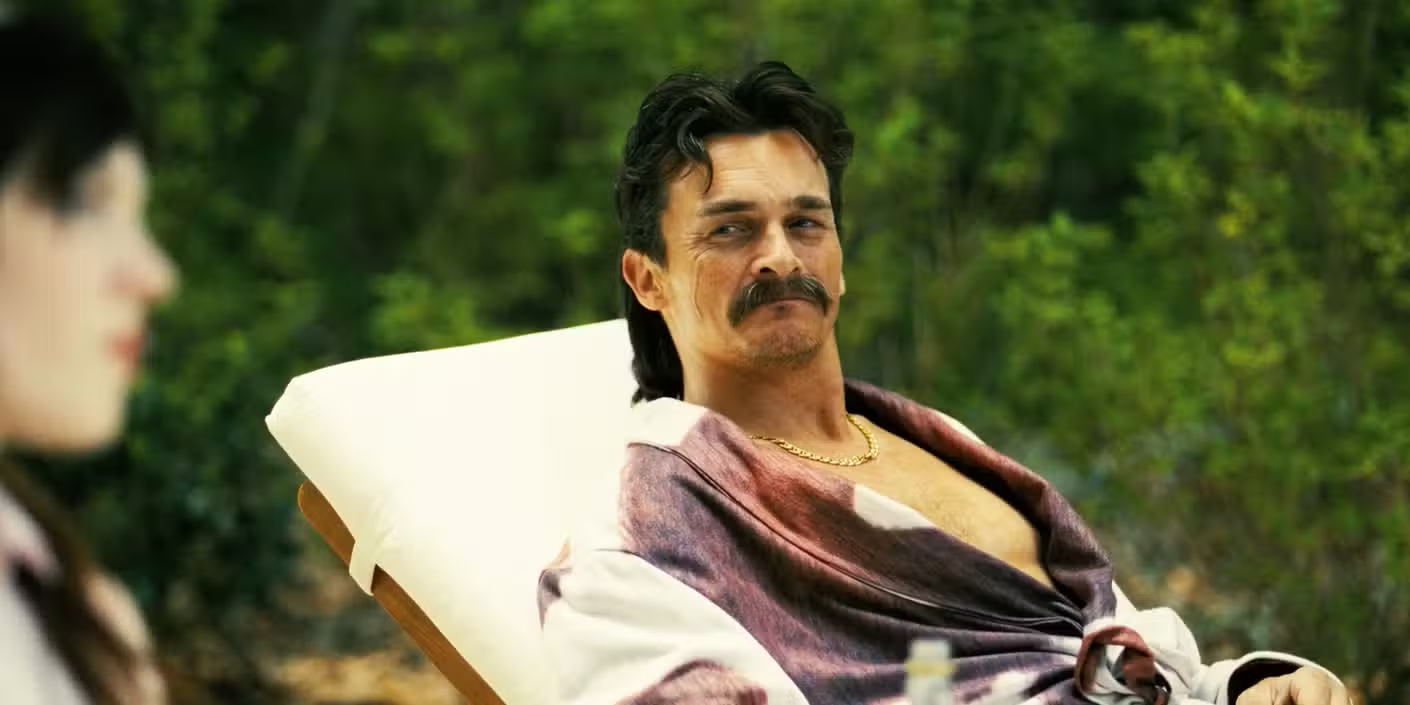
And I’m not gonna lie: the best thing in this film might be Rupert Friend’s Russian millionaire character. I mean, look at this guy. What a complete blast of a caricature brought to sweaty, ticklish life. I enjoyed Friend in Rebirth as the dickwad billionaire. But here? I just wanted to hug this dude and say, “Thank you for bringing a momentary surge of undeniable joy to my life.”
But the second best thing is just how entertaining and thoughtful this film is. The humor is dark and morbid – any film with a female robot having her Intelligence turned to 0% by her boyfriend and having it backfire on him will do that – but it punches in all the right places. Each twist and turn of this script had me hooting and hollering on the inside and rooting for an incredible Sophie Thatcher to make it to the very end. A truly electric ride of a story. 

14. Roofman

“We both know doing things the right way is not your superpower.“

The premise, based on a true story, is ridiculous. Jeffrey Manchester, on the run from the law, robs a series of McDonald’s (through the roof, of course) before setting up a new life in the hidden margins of a Toys’R’Us. It’s the kind of wild tale you’d clock out of if you didn’t already know it really happened.

But when I heard Derek Cianfrance – the brain behind one of the most challenging, depressing relationship movies I’ve ever seen in Blue Valentine – was behind this, I definitely sat up. Sometimes the press interviews are what really compel me to seek out a film, and this Vulture interview did just the trick. The biggest nugget: Cianfrance learning that, despite all the lawlessness and getting caught, Manchester had no regrets. He couldn’t outrun the law, but he could run astride with a new life. It goes to show you just how quickly you can make your own little happiness, and how you can stretch those moments just a little longer before reality snatches it away. At the very end of this special film, we see the real people involved. We learn the daughters and wife never held it against Manchester. They understood what he felt he had to do. And they appreciated what he gave. A bizarrely hopeful reminder that it’s never too late to turn your little precious life around. 

This is a film full of delights: Peter Dinklage as an especially dorky store manager. Ben Mendelson, long the villain in the Marvel and Star Wars verses, playing a pastor who welcomes Jeffrey into his church and doesn’t even twist into the bad guy! Kirsten Dunst bringing all the warmth and wisdom. And Channing Tatum, a dude I honestly believe is a better actor than most give credit for, completely recognizes the assignment and gives it his all. When the walls start closing in, when people start making connections, Cianfrance lets the camera dwell on Tatum’s face as he we see him do emotional math in real time. It’s thrilling, heartbreaking work.

13. One Battle After Another
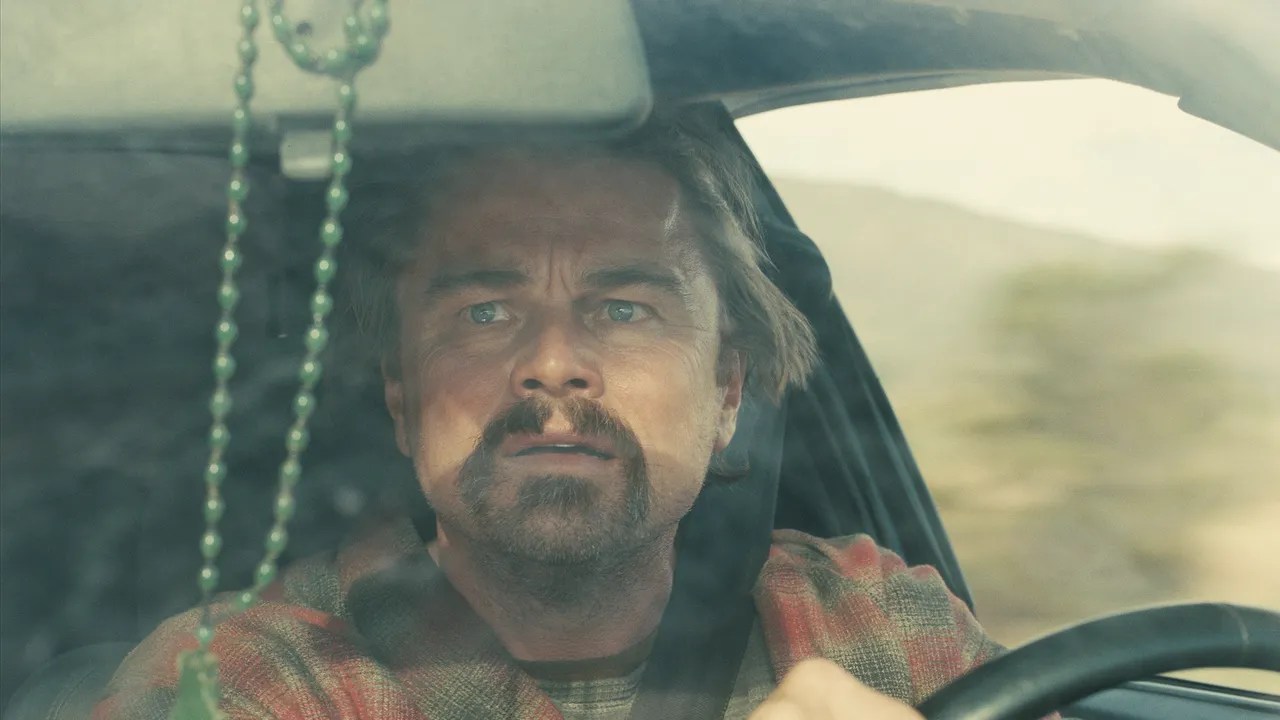
Last summer, when I first saw the trailer for Paul Thomas Anderson’s latest, I thought: how can all these wild images be a part of the same movie? A pregnant Teyana Taylor screaming as she fires an AK-47. Leo DiCaprio stuttering his way through a pay phone call with secretive language. Benicio Del Toro running down the hall and bowing to Leo in a beat that felt like an outtake of some forgotten Wes Anderson commercial. I just did not get how it would all coalesce. And after having seen the actual film this past fall, I still don’t quite know if the story comes together for me as well as the film thinks it does. 

What I can’t deny is that for all my misgivings about elements of the story, the filmmaking on display is pure. The editing, across time and space: seamless. Johnny Underwood’s score: a perfect companion. The cinematography: as good as it gets, especially in the unforgettable River of the Hills car chase. On top of that: every actor here is giving their very best. If you’re gonna tell a story that’s a little shaggier, this is pretty much the best case scenario result. 

But what I keep coming back to is Leo’s performance. DiCaprio has been turning in great work for decades now. There’s a reason why so many great directors insist on working with him. But here: his Ghetto Pat is the thing that ties all those disparate images from the trailer into a film that feels like it works. I think about how wide-eyed and stunned he looks in the opening scenes, not fully understanding exactly what he’s doing or how to be the most helpful, but eager to be a part of the cause any way he can. I think about that same stunned look when he sees Colonel Lockjaw for the first time in a grocery store, waiting in line to pay for food. When the film jumps ahead and he’s struggling to keep some proximity to his growing, rebelling daughter? Leo sells it. When he’s stoned out of his mind and frantically trying to find a goddamn phone charger and remember the password lodged somewhere in his brain? Leo sells it. When he’s chasing cars through the River of the Hills, the camera zooming in so tight it feels like a naval battle amongst tiny ships across an ever-powerful ocean, desperate to get to his daughter before anything awful can happen to her? Leo absolutely sells it.

I can still turn this movie on and be swept away by the sheer filmmaking of it all, of a team of collaborators working at the top of their game. But this is at its heart a girl-dad movie, and Leo’s performance here is one I won’t quite shake anytime soon.

12. Predator: Badlands
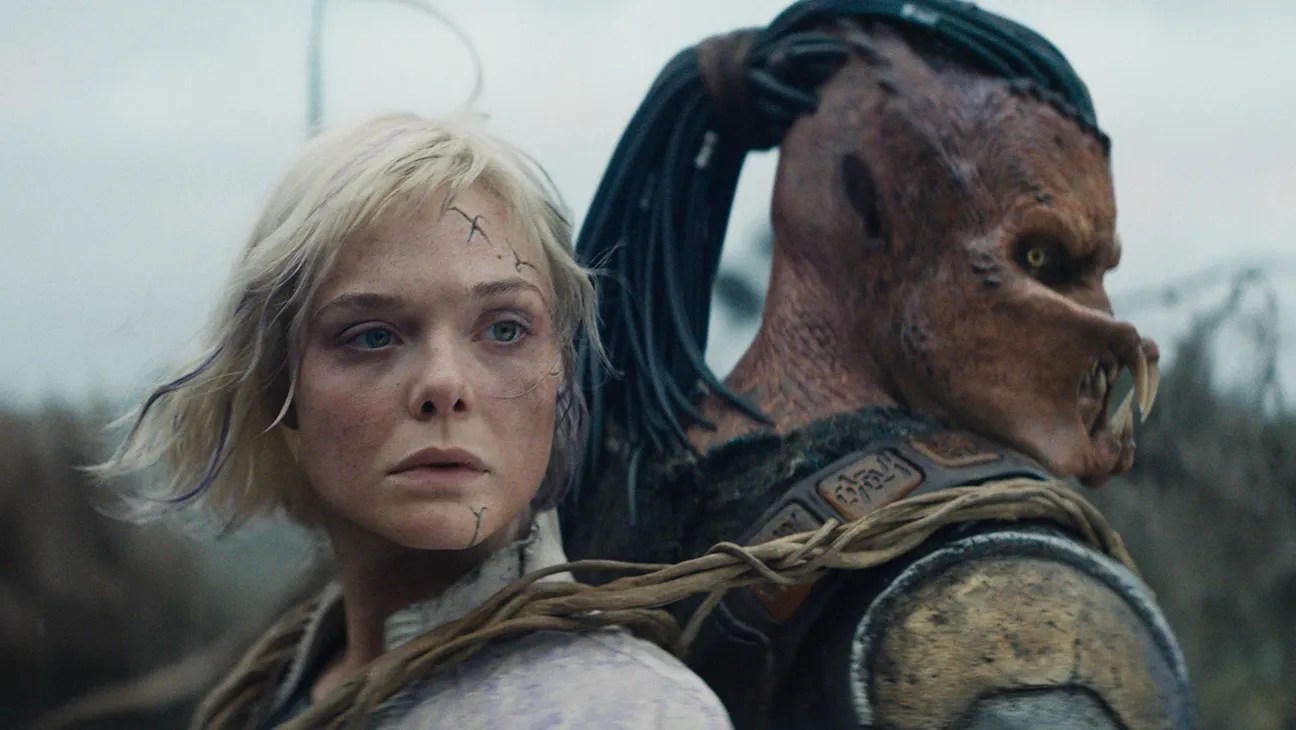
For anyone who felt the Predator franchise had too much toxic masculinity, this is your antidote.

Personally, I am not a Predator superfan, having only seen the original. Luckily, Dan Trachenberg knows there many are others like me. And he and co-writer Aaron Polic artfully lead the average viewer into a real hummer of an opening ten minutes where we learn about the home planet of the predator species, the way they mature, and the toxic masculinity at the center of it all. And then we’re off to a new planet, as Dek (Dimitrius Schuster-Koloamatangi) tries to prove that he’s actually just as badass as anyone else in his family. The goal: to bring home the most vicious predator of all, the one even his own ruthless father won’t bother with. 

I adore the way this movie is showcasese a planet committed to kicking the ass of visitors who don’t bother to understand it. Dek uses force wherever he can; it never works. He’s only alive thanks to the help of an android named Thia (Elle Fanning, excellent and yet my 2nd favorite performance of hers this year), who is missing her legs and the rest of the mission party she was viciously torn away from. 

What I especially love about this film is the way it does honors the action sci-fi of the Predator franchise with a message about what it mean to be an Apex Predator. Dek, early in the film, is told by Thia that the Apex Wolf is not the wolf that kills everything, but rather the wolf that protects all. It’s a subtle difference that somehow, even with the language and cultural barrier, is clear enough for Dek to digest. And watching him continue to fall on his stubborn ass in a way that not only hurts him but those around him makes the journey even sweeter. He learns how to lean into the environment. He realizes that it’s not out to kill him as much as it’s there to, like him, protect whatever it can. It’s a subtle shift done wonderfully and with great visual panache.

There are just so many little elements established in the beginning that pay off in increasingly satisfying ways in the final third. Tight structure. Great characters. Fun action scenes with real visual flair. What more could you want?

11. Not Alone Anymore: Marlee Matlin

Many classic films have premiered at Sundance in the historic Ecclestes Theater. It’s a place so storied that I expected it to look like something straight out of a 1950s film, with an overwhelming readerboard and gold trim everywhere. I wanted to see as much as feel the history. Turns out: it’s part of a community college. It’s easy to miss. It’s a reminder that what’s inside is what truly counts. 

But I will never forget being there on January 26th, 2025 for the premiere of Shoshanna Stern’s luminescent documentary. A packed theater, sitting beside my Deaf filmmaking friends, totally prepared to cheer on this huge milestone. 2025 is the year Sundance had two major Deaf documentaries premiering at the same time: this documentary and Deaf President Now. We all knew how unique this experience would be. And we knew it might be a while before two major Deaf productions are in this festival at the same time. We dream to one day be not be so impressed; we know the odds, until we make them, are not in our favor. 

Not only was this the premiere of the documentary, but it was the opening film of Sundance 2025. Just history upon history. 

When I first heard about this film, I felt like Shoshanna Stern would be the perfect fit as director. I had become quite smitten with her and Josh Feldman’s This Close – a fantastic two-season series that I’m convinced will be rediscovered by Deaf and hearing generations to come. I knew she would be unafraid to go deep, to find the scar tissue beside the beating heart. And what grounded that potentially overwhelming experience at Sundance is the slow realization that she absolutely fucking nailed it. Marlee Matlin is a cultural shadow that I’ve lived in my whole life. But she became famous before I was old enough to understand her impact in the 80’s and 90’s. By the time my HS history class watched West Wing, of course they’d point out Joey. Joey felt like a reminder to my peers that being Deaf could be cool and funny. It never felt like Sorkin was making fun of us, but rather luxuriating in the personality, just like you would with any other character. 

There is so much material in Matlin’s life that you can work with. But making it into something digestible is one thing. Making it something this heartfelt, and emotional, and funny, and punchy – just like Matlin herself – is a whole other wonder. I delighted in the way captions changed throughout, allowing us to see the history of access. I found my breath shortening as I watched Marlee deal with a Deaf community no one had ever explained to her. There is so much about this film that cannot be described as anything other than brave. Marlee’s brothers owning up to the challenges of growing up and seeing their current dynamic. The way Shoshanna shows what we all believed to be her happiest moment – winning an Oscar, given to her by your boyfriend onstage – only to return to it later, recontextualizing it with the truth, showing us just how fraught a moment it was for a terrified 19-year-old with an abusive partner. 

But I keep coming back to the way Stern interviews Matlin. There is nothing but warmth and empathy. They sit on a comfy couch across from each other, directly looking at each other, two women connecting across generations in an area that just happens to have lots of expensive filming equipment surrounding it. Only Stern could have gotten this out of Matlin. Only Stern could have led her team to put this all together and helped us understand just how important this woman’s life is and how it feels to finally, if only briefly, feel like you’re not alone. And I’m so grateful it exists. What a gift. For Marlee. For film history. For us all. 

10. Blue Moon

I practically came of age with Richard Linklater’s Before films. Before Sunrise taught me how transporting love could truly be. Before Sunset taught me how it’s never too late to recognize the right person you want in your life and to make sacrifices to get it. Before Midnight taught me how difficult it can be to make the dream work, what an argument that draws metaphorical blood can feel like, and how you can still find a way to time travel back to the moment it all began. To say the Before films are in my DNA is an understatement; it practically affects the way I turn my head towards the world around me. 

So you can imagine my delight when the film starts off in this 1950s bar, all light and atmosphere, and we meet Lorenz Hart aka Ethan Hawke aka Jesse in a different body. For those who were waiting for Before Sunset to arrive in 2006, they were lucky enough to see him in animated, rotoscoped form in Waking Life, a bed conversation between Celine and Jesse in some Paris hotel. This Lorenz is even more animated than that animated Jesse. But for as much as I can see Jesse in the character, I’m still in a bit of awe of how smoothly Hawke embodies Lorenz. He gets him. He knows how lonely it is to feel like the only one wanting something real just as the world acts like moths gravitating to the warmth of a false sun.

On the surface, it’s about a musical genius who’s about to be consciously uncoupled from the man he’s written nearly a thousand songs with. Musical theater has never quite been my thing. For so long, it was deeply inaccessible. Now? It feels like playing catchup with a cultural getaway train. It’s long gone, and I’m okay with that, glad to board whatever station stop I bump into. And watching this on a plane without sound meant I could focus on the story and actors alone. Case in point: Andrew Scott as Richard Rodgers, Lorenz’s soon-to-be-former writing partner. Rodgers is premiering his new musical, Oklahoma!, a piece of work we already know will endure for decades after. But each time Lorenz approaches Rodgers, Scott beautifully plays that mix of emotions – of wanting to move on while wrestling with what’s being left behind. As riveting as it is watching Hawke and Scott play off each other, they masterfully make you feel the gut punch taking place.

It’s wildly entertaining to see Lorenz endure this movie-long losing streak because as much as it sucks for him – and especially because the movie lets us know from the beginning just how this is all going to end – it’s also deeply inspiring. This is a man steadily being hollowed out just as he remains committed to the beauty of the world. “You’re the best listener I ever met”, Elizabeth Weiland (a fantastic Margaret Qualley), says, and Lorenz responds with: “That’s because I have absolutely no interest in myself whatsoever.” There is so much story to be found in the margins of history, and I’m so glad Linklater and writer Robert Kaplow brought this to life.

9. Weapons
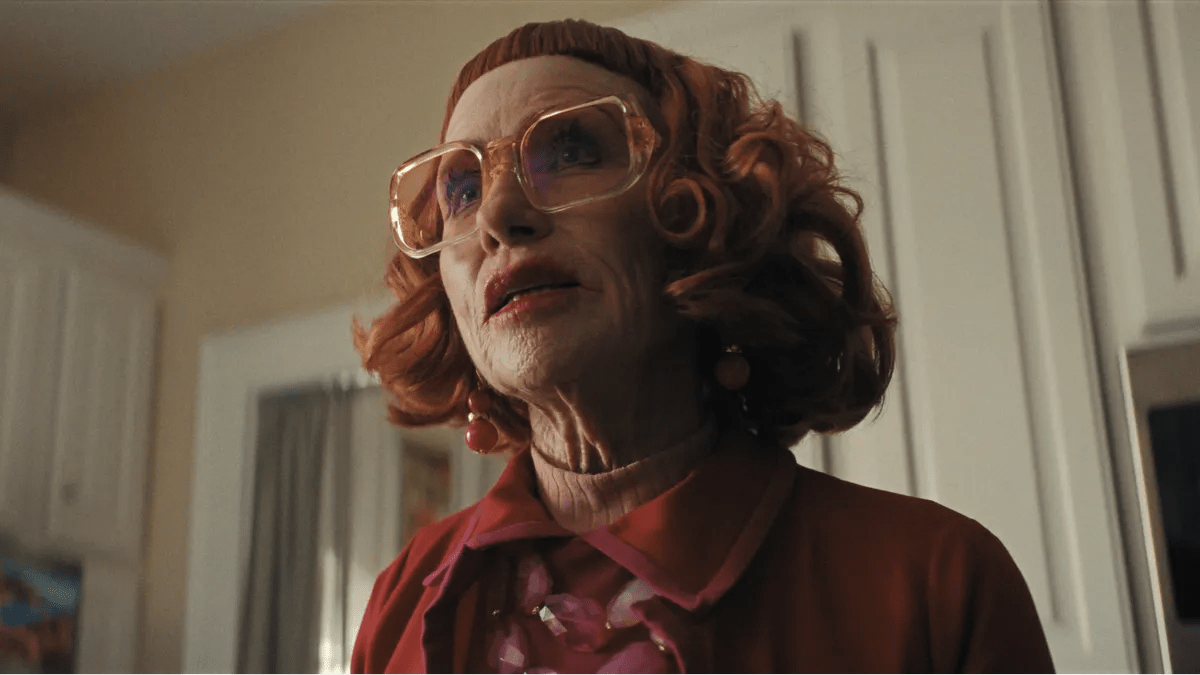
I am certainly not the first to recognize how Zach Creggor reminds us of Jordan Peele in that way their sketch comedy background transitions so well to horror. Comedy is all about tension and release. Horror is the same.  It’s just that, usually, one tends to involve more terror and blood. Here, Creggor flexes those muscles with such careful, thoughtful camera moves and positioning, beginning with the arresting image of children fleeing their homes in the dead of night. I still think about one of my favorite shots of the year: when Justine (Julie Garner) is asleep in her car and we know someone is moving around to the other side. We can’t see who it is. But we can hear the door open and shut. We can see scissors coming close. It seems so obvious that someone is going to get stabbed. Instead: a clip of hair is taken. It’s death by a thousand cuts, subtle moves by a system that slowly drain us of our spirit and control while those at the top continue on, finding new horrors to inflict on others. 

This film is satisfyingly full of flawed people. People we absolutely recognize. I absolutely know teachers like Justine (Julie Garner) who are well-meaning but unable to fully extricate themselves from weaponizing trauma or stress they feel at the job. Cregger does a fantastic job of showing just how isolating and exhausting her life is. There isn’t much to do when you don’t want to interact with a small town that doesn’t want to interact with you. And in the absence of having a job that gives you focus and purpose, it makes total sense why she’d take matter into her own hands – despite being warned several times not to – and see just what is up with this one surviving student and this big, baffling circumstance.

But then I kept thinking about this film, at church of all places, and thinking about how it’s maybe the most oddly uplifting movie I’ve seen in ages. Because think about it: this is a story that’s meant to be about how people are weaponized against each other. The witch (Amy Madison, fully deserving that Oscar) literally takes something about one particular person, mixes it with her blood, and snaps the twig, sending off a furious soul towards a target. And then the cycle doesn’t stop. She keeps creating new targets, and the net widens. All of these people – the teacher, the father, the cop, the druggie, and the principal – are all weaponized in some way. They are either being used as a weapon towards someone or they are a target that’s unavoidably caught in the crossfire.

What finally brings the Justine and Archer (Josh Brolin) – the father of one of her students – together isn’t having some deep, heartfelt conversation over a beer. It’s being nearly killed, multiples times even, by a weaponized principal. It’s only after they survive that they can see each other anew. Archer checks in with Justine, the same teacher he earlier wrote WITCH on the car of. Then he asks her if she wants to see something – a question that he’s asked just about everyone he thinks might be able to point him in some new, unseen direction – and they are off to comparing their notes. That collaboration is what leads to them finding the witch. Sure, they almost lose their lives in the process as other characters are weaponized against them. But the ending, the cathartic release, is not even possible without their teamwork.

And once they start putting enough together to figure this out? The kids are finally released from their mental and spiritual prison and make a beeline for the inner workings of this awful witch. They show no mercy, pulling her apart at the skin and organs, unraveling her bit by bit until she exists no more. So I’m not kidding when I say this incredible horror film is one of the most hopeful films I saw all year. The witch at the center of it all represents – at least to me – the gerontocracy that has held our country (and the world) hostage. Wealth and power is being hoarded at unimaginable, unsustainable levels and billions of people caught in the web suffer.  Weapons shows us how we’re all going to have to work together, to say “Can I show you something?” to people we long held uninformed resentment against, to compare notes, to agree to see and try and do very scary things together. Only through this process will we ever find any kind of progress. Only then will we find our way out of the darkness and into the light.

8. Sinners
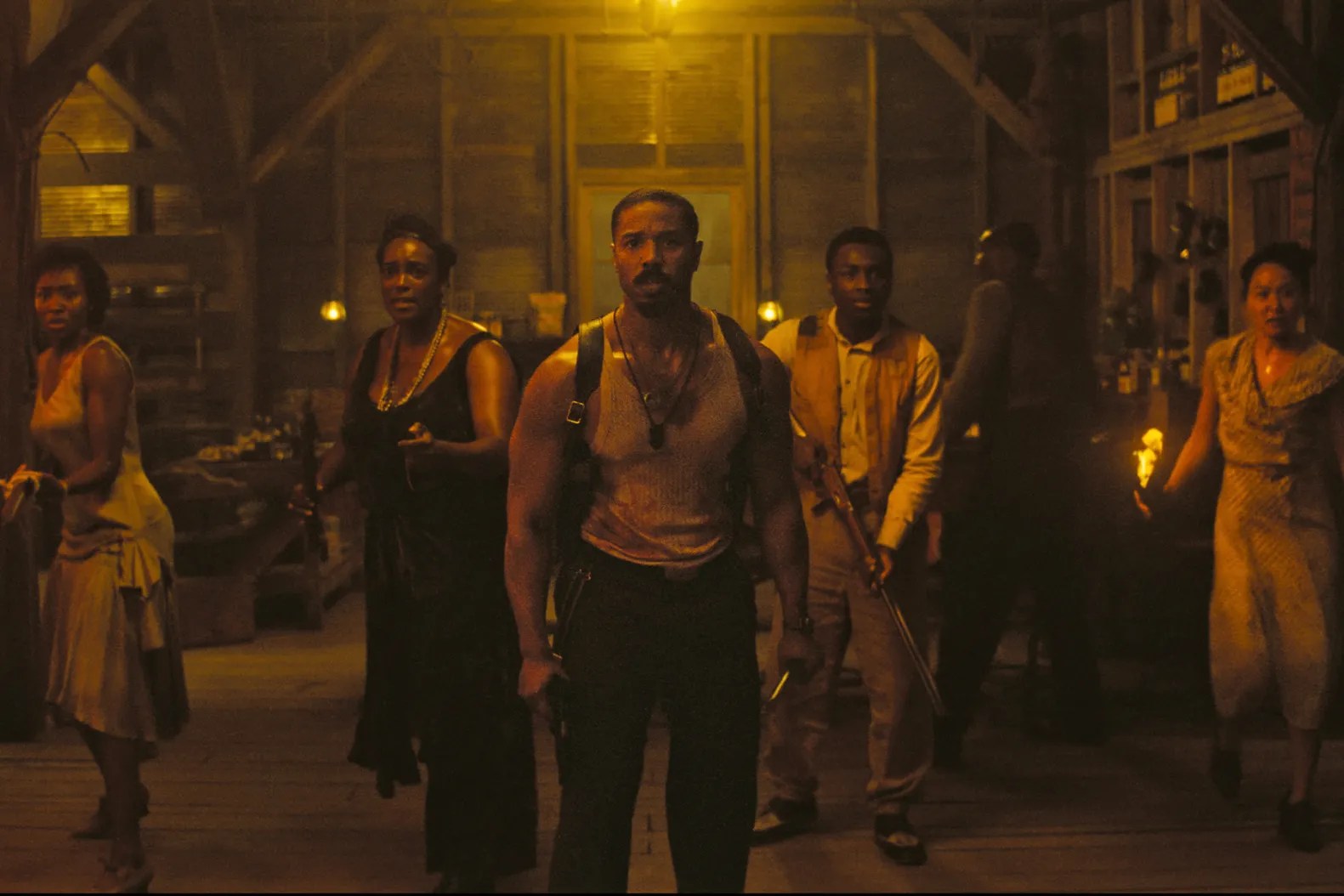
This is the film I’ve been dying for Ryan Coogler to make. I remember being a Creed evangelist, seeking converts wherever I could. And then reminding everyone, months before its release, how unique and special his Black Panther would be, rising above the grey Marvel molasses. I ached for him and his collaborators as they did their best with Black Panther II, a film truly about people doing their best to honor the fallen and persevere while still grieving. But that’s three films in a row operating in franchise mode, and Sinners is the first time Coogler gets show the breadth of his talent with an original story. It’s no surprise that the result is absolutely worth the long-awaited promise.

You can peel back layer after layer of thoughtful decisions in this film. Never have I seen the Deep South rendered this beautifully on the big screen. Autumn Durald Arkapaw’s cinematography brings everything to especially incendiary life, with the cotton candy pink sunsets following the baby blue skies, the shine of love next to the shadows of evil. Ludwig Goranson, one of my favorite composers working today, got nerdy writing most of the film’s music with a rare 1932 Dobro resonator guitar, resulting in a truly eclectic mix. And Coogler knew exactly how to once again bring out the best in Michael B. Jordan with his twin characters, leading to a well-deserved Oscar. Any film that allows Wunmi Mosaku to be an object of desire and gravity is going to get my attention. Even better when it fills out the cast with Delroy Lindo (wrongfully robbed of an Oscar for Da 5 Bloods – yes, I’m still salty about it!) and introduces the rest of us to Jayme Lawson and Miles Canton. Just riches upon riches.

What I come back to is the central metaphor: of people trying to build something they can call their own. And for that exclusivity to be a step too far for others with their own ticket through another door. Unfortunately in today’s America, we often see the ugliness that comes from those who are shut out of something not meant for them. And when that happens: you can only survive with those you built the magic with in the first place.

I don’t think Sinners is a perfect film. When the blood starts letting loose, ironically, the film seems to lose a bit of its thematic pulse. Maybe a rewatch will smooth those moments over. Maybe I’m just expecting too much. What I do know is that this is one of the most thoughtful films printed upon celluloid in 2025 and that it will be rediscovered and celebrated in the years beyond. I’m already salivating for whatever Coogler and his collaborators are cooking up next. But in this time of uncertainty – when Warner Brothers is potentially about to have new owners with highly questionable taste – I’m just glad a film like Sinners made it out.

7. K-Pop Demon Hunters

It’s so rare to be able to live through a genuine pop cultural phenomenon. Often, we’re trying to shepherd our friends and children towards a franchise we’re nostalgic for (Mario, Jurassic Park, Star Wars, etc), hoping they might find a train worth catching onto. But to be there in the very beginning? And to see it only grow? And deservedly so? It’s the rarest. 

The beauty of the iterative process of animation is that the story is often refined for clarity and efficiency. Trying to explain the premise over FaceTime to my mother made me realize how bizarre and unexpected it is. But I got it within the opening minutes, and understood the stunner of a twist the first time we saw Rumi’s markings. It was only when I explained it later to other friends and family that I realized how crazy this story sounds. It shouldn’t make sense! And yet: it flows so well that my daughters watched it on repeat for what felt like months and I never, ever got sick of it. Everything about it feels so fresh each time around: the personalities, the humor both silly and subtle, the hint of darkness, the avoidance of any toxic masculinity. And to top it all off: the songs. My god, the songs. Someone recently told me that “Golden” is this generation’s “Let It Go” and while I entirely understood the point, it felt like it massively undersold the power of the music. “Takedown”, “How It Goes”, “Soda Pop”, and “This Is What It Sounds Like” are all permanently wired in my brain. Not even the best of Disney animated classics could claim 5 absolute earworms in one film. 

What makes these songs stick are what I imagine makes K-Pop so infectiously popular: each song has so much dynamism, with so many sonic layers; each time through, you hear a little something new. And when you think you’ve heard it all, the layers change so often that a relisten never bores. It sounds simple, but it certainly isn’t easy. The hard work by the soundtrack’s team clearly paid off. KPop Demon Hunters as a film embodies that DNA with its own dynamic shifts within the film, and with layers of humor, personality, and well-designed action that make this a tirelessly repeatable watch.

6. The Secret Agent
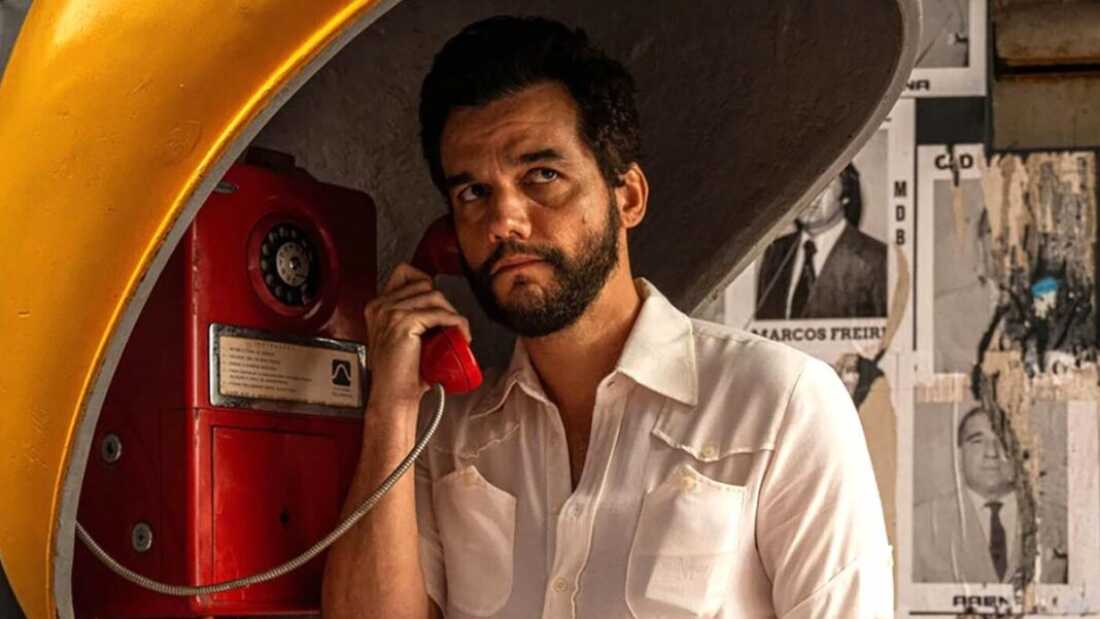
There’s a moment about halfway through the film where I started to think about the title of this film and what it actually means. Up until then, I had been under the impression Armando (Wagner Moura) was some kind of man with very special, unique skills. That he was coming from far away in his delightful yellow Beetle, staying in a very quiet, flavorful little hotel room – all for the purpose of laying low until his mission clicked into place, like some Brazilian James Bond.

But then he meets with two people in a secret room. You half expect someone to hand over a briefcase with more fake ID’s and mission details. There are Fake ID’s involved. But they are not for the mission you imagine. They are to safely leave the country. Here, Armando is informed he has a target on his back. Men are actively looking for him. The only crime he has committed is that he’s got technology he’s developed and that he’s refused to simply give away for free to a corrupt owner. It doesn’t make sense nor does it feel remotely fair. But it doesn’t matter: Armando must make some tough decisions if he wants to save his life and keep his son alive. 

And then the film clicks into place in the future, where you see two college students listening to recordings of these conversations. They are trying to piece together a bit of the generational puzzle for a research project. The question then becomes: who, precisely, is the secret agent? Armando, fleeing for his future? Or the researcher determined to fill in a family’s historical gaps and share information meant to be siloed? It takes a while for the film’s true message to lock into place, but when it does, it’s utterly unforgettable. Two and a half hours completely flies by and then hits you right in the gut. What a stunner. 

5. Splitsville

When you’re making a film outside the studio system, you have to have something that excites you. You need a shooting star you’re comfortable wandering through the night towards, year after year, because there’s no telling when you’ll arrive at your destination – if ever. Director/writer/actor Michael Angelo Covino and co-writer/actor Kyle Marvin both expressed in an interview the two parts that got them the most excited – a brutal, hilarious fight and a swirling, complicated 360 shot later in the film – and their enthusiasm is abundant as theses scenes play out. It’s a sign of the movie you will get: something daring and heartfelt and hilarious all at once.

I didn’t quite know what to expect going into this film. I definitely did not expect to be laughing out loud in a way I haven’t with a movie in years. Like, just even thinking about the purposefully cumbersome, massively entertaining fight that happens early in the film brings a deep smile to my face. A phrase I’ve become more comfortable with this year is the idea that some years question and some years answer. This is a film that feels like it’s a giant question in search of an answer, stumbling upon a subtle realization that the pursuit of that answer might be the worthwhile pursuit to undertake.

This is a delightful film of characters making bad decisions with their own internal logic – making it all the more relatable – and of seeing just how the pins will fall after each bowling ball of drama makes its way through. It says a lot about the movie that even a late appearance of all 6’7″ of Cousin Greg (Nicholas Braun) didn’t jar the film; instead, it felt like a piece of a whole, a tone in which many things can happen but all with an emotional honesty beneath.

At the end of the day this is a movie about two men slowly realizing they’re still the same 12-year-old nervous wreck in a 40-something body and trying to impress the women who are a few steps ahead of them. I adored it and can’t wait to hear the reactions from the next friends I recommend it to.

4. No Other Choice

One thing you learn from teaching 5th graders is that they are brutal about details they have yet to fully understand. They have not yet approached the world of student loans, rising grocery prices, or the enshittification of every once-great piece of technology. So what do I get the most flack for? My four-and-a-half-year old iPhone 13 Mini. They cannot understand how it’s so small. Or how it’s even usable. Or how it’s something that a grown adult would willingly buy. 

But it is with this much-ballyhooed phone that I finally got around to watching Park Chan-wook’s absolute corker of a film, propped up upon a little stand built into the new Alaska Airlines plane seat, and without any sound. Running at 2 hours and 29 minutes, I didn’t know if I could make it all the way through without reaching for my laptop and a larger screen.

I never reached for it. 

I found myself so wholly engrossed in what might be the best-shot film of 2025. Every single camera movement and frame is motivated and tells its own story. You don’t realize how much you don’t see movies quite like this anymore until they are playing two feet from your face on a screen your 5th grade students find comically small. And yet the absence of sound leant me further into what Chan-wook is doing with this tale and with his completely game actors. 

Lee Byung-sun is, to me, like Leo Dicaprio in One Battle After Another: an endlessly elastic center for the film, like the tree a tied-up dog can stretch far from but never escape. So many emotions cross Byung-sun’s face throughout the entire film: desperation, pride, fear, joy, everything. You believe him as a man who cannot get his shit together just as much as you believe him as a man intent on performing the horrible crime of dismembering a person with a hacksaw before choosing a lesser fate of burying them like a tree (yes, this is very specific because, yes, it does happen). He is smooth at times and utterly, hilariously awkward at others. And you buy all of it. 

Perhaps no scene illustrates what makes this film so special like a fight between 3 characters, all reaching for a pistol just outside their grasp. It starts simple, with Byung-sun breaking into a home to shoot a man he desperately needs to disappear, not realizing the wife of the target is approaching from behind. What ensues is a kind of brutal slapstick with elevating tension, just one little set piece of a story about the desperate methods we take when we feel we have no other choice. 

And that ending? Whew, that ending. I will be sitting with that one for a long time. 

Perhaps the best thing about watching this movie so intently on such a small phone is that it’s the first Chan-wook film I’ve ever seen. His name has floated around the film circles like a hawk, gliding above so many conversations, and yet I’d never seen any of his films (Oldboy, The Handmaiden, Decision to Leave). And now? I want to see them all. What a masterful director. What a timely treat of a film.

3. Sorry, Baby

“But, sometimes, bad stuff just happens. That’s why I feel bad for you in a way. That you’re alive, and you don’t know that yet. But I can still listen, and not be scared. So that’s good, or that’s something, at least.” – Agnes

You may think you’ve seen this kind of movie before, a cutesy little indie about a grad school writer figuring out her life. The trailer showed bits and parts of strong emotions and, of all things, a very tiny, very cute cat. I had no idea how something could be so profound and moving until I saw the full thing. But holy shit. What a movie. 

Very, very little makes sense to Agnes in this life. And the way writer/director/actor Eva Victor structures this makes it especially powerful. We first see her a few years after The Bad Thing happens – even though we don’t yet know what the bad thing is – and she makes a promise to her best friend (Naomi Ackie) that she won’t kill herself. We get a great glimpse at the relationships between her and her former roommate, who she is clearly so excited to see. And then we go back in time to where things began, where they started to unravel. And the way Victor lays it out is revelatory.

There’s a scene deep in this movie where Agnes is at jury duty. Anyone who has been a part of any legal process knows that the system, as straightforward as it can seem from the outside, has uncomfortable grey areas. But as the lawyer leads the group through questions, Agnes starts asking questions of her own and can’t seem to decide if she should be dismissed from jury duty because the logic of what happened to her – and not wanting her attacker’s son to have his own family destroyed – is overriding the feeling of being isolated and left to figure it out. There is so much that doesn’t make sense. And Victor plays it beautifully, laying out the knot of emotions with stunning clarity.

This movie ascends the more I think about it. The little bits of wisdom and careful choices made. The way we never see the Bad Thing but only hear it from Agnes’ explanation. The bullshit they have to deal with at the doctor’s office and with the school administrators. The way nobody quite gets or every will get what is going on. And the way even the guy we are allowed to love – Lucas Hedge! All-around good guy actor! – suggests a life that turns Agnes’ warm bath water suddenly cold.

It’s very hard to make a movie about this subject feel so alive and funny, and yet Victor succeeds. The way she talks to Hedges about only having two hot dogs and no room for visitors. The way she lies about sneaking in a stray cat. How just when she hits a moment of clarity – that there is no way the professor actually liked her because he doesn’t respond like that to someone he actually respects – only to find out that he slept with a student he definitely does not like and can’t stand, and that he did it consensually. It’s an incredible way to show a low point, of someone seemingly out of the woods only to spiral from watching her house of mental cards – the one she constructed to help build herself back up from – completely collapse. It’s all in the little details, and Victor organically constructs them all so memorably.

And yet I still think about the final act, when her bestie comes back to visit with a baby in tow and Agnes – surprising herself – agrees to watch him. We don’t ever see her suddenly discover a motherly instinct, a too-cute ending that wouldn’t feel authentic. Instead, we see her become what the baby’s mother has always been this entire film, this entire story for Agnes: someone who will listen to her when bad things happen and simply be there. Bad things will happen, Agnes tells this little boy, but she will be there to listen and to sit with him alongside the way. Just like her best friend did. Just like Pete (John Carrol Lynch) with his offered sandwich. Just like the jury duty lawyer who, mid-conversation, recognized a wrong that had yet to be righted and gracefully got her released. Life is really lived in all the small, hidden places. And what a collection of places this astonishing film makes a home for.

2. Twinless
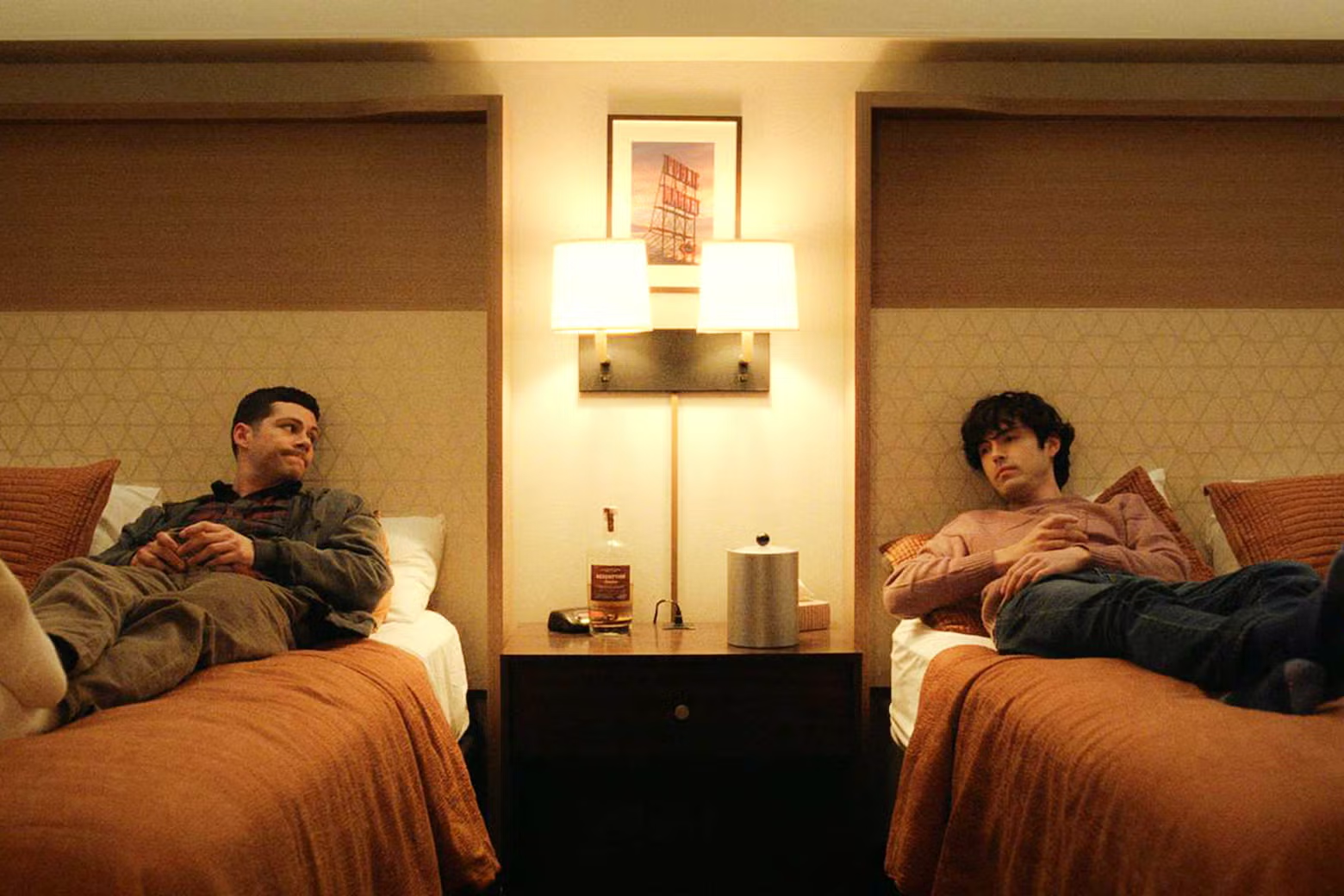
“You know how people say ‘just be yourself’? Like, what version of me? I hate most of them. But the version of me that was just hanging out with you, I… I wanted to be him all the time.”

As confident a movie I saw all year, from first frame to last. What really propels this film into something special is the mesmerizing way Dylan O’Brien plays both twins. We can see the hills of one while we ride through the valleys of the other. It’s delicate, vulnerable work that requires an actor to get it and O’Brien brings as memorable a performance as I’ve seen all year.

The story alone is fascinating, but writer/director James Sweeney isn’t content to let it rest just there. He finds ways to elevate everything with careful shot design and incisive editing. Case in point: there’s a shot near the middle of the movie – the point of no return – when Roman (O’Brien) and Dennis (Sweeney) arrive at a party and go two different directions. The screen splits with them, taking turns with showing dialogue and action. We see Dennis fall flat with a man every bit as adventurous as he is timid. And we see Roman meet the woman that will change his life for the better. You know this isn’t something that is going to end well for Dennis, and yet the split screen makes it clear they are going to meet. We see Dennis’ head poke up above the second floor and as the frames start to blend, where you think it will end and where it begins is not quite the same thing. And yet. It’s blends perfectly. The way that split frame coalesces into a collision of release and heartbreak was enough to make me internally pump a fist and shout “Movies!” That’s what makes Twinless so good. A narrative of escalating conflict that somehow completely earns an ending I didn’t see coming.

The best films I saw this year reminded me of the power of efficiency – of how to tell a story that gets its fangs into you in as few scenes and locations as possible. Regardless of the budget level here, everything is maximized. And actors, fully understanding the assignment, all come ready to play. You can see in real-time a very fine actor like Sweeney slowly leveling up his game to match O’Brien’s big-hearted performance. And this movie is funny. Masterfully structured and plotted. Heartbreaking. And ending on note that makes you believe there is room for healing and community beyond our wrongheaded yet well-intended decisions.

1. Sentimental Value

There’s a moment deep in the film where you see a character you’ve learned to care deeply about move towards a decision you can, unfortunately, see coming. It’s a portrait of someone living within a generational echo without realizing it. You almost want to reach out and interrupt it just as much as you realize this was perhaps inevitable. And then you see her wait behind a door, listening, and you realize this is the project the character initially rejected being a part of. This is the bridge, the apology, the leap of faith. This is everything her own father could muster, even if it looked self-serving on the outside. This is art that can heal.

I can’t say enough about the acting in this film and the process it must have taken to get all these actors to where they are, let alone for Joachim Trier and his cinematographer Kasper Tuxen to survey so much genuine emotion from all involved. Trier used to be a champion skateboarder and has said that he loves nothing more than setting a camera on his shoulder and filming handheld, which he estimates to be at least 60% of how Sentimental Value was shot. You can imagine his director’s eye swerving through the locations, forever curious with his actors while respecting their space and process. Stellen Skarsgård, Renate Reinsve, Inga Ibsdotter Lilleaas, and Elle Fanning all do incredible, brutally honest work throughout. You only get here by trusting the artists and the process.

I still think about the first time we meet Elle Fanning, playing the fictional American actress, Rachel Kemp, and desperate to break out of the confining rom-com box of her young career. She’s at a retrospective at the Deauville Film Festival for an aging director, Gustav Borg (a never-better Stellen Skarsgård), and as the lights come up at the conclusion of one of Borg’s films, she is absolutely soaked in tears. Just truly flattened. It’s only one shot, but it says it all: this is someone gobsmacked by the material she’s longed for, by the kind of stories she’s yearned to tell, and here it is, the opportunity right in front of her. Fanning continues to amaze in the way she makes it clear Rachel is not quite the level of actress Gustav’s new film needs, but she’s curious enough to ask the questions help the project reach the impact it seeks.

Later: Kemp is reading a key monologue, her voice building and breaking in equal turn as she brings it to tear-soaked life. It’s an actress pushing herself out of the shell previously built for her, a shedding of an exoskeleton once too constricting. Fanning completely devastates and Skarsgård expertly shows how deep this story really runs within him. And then later, the same monologue is read by his daughter Nora, whom it was always intended for. Riensve begins it like reading a news article, walls up and prepared for any bumps. But then she slows and lingers and when it finally gets to her, the emotion catching up to her? Cinema. Absolute fucking cinema.

What I still think about all these months later is something I initially felt was a fault: a fade to black between scenes that my brain, for whatever reason, wanted to instead lead to smoother, more fluid cuts. Perhaps I wanted the story to connect in a way it was never attempting to. But in the days after seeing it, I realized those fade-to-blacks are one of the most powerful decisions that Trier makes. Because in starting over after each fade, we don’t know if the next scene is in the past, the present, or the movie within a movie. Sometimes it’s not clear until nearly the end of the scene. It is enveloping us within this generational echo before we realize it. These are people trying desperately to break out of grooves while finding themselves eternally stuck.

What an incredible collection of performances, of writing that allows us to see the way life echoes art and art echoes life, and to tie it all up with patient, thoughtful editing and intimate cinematography. I didn’t really know at the end of this film if it would chart this high on my list. I needed time to digest it. But I haven’t been able to shake it or stop thinking about it since. It is, for me, the film of the year.

Filed Under: FILM Tagged With: Film, Top 20 of 2026

Adam’s Top 10 Films of 2024

July 19, 2025 by Adam Membrey

If you saw my Top 10 list for 2023, you’d notice it was published in July – a full 6 months after the calendar year ended. Here, I’m sliding in a week past that previous record. The reasons remain the same: work, family, and the simple fact there is so much to see and so much of it not quite feasible to see until well into the next year. So here we are.

Many films I’m sure are great but I never got around to: Anora, The Brutalist, Challengers, All We Imagine As Light, The Substance, Nickel Boys, etc. There are many. Hopefully one day I will see them.

But the beauty of writing this nearly 6 months into 2025 is that I know what really stuck with me. First, a some acknowledgment of films that didn’t quite make the cut but still had much to offer.

A FITTING FINISH: Wallace and Gromit: A Vengeance Most Fowl

This film holds my favorite sight gag of the entire year: an alliterative sentence of a penguin doing prison pipe pull-ups. And then it follows my second favorite sight gag: that same effortlessly cool penguin, Feathers McGraw himself, sweating literal beads of sweat. There’s definitely a nostalgia button being hit here, bringing back a villain from the Wrong Trousers film I first saw over 20 years ago, a short housing one of the greatest chases in animation history. But no corners are cut. The puns are as plentiful as ever. Gromit’s face remains relentlessly elastic. And it all builds to a clever, rousing finale. My four-year-old found the gnomes utterly terrifying once they went evil (“Dada I don’t like this movie“), only to continue watching from the kitchen, inching further and further back to her sleeping bag before asking to watch it all over again.

ANXIOUSLY ANIMATED: Inside Out 2

Last June, at the tail-end of an incredible trip to Costa Rica, I convinced my wife that we should see a movie in San Jose in the Cine Magaly. Of all the (not very accessible) options, I figured we would see Inside Out 2, or, as the marquee called it, Intensa Mente 2. The dialogue would be in English and the subtitles in Spanish. Surely I could use my two years of high school Spanish from 20 years ago and match it with a little bit of understandable dialogue – what could possibly go wrong?

Needless to say, I deeply overestimated my Spanish. But even as I pieced the story together visually, it was hard not to feel the sequelitis running through the film’s veins, like it was working overtime to assure me that yes, there is enough story worth telling and no, this is not some kind of studio cash grab. It’s a simliar structure to the first film. It adds several more characters. There’s also two memorable voices missing (Bill Hader and Mindy Kaling) because Disney didn’t want to pay up. So it all feels like it’s tumbling towards something new while being strangely handcuffed by the Mouse Powers That Be. I definitely enjoyed some of the weirder bits (the 8-bit character in Deep Memory) and the impressive puns (The Sarchasm). Anxiety (Maya Hawke) and Envy (Ayo Edebiri) add perfectly-cast voices to the mess the characters create.

But by far the best part of this film – and the thing that transcended whatever language barriers or lack of access I was dealing with throughout – is the very real way it shows a manifestation of an anxiety attack. You can feel Riley working through it, trying desperately to keep it all together. And you can see how all the emotions are furiously trying to keep her from spinning out of control. It’s the high point of the film and worth revisiting.

A WEIRDER DRONE: Beetlejuice Beetlejuice

A tweet that has stuck with me over the past year is Drew McWeeny’s observation that every drone shot is like the cinematic version of a throat clearing. Whenever I see it in films or TV these days, that’s all I can think about. A story going “uh, um…” as it leads to its next thought. So for a film that’s been in Development Hell for literal decades, with screenplay after screenplay being considered and scrapped, it’s no surprise the opening minutes of this film are littered with drone shots. It’s as if Burton himself isn’t sure how he wants to get into the story after being away from the Beetlejuice universe for so long.

But for a movie with such a long development line, this could have been so much safer. There are tantalizing story lines set up that go absolutely nowhere – you can’t just bring Monica Bellucci in and discard her like that! – and not all the jokes hit. The Jeffrey Jones running gag definitely went meaner and longer than necessary.

But the best part is undoubtedly the really weird shit like Willem DaFoe’s undead cop, a true example of an actor Understanding The Assignment and having an absolute blast doing it. The legacy sequel has really held no juice for me. I have to be convinced to care somehow. And if it can’t tell a story that makes sense – the less we say about the ending, the better – it can at least give us a few more shades of bizarre humor.

STING OPERATION: Hit Man – written and directed by Richard Linklater

A darling of the 2023 Venice Film Festival, many of my favorite film critics bemoaned a true crowd pleaser being gobbled up by Netflix’s cash and deprived of a proper theatrical release. When it finally arrived to the streamer, premiering in June of 2024, I wanted to see what the fuss was all about. The reality of this film is that, like many Richard Linklater films I’ve seen over the years, it can fall into an intellectual rut. What looked from the trailers like a blast of pop ended up being more of a singer-songwriter’s attempt at hitting it a little bigger, a little broader. Glen Powell continued his hot streak with this year, trying on some pretty playful personalities as the role-shifting Gary Johnson. And the chemistry between Powell and Adria Arjona could probably power at least a few small towns.

If you’ve heard about the iconic Notes scene in the final act, I can assure you it’s as clever and delightful and sexy as you’ve heard. It’s so sparkling that a) I couldn’t believe it had been done onscreen before and b) I forgot all the minor nitpicks that could possibly have come up (could he really type that quickly beforehand?). In the end, the tone takes another shift and truly commits to the bit, offering a real sting of commentary on how we’re all playing roles until we find just the right partner in crime.

BARK AND BITE ALIKE: Nightbitch

I’ve been a huge fan of Marielle Heller’s last two films, and the minute I heard about the synopsis, it felt like a perfect marriage of director and material. And, in many ways, it is. But it’s also a case where the material got warped to the interests of the director, and yielded a fascinating document.

This New Yorker article should be a companion piece alongside the film. You can definitely feel, with it’s intricate shifts and specific POV, like this is something deeply personal to Heller. Amy Adams gives a performance full of empathy and anger, the perfect actress to lead this story through. This could have just been a film about a woman reclaiming her life and her story. What elevates it even further is the way it allows the husband to come around and realize what he’s missed. Kids complicate everything, and they especially complicate a protagonist’s journey, when the two adults need to figure out what the new normal looks like. This progression away from the premise and towards some greater understanding makes the film shaggier, but it also makes it that much more meaningful. It’s a brave film. A brave actress helping a brave director tell a rather brave story. It’s not for everyone. It may never get its due. But I’m glad Heller got this out of her system in the way only she could.

SLIGHTLY SHORT-CIRCUITED: A Wild Robot 

There is much to admire about this film. The voice cast, led by Lupita Nyong’o’s powerfully gentle work. The animation style in the way it feels messy in a very controlled manner, art bustling with chemical reactions. That it’s being directed by one of my favorite animation directors in Chris Sanders. So much to like! Even the trailer, with it’s remix of “What A Wonderful World” felt like it was designed in a secret lab to make me, and specifically me, cry all the tears. 

But there’s a funky shape to this film that I suspect short-circuited the waterworks. The film makes you think that Brightbill’s moment of flying is the emotional climax. But there’s still an entire second half of a film to go. Which leads to an ending that feels a few scenes too long, blunting the emotional impact. This is the kind of film that makes you feel through 60% of it like it’s going to make you cry, living in your chest and threatening to break everything loose. But that ending, as it becomes increasingly protracted – the key deviation from the excellent Peter Brown book it’s based on – lets out so much of the steam it has built. Perhaps it’s trying to set up a sequel that may or may not be made. But it might also just not be able to fully trust its own story and splits the difference. 

Movies are hard to make. Animation even harder and longer. There is still so much to celebrate about this fine film. I just wish it had a smoother landing in the home stretch.

A SLICE OF THE PIOUS: Conclave

Every Easter, I think about a tweet from a film critic who once said, “If church was like The Last Temptation of Christ, I would have gone a lot more.” So much of what held people back from seeing Scorsese’s classic back in the 80’s still holds true now: the assumption of depiction versus a more human, more relatable reality. I found Willem Dafoe’s Jesus so engrossing not because he was tip-toeing some kind of make-believe line of decency; instead, he had fears, doubts, and desires just like you’d expect from every 30-something male. It made him more relatable and thus all the more powerful a story. 

Unless you’re fortunate enough to visit the Vatican, you don’t really see any of it up close. The only sense of movement the rest of the world sees – beyond the papal visit or speech – is white smoke from a chimney. Only then do we know change is on its way. What Conclave does so artfully and entertainingly is expose just how normal these gossiping gentlemen are. Deciding on the new pope is an enormously stressful experience for a man already doubting his own place in things, and few can communicate so much with their face alone quite like Ralph Fiennes. He is the moral center of the film just as much as he’s the canvas for which we can paint our own projections upon. Any film that has Stanley Tucci, Jon Lithgow, and an assortment of other perfectly-cast actors is going to keep me glued to the screen. The cinematography and production design work in concert to make the most intimate of conversations feel epic, like little verbal dances across a sprawling, immaculately-framed chessboard. All of it leads to a conclusion I found unexpected and moving in equal measure. Perhaps it’s fantasy to hope for a fairer world where the right pope for the moment is chosen. But Conclave reminds us that real change comes from all the things we cannot see.

A HUGH LEAP FOR HEROKIND: Deadpool + Wolverine

I didn’t have high hopes for this one. Six years is a long wait from the last sequel, even if a studio merger, COVID, and strikes complicated the timeline. I was not crazy about some of the people involved this time around. And my Marvel fatigue is an old t-shirt I retired to my closet years ago. It would take a lot to pull me back in, and the early trailers showing a greyish CGI hellscape didn’t do the trick.

There is still so much about this movie that doesn’t do it for me. Many of the jokes fall flat, especially in the juvenile attempts oriented around Deadpool’s nebulous sexuality. The mask allows Reynolds and the crew to ad-lib to their heart’s content, and that level of contentment is a whole layer of atmosphere above where I stand. And that’s okay! It doesn’t have to be for everyone. But, despite all these gimmicky warts, what brought me back in were two things: the connection to the early 2000’s Marvel and the indomitable, indefatigible acting energy of one Hugh Jackman.

Seeing Channing Tatum as a ridiculous version (that accent!) of Remy aka Gambit – an X-Men hero rumored for decades before finally getting a shot onscreen – instantly got me on the rooting side of the film. And having Elektra and Blade, the real OG’s in this Marvel universe that keeps getting rebooted, made it even sweeter. I don’t have any real connection to these characters. But it is fun to see Jennifer Garner and Wesley Snipes have their own kind of fun with revisiting the past. Everyone seems to be getting a kick out of this big-budget cosplay, and I’m not beyond enjoying it.

But Jackman commits so hard to his role, to so convincingly showing you the deep anguish Wolverine lives every second of every day with, that it warps the entire film to its own gravity. Anytime Deadpool’s side of things gets too far out into the quick quip realm, Jackman wrangles it with his voluminous forearms and twists it into something far more tolerable. The van fight is a clever use of tight space and powerful abilities, but it’s the monologue that precedes it, when Wolverine tears Deadpool an asshole and a half, that really pulled me in. Jackman believes this universe, this script, this character more than anyone possibly could. He doesn’t just sell it. He collects royalties by the second, with each micro shift of his brow, each mutton chop sweat drop.

The ending still makes absolutely no sense to me. It seems to undercut the entire emotional journey of the characters, regardless of how they both nearly died to save the world – or universe or branched timeline or whatever it is these days. But I don’t care: it’s just great to see people care about the things we once thought silly, and to be reminded of just how powerful they can be. Humor is a significant force. But commitment to the bit – that’s a superpower.

WHEN MISERY NEEDS COMPANY: Hard Truths

It took a Delta flight a couple months ago to finally catch up with this film, and I’m still digesting it. So much has been made about Marianne Jean-Baptiste’s stunning (and criminally overlooked) performance as Pansy, the most entertainingly miserable person you’ve seen onscreen in a while. Every little thing sets her off. The lines that are too long, the people wanting her parking spot, the strangers who dare look at her the wrong way. Pansy could probably find a way to complain about her own shadow. And Jean-Baptiste so artfully allows you to see how much energy this woman expends on all this discontent just as the cracks show you how much she exhausts her own spirit.

What I love – and what sticks with me, still – is how writer/director Mike Leigh doesn’t judge. There is every reason to give Pansy a moment of comeuppance, where someone finally lights into her and snaps her out of it. Instead, Leigh gives us contrast. There is a bit of whiplash that occurs when you see Pansy practically foaming at the mouth about some nonsense, only to shift to a hair salon where her sister, Chantelle (a luminous Michelle Austin), is the center of a free-flowing, open environment full of laughter and warmth. There is no way these two could be sisters. But as you see everyone around Pansy slowly moving away, Chantelle stays close. Midway through the film, the two sisters visit their mother’s grave. And while cinematic history may have conditioned us to believe a major breakthrough will occur here, Leigh doesn’t let anyone off the hook. “I don’t understand you, but I love you,” says Chantelle.

In the final scenes of the film, Pansy has driven everyone away with her outbursts and her unwillingness to accept the help and light of others. She lays in bed, hoping she can sleep away whatever is rotting within her. Meanwhile, downstairs, her husband, with a badly twisted back, calls for her. Neither one is able to move – one physically and the other emotionally. Even then, Leigh refuses to judge or give us answers. A film of remarkable performance and restraint that will make you rethink how your own energy affects those around you.

I WILL FOLLOW YOU INTO THE DARK: Rebel Ridge

Every year, there’s a highly regarded film that I finally get around to and then, as I’m watching, I inexplicably – and during a key sequence! – fade in and out of Napland. One year, it was Arrival. Another year it was Pig. Both great films that absolutely did not bore me; just had the misfortune of being seen on a Friday night when my body needed a reboot before my brain accepted the terms. A similar situation happened with Rebel Ridge in the (literal) darkest scene of the movie. I have an inkling of what happened. I looked at Wikipedia after to confirm the suspicions. But somehow that body reboot of a nap blunted my emotional engagement.

But by the time Aaron Pierce is rightfully praised for what will surely be an outstanding turn in next year’s Lanterns HBO series, many of us will point to Rebel Ridge as the proof of concept for Pierce’s superstardom. Yes, he is 6’3″. Yes, his piercing eyes make you feel like you’re hiding a secret you’re not even aware you have. And yes, he’s classically trained from England like so many male action film stars these days. But not every actor can put all these things together into something intriguing. Pierre does it with ease.

Despite my brief nap, I have no problem recalling that Rebel Ridge is an exceptionally clever film about how you can defeat a rather overwhelming enemy through nonlethal means. It’s truly masterful the way writer/director Jeremy Saulnier is able to ratchet up the tension as the minutes go by and Pierre’s predicament grows increasingly desperate.

Come for Pierre’s rise, so you can say you saw him back when he was in a film only released to Netflix (even better, watch him in Barry Jenkin’s Underground Railroad on Amazon Prime). Stay for Saulnier’s muscular direction and carefully laid out story of a man trying to fight back against severe injustice the only way he knows how.

And now, the stickiest of 2024:

10. A Real Pain

You could make the argument that this is a film about two great character actors playing something eerily familiar. Eisenberg’s Richie comes across like a lot of neurotic, stressed-out Eisenberg characters. And Culkin’s David isn’t too far from Roman Roy, with his unpredictable cadence and propensity for saying wild things at perhaps a tick or two past the right moment. But, to me, this is all deceptive. It’s going to relax you. You’re going to think you know what you’re seeing. Two very odd ducks coming together to go on a Holocaust tour. They’ll probably bond. Share some big tears together. Find some greater truth in life to unite behind. You’ve seen this kind of movie before. You can practically feel it.

But that’s not what this is. And what really sticks with me in the months since I’ve seen it is how artfully Eisenberg (who wrote and directed) lays out these two men who are so desperate to be more like the other, and yet will never get there. Richie is the responsible one. He plans everything. He reaches out. He is The Good Guy who does the Right Thing. But this also, in many ways, makes him invisible. And Richie knows it. He knows how painfully square he is, but he can’t quite break out of it. And as much as David pains him with his unpredictable behavior, he can’t help but look on in envy when his cousin effortlessly connects with these people he’s never met before. The way he can get them to all drop everything and do silly poses in front of very real, very solemn historical statues.

It reminds me of an essay I read nearly twenty years ago and which has haunted me in the many hundreds of weeks since. Charles Baxter compares the fiction writer and the poet, and while the strokes my feel broad, the characterization rings true. Fiction writers are often deep in their heads. They’re piecing together the story, the dialogue, the little bits of their own life they can lift and put into fictional place, like a puzzle with just the right kind of felt on the bottom. The poet, on the other hand, lives in the moment. They don’t hold onto things. They seek out experiences and connections. They lead with curiosity and introspection, keeping them in The Moment far more than the fiction writer can ever seem to manage. But the poet is jealous of the fiction writer’s ability to rewrite anything, to bend the narrative towards something that feels better, perhaps even truer. The fiction writer wants to be less absorbed in thought, less up their own narrative ass. They want to be each other. At least a little more of each other. A perpetual battle that will never be won or lost.

9. Lisa Frankenstein

I will watch anything Diablo Cody writes. Beneath the playful dialogue and offbeat characters is deep empathy. She loves her little weirdos and she understands that we are all little weirdos in our own way. Zelda Williams brings a lot of flair to her directorial debut, and what I will remember more than anything is how much this film commits to an ending I did not see coming. Sure, the 80’s fashion and music is a lot of fun. Cole Sprouse and Kathryn Newton really sell their bizarre little relationship.

It starts really cute and playful and then accelerates in a way that if I became a Human Wikipedia and read you the plot, sentence by sentence, you would short-circuit. It’s insane. It sounds like a bunch of questionable ideas somehow strung along into a feature. But it’s the audacity of it all – and Cody’s delightful, yet human touch – that gives it all the electricity it needs to bring it to life. I still smile thinking about how everything went from the expected Frankenstein’s monster film into something only Beetlejuice Beetlejuice could dream to be. We need more genre fare with a flair for fun, and highest of kudos to Williams and Cody and their team for making this low-budget delight.

8. The Fall Guy

Two years ago, David Leitch came out with Bullet Train, in which a pretty great concept (a man fighting his way through a train full of escalating challengers) is led by a massive movie star (Brad Pitt) and injected with offbeat humor that doesn’t always stay on track. This past summer, Leitch has The Fall Guy, another film sporting a great concept (a stunt man goes undercover to win back the love of his director), a massive movie star (Ryan Gosling) and injected with offbeat humor that doesn’t always land. All of this to say: Leitch continues to make films that are shaggy as hell. Not all of it works. At times you can feel the bumps of a production with perhaps more money than it needs. But what elevates this year’s Leitch production is Drew Pearce’s smart script and the bubbling chemistry provided by Gosling’s co-star in Emily Blunt. I never quite fully believed in the movie Blunt’s character is supposed to be making – which she herself isn’t a believer of either – but I bought, 150%, the dynamic between Gosling and Blunt. And there are few funnier shots to me this year than Gosling, in a big truck he mistakenly believes to be a closet, quietly crying to Taylor Swift’s “All Too Well”.

What Leitch’s last two films do especially well at this big-budget action hybrid stage is allow character actors to let their quirk flag fly a little freer. Hannah Waddingham gets to play someone several shades darker than Rebecca Walton. Aaron Taylor Johnson gets to flaunt just how little brains can exist behind an 8-pack. Winston Duke gets to ham it up as a stuntman bestie.

It’s an expensive soundtrack packed with 80’s anthems and power ballads. It just feels and sounds like guys having the time of their lives, living it up in Australia through stunt after stunt after stunt. You can feel the fun of it all. And I especially delighted in the way Pearce injects the metanarrative of our two lovers at the heart of the sci-fi film, like an almond-centered chocolate candy. Pure fun that should have made many more millions at the box office.

7. I Saw the TV Glow

For the longest time, I yearned for a mass cultural event. It’s why I watch the Super Bowl alongside social media – it’s one of the few things we have left that so many people partake in at once. But sports, for all its narrative flourishes, can’t always compete with the cultural depths of art. Art has been defragmented in a thousand streams (pun fully intended). We don’t have albums to obsess over. Movies aren’t in theaters like they used to be. Books lack a communal space for discussion that isn’t haunted by Nazis and Reply Guys. And there is just too much goddamn good TV out there. Nostaglia is a dangerous drug, but I think it’s easy to misunderstand what we truly long for. For me, it isn’t so much a time or place; it’s a common shared experience to obsess over. I still remember the Wednesday nights from college friends and I would gather for the latest LOST episode, and the way our minds were collectively blown with the first flash forward. And how, just a few blocks down the next night, there’d be a watch party for The Office. Or how, as a Resident Assistant, I marched 45 freshmen through Riverfront Park on our way to see The Dark Knight in IMAX, freaking out every passerby with my gnarly, melting Joker makeup.

As much as I love writing these little Best Of lists, the desire to do so has sometimes felt more like inventory – etchings into wood to be revisited later – than something to be shared. The chances of readers having watched all these same movies? Basically nil. The chances they will seek any of these out and find a way to fit it amidst their already expansive, ever-expanding media diet? Only slightly higher. What Jane Schoenbrun’s I Saw The TV Glow gets is just how important those shared experiences are and just how much we die a little inside when we have no one to share it with. And especially when no one else gets it quite like you do. Owen (an incredible Justice Smith) is in denial of just how much The Pink Opaque has impacted him, even as a childhood friend comes back trying to draw him back into that communal safe space. We are all dying to share the things we’ve seen because we’re all dying to be seen a little bit better. And to feel like that thing that so profoundly affected us was real. That it happened. And that it cannot, regardless of administration or climate, be erased.

6. Love Lies Bleeding

Any movie that can convince Ed Harris to have that awful of a mullet wig is going to be worth it. Kristin Stewart brings a sweaty loner desperation to Lou that’s instantly captivating, and the chemistry between her and the wayward Jackie (an outstanding Katy O’Brian) is heartbreaking and real. Dave Franco has never been sleazier until his JJ meets a mindblowing (maybe kinda pun intended) end. Every actor really makes you believe in the reality of this.

The ending is what still sticks with me, many months later. Our gals have seemingly fought their way – both physically and metaphorically – through the last remaining ties to their difficult past. The desert surrounding them and the miles of highway before them suggest a life they can happily rewrite. It almost feels too good to be true. And then there’s a stirring in the back of the truck. A body once believed dead has sprung to life. Next: we see Lou digging the body she just had to re-kill while Jackie awakes. It’s that kind of nap where you wake up and realize things are much harder than you dreamed of. That the truth will catch up to you, eventually. And that the fantasy you’ve been living just might be more real than you can handle. It’s a deceptively simple ending.

What I still think about, months after first seeing this, is how writer/director Rose Glass (alongside co-writer Weronika Tofilska) shows her characters under smaller lights, surrounded by growing shadows. The frame is expansive, bathed in darkness. And there’s our characters, only visible from the small range of light they’re standing in. It’s an artful metaphor in so many ways. The way we have to make our own little happiness, and the way we can be fooled into thinking we’re safe when we are surrounded by what will devour us.

You can tell Glass just wanted to tell this weird, little crime story in her own way and, when given the opportunity, passionately makes the most of it. She’s absolutely someone who is now on my radar and I cannot wait to see what she comes up with next.

5. His Three Daughters

There are few genres of film I enjoy more than “let’s get some of our best actors together in a small intimate space and let the fireworks fly“. And when you combine some of my actual favorite actresses in Carrie Coon, Natasha Lyonne, and Elizabeth Olsen? I’m there. I’m so there.

There are many movies about siblings coming together as a parent is dying. But I’ve never seen one quite like this. I love the way the writer/director Azazel Jacobs initially films each of these three very different sisters, all alone in their own frame, even as they’re sitting at the same table together. That separation by frame continues through most of the movie, subtly breaking apart. And then, by the end, we rarely ever see them alone.

In many ways, Coon has the hardest role. She’s bitter. She’s angry. She doesn’t understand why her pothead sister just couldn’t get a simple form signed. She is a heavy presence everywhere she goes, even as though she wants to believe herself to be a feather floating amongst the wind, confused as to why people are not more appreciative of her. Coon finds all the edges in the silhouette and all the light that can squeak within. It’s astonishing work.

We know by Lyonne’s limited response that she’s a dam waiting to burst. And yet Jacobs and Lyonne keep you waiting, letting other people – including her boyfriend (Jovan Adepo) – speak and fight for her. And when she finally breaches the wall? It’s your tears, not the metaphorical water. It hits you in the softest spot. The narrative and audience patience is rewarded.

But Olsen nearly runs away with the whole thing. The way she so carefully lets us see a woman cracking from within, someone who thought they had it all figured out and isn’t sure how to let the world see she most definitely hasn’t. She’s never comfortable, even when she’s doing her yoga breathing exercises in the living room. It’s the kind of work that often goes unnoticed at awards season but that when you stumble upon it later, you’ll look around the room for a witness, any witness, and wonder aloud, “How did she not win all the awards for this?”

I still think about a moment late in the movie when the father (Jay O. Sanders) of the three daughters – who’s presence has only so far been heavy breathing heard down the hall – is brought out into the living room. He suddenly stands up, pulling off all the tubes and tape he’s been entombed in, and delivers one lucid, haunting thought after another. He’s full of love and regret and a desperate need to get out any important thought he has, like a door is about to be closed on him. It’s so jarring and yet so fitting. And Sanders is the perfect vessel of an actor for it. The masterful thing about this sequence is that you know it has to be some kind of dream sequence. There is just no way otherwise. But it’s a catharsis that’s only possible because of the patient story steps taken beforehand, as beautiful a dramatization as I’ve seen of what can happen when three people at odds with each other finally see the light. Sisters who were once shot in isolation are now always within the frame, together, forever.

4. Mad Max: Furiosa

I still think about the opening scenes of this astonishing film, the way the low, distinct rumble of the motorcycles sneaks up and lives within the theater walls as we watch characters chase each other over long, blue sand dunes at night. The way that George Miller lets this prequel reference Fury Road in ways that only deepen it. The way that Chris Hemsworth, Thor himself, absolutely disappears into a role as this muscular yet desperate villain, Dementus.

And Praetorian Jack. What a name. What an actor in Tom Burke. What an impression.

There are so many ways this film could have gone wrong. It could have repeated the structure and all the things we loved about Fury Road. Hell, it could have just been 150 minutes of the Doof Warrior rocking out, a rock opera for the apocalyptic ages, and I would have been satisfied. But where Fury Road is almost entirely a chase film, from opening frame to last, Furiosa builds instead like a biblical epic broken into parts. This isn’t just the story of Furiosa (Anna Tayler-Joy). This is the story of the Land of Women fighting back. Of protecting what’s theirs. Of trying to find a glimmer of hope in a sea of darkness.

I confess I did not see the point of this film until I read Kyle Buchanan’s excellent Blood and Chrome, which revealed how, in the long gestation of Fury Road, Miller and his team had written an entire prequel that is very much the film we came to get this year. Miller and his team have lived this tale, day after day, year after year, and the obsession pays off in astonishing ways. I still get tickled thinking about the various set pieces and how they play out differently in shape and rhythm. The long shot of Dementus’ monster truck chasing Furiosa along the ridges of large, cracked land. The first time we see death by motorcycle. The final confrontation between Furiosa and Dementus, when she realizes that revenge will be something she has to define and live with, because death is not enough.

I don’t know what kind of tax credit wizardry had to be agreed to with Australia to make something this big and weird and beautiful happen, but I’m so glad it exists. It’s a complete vision. The thing that still sticks with me a year after seeing it is the closing moments when we see how Furiosa has decided Dementus’ fate. It’s the cleverest kind of “revenge” I’ve seen onscreen in a long time, a kind of mythically-tinged moment that may or may not be true and yet could make a believer of anyone.

3. Sing Sing 

There is a moment late in this extraordinary film when Divine G (Colman Domingo, deserving of all the awards) is at his parole hearing. The film has carefully laid out for us all the reasons to be hopeful. Divine G is clearly a positive presence in the community at Sing Sing Correctional Facility: setting aside his pride and taking another troubled prisoner under his wing in Divine Eye (Clarence Maclin), talking to the prisoners when play director Brent’s (Paul Raci) words aren’t quite hitting the right way, and offering inmates ideas and ways to do better at their next parole hearing. We want Divine G to win because we see how deserving he is. We know there’s some kind of tape that’s supposed to exonerate him. Everything will, for once, work out. Justice, as we see it, will finally be served.

But then Domingo offers some of the best acting I’ve seen all year when you can see it slowly dawn on Divine G, mid-interview, that he’s not going to get the news he’s worked so hard for. Worse, he’s interviewed in such a callous manner, leading up to when he’s asked, point-blank and soaked in disrespect, if he’s been acting in front of the panel. There are about 5 different layers of things going on in Divine G’s head at this point, and Domingo plays them all like a heartbreaking symphony. From there, the film only gets more artful, laying down each devastating card it had carefully hinted at before. When Divine G finally breaks, it’s just as bruising to see how beautifully the men around him absorb it. They don’t overreact. They don’t fight. They just stand and listen. Because they know that anger and they know how badly they wanted someone just to listen to them once. So they do it all together, as a community, a safety net being offered for a man ready to jump. 

Kwadar and his team clearly did their research, and by using former prisoners (and members of the Rehabilitation for the Arts program depicted in the film), there is an almost effortless economy to the storytelling. When Sean Johnson, on the verge of seas of tears, pleads to Divine Eye to let go of the anger consuming him, you believe it. When Divine G tells his fellow thespians that anger is the easiest emotion and Raci, with the perfect disposition, exasperates, “too easy,” you believe it. The camera understands the most valuable part of the film is their collective stories which, in the limited time of a movie, means we see through their faces. The 16mm film makes all the contours, wrinkles, and bumps of each of these characters pop. We know these are men who have lived and are striving, every day, to get a little more color back into their lives. 

But I keep coming back to the vulnerability. The acting exercises they willingly perform together. The endearingly goofy props they put together with cardboard and dreams, all in service of a truly out-there time travel story involving gladiators, Egyptians, and Hamlet. The way they share their dream places, each of them as varied as their personalities. They are creating space for each other to feel a little more human each day. And within that space, they can allow the art to heal them. Healing doesn’t happen on its own; it must be done within community. And what a community this is to briefly be a part of.

2. A Different Man

Categorization, by definition, dehumanizes. Studios hope to fit their films within neat genres to make them more marketable. But many of the most unforgettable movies are the ones that defy this neatness. They yank at genre boundaries like yarn, running and weaving into its own final form. Aaron Schimberg’s exemplary, deeply reflective A Different Man is such a film. It lurks with Lynchian and Cronenbergian horror, harkening back to old-school, tactile sci-fi, before shifting into a psychological dramedy and settling into a daring satire that wraps it all together. I wouldn’t even know how to truly define it except as a true vision of what it means to push beyond the constraints of the stories we’ve been told to believe.

Sebastian Stan deserves all his flowers for the way he shows Edward’s transformation throughout. His posture can only be described as “haunted” early in the movie. And when the extra skin (quite literally) peels away and he looks like Stan himself? Edward doesn’t quite know what to do with this strange new power. He walks downtown, stunned at how people simply pass him by without comment. He goes into a bar he attended the previous day – in which he, in the throes of transformation, puked his entire guts out in the bathroom toilet – and has a new, ill-fitting swagger to him. He feels stiff. Like an action figure trying to figure out how many points of articulation it has. And then when unruly Mets fans come bumbling in, Edward is suddenly one of them. The way Stan screams within all the excitement says so much about the character; he is a man desperate to fit in but with nothing to build upon. He is an empty vessel in search of direction.

There is so much more to say about this film. Renate Reinsve is incredible as Ingrid, a one-time neighbor of Edward who later writes the play of the story she imagines his life to be. The way she pokes and prods at his life early on, trying to embellish it into something more interesting, only to later twist everything into an overwrought, misguided attempt at onstage empathy? I know that person all too well and yet Reinsive manages to keep Ingrid from being a completely repulsive character, finding new layers to bring to the surface. And when Adam Pearson shows up as Oswald? Everything kicks up to a whole new level of playfulness and meaning. Oswald has the same genetic condition of neurofibromatosis type 1 (NF1) Edward has, but he’s just about everything Edward is not and wishes to be. And Stan plays that desperate jealousy and resentment beautifully. He is a man being shown the distance between where he is and where he yearns to be and is deeply unsure if he can bridge the gap.

Often when there’s a work of art related to disability released into the public, it takes me a while to get to it. There’s a fear that your experience will be portrayed somehow, and badly. And if it’s somehow well-done, then you feel your chances of expressing your own have deflated. A box has been checked; the Hollywood bus will not come back around anytime soon. What I found so comforting about A Different Man is how I felt like it was made by someone who understood. Schimberg has been very transparent about how having a Cleft Palate affected him, over a lifetime of 60 surgeries. And his collaboration with Adam Pearson has clearly helped him find a delightful conduit through which his complex ideas can course through. Nearly every line in this film is tinged with a double-meaning. Philosophical and cultural conversations are dramatized. Schimberg has heard and grappled with them all. And he’s eager to push forward. 

I am probably going to spend the rest of my life thinking about this film, turning it over like a Rubik’s cube, feeling my way through every crease and shift. I am just in complete awe of what Aaron Schimberg and his team of Stan, Pearson, and Reinsve have accomplished. There are more layers than a forever-spinning onion. It’s incredible. The understated nature of it all makes it easy to overlook at first. And then, like me, you’ll never get it out of your head.

1. My Old Ass

It took me until my second daughter started walking to realize how much I had been a parent asleep at the wheel. At times, I felt we had moved through our firstborn daughter’s stages with efficiency because we knew we could probably savor the second one a little bit more. We didn’t entirely know what we were doing the first time around. And then we really didn’t remember what we learned the second time around. And then, by that time, we realized it was too late. She had already started walking. Our days of holding her were now numbered.

The reality with children is that everything is numbered and you are not privy to that data. You don’t know the last time you’ll pick them up. Or that they’ll let you pick them up. Or the last time they will tell you they love you and mean it. Or the last time they will actually want to sit and eat with you, rather than scurry off with their friends. My first daughter used to say, in the cutest way, “Dada, hold you” instead of “Dada, hold me.” The day she finally said it the more grammatically correct way, a small petal inside of me dropped from the rose, much like in 1991’s Beauty and the Beast. So when my second daughter started saying “Dada hold you“, something woke in me like a cold sweat. I had to document better. I had to savor it more. It would all be gone too soon.

The premise of My Old Ass – a high school senior meeting her 39-year-old self on a drug-induced trip – suggests some humor and wisdom. But I did not expect to get so emotionally walloped. Cracks formed in the dam when Madison talked with her mother about the first night she could put herself to sleep. I felt that so hard. I could picture it so well I could almost remember the smells, the soft sound machine lights, and the slight breeze from the nursery’s ceiling fan. It was so long ago and yet just like yesterday. Time isn’t a flat circle; memory makes it feel so.

It’s easy for films with time travel concepts to suffer cognitive entrenchment with their own ideas, to go so deep in the weeds they lose the audience. Writer/director Megan Park understands none of this matters. We just need to know they’re connected and that she trusts her own metaphor. When Younger Elliot (an electric Maisy Stella) and Older Elliot (a heartbreaking Aubrey Plaza) are lying in bed next to each other, it’s one of the tightest time loops ever constructed. “You are so lucky,” Older Elliot stresses. “Life will never be the same as it is now.” She describes getting lost in the excitement of the city, of the regret of missing out on her first Thanksgiving away from home. “The only thing you can’t get back is time. When you get older, it goes by so fast, dude. So fast. It sucks.” And as she’s saying this, we can see in Plaza’s face the way Older Elliot’s done the math many, many times, and still, no matter how hard she tries, cannot find a way to find a more satisfying answer. Time is undefeated. Then she looks over to see Younger Elliot falling asleep. The message might well have been a ghost, a whisper. But that’s how it is. That’s how it often has to be. The brain has to lose the plot so the heart can even get into the conversation.

There’s especially inspired song selection in this film, even if it makes me uncomfortably feel my age. Nelly Furtado’s “Say It Right” while Elliot and her girlfriends slide across water towards their hallucinogenic hubris. Justin Berber’s “One Less Lonely Girl” on a second mushroom trip as Elliot wrestles with why her girl-hunting self suddenly is in love with a guy. Even the French song “Comme Des Enfants”. But my favorite, and the one that hits hardest, is when Chad and Elliot start getting intimate with each other beneath an isolated boathouse in a rainstorm and Feist’s “Let It Die” begins, the sound of ache and longing entwined. What we don’t know is how the lyrics will hurt more later. And that’s precisely the point. If we knew the pain coming, would we still make the effort?

I went in expecting this film to be about a younger self being schooled by a more cynical older self. What I didn’t anticipate, and what sits with me all this time later, is how it works in reverse. Younger Elliott reminds Older Elliott of how to let go of the past, of how to find a way forward as they both walk into their own path of uncertainty. In the final shots, the golden hour light shines around Young Elliott’s head. Her hands reach out and knifes through the water she once haphazardly motored through. She’s going to savor this lake that gave her so many memories. She knows she’s fortunate to be aware it’s the last time, and she’s not going to let herself take it for granted.

Filed Under: FILM

Adam’s Top 10 Films of 2023

July 11, 2024 by Adam Membrey

I don’t usually publish my Top 10 lists until a month (or two, or three) into the new year. A lot of this is just logistics. It’s hard to catch all these great movies that come out in the last quarter of the year. It has to be spread out. Something has to give. And while I often find my favorites earlier in the year (this list will prove just that!) I can’t help but exercise patience in giving some late-year award contenders a chance.

When you combine that with the time-bending nature of being a full-time teacher and parent of two young children, you get a situation like this: a 2023 list over six months into 2024. But in many ways, this is how I like it. I love writing about movies that stick with me. My first attempt at a movie blog was called The Gumball Factory because that’s what the best art did for me: gave me something to chew over, on my own and with others. And if you really want to overextend the metaphor: something that I’d often catch my sole on whenever I thought my brain had discarded it.

So here it is: the stickiest films of 2023. 

A FOND FAREWELL: Guardians of the Galaxy Volume 3

Maybe it’s by accident. Maybe it’s just following a roster of GOTG comic book villains and this is the biggest remaining one. But I think it’s fitting for James Gunn to use the High Evolutionary, a villain so committed to his society-developing goals that he’ll wipe out entire, well-functioning towns just for another chance at something a smidge more successful. Is that not what reboot-laden Hollywood is today? Every good, popular thing must be remade. Not to add meaning or to explore new colors in the narrative – that’s bonus frosting for cinematic foodies. No, everything must be remade to squeeze a little more juice out of the aging lemon. 

Gunn knows this as well as anyone. He’s now leading the DC film and television division at Warner Brothers, which currently has a prospective schedule full of rebooting characters. He’s currently making a rebooted Superman movie with the (and this could change!) title of…Superman. Hollywood is the High Evolutionary and it will always be. So what’s James Gunn gonna do with his final film with his beloved Guardians of the Galaxy, the franchise that helped boost Marvel’s financial and creative floor? He’s going to rage against the machine with all his unique touches.

I think it’s great he’s centered the entire movie’s narrative around Rocket Raccoon, a character that literally has a CGI mouth modeled after one of Gunn’s dogs, Von Spears. And that he begins the film with Raccoon half-singing to an acoustic version of Radiohead’s “Creep”, a reminder that this is a franchise of misfits. And that the ending involves not only saving a bunch of human orphans, but a whole Space Noah’s Ark of badly mistreated animals. I love that Gunn goes just as hard with the soundtrack, moving us into the 90’s with some unexpected choices. The fact that the action finale is scored to Beastie Boys’ “No Sleep Till Brooklyn” is oddly perfect. This rag-tag team has embodied a bit of that snotty, yet earnest Beastie Boys attitude. 

There are so many ways that Gunn could have sleepwalked his way through his last Marvel movie before jumping over to his extra-full-time gig at DC. But you can see him making the most of it. The giant physical set of Knowhere. The extra gross texture to the Orgoscope or the impressive gore when High Evolutionary’s face is removed. The way he takes Gamora’s death in the Avengers films – something that probably knee-capped the trilogy story he likely wanted to tell – and makes it a message of how people may not be who we want them to be, but they’re good enough as they are. Gunn has clearly hit upon a formula that works just as well for him as it does for audiences. The Suicide Squad could be considered the R-Rated DC version of Guardians of the Galaxy. And his next movie will be about one of the biggest, yet most well-meaning misfits in all of culture: Superman.

I will remember how deeply Gunn cares about all the trilogy actors he’s worked with. You can see it in the way he sends every character off on missions that fit not just who they are but who they can be. He wants these people to do well – fictional or not. Volume 3 is a big film that doesn’t quite fire on all cyclinders – the Marvel machine grinds the gears a little too often – but the goofball and heartfelt streaks Gunn and his team paint it with make it a worthwhile ride. Gunn will continue to make big blockbuster films with lovable actors, great music, and an earnest yet offbeat approach. In many ways, he’s just like the characters at the end of Volume 3 – pushing ahead out of his comfort zone and seeing what magic he can find in the process.

A KNOCKOUT JOKE: The Killer

The funniest thing about this movie is also the realest: it’s a feature-length setup for a zeitgeist punchline. Director David Fincher and writer Andrew Kevin Walker are in total lockstep with this, an adaptation of the French graphic novel series by Alexis Nolent and Luc Jacamon. It starts off funny enough, with Michael Fassbender’s narration almost comically meticulous, as if he’ll fall asleep while wanking off to the sound of his own carefully-calibrated voice. But when a mission goes awry, he must fix it. And anyone who’s ever had to be on the phone for hours – days, even – to dispute a bill will understand Fassbender’s pain as it plays out within the contract killer genre. He goes from one place to another, each finish line revealed to be the beginning of another race against time, money, and his own life. When it all ends high up in the Brooklyn apartment of a wealthy man, a big smile crept over my face. “What I’m trying to say here, and I can’t express this strongly enough,” the panicked billionaire says, “I have no issue with you. Zero. As far as I’m concerned, we’re good.” There are a comical amount of layers between him and the problem Fassbender was supposed to take care of so that the pain does not disturb the rich guy’s takeout meals. He is a man insulated from pain. And the insulation is the world the rest of us live in, the one where our bill disputes suck hours of our lives and when a mistake on the job can mean the difference between life and a callous death.

COME FOR THE LAUGHS, STAY FOR THE HEART: No Hard Feelings

If you’ve seen any interview Jennifer Lawrence has done over the years, you know she’s got a sense of humor rarely showcased on the big screen. Anytime someone wins an Oscar – as Lawrence did in 2013 – it’s hard to get off the Oscar-baiting Prestige Film Train. The trailer showed some good gags – the throat punch, the pickup line about weiners – but they successfully obscured a rather touching story about an adrift woman desperate to call something her own.

I still think about a scene midway through, when Maddie (Lawrence) and Percy (an incredible find in Andrew Barth Feldman) go to a fancy dinner at a fancy resturaunt to make up for the prom night neither of them went to. When a nearby upright piano opens up, Maddie dares Percy to show off the playing ability he previously disclosed. It all feels light and fun – an odd couple making the most of an unexpected summer connection – until Percy goes up to the piano and, to Maddie’s complete surprise, plays Hall And Oates’ “Maneater”. As he glides into the intro and the opening verses, the camera slowly eases towards Maddie, who is frozen by the fact the song applies to her way more than Percy even realizes. I still get goosebumps by the acting Lawrence does in this scene. The way she shows so many conflicting ideas and emotions on the verge of completely overwhelming her, all without moving. It’s an incredible scene to anchor the movie with, one that elevates it to something deeper than I ever expected.

THE QUIET PART OUT LOUD: A Thousand and One

I first checked this movie out after Film Crit Hulk’s effusive praise, and I’m so glad I did. Writer-director A.V. Rockwell’s thoroughly impressive debut avoids so many cliches by immersing itself in the specifics and grooving alongside Teyana Taylor’s incredible performance as Inez. But it’s in the film’s final third in which the story elevates. It takes all the cards it has carefully laid down and begins to reveal them, one by heartbreaking one. It’s here we meet the oldest version of Inez’s son, Terry (Josiah Cross). What makes Cross’s performance so unforgettable is the way he communicates so much with a character we know uses few words. Terry is often withdrawn. He needs more time to process things. But when the film’s twist kicks in, when the truth that’s been hid both from Terry and from us, the audience, is revealed, Cross devastates. Most onscreen teens we see are hyperverbal, sharing their many thoughts and conflicted feelings. Perhaps it’s because some writers don’t spend enough time around teenagers. But it also may be because teenagers can be notoriously frustrating people to converse with. They hold so much in – sometimes unconsciously, their brains still making sense of the world – and what they do share can sound completely unaware of the ecosystem around them. But Cross does it all with his eyes, with his body language, with his movement. It’s a masterful performance seeped in a honesty and vulnerability we don’t often get to see. Cross, like Rockwell’s film, avoids cliche with every choice. He meets Taylor inch for inch, giving their final scenes its bittersweet, yet hopeful sting.

A LAYER CAKE TO SAVOR: May December

What’s stuck with me most about May December is how much we gain from the layering of its narrative. We think we know this story because it closely remembers the true story of the teacher Mary Kay Letourneau and the 12-year-old male student she initiated a deeply inappropriate relationship with. But director Todd Haynes makes great use of the angles the script by Samy Burch and Alex Mechanik offer. By having a try-hard actress in Elizabeth (Natalie Portman) come into the town where Gracie (Julianne Moore) and Joe (Charles Melton) reside, intending to shadow Gracie for a role in an upcoming biopic, we see the mythmaking that takes place. Elizabeth’s desperation to tell their story feels just as predatory as the media must have been when Gracie and Joe were first reported on. It’s rekindling a cycle of trauma and shame that begs us to ask: who does this story benefit and why are we so desperate to tell it again? And when will we value the cost of these stories more than eyeballs they bring?

At one point in the film, Haynes uses a gorgeous shot of Moore and Portman sitting before a multi-sided mirror, their reflections physically showing us just how many sides to the story there really can be. The additional mirrors added to the scene (per a suggestion from the cinematographer, Christopher Blauvelt) makes it hard for us to figure out at first which angle is real and where characters in the scene are actually positioned. We never quite know which one is the truest angle. And it doesn’t matter. We will believe what we choose to believe. And we will find ways to distort the story over and over again. 

What also sticks with me, all these months later, is Melton’s slow burn of a performance, and the way we realize he’s missed an entire childhood. He’s there for his first child’s high school graduation and it feels much like graduating college when you realize the goal you all shared no longer exists. Suddenly they – and you – are free, and what comes after is a terrifying unknown. He melts in silent tears. There is no going back. No parent to lean on and guide him through the next phases. The only way forward is stepping into deep uncertainty. 

THE ASHES OF GUILT: Oppenheimer

Oppenheimer (2023) | film freedonia

This cast is stacked like a Russian Doll’s cupboard. Great actor upon great actor upon great actor, all neatly placed within roles that stretch down hallways and across boardrooms. It’s so great to see so many favorites – Josh Hartnett! David Krumholtz! David Dastmalchian! Florence Pugh! But having so many welcome sights doesn’t just put a face to a name – it makes the film skate by just fast enough to make you almost forget how harrowing it will all soon be.

The opening minutes of Nolan’s Oppenheimer show a level of editing the rest of the film doesn’t try to match. Full of suggestion and color, of visions and terrors, it’s as close to a big-budget art film as Nolan may ever attempt. And then it settles into rhythm. And, to be fair, there is a particular delight in that rhythm of watching great actor after great actor step up to the plate and knock their line or two clear out of the park. Everyone wants to work with Nolan. It feels as if the entire film is imbued with goodwill, even as it shows the outline of some of the darkest horrors of history. The scenes flow by and you can’t help but be swept up in it. 

What sticks with me the most is the way Nolan ends his film, bringing Oppenheimer (Cillian Murphy, deserving of all the awards and a sandwich or five) back to the pond with Einstein (an excellent Tom Conti) as he delivers this final line: “When they’ve punished you enough, they’ll serve you salmon and potato salad,” he says, as Nolan shows us flashes of the awards banquets soon to come, “give you a medal, and pat you on the back, telling you all is forgiven.” Then the look on Einstein’s face hardens. “Just remember, it won’t be for you…it will be for them.” 

In just one line, beside a pond, we see how an everlasting history of complicity is built. People support the worst of urges in their own self-interest. They find someone else to blame. And then they circle back around, as their nightmares become too much, and try to reward their way out the guilt tunnel. They don’t want the burden. They don’t want to have to explain themselves to Saint Peter or whichever gatekeeper they believe in. They want to burnish regret and shame into a forged medal to be passed on to someone else. Let the demons find those ashes, they think. Let me admit my wrongs while maintaining my status above it all. 

I think about the line everywhere I go. The many random, all-too-late recognitions for things that were once swept under the rug and out of sight. If you look hard enough, you can see the white-hot light at the center of it all, the passion hidden or stolen. It’s almost enough, just like the bombs borne from Oppenheimer’s work, to take your breath away. 

YORGOS GOES YOLO: Poor Things

Very few filmmakers seem to be having as much fun as Yorgos Lanthimos while he chases dark ideas and quirky dreams. Not all of Poor Things quite comes together – but that’s only because it’s bursting at the seams with fantastical ideas and risks. Lanthimos allows his film to explode with color and contrastive visuals just as the loud, clashing world is being absorbed by a deeply confused yet ferociously curious Bella Baxter (Emma Stone). You can see every actor having the time of their life participating in this phantasmagoric fantasy, this technicolor acid trip of a film.

I do wish Lanthimos and his team gave us more of what they suggest in the final shots: an imagination from Bella Baxter that doesn’t seem so deeply drenched in the male gaze. But the surrounding film, and Stone’s performance at the center of it, shows just how cruel and colorful a world we bring our children into and how, at some point, we all have to let go.

A SHELL WORTHY OF HOME: TMNT: Mutant Mayhem

It does not take much to sell me on a Teenage Mutant Ninja Turtles film. Even after the Platinum Dunes produced versions that came out in 2014 and 2016 with their nightmare fuel CGI designs. Even after all the cartoons made and all the toys botched (they’ll never make them as good as they used to, I keep telling myself). But a script from Seth Rogen and Evan Goldberg? With Jeff Rowe (Mitchells vs the Machines) co-writing and co-directing? With a new, invigorating art style? With a Trent Reznor and Atticus Ross score? What more could a Turtlehead even ask for? 

It says a lot about this film that the hype never felt overblown. From the very get-go, when we’re in the middle of a mission and the Reznor + Ross score rocks out, you know you’re in good hands. The good vibes are sustained throughout. 

What stuck the most with me is how easy it is to forget all these years later that these are Teenage Mutant Ninja Turtles. For whatever reason – perhaps the suits they wore in their original live-action films or the fact they just seemed so kick-ass – I always read them as aimless twenty-somethings. Here, they embody their names in many ways. They talk over each other. They joke. They seek ill-advised thrills. And, more than anything, they just want to fit in. 

I found it an inspired choice this time around that for as gorgeous as the animation choices can be, the humans are by far the ugliest thing in the entire film. They look often look grotesque and judgmental. They look more alien than even a ninja turtle. You spend the whole film with this hilarious group of turtle teens, understanding their desire to fit in but also wanting to remind them that humans are absolutely no cooler. Perhaps that’s where the wisdom kicks in. We always think the older ones are wiser until we are them, and realize we’re still teenagers in our own hardened, shelled bodies, still desperate to fit in somewhere. 

All this and it must be said how fun this movie is. When I strived to find a movie for my 4th graders to watch before a Break, the vast majority feverishly voted for this one. It makes them feel a little cooler. A little bit on the edge. A little more like the teenager they may one day dream themselves to be. 

THE SOUND OF COMPLICITY: The Zone of Interest

Review: The Zone of Interest - Chicago Reader

It’s not often you see a movie scored with the sounds of human suffering, but Jonathan Glazer has always been one to set audiences off-balance. The genius of this film lies in how it plays like a rather standard family story. They’re all living their lives in a beautiful home, a happy life only temporarily upset by the father’s job transfer. They swim. They try on clothes. They argue about how they should not have to move. It’s all fairly standard familial stuff except for that part about the whole thing being scored to the sounds of humans being deprived of dignity and, eventually, their lives.

There’s a baby that cries almost all the way through the movie. You could think the baby is colic. But you will also be unable to ignore the gunshots, the screams, the many, many audible and visual reminders that next door to this family is a Holocaust crematorium. You’ll be unable to ignore the fancy coat the wife tries on, knowing it belongs to someone else. Or that the human remains that interrupt a family swim are not some unnatural phenomenon, but rather an everyday circumstance they’ve stumbled upon. Entire lives and family trees are being removed, one immoral decision at a time, and all you’re seeing in the foreground is a family who’s so used to it that they’ve tuned it out. It’s white noise. It’s everyday life.

Glazer and his team have created a masterful exploration of what it means to be complicit, to allow great suffering to slip into the casual noise of our lives. I still think about the final scenes when the father stumbles down the stairs, as if he’s going to vomit, to finally purge some awful thing that he’s been holding deep within him. Maybe he’s finally grown a moral center after seeing the plans other crematorium managers have. His whole body is keeled over. It’s a position we’ve never seen him in. And yet: nothing comes out. His body is used to it by now. The question becomes: is ours? 

A PLAYFUL PLAYTHING: Barbie

Barbie' Review: Margot Robbie And Ryan Gosling Smash The Patriarchy In  Greta Gerwig's Charming Comedy

There was no reason to believe that a film adaptation of one of the most popular toys of all time would be good. But I trusted in Greta Gerwig and Noah Baumbauch, even if I had no idea the tone they’d aim for. But the first trailer showed just how delightful it could be. And so the excitement built and built and built and it finally came out last summer in a cultural explosion worth being a part of. You can practically hear Gerwig giggling behind the screen in every scene, so thoroughly entertained by all her wonderfully-game actors, delivering lines from a script full of ideas and heart. After the more subtle, intimate delights of her first two movies in Lady Bird and Little Women, it’s so exciting to see Gerwig play in such a massive pink sandbox and for so much of  her voice and energy to carry over through the studio system.

Ryan Gosling’s Ken may have been the performance (rightfully) nominated for an Oscar, but it’s Margot Robbie’s Barbie that holds it all together at the center. She masterfully plays all the shades of Barbie’s feelings – her confidence, her self-doubt, her heartbreak when things fall apart – and gives the film the expansive emotional palate to play with. There are entire unforgettable sequences and lines I’ll always be excited to return to. Let Barbie be a reminder that you can be earnest in your pursuits (just look at how many classic film inspirations Gerwig name-drops in this video) while still embracing the absolute fun of it all. 

A LIZARD KING WORTH FEARING: Godzilla Minus One

Behind the Scenes of 'Godzilla Minus One'

Hollywood has really tried their damndest to make Godzilla a thing. They rebranded him in 2014 with Gareth Edwards’ earnest take and its Michael Dougherty-led 2019 follow up, King of the Monsters. Then they tried again teaming him with King Kong – himself rebranded only 15 years after Peter Jackson’s remake – in 2021’s Godzilla vs Kong and 2024’s Godzilla x Kong: The New Empire. At this point, it feels like a classic Hollywood misunderstanding: mistaking iconography for character. Just because something looks cool doesn’t mean it will be. Don’t get me wrong: the current American Godzilla is pretty cool in its own way, especially when he blows an atomic breath blast to the middle of the Earth because he doesn’t want Kong talking shit about him. But what Japan understands is that Godzilla works best as a metaphor. He does not have the most mobile face. You can only work the eyes so much before they look goofy. You can make him too lean and look like a knockoff Jurassic Park T-Rex. He exists best as scaly, giant canvas to work upon.

What this Godzilla Minus One does so beautifully is show the percussive, crescendoing impact of trauma. Our lead character is already dealing with survivors’ guilt after the film’s incendiary opening scene. Then he feels another layer of guilt as he returns to a devastated hometown. And then – and only then – does Godzilla resurface. Instead of pumping your fists like we do in America, you’re thinking “Oh, fuck that guy.” You know these people don’t deserve any more pain. But a bill must be paid, and the chances of Godzilla paying are about as realistic as him having an online savings account.  By the end, when the line, “Is your war now over?” is uttered, I got goosebumps and tears. It reminded me of the end of the original Jurassic Park, when the final moments aren’t about the badass dinosaurs but rather the end of a terrifying journey where these people feel fortunate to survive. There is no telling what will come next. Surely, chaos will reign. But somewhere in that moment, the formed bond becomes unmistakable and worth protecting. The war may be over, but worthy battles will soon begin.

10. You Hurt My Feelings

Nicole Holofcener is one of our greatest screenwriters alive. Few are so deft at observing and depicting the emotional microtranscations we make in our everyday lives. How we’re all tightly-wound, high-functioning people until someone unlocks us with the right key and we explode out into the wide, unpredictable open. Here, an entire movie centers around Beth (Julia Louis-Dreyfus) overhearing some rather honest writing feedback from her husband, Don (Tobias Menzies). The person she believes no secrets are held between. The person who’s supposed to be her person. And once she hears the true opinion he’s been withholding, it feels like all bets are off. All truths are now some from of well-dressed lies. The center, for now, cannot hold. 

Holofcener builds out her intimate thematic framework with characters who are all avoiding conversations they need to have. It’s the kind of thing that builds over years of routine, when we know the rhythms of our partners and children so well that we can sleepwalk through every hiccup. But it all adds up and, at some point, the bill must be paid.

I love the way Holofcener shows Don half-assing his way through his job as a therapist. After all, if all your conversations are happening behind closed doors, who’s there to really debate how good you are? He’s protected in a way that his wife, a writer, is not. Even when a disappointed couple threatens to sue him for therapy they claim doesn’t work, he’s unbothered. But after he lays out everything in the open with Beth, after they finally talk about the little white lies they’ve told each other, the little things they do to avoid the harder conversations they should probably consider having, he feels a shift. He comes back to the office a new person. He connects with his patients better. Holofcener walks us through the pain of truth, the ways we lie even as we’re hurt by being lied to, and how scrubbing off that scar tissue allows us to move a little better.

9. Dungeons & Dragons: Honor Among Thieves

Dungeons & Dragons: Honor Among Thieves - Movie Review - The Austin  Chronicle

There’s a scene where our rag-tag group of heroes, desperate for answers, stumble upon a graveyard. There, they can ask each awoken deadman up to 5 questions before they return to their eternal slumber. They blunder it initially, asking questions to each other, only for it to be overhead by a deadman and counted against them. But then they start to figure it out, and with each given answer, we see glimpses of a battle that could easily have been slid within the high-budget fantasies of the past. That is, until they meet their on-field demise and their story reaches a literal dead end. If I were to sum up this film, this unexpected wonder of a $150 million dollar adaptation to a well-known fantasy board game, I’d point to this scene. The characters and actors play it straight, which only makes it funnier. And it ends on a perfect button of a deadman still awake, waiting for someone to ask a 5th and final question so he can finally get back underground. It’s ridiculous and hilarious a terrific use of Dungeons & Dragons lore that can delight fans and newbies alike.

Fantasy has rarely ever felt this fun. The creatures are inspired. The scenery gorgeous. And the film truly follows the spirit of a Dungeons and Dragons game in which every bit of problem-solving feels like an inspired bit of improv, of stumbling upon answers you didn’t realize existed. There are so many little nice touches set up that definitely pay off later, including a final choice at the end that – no joke – had me all emotional! You know that writer-directors John Francis Daley and Jonathan Goldenstein are probably a bit shocked they got people to put so much money into this. But you also know it’s gotta be a great script to get so many game, fun actors involved. Hugh Grant, especially, seems to delight in his villainous turn. Chris Pine deftly handles the silly and the serious while being a generous scene partner to actors who totally understand what movie they’re in. I could go on. In a fairer world, this would have been a massive box-office hit and a sequel would be currently filming.

8. American Fiction

American Fiction | TIME

The most persistent thing about this movie – the part I can’t shake, over 6 months later – is the way it shows the point it’s trying to make. It feels like we’re softly pinballing between two parallel lives, the story Monk (a pitch-perfect Jeffrey Wright) believes the world wants of him and the true life he’s not yet ready to write about. And he can’t seem to win in either one. He’s always playing catch-up while being reminded he’s not quite in control. In the literary and film world, he’s at the mercy of an algorithm developed within a system that constantly undermines him. In his own life, he’s stumbling his way through one family decision after another.

I still get goosebumps when I think about a small scene when Monk is driving back from the hospital and his family’s longtime nanny, Lorraine (Myra Lucretia Taylor), asks him a simple question: will he walk her down the aisle? It’s a marriage you’re already rooting for because it’s two people late in life, grabbing on to whatever joy they can tie around their fingers. But it also reminds you how much of the family is missing and how, despite it all, Monk has made enough of an impression that he’s the one she chooses. You can see how much it touches Monk, how much he needs it. In a world desperate to place marginalized people on pedestals that only isolate, it hits especially hard when someone unexpectedly draws us in closer. 

Jefferson has built quite the eclectic, impressive writing career over the years with his work on The Good Place and Watchmen. He always felt, to me, like the chameleon who could do it all. Here, he gets to show a little bite while showing just how much further he could push, if given the opportunity. I hope he gets it. I hope this is the beginning of a burgeoning new career direction and he goes all the way.

7. Past Lives

Past Lives — Film of the Week

Too often these days I find myself failing to respond to people in a timely manner because I want to make space for them. A Marco Polo here, a text there. I leave them unanswered, waiting for the right moment that never quite comes. They are like books I’m holding, stacked high and just over my head, that I just need a place to set them down upon. 

The real beauty of Past Lives, to me, is the way it makes space. It is an interrogation of the self disguised as a movie. You know these people. You may have been then at some point in your life. You’ve used the same technology – the laggy jitters of Skype, the Facebook messages sent leaping into the unknown. The story is simple in its structure to make way for a stunning amount of emotional complexity. And that complexity comes not just from the film itself, but from you, the viewer. 

No film made me think about my own past quite like this one. It made me think long and hard about the parts of my life – both across time and space – that are inaccessible to others. How those from my childhood would not able to fully access my life here in Austin and vice versa. How there’s entire stories that I need to translate for others, over and over and over again, until I understand for myself why they matter so much to me. 

6. Killers of the Flower Moon

Killers of the Flower Moon - Fuller Studio

The last time Martin Scorsese made a 3.5-hour movie (2019’s The Irishman), I found a morning when all would be quiet and marveled at how quickly the time passed. Years of story flowed before me, all culminating in a gut punch of an ending. Just recently, I found another quiet morning to watch a 3.5-hour Scorsese movie – this one only three minutes shorter – and marveled at the how quickly the time passed, again culminating with a gut punch of an ending. This is the power of being in the hands of a true master of cinema. It’s what happens when you have an editor like Thelma Schoonmaker. When you have a writer like Steve Zaillian or Eric Roth. When you have talented actors like Robert DeNiro and Leo DiCaprio. When you have a devastating, centering performance from Lily Gladstone as Molly Burkhart. There are few people doing it like Scorsese and you can feel the man working with utmost focus to ensure he tells this story with equal parts respect and verve.

Not once did I wonder if we needed to see the whole story as presented. Everything has its purpose. The deliberate pace setting the Osage Nation chessboard up, punctuated by the sparks of quick, wrongful violence. The many characters established as dominos leading toward a death spiral they can’t escape. You won’t truly appreciate how devastatingly the entire thing falls apart if you don’t see how formidably it was built, how painstakingly everyone was put into place, and how quickly everyone became a body to be pulled in front of another body, scrambling to keep ahead of the trail of guilt.

I still think about two paired shots that take place just before everything truly descends into tragedy. Scorsese, along with his masterful cinematographer Rodrigo Prieto, sends the camera through a house full of Molly’s relatives and their partners. It’s a wide swoop of a shot. We see how it’s a little too many people – too many competing interests, both present and hidden – and how it does not nor cannot truly feel like home. The air has been poisoned with greed. You can feel it as much as you can see it. But as that camera slows, we see Molly’s grandmother, clearly at the end of her mortal coil, as the shot shifts to a house empty of everything but a single, solitary owl. It looks to Molly’s grandmother and nothing more needs to be said. Death is near. We are shown just how lonely it feels. To at once be surrounded by a true community and then to have it taken away within the next few breaths. The owl will return later on as more Osage die.

The surrealism of the owl, a powerful Osage symbol, shows just how genuine Scorsese and his collaborators are. In just two vibrant shots – one of worrisome plenty and one of terrifying scarcity – we see respect paid to a rich Osage culture and the way white man’s arrival and the destruction of their community has isolated them.

I still think about the final words delivered in the film, at the end of a dramatization of a radio show meant to market the FBI’s work in investigating the Osage crimes. For all we’ve seen – the tragedies, the blood shed, the history erased – we are reminded that those who did the most wrong were eventually released, and that the original owners of the land, the Osage, would be reduced to the sound of a mocking voice actor. And so Scorsese, playing a producer within the radio show, steps up to deliver a piece previously omitted: Mollie’s obituary. As he describes her life and family, the last line is the one that hits the hardest: “There was no mention of the murders.” If you can see how devastating the decimation of the Osage wealth and community in 1920s Oklahoma was, then you can only imagine how many other histories have been wiped out and swept under the rug. This is a film that will haunt you long after its final shot. As it should.

5. Spider-Man: Across the Spiderverse

Box Office: 'Spider-Man: Across The Spider-Verse' Super $16M Thursday

There are few films I’ve sung the gospel of more than 2017’s Into the Spiderverse. Every line hits. Every character lingers. Every action scene is full of emotion and confidence. And to top it all off, it assured many risk-averse studio heads that yes, you can invest in animation that looks a little different and it can be very, very successful. So how do you possibly follow up a film so many people consider a downright modern classic? It certainly helps to have producers Phil Lord and Chris Miller – a team that’s somehow made just about every bad-sounding idea into cinematic gold – back on scriptwriting duties. It also becomes apparent that so many of the people working on this astonishing film were inspired by the original before it. And that they all have the same collective goal: to take it one step further. 

What makes this film so memorable is how it takes it further. There is certainly a god-level amount of technical work at play here, with the way so many characters are crammed into scenes and yet remain distinct. The artistry alone truly feels like a supergroup gone supernova. But what I keep coming back to is the way it pushes our characters. One of the opening scenes alone, in which Gwen must confront her father about her identity, is one of the most gorgeous things I’ve ever seen or experienced in a movie theater. And to go there following a showstopper of an action scene with a DaVinci-drawing inspired Vulture time-tripping into a Guggenheim Museum with a pregnant and motorcycling Spider-Woman and for it all to feel as if it’s one piece? It’s incredible. How lucky are we such a thing exists? 

But I keep coming back to the way the film does a very Lord and Miller thing of using the meta idea of a canon – one that, as our cultural superhero infatuation has shown, is predominately white and straight – and how it affects the way we live our lives. Miles can see the way things should go. The person he maybe should be. But when the math doesn’t seem to math, he takes matters in his own hands, in another mindblower of an action scene where just about every Spiderman ever created is chasing him up a sky-ascending train, culminating in the line that sets everything into place just as it all is blown up: “Nah, I’mma do me.” 

I can’t wait to see what this means for Miles, Gwen, and the many Spiderfriends (especially Hobie aka Spider-Punk, one of the coolest characters ever committed to film) all wrapped up in this ever-expanding tale. I hope they take their time. The way the groundbreaking animation works with Daniel Pemberton’s invigorating score is just such a mood to bathe in. This is a series so committed to making something memorable that I know there’s nothing to worry about. They will do right by the characters and the audience. And we will be all the richer for it. 

4. Are You There God? It’s Me, Margaret.

FYC: "Are You There God? It's Me, Margaret" For Best Adapted Screenplay

As someone completely mesmerized by writer-director Kelly Fremon Craig’s debut film The Edge of Seventeen in 2016, her follow-up sat high atop my must-see list since the first trailer. You can tell James L. Brooks (Broadcast News, Terms of Endearment) is her mentor, the way she shares his warmth and empathy for characters while punching out one great line after another. But adaptations can be tricky, even when they’re esteemed sources like Judy Blume’s 1970 classic. Needless to say: Craig and her team pull it off wonderfully.

I saw this movie 9 months ago and still cannot shake Rachel McAdam’s performance as Margaret’s mother, Barbara. At the start, we learn the family is going to move to New Jersey for Margaret’s father’s new job, and that Barbara will take a break from her busy career hours to stay at home. McAdam’s eyes are lit with tickled possibility as she informs Margaret that now she will be able to spend all the time together they didn’t have before. Every parent knows this fantasy. That opportunity to trade in years of guilt for the levity of sharing something special. But then the real kicker comes in: time frees up just as Margaret becomes as independent and social as ever. She needs her girlfriends to talk about all the Big Girl things coming her way, and with a candor she can’t quite imagine having with her own mother. Barbara does her best to swallow the disappointment, and McAdams presents it in beautiful, heartbreaking fashion, a mother doing her best to find some light in a situation full of shade and isolation. It’s a valiant effort, one so consuming that she keeps forgetting to order the new couch they need. Barbara just missed the window. And now she’s a child, without friends, relearning how to deal with the world again. That’s the tough thing about parenthood – you are reminded of all the time of what you’re missing with your kids and then when you finally get it, it’s too late. 

In many delightful, all-too-human ways, Margaret spends the rest of the film trying just as much to figure out her beliefs on religion as her complex thoughts about these new phases of puberty. She sees the way religion tears her family apart – a thorny estrangement McAdam’s plays powerfully – and the way competing biological timelines threaten to spread giant cracks through every friendship she forms.

In the final scene, Margaret’s period finally arrives. She yells for her mother, who feels emboldened by the fact her daughter – so independent for so much of this wild New Jersey school year – finally needs her. “I don’t know why I’m crying,” Barbara says as they embrace. But we know. It’s so many emotions as a parent coursing through your veins, threatening to burst out at any moment. By this time, my tears are threatening to burst out, too. Barbara runs to get some pads she’s set aside for Margaret – because preparing for the possible future is definitely a parent coping strategy – only for Margaret to say she knows how to use them because she’s been practicing in her room for two months. You can see in McAdams performance – again, this should have won all the awards – how Barbara is doing the math, how she’s trying to sit her hurt at not being involved in this process along with her pride in her daughter’s growing persondom. “Well, then,” she says, pushing a smile as kindly as you she can, “You don’t need me.” She leaves the bathroom and shuts the door and that’s when my heart and chest caved in alongside Barbara’s. It reminds me of a tweet I read long ago where the difference between having kids and not having kids is not that you feel more emotions, but that you feel all of them deeper. McAdams as she shuts that bathroom door and takes it in all is Exhibit A.

Craig knows how to end this movie, this journey of a girl who’s spent so much time trying to figure out who she is alongside so many competing ideas, interests, and values. She’s had to wrestle with the opposing faiths of her grandparents and the competing interests of her fast-growing friends. She’s a duck calm above the pond but furiously pedaling beneath. And yet, here she is at the end, looking to the camera, a year older but untold years wiser, ready for the great unknown.

3. All Of Us Strangers

All of Us Strangers' Leaves You Longing Yet Hopeful, Especially If You Know  That Pain | The Mary Sue

Family can make it feel like your past life is frozen in amber. There are comments you never escape. Ill-fitting jokes that are always repeated. A constant feeling like you can’t escape the person you were back then long enough for them to truly see who you are now. An example: my siblings insist I am terrible with directions. Just the worst. Not a person to ever count on. But every time they say it, it baffles me into a quiet submission. We haven’t lived close enough the last decade for me to give them many directions. But then I remember the trips we took together – the Canadian adventure without a working GPS, the hunting for an apartment around the wonky, turn-heavy South Hill of Spokane. Their memory of my ability to give directions is strongest in places where of course I would be bad at giving directions. I had no idea where we were going, where north, south, east, or west resided. It seems silly, but when it’s brought up – still to this day – it feels like I’m being yanked 15 years back. There’s no escaping it. 

When Adam (Andrew Scott should have got all the awards for this) struggles to write a script about his one childhood, he finds himself mysteriously returning to his childhood home. And even though Adam’s parents died in a car accident when he was 12, they’re there to greet him. They were frozen in amber at the time of their death, and now they’ve been released. Their clothes or hairstyles haven’t changed. They are clearly stuck in the 80s. What at first seems like a great opportunity to make up for lost time is quickly undercut by the tension of Adam realizing he still hasn’t come out to his parents. He’s lived a whole life – full of loneliness, of success and failure – and they have no idea. They are now just as much strangers to him as he felt with them. 

The way that Andrew Haigh frames this story (based on the 1987 novel Strangers by Taichi Yamada) so elegantly shows how much we are constantly rewriting our lives. We’re looking back, imagining conversations we always meant to have and never did, wondering what choices could have changed our lives had they been different. While Adam’s reconnecting with his parents, he’s also starting a genuine, careful relationship with Harry (Paul Mescal). To say any more would be to give too much away. But I still think about the shock I felt at the ending, and the way Haigh suggests that maybe we’re just as much strangers to ourselves as we are to others. Maybe we’ll be spending the rest of our lives rewriting our way to a better ending, to who we want to be seen as.

2. Perfect Days

Perfect Days' review: Profundity in a worker's daily routine - Los Angeles  Times

So much of technology these days flattens the joy. Cinematography looks duller and less-inspired than ever in the streaming era. Music is torn from albums and mixed in ever-expanding playlists that encourage us, whether we realize it or not, to stay in sonorous silos. Kindles, as much as I love the convenience of them, rob of us of that feeling of speeding through a book and realizing you’re about to run out of the minor miracle we’re now absorbing.

Hirayama (a luminous Koji Yakusho) drives to work each day doing a simple job he takes great pride in. He has all his tools. He does his job with the kind of precision you can find great satisfaction in. On his drives, he makes great use of his work van’s tape deck, listening to only cassettes. What feels rather fitting is that Apple – and likely any service streaming this film – does not include the name of the song or who the artist is. The lyrics are not even subtitled. It makes our main character more inaccessible to me. I can appreciate the visual beauty he finds, but I’m missing a key part of what connects with his soul. Finally, I use Shazam, an app Apple bought and embedded, to identify the song for me. But it won’t even try to sell me on the album it comes from. Only the single. It wants the thing to be broken into sellable parts. It wants to dangle a carrot forever. That’s the society Hirayama finds himself trapped in.

What I find so gorgeous about this film is the subtle ways it tells us in its second half that this man, who seems to have it all figured out, is using his routine to find the meaning he’s long been searching for. He didn’t get it at the previous career he escaped from. He didn’t find it in family. And he certainly didn’ find it when his coworker quits one day, sending him spiraling into an unexpected fit over the phone, demanding for a replacement as soon as possible. 

We spend so much time thinking about what the perfect days would be – the resort we’d be drinking a margarita from, the family we’d be talking with, the delicious food we’d be ingesting – without considering how to make our everyday something we find great, accumulative meaning in. Perfect Days made me long for the analog, for the feel of bass and the warmth of tape, for the mistakes and questions, the mysteries and the wanderings. The way our routine can help us build these blocks of time in which we can, if we’re open to it, find a little bit of magic. 

1. Asteroid City

I don’t even know where to start with this miracle of a movie. Pick one strand and out comes more colorful string from another side of it. You can turn this film over like a Rubik’s Cube, shuffling and turning and gazing at every side and you’d find something new. Ask 5 fans what they think this movie is really about and you’ll get 5 really unique answers (and more than likely at least 2 that will describe it as a baffling bore). No 2023 movie has stuck in my mind for so many different reasons quite like this one.

I think about the boy who’s constantly doing stupid shit, jumping off of buildings and daring others to do wild things. We, the audience, are just as sick of his antics as the characters around him. Finally, someone asks what his deal is. His response will stop you mid-breath: “I don’t know,” he says, “maybe it’s because I’m afraid no one else will notice my existence in the universe.” Behavior is communication. And Asteroid City is full of people expressing shades of grief, confusion, and longing.

People make fun of Anderson for his layers of artifice. But it’s not artificial; it’s the realest part of his films. We are always making meaning. We are constantly reframing our lives. We try on different voices – our therapists, our parents, our stronger selves – like narrative devices, shaking the stakes around to see if any truth we may have missed drops out like a cosmic 8 ball.

When a wide-eyed alien interrupts a star-gazing ceremony in the middle of the movie, coming down to take the asteroid rock it spots, it sends the entire group into an existential tailspin. What is this alien and what could it want from us? But the answer is far more sobering when it later returns to drop off it off and leave. It’s turned over to reveal some kind of number. They’re simply doing inventory. It’s so deflating to everyone that one small town’s phenomenon is another alien’s documentation on a spreadsheet.

Similar to May December, Asteroid City gains great power from its narrative layers. It takes a couple viewings to fully understand when an actor is playing a character – but it’s all intentional. Towards the end of the film, Augie Steenbeck (a fantastic Jason Schwartzman) exits the play to go behind the scenes and find the director. Augie expresses he still doesn’t understand the character and wants to know if he’s doing him right. “I still don’t understand the play,” he says. “Doesn’t matter,” the director (Adrian Brody) reminds, while assuring him he’s doing great. “Just keep telling the story.” We’re all Augie in our lives. We’re all finding ourself in moments where we aren’t sure if we’re playing the role right. And we just need to be reminded that we’re doing great, that it all doesn’t really matter in the end, and that we just keep telling the story we’re in. Augie is a photographer and there’s a line he repeats often throughout: “My pictures always come out.” It sounds like he’s bragging at first. Like he’s a man incapable of mistakes. But the repetition reveals something deeper: that every effort we make at understanding life matters. A picture may be a thousand of the most truthful words you can manage in that moment.

Later on, the actors are working with Saltzburg Kietel (Willem DaFoe), an acting teacher very much based on Lee Strasburg, and he leads them in an exercise all based on a simple mantra: you can’t wake up if you don’t fall asleep. It’s a line that you unconsciously, intuitively understand before you truly get. You can apply it to the grieving process. You can apply it to just trying to figure out what you want out of this life. But the idea that you must be lulled into something, that you must sleepwalk, that you must wander and allow yourself to be lost before you can truly understand where to go? What a beautiful reminder. I haven’t shaken it since.

There is so much delight to find in this film. Scarlett Johansson’s incredible, heartbreaking work as a big-time actress all too aware the world doesn’t really understand her. The way Tom Hanks’ grandfather keeps pushing Augie to have the conversations even he’s not ready to have with his granddaughters. Jeffrey Wright’s rapid-fire ceremony monologue that somehow encapsulates the country’s anxious wartime history, culminating with the sticker of an all-too-relevant line (“If you wanted to live a nice, quiet, peaceful life, you picked the wrong time to get born”). The young class that breaks into song with “Dear Alien (Who Art In Heaven)”. The consistently gorgeous pastel-pasted shots throughout. There will always be people who don’t like or don’t get Anderson’s films. But he’s always able to corral a beyond impressive group of actors and he always finds a way to comment on the deepest and hardest of human emotions in such a colorful, almost child-like form. We’re all children trying to figure things out. And it’s not that Anderson hasn’t grown up; it’s that he understands us better than we’ll ever give him credit for.


Filed Under: FILM

Adam’s Top 10 Films of 2022

March 24, 2023 by Adam Membrey

There’s a lot of great movies I didn’t get around to this year. The time constraints of raising a toddler meant my wife and I gravitated towards the shorter episodes of a television series rather than sinking into a movie we weren’t sure we had the energy for. So there’s an awful lot of surely great films I just never got around to, including: Wendell and Wild; The Sea Beast; Crimes of the Future; RRR; Marcel the Shell With Shoes On; Decision to Leave; Raymond & Ray; Weird: The Al Yankovic Story; Bones and All; After Yang; White Noise; Puss in Boots: The Last Wish; Women Talking, the list goes on.

As usual, a few awards to hand out before the Top 10. As is often the case, we got a few bangers and some all-timers that will (hopefully) only grow in stature over the years. Let’s begin: 

A Marvelous Party with (a) Punch: Thor: Love and Thunder 

This is the kind of movie where you get to see Russell Crowe, once the menacing Maximus in Gladiator over twenty years ago, wear a tunic and dance as a beer-bellied Zeus. Where giant screaming goats are inspired by a Taylor Swift meme. Where Thor spends quite a bit of time trying to convince his current battle axe, Stormbreaker, he’s not cheating on it with his old flame, his hammer Mjölnir. It’s an utterly ridiculous film in so many ways. Truly a film where Taika Waititi had as close to a blank check to do whatever crazy shit he wanted. 

But Taika’s films often have a more serious idea gently flowing underneath the silliness, and here it’s no different. Christian Bale’s Gorr the God Butcher sets the tone early on when he realizes the gods are not there to save him; they are only there to use him for their own bidding. When we see Jane with Stage IV cancer, we’re somehow convinced that if she can become a female Thor, she can certainly, through some form of Marvel magic, be cured. But Waititi connects Gorr to Jane in an unexpected way to underscore that not everything can be outrun. The gods will not save us. There are things that will take us away from what we love most and there isn’t anything we can do about it. It’s a pretty sobering message for a silly superhero movie! The rest of the movie doesn’t quite gel – the tonal shifts like heavy waves, the abundance of CGI shows its seams – but I appreciate Waititi’s desire to stick to his creative guns and give us a party with a different kind of punch to drink up. 

The Real Boy McCoy: Pinnochio 

The opening forty minutes of this artful movie made me think of a This American Life story I heard about years ago, where a couple’s show-business bull, Chance, died. In the fog of their grief, they allowed scientists at Texas A&M to clone the bull with Chance’s DNA, creating an offspring aptly named Second Chance. Except Second Chance acted nothing like Chance. In fact, he was unpredictable and, at times, violent. In this version of Pinocchio, Geppetto’s need to build his wooden son comes after losing his real son in a horrifying event. We know he won’t be the same as the real thing. And we know Geppetto will struggle to appreciate the difference as he works his way through the grieving process. 

While the film has a heavy dose of Catholicism spread through its 1930s Italy setting early on, it’s not until Pinocchio dies for the first time and 4 skeleton-bodied bunnies carry his casket through the underworld does it feel like a true Del Toro film. From there, we see a glowing winged spirit with eyes in their feathers, pontificating on the nature of death, loss, and memory. This is where stop-motion – and animation in general – really flexes its muscles. The level of detail in these puppets and their various sets is as incredible as you’d expect. A swap of the Pleasure Island for a fascist military training camp is a great touch. It all comes together to lead towards an ending as mature as it is melancholy; a true reminder that we will all be outlived by someone and to do our best to enjoy our fleeting moments together. 

Best Duo, Non-Nope, Non-Aftersun division: Bullet Train 

If you’re gonna tell a story almost entirely on a bullet train, you need a colorful cast of characters to keep things interesting. Fight scenes alone can’t do the trick. You need people worth caring about fighting for. And while I cackled with delight upon the reveal of the White Death (Michael Shannon, I missed you!) and a particular train passenger (The Lost City–Bullet Train connection bears some spectacular fruit), the duo of Lemon and Tangerine made it all work. Played by Brian Tyree Henry and Aaron Taylor-Johnson, respectively, the hilarity often comes from two guys desperate to be taken seriously despite their ridiculous nature. They bicker over their names. Over the details of the case. Over who’s gonna do what and shhhh to not talk quite so loud. They are like a married couple suddenly realizing a cross-country trip isn’t quite the relaxing thing they imagined. It all feels like quite the lark until one of them meets an unfortunate fate and you realize just how much these fine actors made you care. 

Way To Get Your Act Together: Barbarian 

This was one of the funner ways I’ve seen three-act structure play out. You can imagine it like thesis, antithesis, and synthesis. The opening 30 minutes or so give you a sense of just what the hell you might be in for. And then just as it gets you all terrified, it cuts to Justin Long playing a terrific asshole, singing his heart out while driving his convertible, wind in his air. It’s so jarring it made me laugh out loud. But then the real magic happens when the two storylines combine and you get to witness two completely different responses to the fucked up situation from two completely different people. A real bizarro delight.

Who’s This Weirdo?: The Batman 

If it wasn’t for Batman providing such cool, sleek imagery over the years, I think we’d all finally realize just how weird this superhero is (Lego Batman sure did an excellent job of pointing this out). Yes, he’s traumatized by losing his parents. But he also wants to dress like a bat – without all the fur, of course, because that would make it too weird. And he drives around with gadgets and would probably be a massive supporter of the 90’s grunge movement if it hadn’t already passed him by. 

So believe me when I say how much I enjoyed the first time Batman shows up to a crime scene and the investigators have this completely aghast look on their faces. Who is this guy? For the first time in forever, onscreen Batman looks so small. So meek. Like someone who barely believes in the thing he dressed up for. And then he builds himself up, everyone believing a little more in him just as he believes in himself. I don’t think the world needed another Batman movie – at least not so soon after Batfleck – but if anyone can make it work, it’s Matt Reeves. He really leans into the total weirdo Bruce Wayne is and Robert Pattinson absolutely sells this wrinkle on the character. And just when Batman starts to get a little too high on his supply, Reeves allows him to try a flying gadget and absolutely eat it as he stumbles across the pavement. He doesn’t have everything figured out yet. And that’s pretty fun to watch. 

Worth the Revisit: Elvis 

There are few people who use artifice to their advantage quite like Baz Luhrman. He’s willing to forgo realism to chase a feeling, willing to go big when everyone goes steady. He understands mythmaking intuitively because he himself is always building a myth each movie out. So seeing this on my in-laws motion-smoothing TV did this film no favors. Everything looked cheap. The yarn Lurhman unfurled became less tactile and far more plastic. 

And yet. 

It still worked. It still showed me the insane power Elvis had over his (especially female) audience. The way he would make the establishment crazy. The way he’d play into the image just as much as he tried to find ways to move beyond it. And while Tom Hanks’ Colonel Tom Parker doesn’t quite work in its fat-suit-with-a-questionable-accent form, you can see what Luhrman is trying to do in showing us just how much Elvis Presley himself got played. It’s a film as joyful as it is tragic, as exuberant as it is melancholy. It knows sometimes the brightest legends dim too fast because those at the controls aren’t watching the heat, only the money. 

A Twist Worthy of Tapestry: The Woman King 

Director Gina Prince-Bythewood aced onscreen chemistry with her films Love & Basketball and Beyond The Lights. Here, there’s a different kind of chemistry between Nanisca (Viola Davis) and Nawi (Thuso Mbedu). Nanisca is the weary, hardened leader of the Agojie, an 18th-century all-female group of warriors that later inspired the Dora Milaje of Marvel’s Wakanda. When Nawi is offered to try out for the tribe for being too stubborn against her father’s matchmaking, she struggles early. It’s through Izogie (a sensational Lashana Lynch) and Nanisca’s tough love she finds her way into the group. But in a polarizing twist, Nanisca and Nawi find themselves connected in ways they’re not sure how to absorb. 

The danger of making a historical epic inspired by true events is that something will always give. Hollywood needs simplification somewhere in order to bend the movie to the shape of what’s expected, and what makes a better movie doesn’t always make a better story. Here, villains are sometimes painted way too broad and love interests too contrived. But what absolutely worked for me is the exemplary performances from Davis and Mbedu as they navigate their tricky relationship. They push against each other. Learn from each other. Realize they can’t be without each other. It’s not romantic, but it’s as strong a relationship as Prince-Bythewood has guided to screen. 

Honorable Mention: Black Panther: Wakanda Forever 

This film had to be too many things. It had to honor Chadwick Boseman while the people involved were still grieving. It had to build upon the success of the first movie and expand the sandbox somehow. It had to tie side characters into the larger MCU story that had yet to be revealed. And it had to answer the question of who – if anyone – would be the next Black Panther. On paper, it feels like all the boxes are checked. The artistry on display is just as vibrant as anything Marvel has offered. Ryan Coogler and his team do not miss. But they are clearly burdened by more than just their heavy hearts. 

The film opens with T’Challa’s funeral, a visually stark affair that felt unnecessarily rushed, as if the MCU clock had set everyone’s watch a bit faster. I loved meeting Namor and the Atlanteans, but a film this overstuffed – having to introduce Riri aka Ironheart, even further – just doesn’t quite have enough time to let everything breathe. It’s why Namor’s turn towards villainy feels rushed. Why the final ocean battle is hard to get invested in until it focuses on Namor and the new Black Panther realizing maybe a battle to the death isn’t so necessary. 

There is so much to appreciate about this film – Angela Bassett’s gravitating performance (that should have won an Oscar), the updated details of Namor and his people, the way Ryan Coogler and co-writer Joe Robert Cole create scenes that allow their actors to properly grieve as much as their characters. I can only imagine how hard it was to adjust this story to make it what it is and then to follow through with filming it during a pandemic. It’s a task even vibranium can’t always save. Thankfully, the last scenes show us the promise of a brighter, freer future, a legacy carried on in ways everyone can build around. 

I See You and I Appreciate You: Jurassic World: Dominion  

Look, it is not easy to make a Jurassic Park sequel. I don’t care what anyone on Twitter or at work may tell you. Everyone thinks they can crack the Jurassic Park sequel code. They think they have an answer that Hollywood just needs to hear before they throw up all their spreadsheets, smack their foreheads, and go OMGYES. 

What makes the first Jurassic Park so great is that it’s about many things all at once. Yes, it’s a horror movie of being stuck at a suddenly malfunctioning park full of deadly dinosaurs. Yes, it’s a warning of what happens when you play God and mess with science without wondering if you should in the first place. When I was a kid, I couldn’t get enough of seeing these dinosaurs on the big screen. When I saw it as an adult in theaters – finally with subtitles – just before our daughter was born, I was struck by how this was really Alan’s story, about a man-child unconvinced of the place of children and the responsibilities of anything beyond his work. Just watch the Alan that arrives on the island and the one who leaves. He’s a stressed, anxious man as they enter. He leaves a relaxed, exhausted quasi-parent with kids at his side, smiling at the woman he loves but perhaps isn’t quite ready to commit to. He’s gone on an entire journey with these kids alone, calming them through Bronchiosaurus snot, electrified fences, and escaping cars stuck in ever-breaking trees. 

The second Jurassic Park goes darker and grayer (literally with the cinematography) and seems unsure exactly what human story it’s trying to tell while trying not to repeat itself. The third comes back to the theme of knowing better without a human story for us to dig into. And on and on we go. So you can see what Colin Trevorrow is maybe thinking when he brings back this Jurassic World trilogy. You see it with the brothers dealing with a divorce and the overworked aunt who fails to do her one job as everything goes to shit. You see it in the second film when they come back to the cruel obliviousness of humanity and pair it with cloning people (okay, that’s a stretch). And then you can see with this third film as they have giant mutant locusts (wait, what?), a high-speed dinosaur chase through a black market in Malta (uhhh), and then top it off with a finale in the Dolomite Mountains of Italy, where a company led by a clone of Apple CEO Tim Cook is determined to do something pretty nefarious with all of it (gulp). I almost resented the pure nostalgia trap of having Alan Grant and Ellie Satler back in the same vicinity until I realized I kinda love these characters and maybe after this crazy movie is over, they can try again in a non-giant-locust-infested future. They are both single and with renewed appreciation for each other, after all. 

When Dominion’s trailer first came out and I expressed my misgivings at the potential story and the blatant nostalgia drip of it all, my friend said, “Dude, who cares about the story? I want to watch dinosaurs eat people.” That’s when I realized a successful Jurassic Park means something different to everyone. If all it took was dinosaurs eating people, we wouldn’t need to worry about revitalizing this franchise so often. As I said, the original worked because it had so much going on. These are not easy movies to write. Or to shoot and execute. They are, like all movies, really, really hard work. So while I won’t be cueing this up again anytime soon, I salute the effort Trevorrow and co-writer Emily Carmichael made to go as big and crazy as they could with this finale. 

10. Glass Onion – written and directed by Rian Johnson 

I’ve been a huge fan of Rian Johnson since Brick, following him through the heady, wistful The Brothers Bloom, as he took a giant leap with the underrated Looper, and even as he made the most polarizing (but still the best) modern Star Wars movie in The Last Jedi. Dude has got significant writing chops, a reportedly delightful onset demeanor, and a constant, incisive desire to upend expectations. How could you not root for him? As great as Knives Out is, what makes Glass Onion really hum is the playful confidence with which Johnson disguises his intentions. He brings in quite the cast of new, conflicting characters (with actors rearing to play some new colors) and dresses it up with a Hidden in Plain Sight mystery and accompanying metaphor that still, somehow, managed to fool me. 

I hope viewers understand this ain’t easy. That they appreciate the utter craft on display. And that Johnson and Daniel Craig’s Benoit Blanc get to make as many of these movies as their heart desires. 

9. AmbuLAnce – written by Chris Fedak (based on original Danish film); directed by Michael Bay 

Sometimes the most ringing endorsement of a movie is how much you enjoyed watching it on a plane. I caught this in the wee hours of a morning flight I couldn’t quite sleep through and found myself desperate to finish it on the connecting flight. No one makes movies quite like Michael Bay does – certainly not with as many explosions and swirling cameras. Here, he’s bolstered by a story with clear stakes and clearer geography, a sandbox absolutely worth exploring. Drone cameras are usually used for languid, panoramic shots. Here, Bay uses them like smooth agents of chaos, like missiles seeking a new, accelerating angle for the viewer. 

The more sophomoric humor Bay can’t help but throw in is easy glided over by the tight story of a man trapped and with few options. Yahya Abdul-Mateen II absolutely sells the desperation at the core of his character. You understand why he makes the choices he did. You feel for him as he sinks further into the danger, like quicksand he’s not convinced he could ever escape. Jake Gyllenhaal gets to have a blast being a slick asshole who occasionally remembers its okay to have a heart. 

Half the fun of movies like this with their FUBAR plots is wondering just how it’s going to end. You figure Yahya has to survive somehow. Someone has gotta get a win. But what I didn’t expect is how much Eiza Gonzalez’s Cam would factor into it. Gonzalez is game for the challenge, completely shouldering the narrative chaos as the story wraps up with about as feel-good and sobering an ending you can ask for. This is an ambulance you wouldn’t mind going for a long ride in. 

9. Avatar: The Way of Water – written by James Cameron, Rick Jaffa, & Amanda Silver; directed by James Cameron 

 There isn’t anyone making movies like James Cameron now. Once again, the 3D is transporting. The blend of CGI and real elements is so seamless as to feel whole – you can’t figure out where one begins and the other ends. Even more: you don’t care. The bleeding-edge technology and explosive creativity (58 new ocean creatures!) that went into making this film possible is enough to make you sit down and take a deep breath. I so appreciate Cameron’s insistence on letting us, as an audience, just soak in all the cool shit his team has created. To allow us to explore just as much as the characters do. From a writing perspective, this is as structurally sound a story as it gets. So many things cycle back around in the end, leading to an incredible third act. 

But for all my jokes about how this was some unexpected sequel to Titanic (there is a giant sinking ship at the end, after all), the true ending caught me off-guard. After a frantic (but never rushed), high-octane action finale, the parents are stuck in a waterlogged ship. It’s unfamiliar territory to them. They were too busy being parents, watching over and scolding their kids, to really learn the way of the water. It is their kids who end up saving them. It’s the kids who remind them how to breathe, who literally and figuratively light the way back to safety. And if that wasn’t enough, Cameron allows us to mourn the death of a child in a way I can’t remember seeing another blockbuster do. It’s surprisingly tender and vulnerable, as if Cameron himself is finally letting us see his own lessons in raising teenagers. Sure, he can help design a submarine and go to the deepest known part of the ocean. But teenagers? Whew. That’s an entire thing to build a massive movie around. 

I’ve learned over time to never doubt James Cameron. I almost did this time – wondering if focusing a story on teenage avatars would be a step too far. But he, once again, proved us wrong. He may still be sinking ships. But he’s learned what keeps us all afloat. 

8. Top Gun: Maverick – written by Ehren Kruger, Eric Warren Singer, and Christopher McQuarrie; directed by Joseph Kosinski 

When I first heard Christopher McQuarrie was gonna be lending his hand to this movie, presumably to help them punch up the story a bit, I didn’t know what to expect. Was it a well-intentioned misfire in need of serious patching? Did they have a good thing they simply wanted to make better? Maverick doesn’t give you any chance to wonder. It’s as confident a movie from start to finish as I’ve seen all year. There’s no wonder it lit the box office on fire all summer. 

Knowing it’s been 30 years since the last movie, Maverick does an incredibly economical job in reminding us why this character matters and why this story will matter to us. We relearn everything we need to know about Maverick, the way he’s an excellent pilot who can’t help but push the limits, all of it punctuated by a stunned Cruise walking into a diner, and the story begins. 

What I didn’t expect is just how much emotional grip they would pull off with the relationship between Maverick and Goose’ son, Rooster (Miles Teller). Some of the best narrative tension you can have in a movie comes from an important conversation that’s yet to be had – and may never be able to take place. The way the movie recontextualizes Rooster’s anger towards Maverick as not about his father’s death but about the papers supposedly pulled and a career delayed is an incredible inspired choice that pays off big time. You feel it in your chest the whole way through. The way there is so much Maverick wishes he could say but can’t. The way he has to guide someone who may always hold anger against him and may never know the truth. There are so many things going on – both narratively and thematically – throughout the movie and yet it all operates with electric efficiency. The crowd I saw it with absolutely cheered in multiple places. A film that soars to heights no one ever expected. 

7. The Lost City – written by Oren Uziel, Dana Fox, and Aaron & Adam Nee; directed by Aaron & Adam Nee

What makes this movie work so well is Channing Tatum’s sincerity. The first time we see his character, Alan, we know it’s all a facade. He’s supposed to be a dumb cover model for all Loretta Sage’s (Sandra Bullock) romance novels. She certainly sees him that way. And she doesn’t see why she should care at all about anything he has to offer. He’s just the pretty face. 

But what makes this such a delight is the way the movie inverts the expectations. Loretta does not need Alan. She’s not ready to put herself out there again, at least not with a little push. Alan, on the other hand, is absolutely convinced he’s one of the few people to understand just how wonderful and brilliant she is and that it is his job to make sure she understands that. There is not one cynical muscle in Tatum’s chiseled body. He absolutely sells it and it elevates the movie scene by scene. We’ve seen him do comedy with ease in the Jump Street movies (and an especially fantastic Bullet Train cameo). But here: he’s like the dancer he is, fully aware of how to use his body for maximum effect – dramatic, comedic, or romantic. When he puts the moves on Loretta and convinces her to dance one calm night before the storm, you start to believe in them just as Loretta does. It’s quite the swoon. 

This is a movie about someone seeing you when you’re not quite able to see yourself. Someone who sees your sparkle and knows how to make it shine once again. And sometimes that person is Channing Tatum. And that’s pretty neat. 

6. The Fabelmans – written by Tony Kushner and Steven Spielberg; directed by Spielberg

The Fabelmans' Review: Steven Spielberg Phones Home - The New York Times

As much as I adored all of EEAAO’s many well-deserved Oscar wins, the lack of love for The Fabelmans shocked me. Spielberg is Hollywood royalty. But I suspect many voters assumed they knew what movie they were getting and glossed over the actual pain and honesty imbued within it. Spielberg isn’t interested in a nostalgia trip to simpler times. He’s excavating the past, trying to present the truth it took him an entire lifetime to digest. 

There’s a scene late in the film when Sam Fabelman’s parents reveal to the children they’re about to be divorced. Sam literally sits behind the whole scene, halfway up the staircase. He’s at a remove. Then he looks up at the mirror and there’s another version of him, moving around the family scene with a camera. In the most devastating moment of his sisters’ lives, he can’t help but film it. He can’t help but see what he can make of it for his art. Any writer or filmmaker watching will feel devastatingly seen in this moment. We’ve all done it. We’ve all slightly removed ourselves in the most painful moments of our lives, wondering just how we’ll write about it, just how we’ll paint the characters involved. And when you know just how much Spielberg has put his own personal family history in each of his films, it hits especially hard. He’s not here for a victory lap. He’s here to look in the mirror like never before. 

Spielberg has always been a director to give kids more credit than they often get in the movies. Here, the kids aren’t freaked out by the fake blood they see in Sam’s films. They catch on to things before the parents do. They’re not dumb. They are as observant and honest as anyone, unwilling to hide behind lies they cannot quite keep track of. 

But as personal as this film is, his collaboration with Tony Kushner – their fourth – is quite funny and full of joy in the way you only can see when you’re looking back through the lens of being a parent yourself. Spielberg understands how hard his parents – especially his father – tried to make it all work. There’s an appreciation for what he had married to a desire to understand what made him who he is. Like Aftersun, we see an artist trying to truly understand their parents and amending their image in the process. 

5. Turning Red – written Domee Shi & Julia Cho; directed by Domee Shi 

“Some people are like, ‘Be careful. Honoring your parents sounds great, but if you take it too far, well, you might forget to honor yourself.” It starts to feel like it’s gonna hit you over the head with it as we gaze at a great photo of Meilin and her parents. Then the camera zooms in and Meilin breaks the fourth wall with: “Luckily, I don’t have that problem.” It’s only a minute and a half in, and we already got this 13-year-old assuring us she’s been doing her own thing her whole life. But then we see her actual life, and we see the truth. We see someone we know all too well: a person trying their best to live in a realm where denial doesn’t exist. 

This film absolutely emanates thematic confidence from the very first frame. It knows what it’s trying to say and what it’s trying to be. Creating an animated film is such an exhaustingly iterative process, running through choices over and over and over again until you stumble on the ones that feel best, all before committing to the expensive, time-consuming final renderings. So when sheer joy emanates from the screen like this, you know the team has galvanized around something they truly believe in. It’s beautiful. 

Between the absolutely perfect metaphor of the red panda, the fictional-but-all-too-real boy band, the delightful characters in Meilin’s friend group, and all the inspired choices pushing this film towards the end, I sat in awe at its ability to never lose sight of its message. Meilin stumbling into her mother in a dream forest is one of the most emotionally and thematically rich things I’ve seen all year. All of it funnels into a highly memorable final act Pixar will struggle to soon top. 

4. Everything Everywhere All At Once – written and directed by The Daniels

When I first saw this movie back in July, I had great love for it but figured it would be too weird to ever great any proper kind of awards consideration. Well. Five major Oscars will certainly challenge that thinking. 

What I found most endearing about this film’s release is just how many of the elders praised what The Daniels pulled off and instinctively understood this was the kind of movie that would change the language of film for the next generation. It’s not for everyone. But it’s certainly a style that jibes well with the internet and the way it’s collectively warped all our brains. The Daniels’ last stunner of a film, Swiss Army Man, mined great pathos from a farting corpse and his delusional pal. Here, they go even deeper, challenging the idea of nothing meaning anything and finding great meaning behind doing laundry and taxes with those you love. 

At times, this film’s maximalist style felt like it overwhelmed the story and lost me for a bit. But then it came back, laser-focused, in that scene in the rain when Evelyn does her best, knowing it may be her last chance, to connect with her daughter and show she cares. Don’t be fooled by the flying butt plugs and hot dog fingers. This is a movie with a heart so big it barely fits inside the cinema. And to see it embraced as much as it has been is one of the year’s great surprises. 

3. The Banshees of Inisherin – written and directed by Martin McDonagh

This is how you can watch The Banshees of Inisherin at home this Christmas  | Goss.ie

For much of my life, in a way I could not entirely explain, Ireland felt like a place that called to me. Perhaps it’s the red in my beard. Maybe even the way I enjoy some judicious use of swearing. It’s certainly not because of the beer, a beverage whose enjoyment I base on my levels of tolerance. When I came out of my first long-term relationship, the world feeling wide and full of possibility, the cards began to fall in just the right manner. My cousin was living in Manchester and eager for my visit. The summer program I often worked was cancelled for budgetary reasons. My summer, suddenly wide open, suggested it be highlighted somewhere – anywhere – with an Irish-green hue. 

There are two times in my life when I’ve felt myself in the presence of something elemental, something full of deep history that dwarfs any man’s existential crisis. I first felt it when stepping barefoot into the coarse, otherworldly sand of the Big Sur shores. Huge rocks with edges and surfaces etched from millennia of weathering and seawater were strewn about, like paperweights meant to stretch the tarp of the Pacific Ocean. I couldn’t help but lay upon one of them like Ariel, the protagonist of my favorite childhood movie, hoping for the perfect shot of waves crashing behind me. It felt like a place where past, present, and the unknown future collided and ebbed and flowed in your mind, much like the water itself. A wave of peace washed over me. I would spent the next few years searching for anything approaching that. 

When I took my solo trek to Ireland, I found myself restless again about the future. What did I really want to do? Whom did I really want to be? I tried to calm my mind in Galway with some stress eating, getting a personal Pizza Hut pizza and an ice cream cone – a true tourist meal. I adored how Galway sat on the edge of the Irish coast, like a whisper hugging the rocks. The next day, I took a trip to the Aran Islands, where the Banshees of Inisherin would be filmed. So I recognized all of the scenery – the impossibly green grass, the stone fences strewn about the island and keeping the cattle in their place. It felt like a place hidden from the world – perhaps because you had to take a boat to get there, one where the waves would rise above your head on either side of you as the engine muscled its way through. 

The way McDonagh and cinematographer Ben Davis frame the island and the characters within it is a true thing of beauty. Every shot feels motivated and thought through. They have made a simple story on a small island feel as epic as anything in theaters today. I went to see Wakanda Forever the following week, and for all the globetrotting, sea-diving adventures it takes, it can’t match the intimately epic and epically intimate feeling of Banshee. 

As the story unspools, I felt myself gripped with Colm (Brendan McGleeson). I just turned 36, and there seems to be something about how you feel invulnerable and gonna be around for awhile all the way up to 35. But 36? Shit gets real, real quick. It started with Jonathan Tjarks dying at 34, an awful, tragic loss and realizing he would never even get to be 35. Then it was followed by relatively young family members dealing with pretty scary health issues. Suddenly, 36 sounded like something to be thankful for. A huge note to write out, saying, “Thank you universe. I ask for nothing further.” But we still have to live. And there are still lives around us needing us to live. And there’s still creative ideas pinging around in our heads, desperate for a conduit to find its way into the world and make someone, somewhere, feel just a little less alone. When Colm finally gets around to explaining why he’s suddenly unfriended his closest friend, Padraic (Colin Ferrell), he describes the sudden pang of realizing there isn’t much time left to make a mark in the world and that, as a result, he must rid himself of dull endeavors as he pursues creative immortality. 

There is no way for us to know if Colm really is even that good of a musician or writer. Because I think McDonaugh isn’t trying to excuse the personal costs of being some kind of creative genius, but rather to own up to how it impacts others. He wants to push everything aside, but he finds himself lonelier. And he’s truly wounded his best friend in irreversible ways. 

As the tension between the personal war of these two friends increases, Colm admits to another character a most devastating thought: “ I do worry sometimes I might just be entertaining myself while staving off the inevitable.” It made me think about all the time I spend writing out my little story ideas in all kinds of files and places, unsure if I can even keep track of all of it and, in my demoralizing moments, unsure whether any of it is worth keeping track of. 

What makes this film stick can be summed up in the last line, when Padraic says: “Some things there’s no moving on from. And I think that’s a good thing.” Our culture is franchise and reboot heavy, willing to undo any death or consequence to keep people feeling fine and happy and unbothered by the future. But there’s a cost to that. It becomes easy to be that perpetual early-30-something until you hit the wrong side of 30 and you’re unprepared for what’s next. Some things there’s no moving on from. And that’s a good thing. 

2. Nope – written and directed by Jordan Peele 

It may be no mistake that the summer film that felt the most like a movie to me has a structure nearly identical to Jaws aka the original summer blockbuster. This is only Jordan Peele’s third movie and I believe this to be his masterpiece. Get Out is a tight story told with tight execution. Us is far more sprawling and ambitious in its ideas, but doesn’t quite pull it all together. Here, Peele seems to have striked just the right balance. There is so much that can be gleaned from this film, any number of ways it can be read, and yet Peele has you glued to every beat, every moment, every line. 

The brother-sister relationship between Daniel Kaluuya and Keke Palmer feels like a true sibling relationship, in the way they irritate and amp each other up. The tech guy (Brandon Perea) is a complete blast, a Dave Franco from a weirder parallel universe. And the cloud monster: what a fucking creation. What a brilliant way to give us something alien and unsure while underlining every one of your themes with terror and awe. Also: a surefire way to get me invested in your movie is to have a chimpanzee. Leave it to Peele to make it a haunting, unforgettable simian experience.

I’m still flabbergasted that the Academy gave this film no love. Especially in a year in which EEAAO won all the awards. In time, it will get its flowers. Until then: don’t stare into the eye of the monster for too long. 

1. Aftersun – written and directed by Charlotte Wells 

This film shows us three different ways we can be haunted. There’s the digital video from a camcorder, the way we can revisit the past in all its grainy glory, looking for clues to explain the entire life that came after. There’s a strobe light on a dance floor, full of bodies dancing to the same beat, allowing us flashes just long enough to wonder but not long enough to truly understand. And then there’s the way we try and live in the present as a parent of our own child, wondering how much or how little we’ll be like the parents that brought us into the world and just how much or how little we want that to be true. 

As the movie ended, I found myself quiet and deep in thought. So much to consider. So many details given, specific but not so specific as to inhibit our own memories from bleeding through. Emotions to recognize even if we’ve never been on holiday at a resort in Turkey. What I keep coming back to is the film’s use of two popular songs – R.E.M.’s “Losing My Religion” and Queen and David Bowie’s “Under Pressure” – and how I’ll never hear them the same way again. 

When “Losing My Religion” first burst out onto the scene in 1991, the first single off R.E.M’s Out of Time, I was five years old and far too young to understand the song or the resulting controversy from the music video. As a teenager, desperate to be as rebellious as my Catholic guilt would allow, I glommed onto it, convinced it was some daring rebuke of organized religion, an absolute earworm for the agnostic soul. It was only later I learned the term ‘losing my religion’ is also a Southern expression for losing your shit. Stipe himself once said it was about romantic expression. Sometimes romantic expression makes you lose your shit as well. 

But in Wells’ superlative debut, a new, devastating context is offered. In another one of those carefully suggested details, we learn Sophie (an electric Frankie Corio) and her father (a devastating Paul Mescal) have a tradition of doing karaoke together on these holidays. She’s put their name on the list. It’s a rare thrill at a resort devoid of any true escape. But as soon as they’re called up, her father resists. He’s just not in the mood and there is no room to bend. So she slumps down the stairs and onstage, alone to sing this song. All the sudden, the lyrics can be heard anew. 

That’s me in the corner
That’s me in the spotlight
Losing my religion
Trying to keep up with you
And I don’t know if I can do it
Oh no I’ve said too much
I haven’t said enough

I thought that I heard you laughing
I thought that I heard you sing
I think I thought I saw you try

You’ve probably heard these lyrics before. Perhaps a thousand times on the radio. But here, you can’t tell who is singing to who. This could be Sophie singing to her father, who’s become increasingly distant and hard to get through to.  It could be her father, watching his 11-year-old daughter grow past what he can understand and protect her from. It can be so many things. And it caught me all in the chest just as her isolation on stage increases and her voice wears down. 

As a parent, it’s hard knowing when you could do better for your kids, when you could give them a little bit more fun, but to feel too exhausted to follow through. You’re doing the best you can but it doesn’t always feel enough. Colum had Sophie had such a young age, when most of us don’t even have a clue what we want to do or what we want to be, and you can see him trying desperately to figure out his own life so his daughter won’t worry about him too much. She knows better than she gets credit for. And he knows it.

But the beauty of Aftersun is in how we get glimpses of adult Sophie – sometimes only flickers of her silhouette through an artfully-placed dance hall strobe light – trying so hard to understand her own father. She may never get there. Much may be left to mystery. Maybe she will hear “Losing My Religion” on the radio and wonder, again, if it says more about her father or herself. It’s a dance that never ends. We can only keep showing up and seeing where the light may fall.

All of this cascades into my favorite movie ending since 2004’s Before Sunset. Once again drawing from a familiar pop song, Wells juxtaposes a young Sophie reluctantly dancing with her father on their last night on vacation with the dance hall strobe lights as older Sophie searches for her father. Bubbling beneath it is “Under Pressure”. What makes it work so well is how the most immediately familiar part of the song – the heavy drum beat and first notes – are stripped bare, leaving Mercury and Bowie’s vocals and a cello. Whether Wells intended it to be or not, it’s a great auditory metaphor for the way we must rehear the past to better understand the present. And knowing what we know about Sophie’s father, the lyrics, like with REM’s “Losing My Religion”, hit especially hard:

Pressure pushin’ down on me
Pressin’ down on you, no man ask for
Under pressure that brings a building down
Splits a family in two, puts people on street
s

Watching Calum dance that night at the resort is the freest we’ve seen him since dancing alone on a balcony at the beginning of the film. It may be his last free moments before he sends his daughter back with his ex-wife and has to deal with his own demons. And the way Wells ends the film, it may be the last time Sophie ever truly sees him. We’re always searching to understand our parents, especially as we may become parents ourselves. We’re dancing with the past, present, and future, all at once.

Early in the film, Sophie tells her father how show thinks about the sky. That no matter how far away someone is, we’re all sharing the same sky. Sometimes blue, sometimes grey and moody, but the same atmosphere on the same planet at the same time. At some point, the sun will set on our parents and closest friends, and we’ll play over and over those days of shared light, making sense of its shadows and glares. And maybe we’ll have a pretty great pop song playing underneath all this reflection. I’m just so grateful to share a sky where this movie exists and to be able to bask in the Aftersun again.

Filed Under: FILM

Adam’s Top 10 TV of 2022

March 23, 2023 by Adam Membrey

A key thing my wife and I learned this past year is that the exhausting endeavor of the toddler bedtime routine left us with just enough time, energy, and brain space for a simple episode of television. Thankfully, the Age of Streaming provided a lot of options. There may be some spoilers. Here are some of my favorites:

10. Peacemaker (Season 1 – HBO Max) 

James Gunn has made an entire career out of skirting expectations. While I enjoyed John Cena’s turn as Peacemaker in Gunn’s darkly playful The Suicide Squad, I didn’t fully understand how they were going to wring an entire TV show out of him. 

What best signifies the fun of this show is the unmissable theme song. Gunn knew TV show themes were often skipped, especially when the streaming apps themselves offer the option to do so. So he picked a rad song and had a dance choreographed and performed by the entire cast. Skip this, you can practically hear him hollering. What makes the whole dance sing at first is seeing these actors of varying athletic ability pull off moves both sultry and awkward. But here’s the thing: you don’t know who all these people are yet. And you won’t know many of them until further into the show. Each consecutive time you watch the theme song, a particular actor and their character becomes more recognizable – sometimes hilariously so. And then as the show really roars along and the bodies pile up, the dance takes on different flavors of delight and melancholy. Gunn wants you to feel things while also having a bit of fun. And to do it with a completely game cast ready to perform each and every move. 

I don’t know that Cena’s ever going to get quite the platform as he does here. We see him cry in his tighty-whitey underwear. We see him mourn the loss of an eagle. We see him bouncing on rooftops as he suffers a great fall. We also get to see him chew up Gunn’s dialogue with delight. Cena’s role here is the kind of thing a post-Guardians of the Galaxy Dave Batista long craves (someone get on that, please): an opportunity to show every shade of emotion and physicality, mixed and shot up with a heavy dose of fun and pathos. Any concerns you have of someone like Cena carrying a story will be quieted here. A complete blast from start to finish. 

9. The Afterparty (Season 1 – Apple+)

It’s a pretty simple equation of what makes this show so much fun. You take a bunch of the most likable comedic actors alive (Sam Richardson, Zoe Chao, Dave Franco, etc) and match them with the concept of each episode being a “mind movie” as they try to explain to a determined Detective Danner (Tiffany Haddish) why they, in fact, should not be considered a murder suspect. Each episode allows these actors to play their characters in different shades – in the style of a 90s show, an action movie, or a musical, for example – and to wring consistent laughs out of the tension and emotional turmoil of it all. 

What really makes this show sing, however, is how everyone is not quite where they want to be. They’ve come back to high school for their 15 year reunion – itself an awkward time between the better-known 10 and 20 year reunions – determined to make amends for the life they’ve lived up to that point. It adds an extra layer of delicious, hilarious tension to an already tense murder scene. 

8. The White Lotus (Season 2 – HBO Max) 

The White Lotus' Season 2 Finale Scores Series High Audience – Deadline

Season 1 of this show certainly had its charms. A gorgeous Hawaiian setting. Hilarious, dialed-in actors bringing characters with sharp, pokey edges. The occasional daring thought (before backing off or dropping it altogether). 

Season 2 not only transported the setting to Italy, but found more to work with. There’s the generational philandering of the Di Grasso men; the lively, humorous hotel (mis)adventures of Mia and Lucia; the superawkward, ever-moving quadrangle of Ethan & Harper and Cameron & Daphne; Tanya’s increasingly bizarre misadventures with her overwhelmed assistant, Portia. The various stories going on here just seem to be working on a much more interesting level than the first season, playing off their conflicts in concert with each other. 

What I keep coming back to, however, is Kate Aselton’s 2010 film, The Freebie. In it, a young couple decides to give each other a night off – they can pursue their crushes, they can do whatever – and come home with no questions asked. The greatest trick Aselton pulls is that we never see the end result of either Annie’s (Aselton) or Darren’s (Dax Sheperd) night. We don’t know what either of them went through with. So when they argue about it towards the end, fully convinced the other is being dishonest with them, we have nothing to stand on. We can only choose to believe them at face value, just like their romantic partner. Very quickly, you can see how even the sturdiest of relationships can collapse from the weight of the unknown. 

There is something similar happening towards the end of this show when Ethan is consumed with what he believes Harper did behind closed doors with his buddy Cameron. We have no idea what actually happened. So when Ethan and Daphne, both bewildered by the actions of their spouses, decide to walk to a remote part of the coast together (after an incredible bit of acting from Meghann Fahy), we have no idea what they actually did. We just know both couples seem to be content with where they end up in the final episode. Maybe they’ll last forever. Maybe they’ll collapse under the weight of the unknown. 

There is so much more going on in this show, but it all centers around this idea that we never truly know what’s happening behind closed doors. And when we do, we must choose whether to believe it or not. It positions The White Lotus – be it in Italy or Hawaii – as a purgatory of sorts, where characters must decide whether to appeal to the better or worse of their angels; there is no going back to the way things were. 

7. Our Flag Means Death (Season 1 – HBO Max) 

Filming on water is expensive. You gotta get the crew out there on multiple boats. You gotta coordinate. Light is precious and fleeting. Clouds may muck up the whole thing. You gotta hope no water animals are too eager for unexpected screen time. It’s a lot to deal with. So I completely get why Our Flag Means Death, even being an HBO show, would keep their pirate show on dry land. 

I recognize the way they manipulate the light and sky in the show to try and hide the stageboundness of it all. At first, I found myself a little disappointed. I wanted the bluest of skies. I wanted to see the ocean surrounding them. But then I realized that was never the point. This isn’t a show about adventure as much as it’s about being forced to deal with who you really are. With the choices you’ve made. With the lives you’re running away from. 

Even when they manage to get off the boat, the settings are just as claustrophobic. An island inhabited by people eager to send them back the direction from whence they came. A bar full of conflict and crossed paths. No matter where you escape to, the past will gain on your trail. 

Every actor here seems to be utterly delighted to be on board, even as they do their best to show a soured soul. Rhys Darby, in particular, represents a lovely, goofy heart to build around. But what makes this show really sing is how creator David Jenkins and his team don’t show away from truth. These are delightful obtuse men at times, but they are also savage and cast a long shadow. 

Taika Waititi hasn’t had a chance to act this deeply since his debut film, The Boy, where he played an alcoholic father unwilling to accept the the cost of his past lives. This is also some of the best acting I’ve ever seen from Darby – finally given a chance to really dig deeper into a character not yet ready to admit his own reality. I can’t wait to see what Season 2 has in store. 

6. Succession (Season 3 – HBO Max) 

Every season of this show seems to be a bit of a magic trick. There’s a lot of walking and talking, of phone calls aboard private jets and helicopters, of board room meetings in high-rise skyscrapers and expensive, hidden vacation spots. It’s a world many of us wonder about but have no access to. And we should wonder: these are the people who make decisions about our media culture and how the rest of us should feel about the world at any moment. The show’s co-creator, Jesse Armstrong, has made it clear their key influence are the Murdoch’s. Americans may not be familiar with them beyond Rupert Murdoch owning Fox News, but their story goes much, much deeper. They began in Australia, scooping up the media there. Then they came to America and England. They are everywhere. They have incredible influence on what is and isn’t covered. They are also a family prone to infighting, especially as the head patriarch continues to age. 

As all of these things happen every season, I’m always amazed at how little narrative ground actually seems to be occurring while we get incredible scene after incredible scene with incredible actors, often punctuated with a bitter line or exchange. By the sixth or seventh episode, you start to wonder if the show is just repeating itself, stuck in motion. But then it shifts gears. And then you realize the gears were being built all along, as if they hid Checkov’s guns in every room in the house, and they were just waiting for the right moment to fire. And when it does, it is a bang to remember.

Season 2 ended with Kendall pulling quite the ballsy move – one we weren’t convinced he had in him – to draw his cannon on his own father. So I expected Season 3 to start off with the fire hose on full roar, only to realize this show is far smarter than me. 

We hear inklings early on of an FBI raid, of the government being aware of just what Waystar Royco is up to, and yet it doesn’t feel for a while like anything is gonna happen. Considering our current political situation where we have a number of things going on – a Jan 6th commission still in play, classified documents being found everywhere they shouldn’t be – with few visible consequences, this tracks far more than I realized at the time. The IRS is not for the wealthy; it’s for us nonmillionaires, after all. 

But I will tell you that I genuinely gasped when the Hidden in Plain Sight storyline finally came to fruition. I still get goosebumps thinking about it. So masterfully hidden. Yet the clues are all there. This is one of the best written shows on the planet and yet it takes a careful, watchful eye to fully appreciate it at times. I’m just glad we were paying attention. 

5. The Dropout (Hulu) 

Pun fully intended, I didn’t think any more blood could be drawn from this story. I had read John Carryou’s barnburner of a book. I had seen Alex Gibney’s documentary. And then here came a show, nearly two years after Theranos was such a hot topic, the resulting trial almost blurring into the background, looking like it would be too little, too late. 

I could not be more wrong. 

There are two facts you need know. That another Elizabeth Holmes movie, sheperded by Adam McKay and titled Bad Blood, was about to film with Jennifer Lawrence as the lead. Then Jennifer saw Amanda Seyfried’s electrifying, heartbreaking performance and thought: “Yeah, we don’t need to redo that. She did it.” The other thing you need to know is the showrunner is Elizabeth Meriweather, the New Girl creator. The alchemy of a terrifying, sobering true story about hubris and deception gone wrong on a scale of billions of dollars combined with Meriwether’s sitcom and character humor is a delight. She wrings laughs and pathos out of comedians and actors alike, infusing this oft-told story with new, revitalizing blood. The bad guys are still 100% the bad guys. But what I appreciate more about this version of the story is the way it restores the dignity of everyone around Holmes and her boyfriend. These were incredibly bright people around her doing their very best to make the impossible happen and yet being reminded each and every day they were utter failures. That they weren’t bleeding enough. They fought their hardest in a culture of cruelty – one we recognize all too well these days – and, in the end, the good guys won out. 

I’m quite astounded at the way Meriwether and her talented team of writers and directors were able to add nuance to Holmes without letting her off the hook. Seyfried deserves all the awards for the way she sinks into this role, the way she shifts her voice and her mouth to wear a costume we know doesn’t feel as comfortable. She plays Holmes as someone determined to be someone at any cost, finding herself too deep in the woods to ever begin to recognize the writing was on the bark of every tree. 

I keep coming back to every supporting actor and the way they acted as our audience surrogate, completely aghast at the game being played and struggling with their powerlessness to do anything about it. The show also shows to great effect how much the people around Holmes fed this death spiral of a mission. They found themselves so enamored with this young, blonde woman of ambition and, being older, white men, could not bear to admit they may have been wrong in their judgment. It’s a pretty hot thing in our media stories these days to villainize the tech billionaires, but The Dropout shows us there’s far more to it: there’s an entire onion of evil enabling that must take place for such an already-collapsing core to rise to such heights. 

The show’s title refers to Holmes herself being a Stanford dropout as she went out to start Theranos. But then I think about the title another way, the way the circles protecting Holmes hardened so much it was possible for her to drop out from the middle, like a little battery you just gotta pop out and replace. We see this in the series final scenes, when Holmes returns to a completely empty Theranos office, a true ghost town, with her dog alongside her. The company’s lawyer (a low-key spectacular Mikaela Watkins) is aghast at Holmes not understanding the significance of what she’s done. It’s only later, after Holmes has left the building, just a suddenly-normal woman in yoga pants taking her dog for a walk, that she lets out a primal, shattering scream. Yes, she got away. But she also lost it all. And the worst – the trial, the money owed – is yet to come. 

4. Andor (Season 1 – Disney+)

Star Wars to me is like basketball. I used to shoot hoops after school, one ill-advised 3-point after another. I played on a few teams in school before giving up after my freshman year of high school. I still enjoy dribbling and taking shots, feeling my way through the clunking misses on the way to the more seamless swishes. I enjoy basketball in doses. But what I really enjoy, I found, is the storytelling behind basketball. Specifically, the NBA. I loved learning about The Mailman (and Scottie Pippen’s immortal line to make him miss at the free-throw line: “The Mailman doesn’t deliver on Sundays). I loved following LeBron’s career from that first HS Sports Illustrated cover to his first championship in Miami, to his breaking Kareem Abdul-Jabbar’s all-time points record on a Tuesday night in LA. My buddy Trey and I are always reminding each other that the best time of the NBA season is the off-season and the trade deadlines, when players get moved and career narratives radically change. It’s a blast. 

Star Wars was the same way. I got into it when two of my best friends – or at least dudes I wanted to be best friends with – were playing with Star Wars figures. That led me to the VHS movies – at the time the longest movies I’d ever seen. That led me to buying an occasional Star Wars toy here or there, but never with enough interest to amass a collection. By the time I got to high school and college, I became far more interested in the story behind Star Wars, and even found myself deep into blog posts that made creator George Lucas out to be the worst thing to ever happen to Star Wars itself. I was convinced. I told the same stories myself. But here’s the catch: I never watched the prequels everyone made fun of. I saw one in a theater and remember only how the crosscutting made it seem like one character was holding its breath underwater an unreasonable amount of time (Obi-Wan, you should have drowned!). 

When they brought back the sequels in recent years, it became much more fun to talk about everything outside of the films themselves. The casting. The directors and their aims. The directors fired off of Star Wars movies because of their aims. It was a lot of hot Hollywood gossip sticking itself to actual story-making on a grand scale. I found myself the most invested in Star Wars when one of my favorite filmmakers jumped up to the big leagues and made the best one of the films in many years. 

So, of course, I did not care for most of the Star Wars shows that were coming out. The Volume sounded cool but immediately put me off – I could see the seams and the limitations too easily. I didn’t find the story interesting enough to pull me through the constant train of Easter eggs planted everywhere. It wasn’t for me. 

But then the story behind the story became more interesting with Andor. Here was a guy in Tony Gilroy who, like me, had zero reverence for the franchise. He just wanted to tell a good story. And here he came, hot off of kinda-sorta fixing Rogue One, to tell another story. 

Much has been made about how surversive it is for a giant corporation to allow an anti-giant-corporation series to be made. But they’re missing the point. Disney wants such a show to be made. It allows them to still be who they are while creating content they can monetize. It’s not as subversive as it seems. 

However. 

I am so glad this show exists. I still think about Luther’s line of “I made my mind a sunless space” at least once a week. I think about the way Gilroy and Team built those first three relatively quiet episodes as a subtle building block to kickstart the story. I think about the palace intrigue and the complete lack of anything screaming franchise or toys. This is a show that wants to tell a story about what it feels like to be under the foot of a growing empire and to feel powerless to push back and yet unable to quiet the growing, gnawing need to fight. In other words: a perfect show for our time.

3. Barry (Season 3 – HBO Max) 

It says a lot about what a magic trick this show is when the first moments I remember make me laugh with glee: the bomb thwarted by a phone’s wifi connection; Barry voice-texting an increasingly violent message while wandering through a department store; the meeting with TV execs as they describe to Sally what they’re looking for in a TV show while also having no idea how their algorithm works; the shoot-out that happens over a Zoom meeting atop a building. I could go on. This is a show that never fails to find some darkly comic beat to lighten the more brutal storylines. And this season had some pretty brutal moments. 

What I will remember most is how much Hader (and his team) upped their game even further than I knew possible. Just watch the way he has his team shoot, edit, and manipulate the sound design when Sally loses her shit in the finale’s sound booth scene. Watch how he somehow elevates the tension of a motorcycle chase scene that spills onto a crowded LA freeway without losing its humor. And then see how this all plays out before laying down his final winking Winkler card. This is a season that had Barry go as dark and terrifying as he’s ever been, where death not only seemed certain but perhaps the only way to release him of increasing guilt. They wrote themselves into a helluva corner by the end of the season and I cannot wait to see how they write themselves out. I have no doubt it will deliver. And I have no doubt I will miss this show as soon as it’s gone. 

2. Severance (Season 1 – Apple+)

I am still, many months removed from seeing the season finale, in awe this show is not based on a book. It’s so deeply thought-through, so meticulous in its detail and design. The statues in the cavernous halls. The quotes that sound so much like someone who once lived, so rattling with truth and hubris, and yet are completely fabricated. This is a show with a long, difficult birth, one necessary to appear so fully-formed from the beginning. 

The idea of a procedure that blocks life memories while you’re at work and work memories while you’re living life is such a haunting, perfect representation of the work-life balance we all talk about wanting to acheive. I still think about the scene in the pilot, when we find out Mark’s (Adam Scott) wife passed away before his procedure and his sister tells him, “I just feel like forgetting about her for eight hours a day isn’t the same thing as healing.” You know she’s right. And yet Scott absolutely sells how necessary this job at Lumon is for him, how there’s no escape to be found anywhere else. 

I found myself delighted at every new detail of this show. The old-school approach to technology. The set design. The narrative gymnastics it pulls with seamless aplomb. The way it ends at just the perfect moment and just the perfect line. What a goddamn show. I just want to hug them all and tell them to take their time with this new season as I eagerly await its arrival. 

1. Station Eleven (HBO Max) 

Perhaps it was inevitable considering Patrick Somerville’s involvement. A writer on perhaps my favorite show of the last decade (The Leftovers), and a co-creator of some of my favorite recent shows (Made for Love and Maniac), his taste seems to align very closely with mine. But still. This knocked me flat in ways I didn’t expect. 

Having not yet read the source material, Emily St. John Mandel’s eponymous novel, I went in knowing only it had a pandemic and the majestic acting powers of one Mackenzie Davis. But a common thread in Somerville’s shows, perhaps something he learned from his time on The Leftovers, is the way it plays with form, time, and memory. Even the ghosts walk among us like real people; it’s often only a well-timed cut and suddenly-empty space to alert us to the line between life and death. 

There is so much about this show to love – the depth of the characters, the way the parallel timelines bring out heartbreaking colors in each other – but I feel like the penultimate episode sums up what makes a series like this so special. Titled “Dr. Chaudary”, it follows Jeevan (an exemplary Himesh Patel) as his ill-fated attempt to track down a young Kirsten in the woods leads him to an abandoned store full of pregnant women, all of whom are convinced he is a doctor who will help them bring their children into this mad world. On paper, it sounds insane, but it’s the little details and the performances that bring it together. This is something shows Somerville is a part of do so well: they take the absurd and give it all the emotional honesty it needs to make it sing. But when it seems Dr. Chaudary’s time is up, he returns to an empty cabin. Kirsten is long gone and he has no idea where she is. It is only then, for the first time in the story, he admits he is not okay. The time at the pregnancy center reminded him of how every day and every action since the outbreak of the pandemic has been to serve others. He hasn’t made one choice for himself. And it’s left him broken and alone. Then, his brother – a ghost amongst the living – comes to comfort him. Jeevan never intended to be Kristen’s surrogate parent. But he watched out for her and protected her as if he was her own. And now she’s lost in woods dangerous enough to make him the receiving end of a wolf attack.  “I’m not okay,” Jeevan says. His brother, a ghost made flesh, if only temporarily, comforts him. “Hey. You got her here,” he says, “She’ll find someone. She’s good at it. She found you.” This absolutely killed me. It crystallized the fear every parent – surrogate or not – has for their child. We always worry about the time we won’t be able to save them. And we struggle against the knowledge that one day we definitely won’t be able to save them. But when Jeevan’s brother says she’ll find someone because she found him? That hit me in all the feels. 

When Jeevan and Kristen do meet again (spoiler alert!), nearly 20 years after that fateful splitting in the snowy woods, the show had built my anticipation in an honest way. I wanted to see them together even as I wasn’t sure how I would feel. Davis and Patel play it masterfully – almost underplaying it – and everything floods to the fore. It reminded me of Kevin and Nora in The Leftovers, that moment when you see someone you’ve lost forever and want to hold them, if only for a moment, because you know you’ll have to let go of them again. There may have been flashier shows in 2022. But none made me believe in the power of people while breaking my heart and putting it back together again quite like this one. Somerville, you did it again. 

Filed Under: FILM

  • 1
  • 2
  • 3
  • …
  • 24
  • Next Page »

Subscribe to Blog via Email

Enter your email address so you can get each post to your inbox. FRESH!

Join 20 other subscribers

Recent Posts

  • Adam’s Top 20 Films of 2025
  • Adam’s Top 10 Films of 2024
  • Adam’s Top 10 Films of 2023
  • Adam’s Top 10 Films of 2022
  • Adam’s Top 10 TV of 2022
  • INKTHINK #30: Slither
  • INKTHINK #29: Patch
  • INKTHINK #28: Crispy

Copyright © 2026 · eleven40 Pro Theme on Genesis Framework · WordPress · Log in

  • ABOUT ME
  • FILM
  • MUSINGS
  • BOOKS
  • DRAWINGS