
Time. If there’s a theme that jumped out at me all year, it’s this one: time. When I first became a parent, I was told, “The days are long, but the years are short.” And that’s true. But that’s also just life. I can’t remember where I read it, but there’s a comment I haven’t been able to shake: when we look at kids and remark at how quickly they’ve grown, what we are actually feeling – whether we are ready to admit it or not – is just how fast time is going for us. Ten years is a long time. But ten years, when it’s in your rearview mirror, feels far shorter.
There’s a scene in Sorry, Baby when Agnes pulls her car over, barely able to breathe. An older man, seeing her and deeply worried, comes over to try and help Agnes deep breathe her way back into equilibrium. He then offers her a sandwich from his shop. And as they’re sitting there, he asks some questions. Agnes admits something really bad happened to her. And because she swerved while breathing hard in her car, he asks if it’s something that happened recently. “No, like three years ago,” she said, almost embarrassed at her ability to still not quite shed the weight of it all. “That’s not very long,” he says. “I mean, it’s been a long time. But it’s not that long at all.” And there’s a way you can hear that at 25 and scoff, because your mindset is still distorted with degree-brain, only seeing your life in 2 and 4 year spans. But when you’re in your late 30’s, it hits different. When you’re at your newly 5-year old’s birthday party and are told congratulations for being a successful parent for 5 years, a perspective that never occurred to you? You can feel the accordion of time collapse into a sound only dogs can hear.
Anyway. This year had so much to offer across the film spectrum. While I usually do an annual Top 10, this particular year of 2025 gave me plenty of reason to expand to 20. It also took me 7 and a half months into the new year to complete. It takes a little longer to finish each year, and this year’s version is already being published a month later than 2024’s list. I will be generous to myself and view this more as a sign of wanting to do the year justice. And since we’re talking so much about time and its elasticity, it makes perfect sense to start with something pretty prehistoric.
Mutant Mayhem: Jurassic World: Rebirth
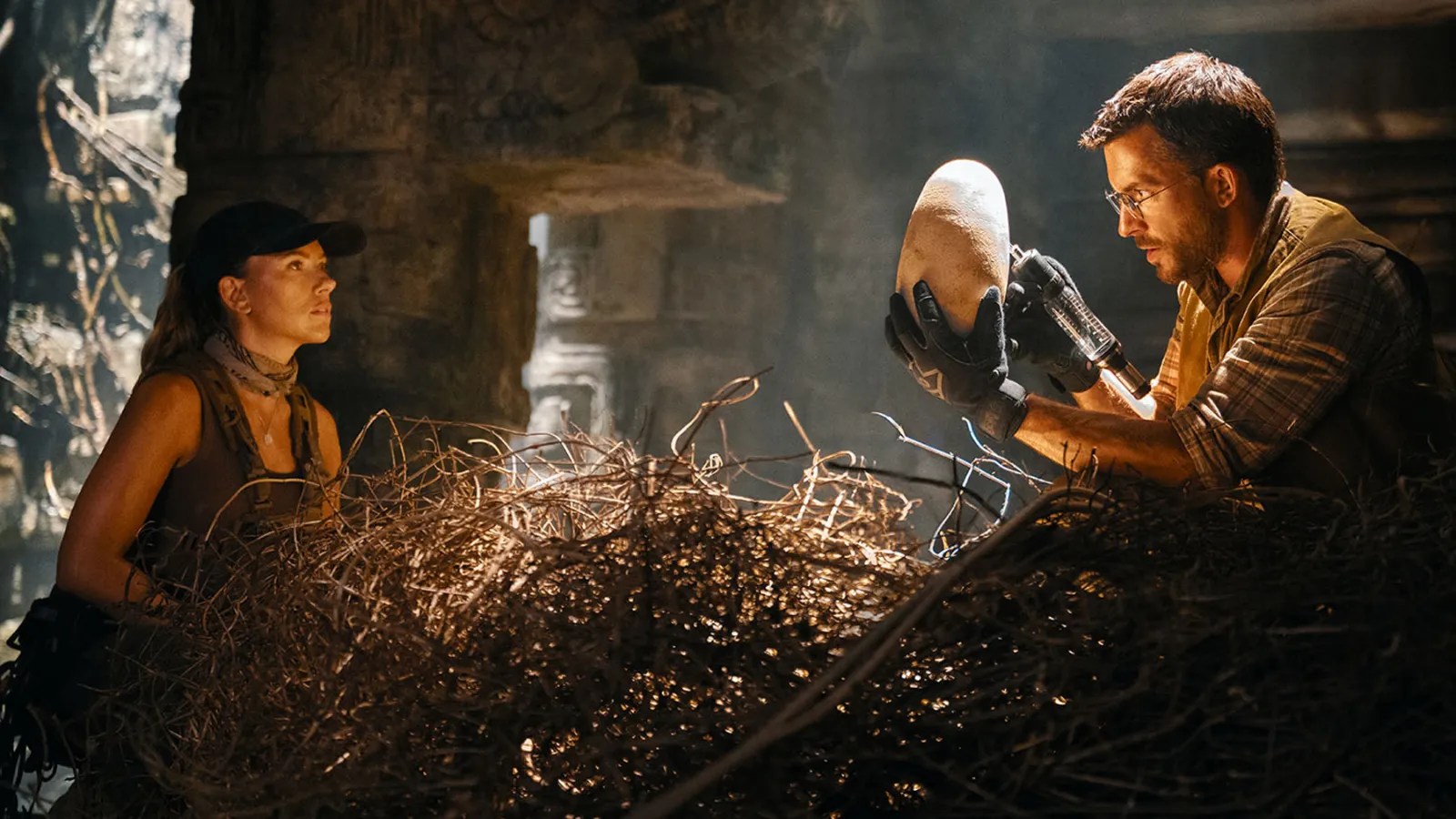
“You know, intelligence is massively overrated as an adaptive trait.” – Dr. Henry Loomis
Look, I have long accepted that if they’re going to be making a long-running franchise out of Jurassic Park, my favorite movie of all time, they’re going to have to find a way to mix a bit of intelligence with a lot of questionable decisions. So Rebirth stacks the deck in its favor with a handful of nice choices. It leads with a brighter palette, 35mm film, and vintage anamorphic lens. It collects a group of great actors who can act with a wink in Scarlett Johansson, Mahershala Ali, Rupert Friend, and Jonathan Bailey. It brings in a Gareth Edwards, a director known for scale within the camera frame and within the apparatus of a VFX-heavy big budget blockbuster. Most importantly – for me, at least – it brings back the writer of the first two films, David Koepp.
Even if you’ve just come off of writing three films with Steven Soderbergh (Kimi, Presence, Black Bag), you’re not going to ignore the call from the other Steven, Mr. Spielberg himself, for another dino dip. This is a writing job that’s hard to pass up and even harder to survive. So of course the original subtitle Koepp gave this film is Survival. A chance to see how these dinosaurs survive human interference just as we the humans try to survive dinosaur interference.
Koepp is a very smart dude who can make hard things look easy. He sets up new characters that echo elements of the series before while being their own thing. These are people who will make decisions that may baffle but will at least have some emotional logic to them. The plot of extracting DNA samples from the largest avian, aquatic, and terrestrial dinosaurs for life-saving heart medicine may sound a lot like a video game mission, but it’s actually based in some paleontological science. Having the dinosaurs who once roamed free at the end of Dominion migrate towards the only hospitable living area around the equator? I like it. Having Dr. Loomis nerd out about hoping to die in shallow water so that silt can overcome him and give his body the best chance of fossilization? I love it. And Koepp peppers in little bursts of humorous and meta dialogue to keep the whole thing light its feet.
If the hybrid dinosaurs of the most recent trilogy didn’t do it for you, here they go one step further and bring out some experiments that went awry. But anytime you mess around with DNA splicing, you run the risk of a mutant gene. So, of course, the seventh (!) installment in this franchise is going to play around with its own DNA, cutting, pasting, and rearranging to try and make something refreshingly new. Rebirth doesn’t just bookend the film with mutant dinosaurs; it ends up being its own mutant in unintended ways.
Now, I’m no geneticist, but let’s take a look at this graphic:

You can say that when Rebirth‘s two main narrative strands first intersect nearly forty minutes in, the film’s momentum diverges and frays just as much as the story itself before loosely finally coming back together for the finale. But the double helix nature of the story is baked in from the start. In the film’s opening minutes – a delightfully nasty little prologue – we see the camera move through a secretive lab. Experiments are clearly being conducted. We know this because everyone is running around with Hazmat suits and we can see young dinosaurs encased in amber fluid. Not only that, but they’re two-headed mutants. A mutadon, a velociraptor, and a brachiosaurus, each with a duplicate head looking at the other like they can’t decide which should take the lead.
Rebirth follows suit, offering us competing questions about just what this film is about. Is it about the dangers of mutant dinosaur gene splicing or is it about a team on the hunt for the DNA of the three largest purebred dinosaurs? Is it about a family surviving a disastrous just-before-oldest-daughter-goes-to-college sailing trip or is it about mercenaries motivated by a job that will reward more money than they’ve ever seen? It doesn’t quite seem to know what it wants to be about as much as the conversations it wants to have. And this can make it very engaging as the film goes on! A very heated argument between billionaire Martin Krebs (Rupert Friend’s 2nd best performance of 2025) and Loomis in the middle of the film could easily be an argument between a studio head and a writer struggling with purpose. Minutes later, that same ongoing argument shifts to be about the survival of humans versus the planet and dinosaurs themselves. There are so many engaging thoughts, but this film is very much a mutated gene. Strands that intrigue on their own but are not held together firmly enough to form one unified, sustainable thing.
And then just when you think the movie is about to be over, when the mercenaries have packed the third and final DNA sample for this soon-to-be-groundbreaking heart medicine, you’re reminded of those mutant dinosaurs from the beginning. The film then makes the most uncommercial decision possible: they end the movie with a big bad dinosaur that is decidedly not cool. To be clear: I genuinely appreciate their commitment to the concept. This is a mutant dinosaur, a result of genetic splicing, of trying to move past the old stuff into the new, that does not work out. He looks positively pissed to be alive. Just full of pain and anguish and, if his digits were a little more cooperative and recording studios were the size of distribution center warehouses, would probably record and release the best emo album since My Chemical Romances’ The Black Parade.

The film wants you to understand the D-Rex as a sign of how far we’ve strayed from God and that some things need to be left alone. Edwards and his VFX team said the design inspiration for this was the OG T-Rex, the H.R. Giger Xenomorph alien, and the Rancor from Return of the Jedi – three very different film franchises thrown into a blender. But the Distortus Rex doesn’t escape from the lab because he’s an eyesore mutant; he escapes because of pure human error, a bold decision to break workplace rules in pursuit of satiating a sweet tooth. And there are few things more Jurassic Park than a good time on an island going completely awry because of a selfish human decision. Therefore: I do think that they could have salvaged this into something highly memorable, mutant gene story structure aside, if they had leaned back into the past a little bit more.
(Stay with me here. There’s a point. Promise.)
Back in June 1998, hot off the heels of The Lost World, a Jurassic Park toyline called Chaos Effect hit stores. The idea was tantalizing and clearly expressed in the trademarked phrase on the cover of each package: genetically mutated dinos gone bad! These would be brightly-colored hybrid dinosaurs that escaped the lab, leading into a Saturday morning cartoon series in which each episode would have a team of badass dino experts hunting down and surviving the latest mutant escapee. Honestly: a pretty fun idea for a show and something that I would have absolutely been intrigued by in the fog of my early Jurassic Park fandom. But then the toys sold poorly, with only 10 of the 18 dinosaur designs ever released, and the TV show was cancelled before ever making it to production.

Now, why do I bring this up? Because a little research revealed two possible reasons for the poor sales: new dinosaur designs that clashed with the ones that came from the previous films, and the fact many of these dinosaurs were repaints of previously unsold toys. You could get really meta here – just like Rebirth loves to do throughout – and say that this is what ultimately has tripped up the film franchise, that sometimes these films have ideas that are incompatible and better off for a cartoon TV show (like the highly enjoyable Camp Cretaceous and Chaos Theory), and you could also argue some these films are just unattractive repaints over the plot structures of what came before (you can especially say this about the recent trilogy I’ve already memory-flushed).
But what I really want to point out is digesting Rebirth led me down a Reddit rabbithole and into this one particular unreleased Chaos Effect toy design: Ultimasaurus. It’s a mixture of Tyrannosaurus Rex, Triceratops, Velociraptor, Ankylosaurs, and Stegosaurus aka some of the most culturally popular and well-liked dinosaurs you’ll find. And honestly? Just badass. Imagine if, in those first moments of Rebirth when it’s really clear something is going horribly wrong and the containment cell that’s never supposed to open is suddenly opening, you saw the head of this Ultimaurus instead of a very pissed off, six-footed beluga whale? Imagine if this mutant looked like an actual dinosaur? Can you imagine how these things would fly off the shelves?

You would absolutely pay a tithe each month to worship at the altar of this dude, even if his red and black colors lead others to believe you’re dabbling in Satanism.
Now, I am a strong believer that you should judge a film based on what it’s trying to do and not what you want it to be. But the characters in this wild franchise can’t help themselves from playing God, so a mere mortal like me can dream: I wish we had something like this Ultimasaurus. We can still have the human error of a wayward Snickers bar. We can still have a commentary on mutant dinosaurs gone too far. And we could have an iconic onscreen design that would help us forget how truly divergent the films narrative strands are. We, most of all, would have some fun.
This isn’t a film that suffers from a lack of intelligence so much as cognitive entrenchment, of digging deeper in one direction without taking a breather to look up and see if better options are possible. There are so many ever-moving parts in these large blockbusters and every successful one is its own kind or miracle. But when you think about it, the danger of cognitive entrenchment is the same as wayward genetic mutation. It requires making stubborn decisions that seem smart in a vacuum but when released to a wider audience? Well, the results can be quite mixed. There can be mutations that are hard for any story to survive.
Best Child Performance: Hamnet

For me, I understand my children best in medium close-up. When they’re far away from my eye’s frame, much like Jessie Buckley and Paul Mescal are for a good chunk of this film, it feels distant. Impossible to really feel anything. And when my children are too close up, like Buckley is in her character’s most understandably hysterical moments, I want to back up a few steps to understand it better. All of this to say that I love actors, and I love it when they’re acting. But I do not love to see the sweat of it all. The one actor who has the most power in his medium close-up? Jacobi Jupe. I connected to him right away.
There’s a scene late in the film when William Shakespeare himself (Paul Mescal) is listening to the rehearsal of his play, to dialogue between two actors. He’s pacing back and forth, seemingly out of it. Until he hears something that doesn’t sound quite right and he corrects them on the spot. It’s a subtle thing, but it’s an especially bruising scene for any parent who’s had to listen to their children transition from playful to argumentative and intervene to snap it back in the right direction. Or for anyone lost in the grieving process who suddenly finds it incredibly important to get one specific, seemingly extraneous detail right as if correcting that detail – and only that specific one – is what holds the balance between a world of control and utter chaos. This is the kind of thing I wish the film had more of. And when the entire theater crowd reaches out at the end, completely beside themselves, mourning a child that is not their own but feels all too familiar, I could feel the bumps of this Hamnet’s path. I know what Chloé Zhao and her team are trying to do. I’m just not entirely sold on how they do it.
But Jacobi Jupe? He almost makes me believe. Somehow he has been airlifted from another film, from a story I wholly find myself invested in. For every stretch I emotionally checked out of this film, Jupe almost single-handedly brought me back in. And so when he – spoiler alert! – dies, the film has nothing to re-energize it until later when they bring Jupe back, standing tearfully behind a veil of which we want to push past but cannot. It almost reminds me of last year’s Deadpool vs Wolverine, when Hugh Jackman gave the film a gravity-shifting performance that somehow made you believe. I don’t think Hamnet ever imagined or wanted to to be in the same sentence as the third Deadpool movie, but here we are.
Bicoastal Misalignment: The Roses
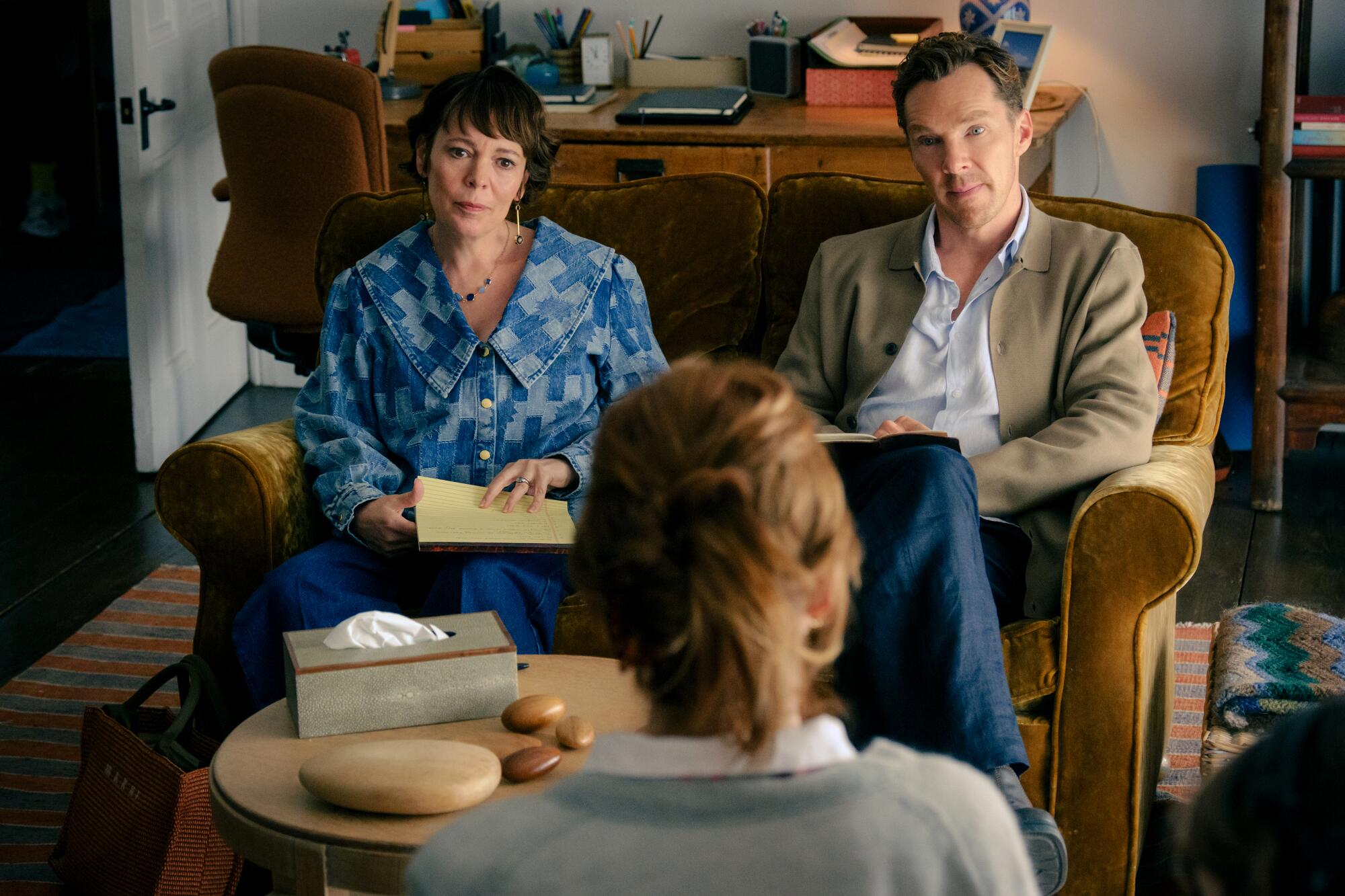
What a fascinating little misfire of a film. This is a case where I think the script itself, adapted from 1989’s The War of the Roses and given a fresh take by Tony McNamara – a writer I truly adore – is better than the resulting film. The structure of the story makes total sense. We understand where Theo Rose (Benedict Cumberbatch) and Ivy Rose (Olivia Colman) started and how they possibly ended up where they are now. The individual lines are full of wit and wisdom. But here, a very British script – you can see it in the speed the dialogue demands, in the dry wit required – is being directed by Jay Roach, the man behind some of the broadest American comedies (Austin Powers trilogy, Meet the Parents). Yes, Jay has also done political thrillers. He is a very experienced, very smart dude. But there is just something to how this film is shot and edited where it feels like a complete tonal mismatch of director and writer. It doesn’t feel too groovy, baby.
(Late in the film, Benedict, a depressed architect, spends unspeakable amounts of Colman’s money to build a dream house on the Pacific coast. It becomes more and more sophisticated – meaning: expensive – and no longer believable. It’s mean to show the resentment Benedict, draining all this family’s money. But it still feels too comfortable. It’s not quite ready to draw blood. It’s all hot air and fuss without the actual bite.)
Now, Cumberbatch and Colman are outstanding actors in their own right. They truly give the film their best, especially when the fighting turns inward and increasingly brutal. Just watch the moment when Theo turns on Ivy late in the film, after a wild whale rescue (yes, a whale rescue), and accuses her of being the most awful person he knows; it is astonishing at how quickly and believably Colman can communicate that deep hurt. As John Lovitz would say: acting! But for all their excellent performances over the years, I can’t quite buy them as truly hating each other. There just isn’t enough believable bitterness between them to truly believe they would do all the awful things they attempt to do to each other.
As Cumberbatch and Colman continue to give this film their sweaty best, it all culminates in an epic fight that only rich people can indulge in, when the priciest of things get broken as if they all know it will be replaced the next morning. They are two children playing house: look at us fight! But then they eventually collapse inwards towards each other and it looks like they might actually be able to find a way out of this mess. Maybe they’ll stumble back upon something like love. They embrace. They fall asleep. And they fail to realize that their house has been slowly leaking gas throughout, a realization that will ignite quite the explosion as the screen cuts to black. It’s kinda shocking. It’s kinda delicious. It’s a commitment to the bit I can’t help but admire and applaud towards. So maybe this film is a misfire? But, much like the ending, a misfire worth remembering.
A Fascinating Adaptation: Train Dreams
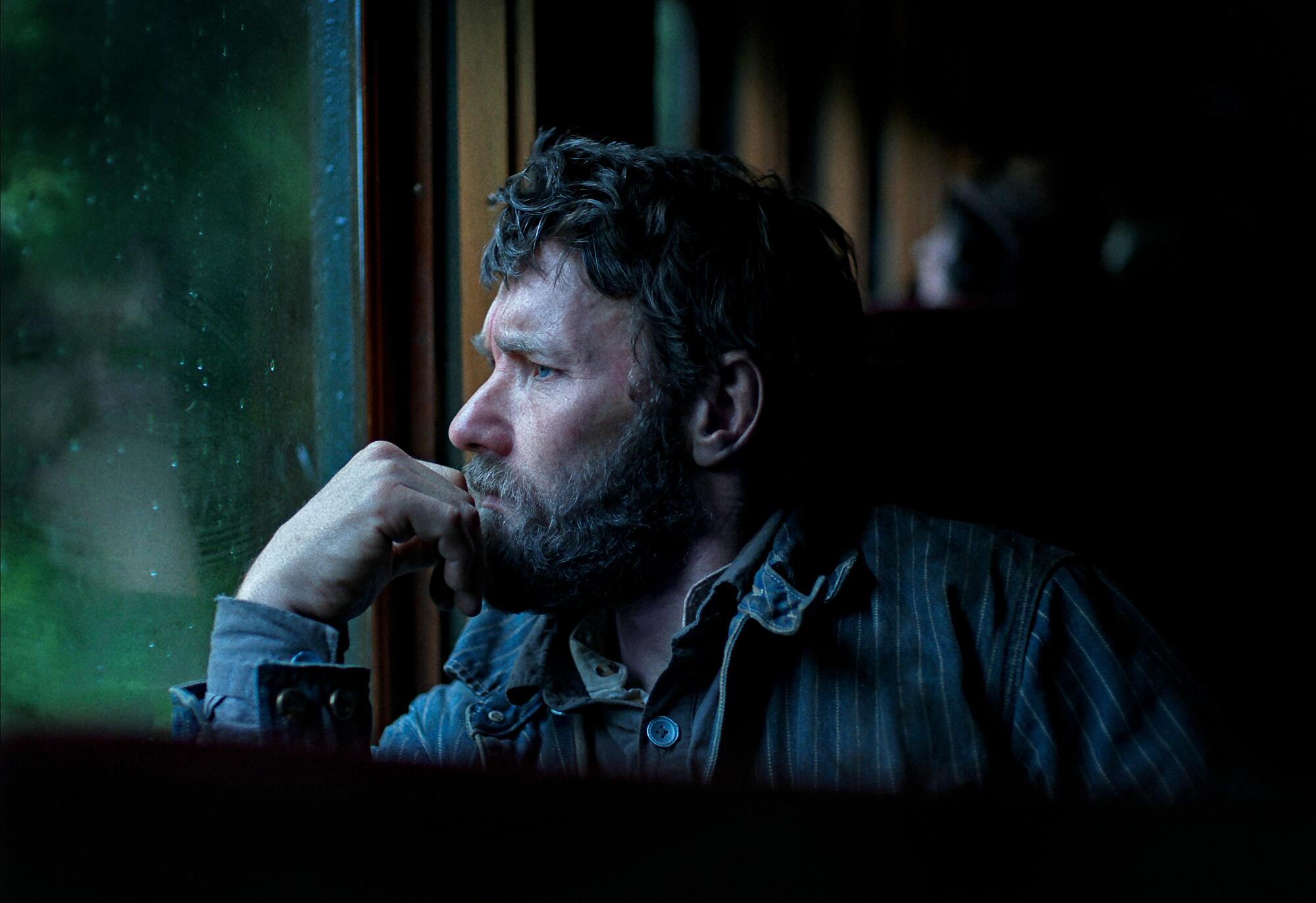
On paper, this film looked like something made just for me. A script written by the writers of one of my favorite films of 2024 (Sing Sing). Lush, picturesque cinematography around the Pacific Northwest. A lead actor I adore in Joel Edgerton. Several references to my beloved hometown of Spokane, WA. The math had to math, right?
And while I did enjoy the cinematography, appreciated the screenplay’s structure (now, that is a helluva midpoint in a story), and delighted at seeing Kerry Condon onscreen again (even in a thankless role existing to only push Edgeteron’s Robert Granier to speak), I didn’t fully feel anything until the film’s final moments, when Granier is flying in a biplane high above the sky. It’s in those final moments, those final lines of narration from Will Patton, that it all clicked for me: this weightlessness in Granier’s stomach as that plane took a deep dive is the same feeling I’ve felt in so many of the biggest moments of my life: of pure, levitating excitement of falling in love with my future wife, of fear my daughters will walk too close to severe injury, of the unknown that comes with each new step in life. It felt like a profound feeling. And yet, at the same time, it also felt like I was projecting my own feelings on Train Dreams in a slightly desperate attempt to extract meaning from it all.
So I decided to read the book’s source material: Denis Johnson’s Train Dreams.
Adaptations should be able to exist on their own, yes, but after reading the novella, I found myself almost crackling with frustration at the film that resulted. Johnson’s story is so much weirder, darker, funnier, and full of life without requiring me to bring the profoundness to it. It exists on the page already. I can understand why some of the changes have been made: events shuffled around, sadder and thornier passages excised. I get it. But it effectively sands down the edges that give Johnson’s story its grip. And as a result, it relies entirely on montage and a fantastic Edgerton to make it work. I get why it enraptured audiences. But for me? I chalk it as one of the most interestingly divergent adaptations I’ve ever seen.
I Feel Alive: Minecraft

Look, I am a simple man. I once thought Jared Hess’ Napoleon Dynamite was the single greatest cinematic achievement of my young lifetime, sticking it out at the theater without any captions, indulging in the desert-dry weirdo humor. I am also exactly the kind of person to appreciate Hess working with Jack Black again and to see Jason Momoa untangle about 30% of the world’s toxic masculinity with his committed performance alone. Throw these guys together for a couple months of filming in New Zealand. Let them cook.
I’m not sure I can say that Minecraft is a good movie. What I can say is that I had a complete fucking blast watching it. From the moment Jemaine Clement (again, New Zealand buddies!) talks onscreen with a pretty slick Southern accent and pleadingly negotiates to hang out with Jason Momoa’s try-hard guy? I was sold. This is a film about what happens when you take a really bizarre, hard-to-adapt property that’s befuddled Hollywood for 20 years and make it halfway around the world, where it’s a little too far for people to be paying close attention. That’s how you get Rachel House’s utterly delightful Molgosha performance. That’s how you get an epic song like “I Feel Alive” – which I have since sang out aloud nearly as much as anything from the K-Pop Demon Hunters soundtrack.
I just know that in a movie I took my oldest daughter to see upon her request, I was the one laughing the entire way through. Something about mixing Jared Hess’ oddball approach with New Zealand and a totally-game Jason Momoa just warped this movie’s DNA so much that it could pass whatever bullshit detector I thought I had in place. Did I feel alive? I absolutely did.
Best Pickup Basketball Game: The Phoenician Scheme
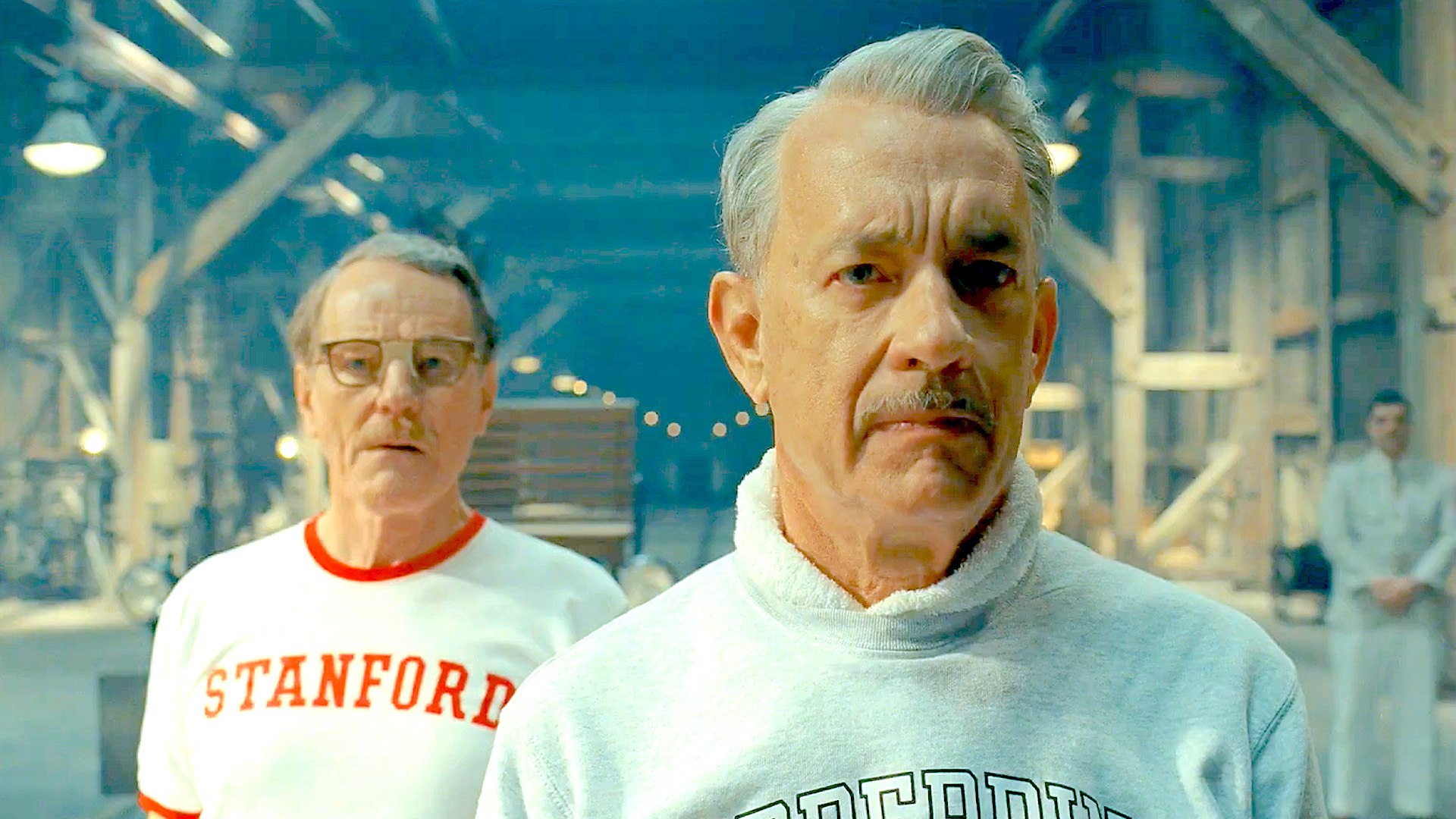
The question has been around since the invention of basketball: who, dead or alive, would you play a pickup basketball game with? If you’re willing to extend that conversation to fictional characters – and you should, because why pick hairs in this economy – then 2025 gave me my definitive answer: Tom Hanks’ Leland and Bryan Cranston’s Reagan.
2024’s Asteroid City remains one of my favorites of the decade, so I admittedly found myself a little flummoxed with Wes Anderson’s latest. I know the treasures are there – the always-impeccable production design, the big actors playing delightfully small parts, the thousand other decisions that only someone like Anderson and his team would make. Time will treat this film well. But for now: I found my ballers, and all I wanna do is get some knee-high socks on and find a safe underground tunnel to get some shots up.
Justice for Amanda Seyfried: The Housemaid

Look, this is meant as no diss towards Jesse Buckley, the 2026 Best Actress Oscar winner, who I adore, or the other four Best Actress nominees. But in a more just world, Amanda Seyfried’s performance in The Housemaid would have been in all the awards conversation. If only camp thrillers were as revered as Oscar bait. If only! Instead, I can only encourage you to see out Paul Feig’s latest film, an adaptation of Freida McFadden’s bestselling novel, and just watch Seyfried absolutely cook. She is the best thing every second she’s onscreen and the film loses its steam in her absence.
The tricky thing with this film is that it tips the balance of the story so strongly in one direction – the perfect husband with a psychotic wife – that you know a movie billed as having tons of twists and turns is going to pull a semi-predictable 180. It’s like they moved all the furniture to one side of the room and all you can see is the other half; you know where it will go and it’s just a matter of seeing their final position. For some: this is entirely engrossing. But for me? I just wanted Seyfriend back onscreen. And when you see where the twists and turns are taking place, you will understand just how incredible the whole of her performance is.
The Housemaid has an undeniably fantastic sequel hook in its closing moments. It’s a genuine bummer it does not appear to involve Seyfried’s Nina Winchester. But I’m glad we at least have this performance committed to celluloid.
New Game, New Moves: Superman (2025)
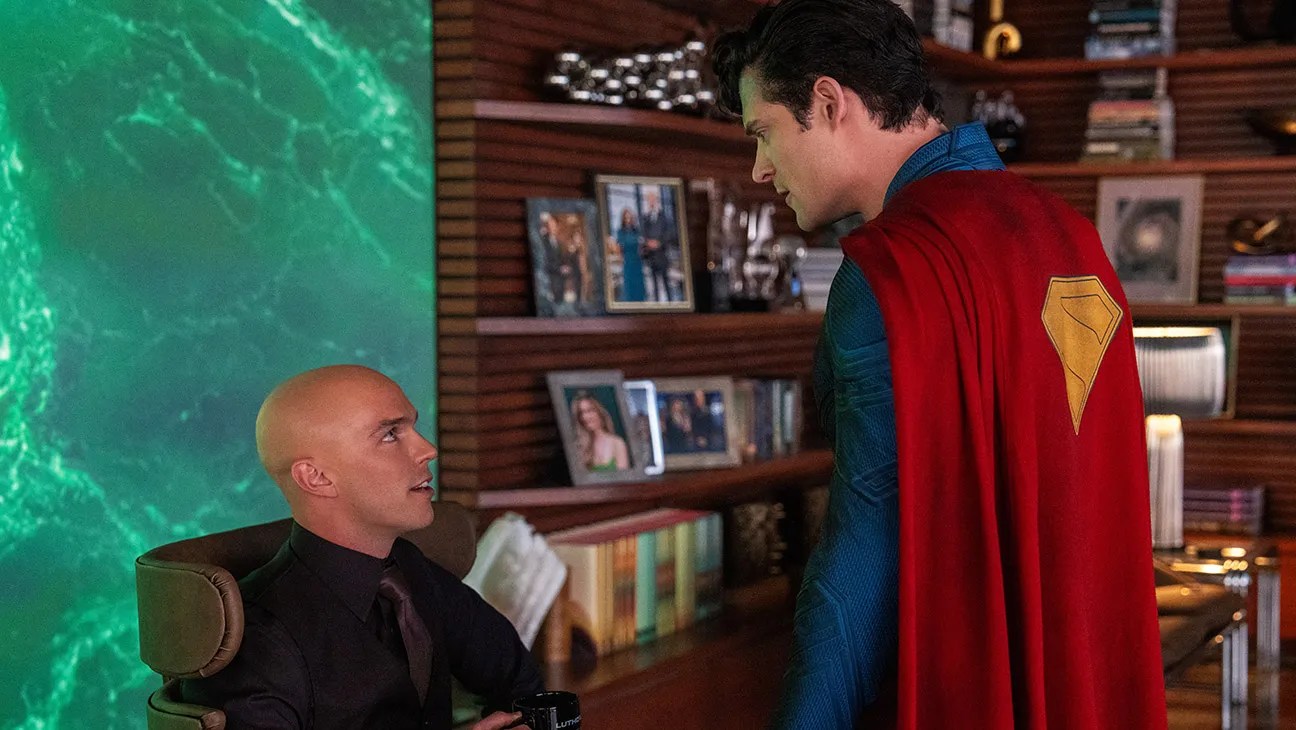
There is much to like about this new version of Superman. He thinks kindness and caring about things is punk rock. He has an annoying dog he can barely stand. And he genuinely can’t understand why we would be okay with anyone dying, let alone a squirrel in the middle of a kaiju fight. In many ways, this is the Superman we want: someone who sees value in us all and cares for our well-being. David Corenswet finds a way to make this genuine approach feel legit and never too sweet or a tad too false.
Director/writer James Gunn, now firmly in the DC Universe, fills out the rest of the film with a number of amusing characters, including Skyler Gondry’s Jimmy Olsen, who just can’t get this soon-to-be-important lady to leave him alone, and Nathan Fillion’s Green Lantern with one of the more impressively bad superhero haircuts. There’s even a great back-and-forth interview between Corenswet and Rachel Brosenan’s Lois Lane that you can absolutely tell is Gunn’s favorite scene in the movie. At the end of the day, the final battle felt far too much like a rehash of Gunn’s Guardians of the Galaxy 2’s Ego vs Star-Lord battle – a remix too sprawling and exhausting to be fully impressive.
Lex Luthor (Nicholas Hoult) is meant to be a character who’s often one step ahead of Superman, and Gunn finds a really impressively unique way in doing this. In major fights, surrounded by his embedded tech team, Luthor shouts out combinations of letters and numbers, like a Rubik’s Cube solver at a rapid-fire auction, and we suddenly get it: it requires a level of brainiac to remember all these moves and know what to call and when. As a result we get a much more cinematically cebebral version of the punch-ups we’ve come to expect. And hopefully, if all goes well, a sign of the creative juice coming to next year’s Man of Tomorrow.
Not Phoning It In: Zootopia 2

I, as a rule, hate the use of “2” in sequel names. I get it. It’s marketing. Name recognition. Et cetera, et cetera. But it feels so cheap tacking a number onto the original title. If you’re gonna spend $150 million on a sequel, why not spend a fraction to come up with a cooler title?
It’s easy to get frustrated with sequels, especially when they come nearly ten years after the original. But animation is an entirely different beast (and especially when you understand much of the same team worked on the stellar Encanto in-between these films). Production can go as long as five years. Story elements are storyboarded and scrapped and storyboarded again. All this to say: these sequels don’t have to be as creative and adventurous as they are. And yet!
There are even more animal puns this time around. There’s a counseling session of mismatched partners that is both hilarious and illuminating. There’s an incredibly clever new area in Marsh Market, where animals live under and above water. There’s genius casting like Patrick Warburton as the Fabio-like horse mayor (My daughters and I definitely quoted his iconic “It’s a snake!” yelp about five too many times). And a quite deep, brutally honest argument between Nick Fox and Judy Bunny that feels ripped from someone’s couples therapy session. Again: it doesn’t have to go this hard! But these are people who take pride in their work, in telling a (very timely) story, and giving audiences something to savor. So as much as I hate that “2”, I can’t deny that everyone involved gave anything but their best.
David Koepp’s Finest Hour: Black Bag
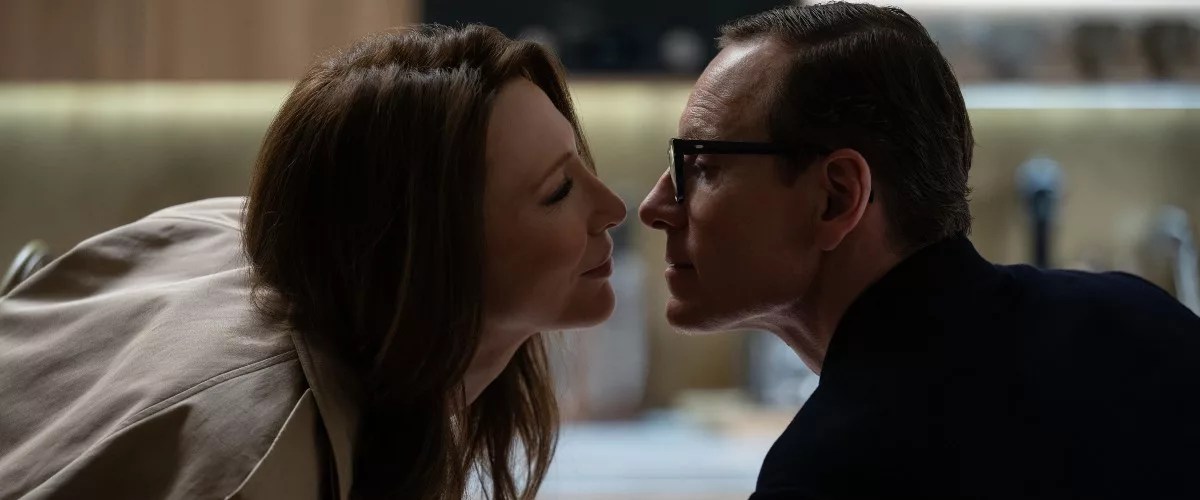
“Not everyone aspires to your flagrant monogamy, George”
The Summer of 2025 turned out to be the David Koepp Reclamation Tour for me. First, I read his debut novel, Cold Storage, a delightful, contained little blast of a comedic thriller. Then, I absorbed many of the press interviews he did for his involvement with Jurassic World: Rebirth (and wrote over 7,000 words about that film that didn’t even make the Top 20 list, all so I could find that more empathetic outlook in Koepp’s favor). And then, to top it all off, I went back to finally watch Steven Soderberg’s Black Bag.
What’s really funny about doing these things together is being reminded that as excellent a writer Koepp is, he is still a writer. And by that, I mean, he will 100% recycle a really dope idea he finds. I don’t fully understand how this piece of technology works, but watching Black Bag use the opening and closing of a satellite window in a very similar way to Cold Storage and even the recent Disclosure Day (though for very different means) really made Koepp seem the right level of human to me. Bonus: Scarlett Johnanson and Rupert Friend’s first dialogue scene in Rebirth feels like Koepp shrugging off the spy garments of this film before slipping into his dinosuit.
But what’s so fantastic about Black Bag is how effortless it feels when you know it’s not that simple. Soderbergh and Koepp expertly set up a dinner table scene that will be returned to later, and with quite the consequences attached to it. In between, we see a married couple deal with their strongest moment of doubt yet. Fassbender and Blanchett absolutely sell it like the pros they are. And the rest of the cast (especially Pierce Brosnan with a prosthetic nose!) make it sing. One of the finest scripts of the year.
20. Bugonia
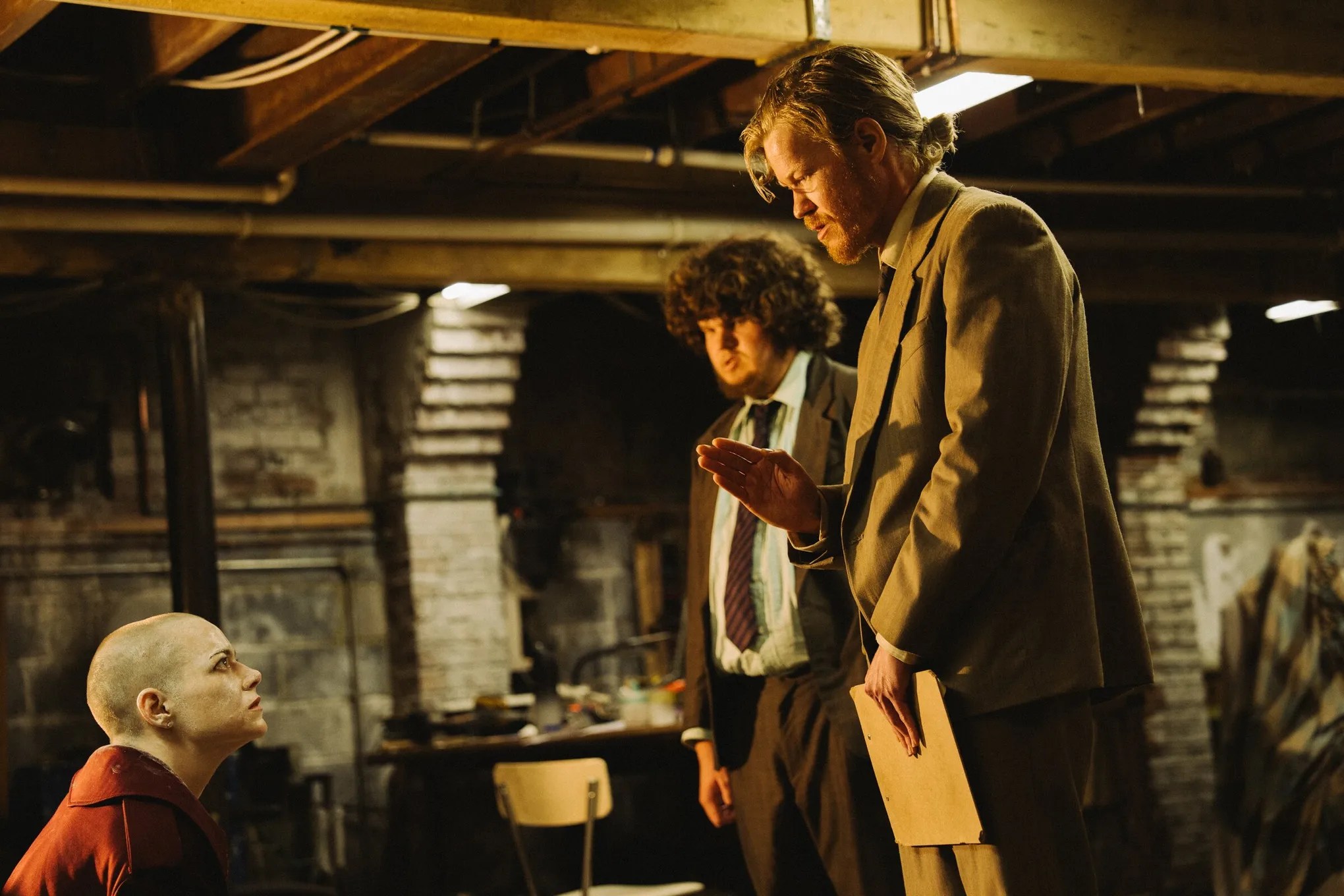
I know I can always count on Yorgos Lanthimos to zig when we expect him to zag. The man, after all, used to be a professional basketball player! Juking out an audience is practically in his muscle memory. But here? The story head-fakes in such a way that I immediately assumed it had to be a remake of something (sure enough: it is).
Jesse Plemons, an actor I’ve adored since his Friday Night Lights days (Season 2 storyline, you can’t hurt me!), gets to truly remind everyone what an onscreen stud he is. Everything that comes out of his character’s mouth is 100% conspiracy theory syrup, before you can even add the carbonated water to the fountain drink. And yet: Plemons makes you believe his sweaty desperation and how much sense his twisted worldview makes. Emma Stone, clearly Yorgo’s ride-or-die, meets Plemons toe to toe throughout, as thrilling an acting matchup I’ve seen this year.
Truly, I coasted along on the incredible performances until the movie shifts into a gear that feels like it came from a different vehicle. I certainly won’t forget those last 10-15 minutes anytime soon. It doesn’t completely add up to the story that came before, but it almost doesn’t matter; so rare is the bird that flies this high and this brazenly.
19. Eephus

I have always been drawn more to the mythology of baseball than the game itself. I still think, at least once a week, about the evergreen line from Bull Durham: “Sometimes you win. Sometimes you lose. Sometimes it rains.” If you think a little harder, you can easily come up with more lines from films like Field of Dreams, or A League of Their Own, or Moneyball, or even Angels in the Outfield, with a young Joseph Gordon Levitt. It’s a sport that hypnotizes with imagery. A pastime that’s always outside of time.
Eephus is unusual title for a film until you learn it’s the name of an actual pitch. It’s a particular pitch that moves so slow that you’re almost hypnotized by it, your body unable to detect any sense of urgency, until you whiff hard upon its approach and hear the sound of the catcher’s mitt. By then: it’s too late. As soon as this pitch was described in the film, I could only smile at the idea of director Carson Lund and his co-writers kicking themselves for coming up with this perfect little metaphor. This is a film that sneaks up on you, much like the pitch itself, and then it’s off to the next scene.
I have come to believe Eephus is the film I wanted Train Dreams to be.
For a while, I wasn’t quite sure what I was getting into. A bunch of guys of various ages and stages in life gathering for a final baseball game before the field gets demolished for a new elementary school? Okay. I kept waiting for some kind of story structure to kick in, for something to ignite this film’s sleepy, small-town vibe. Until I realized that’s exactly the point. This is a movie about life. You think you got a ton of games ahead of you until you don’t. You think you got enough light to properly judge balls and strikes until you don’t. You think you know what’s coming next until you realize you have not the slightest clue. Life is one eephus pitch after another.
There are so many lines in this film, thrown out like high-flying balls for anyone to look into the sun and try and catch:
The in-the-park double: “Is there anything more beautiful than the sun setting on a fat man stealing second base?”
The sobering last-minute out that began as a home run: “All the arguing in the world can’t change the decision of the umpire.”
The home run with the final word: “I’m looking around for something to happen. Then poof, the game’s over.”
18. Together

I love a story that takes a premise and commits. And you could argue that, for most of the runtime, this film commits more than Millie (Alison Brie) and Tim (Dave Franco) do to each other. They want to be together. They wanna make their relationship somewhat more official. But there’s a gap between them they can’t quite bridge. So they do what any stuck couple would do: they move into a beautiful house in a tiny town, looking for a fresh start.
If you’ve watched movies with me enough, you know I love to look for the midpoint in the story, the point of no return. It’s almost always right in the middle. And yes, this means I will pause movies (when not in theaters) just to check the math on the timestamp. Sometimes that midpoint is pretty predictable. But here? I positively cackled at the absurdity of this film’s midpoint and how thematically perfect it is. Seriously: one of my favorite scenes of all of 2025. It’s horrifying, it’s hilarious, and you may suffer from first degree burns of secondhand embarassment. From there, the film just continues to surprise as the story gets creepier and goopier and stickier, ending with a truly chilling ending that I could only stand up and slow clap for.
Brie and Franco are both fantastic here, and there’s something extra special about seeing a real life couple this willing to go this crazy together, to be seen as weirdos doing deeply weird things. I’m sure they were laughing their asses off throughout all of filming. Truly: #relationshipgoals.
17. It Was Just An Accident
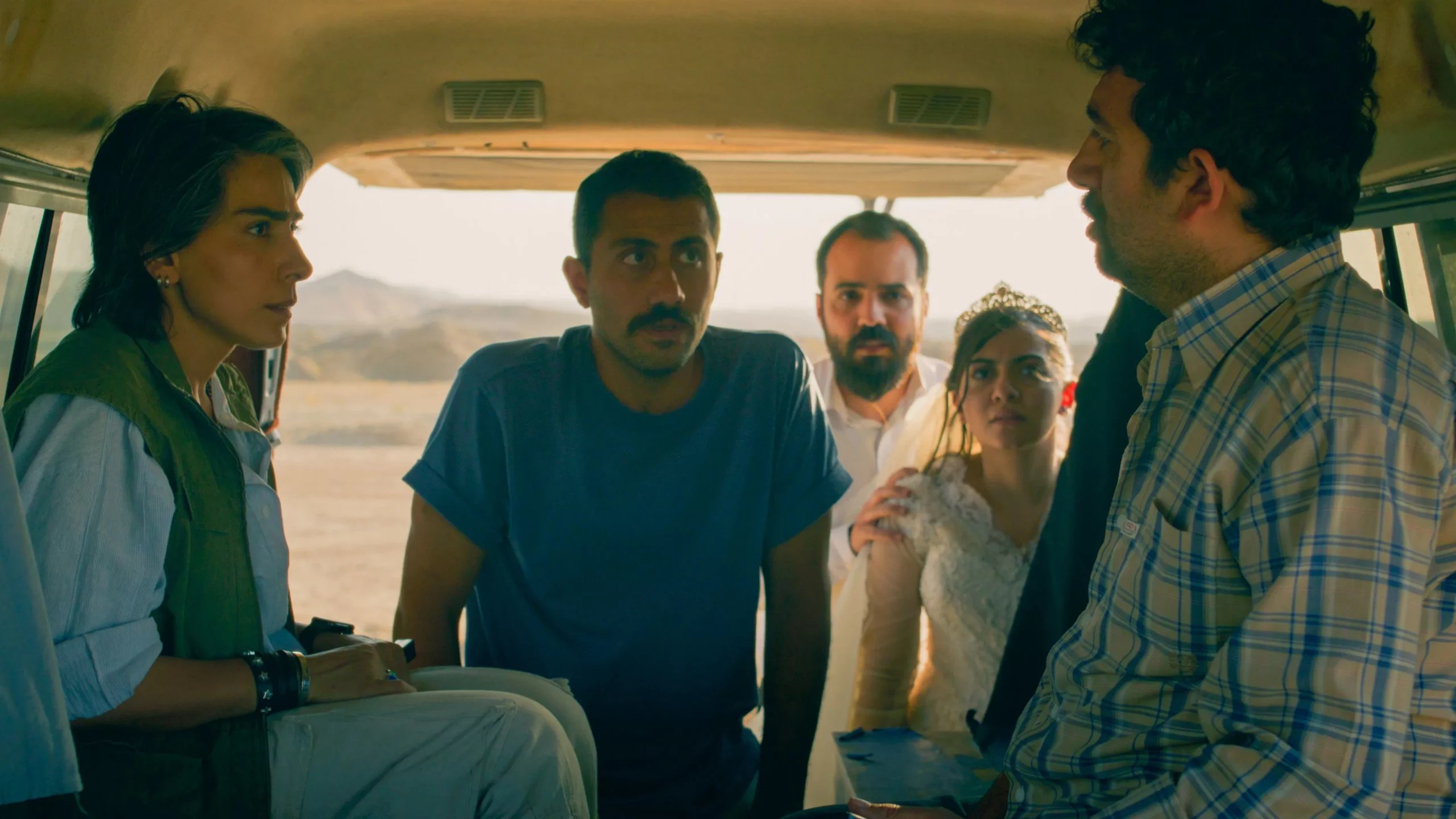
Back in college, in the midst of phrase of renting entire rows of foreign film DVD’s (the most reliable subtitles!) from my local Hastings, I came upon Alejandro González Iñárritu and Guillermo Arriaga’s Amores Perros. The three stories felt electrifying in their own right, even before seeing how they would connect. Coming from the relative safety of American cinema, it felt almost like flying under the radar, sneaking into unknown territory in the darkness of night. But the final story of the triptych is the one that has stuck with me since. It’s the story of El Chivo, a homeless hitman (yes, really), and his final job. There are a number of elements going on with this story, including a trying relationship with his daughter and a bed full of dead dogs, but the most important thing is the way El Chivo subverts what is presumably his last hit. He brings the target to his own home and ties him up. And then he invites the man calling for the hit for a visit, offering a gun and forcing him to commit the crime himself.
It blew my mind.
And it made me realize how many atrocities are carried out because the ones calling for them don’t have to deal with the mess. They only see the absence. They don’t feel the pain or struggle or dark nights of the soul. They are making a simple transaction at the Bank of Life and Death. Throughout It Was Just An Accident, this is all I could think about. Here, a man (Vahid Mobasseri) stumbles upon a former oppressor and torturer. He manages to track him down and tie him up in his van. He drives around town to find those who can not only confirm he is that awful man. And the rest of the movie is an exploration of just what to do with this awful man, the one they have confirmed to be the figure behind so much pain and trauma in their lives. Watching this rather odd group slowly move from vengeful anger towards a clearer understanding of what kind of energy they want to put out into the world is a beautiful, goosebump-inducing arc to behold. But what makes it sting, what I suspect will make me think about it just as much as I did the adventures of El Chivo, are in the film’s final moments, when we don’t know if the sound heard is real or not. It invites the questions we all struggle with and have few answers for. An electrifyingly relevant film.
16. Wake Up Dead Man
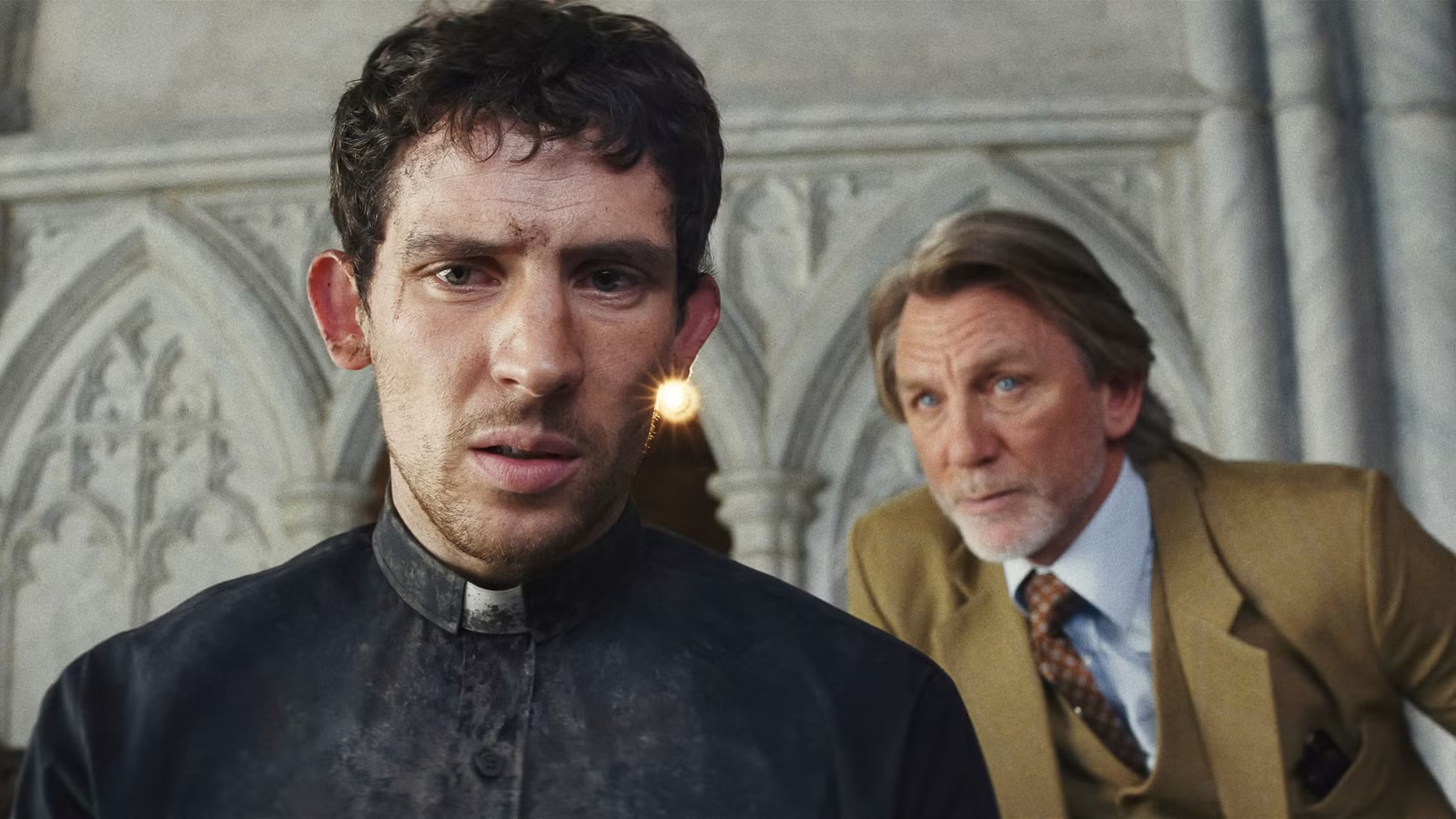
I have worshipped at the altar of Rian Johnson films for years. Brick, Brothers Bloom, Looper, The Last Jedi – all bangers, no filler. And while I enjoy these Knives Out movies and his ongoing working relationship with Daniel Craig, it can sometimes feel like Rian is developing an intricate Russian novel of a story that becomes almost too clever for its own good. Johnson has been very upfront that the least interesting part of the murder mystery is the actual killer. A story dependent on that reveal often ends up being too load-bearing to fully work beyond the initial shock. So he beautifully writes in misdirects and one-liners and heady thoughts, layer upon thoughtful layer. It always feels worthwhile. But it doesn’t always make me feel.
Here, Johnson seems to have caught onto his own game. There’s still a cast of colorful characters surrounding the story. There’s still a clear reminder of how much of writer Johnson is with all the talk about the impossibly perfect murder. But what makes this Knives Out tale stick with me in a way the others quite didn’t is how he uses Father Judd (a perfectly-cast Josh O’Connor). Johnson takes his time letting us into the mindset of Judd – of how he arrived at the Church and how quickly he clocks the hateful hypocrisy burnished in this dwindling congregation. Blanc doesn’t show up until late in the movie, in what feels like a truly fresh move, and the dialogue and hypothesis come fast and furious, the mystery fully kicking into momentum until-
A phone rings. Judd answers. It’s a congregant. She’s been struggling. She’s not sure just what to do. And the beauty of casting Bridgett Everett in this scene is that it’s easy to initially see it played for laughs, as someone who’s been stuck at the office and desperate to talk to anyone. But if you’re like me – you know what a powerhouse performer Everett is. The conversation turns. You can hear the fear and desperation in Everett’s soft, shattering voice. Judd recognizes this murder mystery craziness is not his true gig, not his calling. He goes back into his office and shuts the door for what we can safely assume is hours. Duty called: his profound empathy answered.
Now, Johnson has said before in interviews how much of a surprise this scene ended up being for him. And if you’re a writer, you know how powerful those moments are. You’re type-typing out these scenes as you’re maybe following your little beat sheet and then suddenly, The Muse – the one that only shows up when your ass is in a seat – arrives and the surprise energizes your story in a way you never would have expected. Credit Johnson for following the lead of that little surprise. It’s by far the best moment in the film, and possibly the whole Knives Out series.
The film continues from there, building out more and more misdirects and surprises and one-liners, culminating in possibly my favorite final shot of any film in 2025: a reveal of a diamond being hidden within the chest of Christ, the place that the hateful hypocrites will never bother to look. Hallelujah.
15. Companion
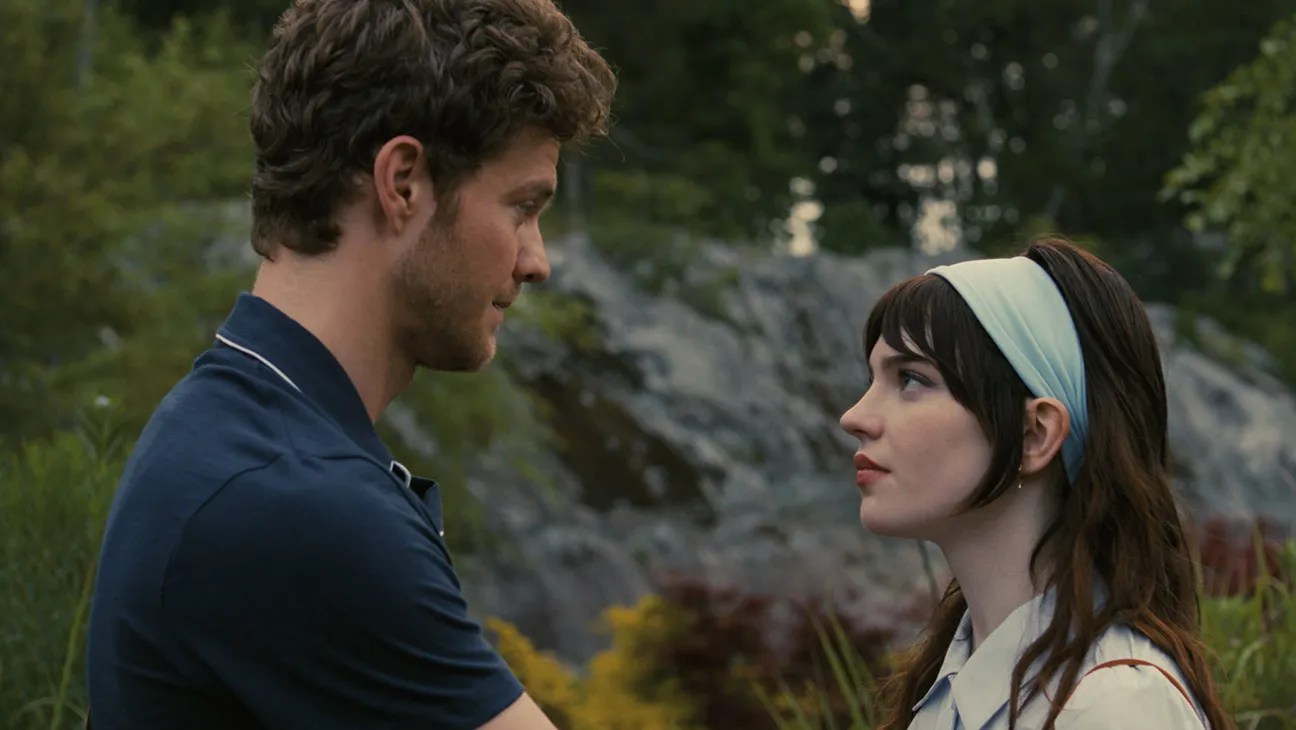
A recent writing tip I’ve stumbled upon is that it’s better to see characters acting smart yet morally dubious than morally straight and really dumb. This movie is a fantastic example of that. The zigs and zags only clarify the real story at the heart of it, the real sadistic plan for inarguable wealth. Each decision respects the intelligence of the characters and allows them space to make pretty fucked up decisions that we would rather convince ourselves we’d never make.
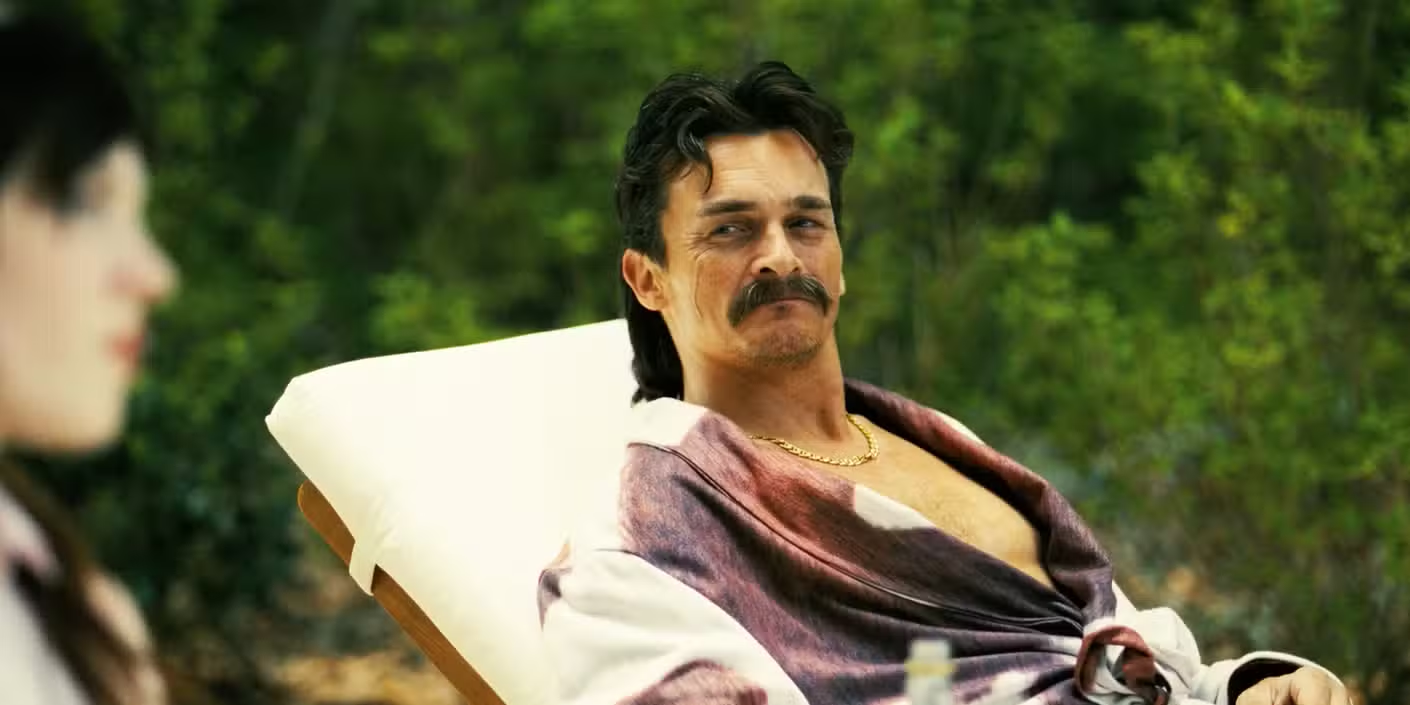
And I’m not gonna lie: the best thing in this film might be Rupert Friend’s Russian millionaire character. I mean, look at this guy. What a complete blast of a caricature brought to sweaty, ticklish life. I enjoyed Friend in Rebirth as the dickwad billionaire. But here? I just wanted to hug this dude and say, “Thank you for bringing a momentary surge of undeniable joy to my life.”
But the second best thing is just how entertaining and thoughtful this film is. The humor is dark and morbid – any film with a female robot having her Intelligence turned to 0% by her boyfriend and having it backfire on him will do that – but it punches in all the right places. Each twist and turn of this script had me hooting and hollering on the inside and rooting for an incredible Sophie Thatcher to make it to the very end. A truly electric ride of a story.
14. Roofman

“We both know doing things the right way is not your superpower.“
The premise, based on a true story, is ridiculous. Jeffrey Manchester, on the run from the law, robs a series of McDonald’s (through the roof, of course) before setting up a new life in the hidden margins of a Toys’R’Us. It’s the kind of wild tale you’d clock out of if you didn’t already know it really happened.
But when I heard Derek Cianfrance – the brain behind one of the most challenging, depressing relationship movies I’ve ever seen in Blue Valentine – was behind this, I definitely sat up. Sometimes the press interviews are what really compel me to seek out a film, and this Vulture interview did just the trick. The biggest nugget: Cianfrance learning that, despite all the lawlessness and getting caught, Manchester had no regrets. He couldn’t outrun the law, but he could run astride with a new life. It goes to show you just how quickly you can make your own little happiness, and how you can stretch those moments just a little longer before reality snatches it away. At the very end of this special film, we see the real people involved. We learn the daughters and wife never held it against Manchester. They understood what he felt he had to do. And they appreciated what he gave. A bizarrely hopeful reminder that it’s never too late to turn your little precious life around.
This is a film full of delights: Peter Dinklage as an especially dorky store manager. Ben Mendelson, long the villain in the Marvel and Star Wars verses, playing a pastor who welcomes Jeffrey into his church and doesn’t even twist into the bad guy! Kirsten Dunst bringing all the warmth and wisdom. And Channing Tatum, a dude I honestly believe is a better actor than most give credit for, completely recognizes the assignment and gives it his all. When the walls start closing in, when people start making connections, Cianfrance lets the camera dwell on Tatum’s face as he we see him do emotional math in real time. It’s thrilling, heartbreaking work.
13. One Battle After Another
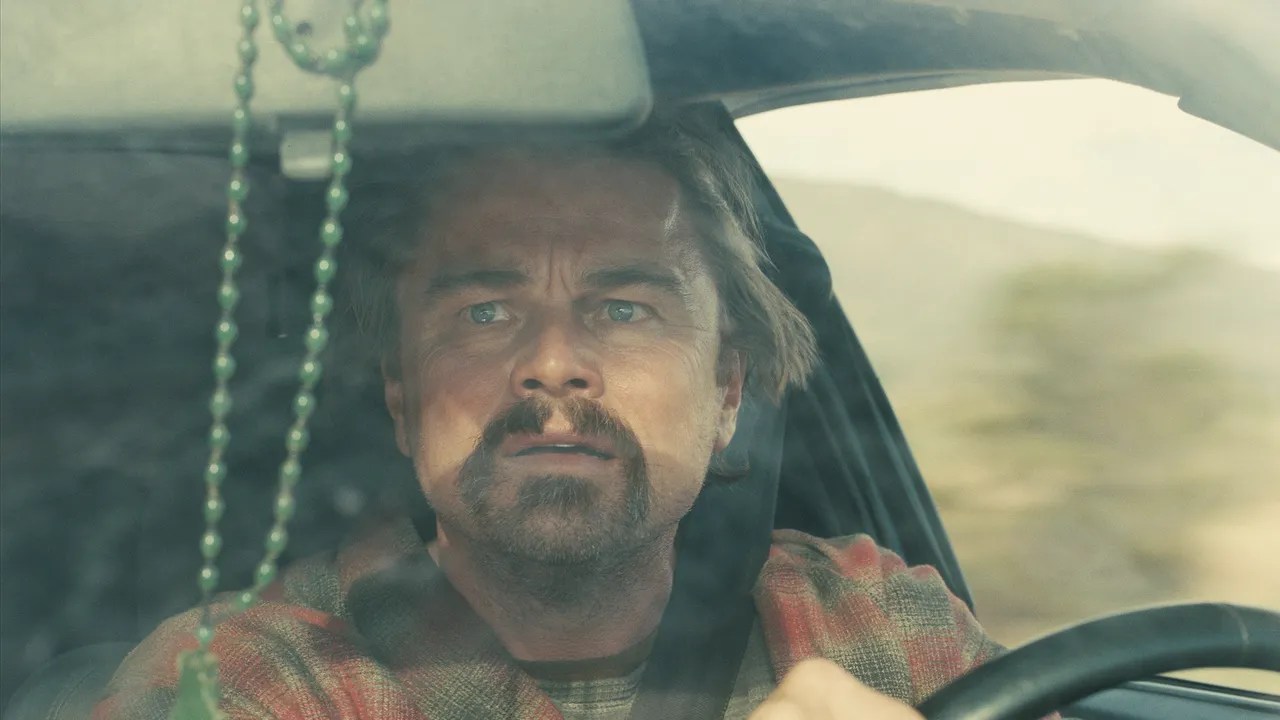
Last summer, when I first saw the trailer for Paul Thomas Anderson’s latest, I thought: how can all these wild images be a part of the same movie? A pregnant Teyana Taylor screaming as she fires an AK-47. Leo DiCaprio stuttering his way through a pay phone call with secretive language. Benicio Del Toro running down the hall and bowing to Leo in a beat that felt like an outtake of some forgotten Wes Anderson commercial. I just did not get how it would all coalesce. And after having seen the actual film this past fall, I still don’t quite know if the story comes together for me as well as the film thinks it does.
What I can’t deny is that for all my misgivings about elements of the story, the filmmaking on display is pure. The editing, across time and space: seamless. Johnny Underwood’s score: a perfect companion. The cinematography: as good as it gets, especially in the unforgettable River of the Hills car chase. On top of that: every actor here is giving their very best. If you’re gonna tell a story that’s a little shaggier, this is pretty much the best case scenario result.
But what I keep coming back to is Leo’s performance. DiCaprio has been turning in great work for decades now. There’s a reason why so many great directors insist on working with him. But here: his Ghetto Pat is the thing that ties all those disparate images from the trailer into a film that feels like it works. I think about how wide-eyed and stunned he looks in the opening scenes, not fully understanding exactly what he’s doing or how to be the most helpful, but eager to be a part of the cause any way he can. I think about that same stunned look when he sees Colonel Lockjaw for the first time in a grocery store, waiting in line to pay for food. When the film jumps ahead and he’s struggling to keep some proximity to his growing, rebelling daughter? Leo sells it. When he’s stoned out of his mind and frantically trying to find a goddamn phone charger and remember the password lodged somewhere in his brain? Leo sells it. When he’s chasing cars through the River of the Hills, the camera zooming in so tight it feels like a naval battle amongst tiny ships across an ever-powerful ocean, desperate to get to his daughter before anything awful can happen to her? Leo absolutely sells it.
I can still turn this movie on and be swept away by the sheer filmmaking of it all, of a team of collaborators working at the top of their game. But this is at its heart a girl-dad movie, and Leo’s performance here is one I won’t quite shake anytime soon.
12. Predator: Badlands
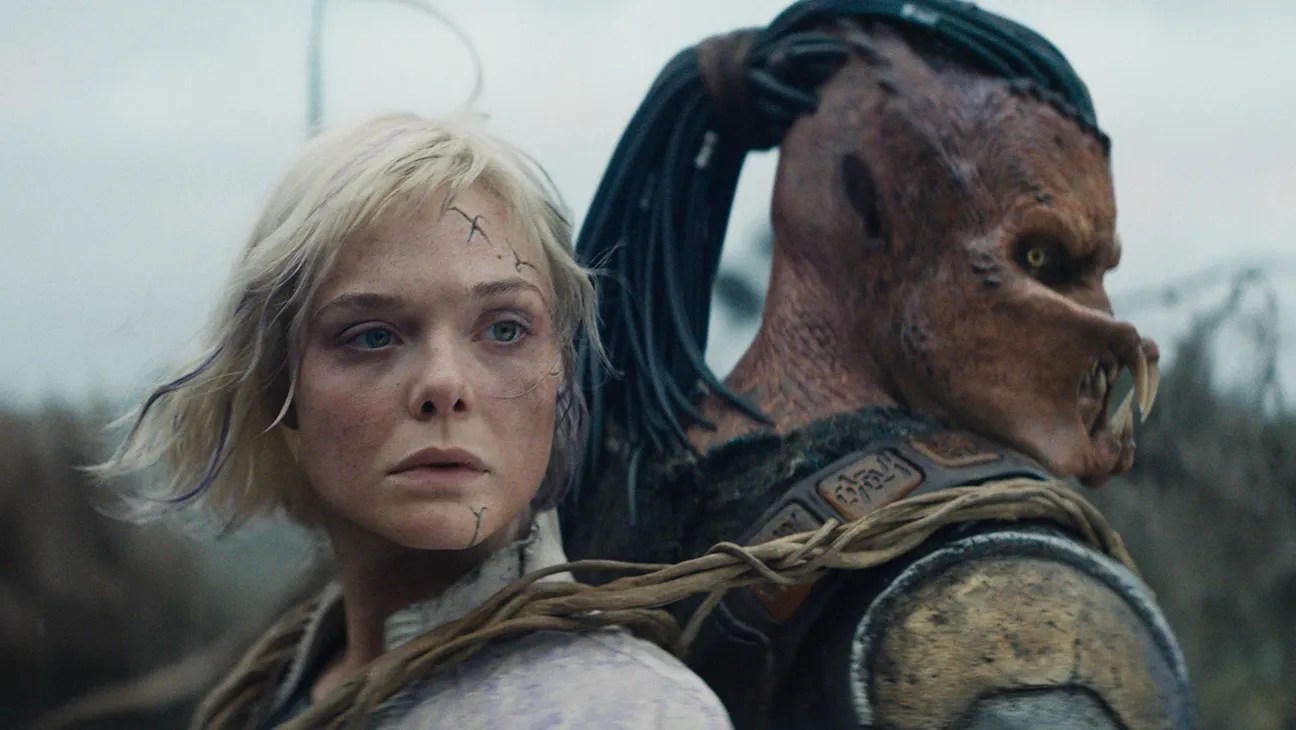
For anyone who felt the Predator franchise had too much toxic masculinity, this is your antidote.
Personally, I am not a Predator superfan, having only seen the original. Luckily, Dan Trachenberg knows there many are others like me. And he and co-writer Aaron Polic artfully lead the average viewer into a real hummer of an opening ten minutes where we learn about the home planet of the predator species, the way they mature, and the toxic masculinity at the center of it all. And then we’re off to a new planet, as Dek (Dimitrius Schuster-Koloamatangi) tries to prove that he’s actually just as badass as anyone else in his family. The goal: to bring home the most vicious predator of all, the one even his own ruthless father won’t bother with.
I adore the way this movie is showcasese a planet committed to kicking the ass of visitors who don’t bother to understand it. Dek uses force wherever he can; it never works. He’s only alive thanks to the help of an android named Thia (Elle Fanning, excellent and yet my 2nd favorite performance of hers this year), who is missing her legs and the rest of the mission party she was viciously torn away from.
What I especially love about this film is the way it does honors the action sci-fi of the Predator franchise with a message about what it mean to be an Apex Predator. Dek, early in the film, is told by Thia that the Apex Wolf is not the wolf that kills everything, but rather the wolf that protects all. It’s a subtle difference that somehow, even with the language and cultural barrier, is clear enough for Dek to digest. And watching him continue to fall on his stubborn ass in a way that not only hurts him but those around him makes the journey even sweeter. He learns how to lean into the environment. He realizes that it’s not out to kill him as much as it’s there to, like him, protect whatever it can. It’s a subtle shift done wonderfully and with great visual panache.
There are just so many little elements established in the beginning that pay off in increasingly satisfying ways in the final third. Tight structure. Great characters. Fun action scenes with real visual flair. What more could you want?
11. Not Alone Anymore: Marlee Matlin

Many classic films have premiered at Sundance in the historic Ecclestes Theater. It’s a place so storied that I expected it to look like something straight out of a 1950s film, with an overwhelming readerboard and gold trim everywhere. I wanted to see as much as feel the history. Turns out: it’s part of a community college. It’s easy to miss. It’s a reminder that what’s inside is what truly counts.
But I will never forget being there on January 26th, 2025 for the premiere of Shoshanna Stern’s luminescent documentary. A packed theater, sitting beside my Deaf filmmaking friends, totally prepared to cheer on this huge milestone. 2025 is the year Sundance had two major Deaf documentaries premiering at the same time: this documentary and Deaf President Now. We all knew how unique this experience would be. And we knew it might be a while before two major Deaf productions are in this festival at the same time. We dream to one day be not be so impressed; we know the odds, until we make them, are not in our favor.
Not only was this the premiere of the documentary, but it was the opening film of Sundance 2025. Just history upon history.
When I first heard about this film, I felt like Shoshanna Stern would be the perfect fit as director. I had become quite smitten with her and Josh Feldman’s This Close – a fantastic two-season series that I’m convinced will be rediscovered by Deaf and hearing generations to come. I knew she would be unafraid to go deep, to find the scar tissue beside the beating heart. And what grounded that potentially overwhelming experience at Sundance is the slow realization that she absolutely fucking nailed it. Marlee Matlin is a cultural shadow that I’ve lived in my whole life. But she became famous before I was old enough to understand her impact in the 80’s and 90’s. By the time my HS history class watched West Wing, of course they’d point out Joey. Joey felt like a reminder to my peers that being Deaf could be cool and funny. It never felt like Sorkin was making fun of us, but rather luxuriating in the personality, just like you would with any other character.
There is so much material in Matlin’s life that you can work with. But making it into something digestible is one thing. Making it something this heartfelt, and emotional, and funny, and punchy – just like Matlin herself – is a whole other wonder. I delighted in the way captions changed throughout, allowing us to see the history of access. I found my breath shortening as I watched Marlee deal with a Deaf community no one had ever explained to her. There is so much about this film that cannot be described as anything other than brave. Marlee’s brothers owning up to the challenges of growing up and seeing their current dynamic. The way Shoshanna shows what we all believed to be her happiest moment – winning an Oscar, given to her by your boyfriend onstage – only to return to it later, recontextualizing it with the truth, showing us just how fraught a moment it was for a terrified 19-year-old with an abusive partner.
But I keep coming back to the way Stern interviews Matlin. There is nothing but warmth and empathy. They sit on a comfy couch across from each other, directly looking at each other, two women connecting across generations in an area that just happens to have lots of expensive filming equipment surrounding it. Only Stern could have gotten this out of Matlin. Only Stern could have led her team to put this all together and helped us understand just how important this woman’s life is and how it feels to finally, if only briefly, feel like you’re not alone. And I’m so grateful it exists. What a gift. For Marlee. For film history. For us all.
10. Blue Moon

I practically came of age with Richard Linklater’s Before films. Before Sunrise taught me how transporting love could truly be. Before Sunset taught me how it’s never too late to recognize the right person you want in your life and to make sacrifices to get it. Before Midnight taught me how difficult it can be to make the dream work, what an argument that draws metaphorical blood can feel like, and how you can still find a way to time travel back to the moment it all began. To say the Before films are in my DNA is an understatement; it practically affects the way I turn my head towards the world around me.
So you can imagine my delight when the film starts off in this 1950s bar, all light and atmosphere, and we meet Lorenz Hart aka Ethan Hawke aka Jesse in a different body. For those who were waiting for Before Sunset to arrive in 2006, they were lucky enough to see him in animated, rotoscoped form in Waking Life, a bed conversation between Celine and Jesse in some Paris hotel. This Lorenz is even more animated than that animated Jesse. But for as much as I can see Jesse in the character, I’m still in a bit of awe of how smoothly Hawke embodies Lorenz. He gets him. He knows how lonely it is to feel like the only one wanting something real just as the world acts like moths gravitating to the warmth of a false sun.
On the surface, it’s about a musical genius who’s about to be consciously uncoupled from the man he’s written nearly a thousand songs with. Musical theater has never quite been my thing. For so long, it was deeply inaccessible. Now? It feels like playing catchup with a cultural getaway train. It’s long gone, and I’m okay with that, glad to board whatever station stop I bump into. And watching this on a plane without sound meant I could focus on the story and actors alone. Case in point: Andrew Scott as Richard Rodgers, Lorenz’s soon-to-be-former writing partner. Rodgers is premiering his new musical, Oklahoma!, a piece of work we already know will endure for decades after. But each time Lorenz approaches Rodgers, Scott beautifully plays that mix of emotions – of wanting to move on while wrestling with what’s being left behind. As riveting as it is watching Hawke and Scott play off each other, they masterfully make you feel the gut punch taking place.
It’s wildly entertaining to see Lorenz endure this movie-long losing streak because as much as it sucks for him – and especially because the movie lets us know from the beginning just how this is all going to end – it’s also deeply inspiring. This is a man steadily being hollowed out just as he remains committed to the beauty of the world. “You’re the best listener I ever met”, Elizabeth Weiland (a fantastic Margaret Qualley), says, and Lorenz responds with: “That’s because I have absolutely no interest in myself whatsoever.” There is so much story to be found in the margins of history, and I’m so glad Linklater and writer Robert Kaplow brought this to life.
9. Weapons
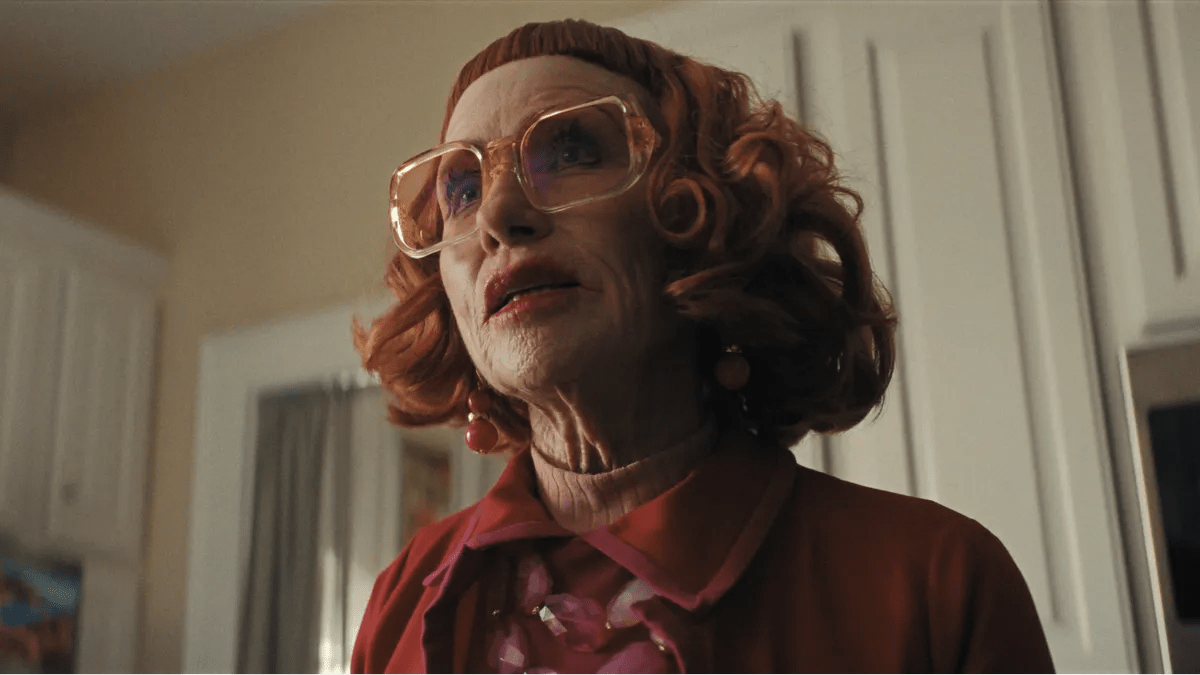
I am certainly not the first to recognize how Zach Creggor reminds us of Jordan Peele in that way their sketch comedy background transitions so well to horror. Comedy is all about tension and release. Horror is the same. It’s just that, usually, one tends to involve more terror and blood. Here, Creggor flexes those muscles with such careful, thoughtful camera moves and positioning, beginning with the arresting image of children fleeing their homes in the dead of night. I still think about one of my favorite shots of the year: when Justine (Julie Garner) is asleep in her car and we know someone is moving around to the other side. We can’t see who it is. But we can hear the door open and shut. We can see scissors coming close. It seems so obvious that someone is going to get stabbed. Instead: a clip of hair is taken. It’s death by a thousand cuts, subtle moves by a system that slowly drain us of our spirit and control while those at the top continue on, finding new horrors to inflict on others.
This film is satisfyingly full of flawed people. People we absolutely recognize. I absolutely know teachers like Justine (Julie Garner) who are well-meaning but unable to fully extricate themselves from weaponizing trauma or stress they feel at the job. Cregger does a fantastic job of showing just how isolating and exhausting her life is. There isn’t much to do when you don’t want to interact with a small town that doesn’t want to interact with you. And in the absence of having a job that gives you focus and purpose, it makes total sense why she’d take matter into her own hands – despite being warned several times not to – and see just what is up with this one surviving student and this big, baffling circumstance.
But then I kept thinking about this film, at church of all places, and thinking about how it’s maybe the most oddly uplifting movie I’ve seen in ages. Because think about it: this is a story that’s meant to be about how people are weaponized against each other. The witch (Amy Madison, fully deserving that Oscar) literally takes something about one particular person, mixes it with her blood, and snaps the twig, sending off a furious soul towards a target. And then the cycle doesn’t stop. She keeps creating new targets, and the net widens. All of these people – the teacher, the father, the cop, the druggie, and the principal – are all weaponized in some way. They are either being used as a weapon towards someone or they are a target that’s unavoidably caught in the crossfire.
What finally brings the Justine and Archer (Josh Brolin) – the father of one of her students – together isn’t having some deep, heartfelt conversation over a beer. It’s being nearly killed, multiples times even, by a weaponized principal. It’s only after they survive that they can see each other anew. Archer checks in with Justine, the same teacher he earlier wrote WITCH on the car of. Then he asks her if she wants to see something – a question that he’s asked just about everyone he thinks might be able to point him in some new, unseen direction – and they are off to comparing their notes. That collaboration is what leads to them finding the witch. Sure, they almost lose their lives in the process as other characters are weaponized against them. But the ending, the cathartic release, is not even possible without their teamwork.
And once they start putting enough together to figure this out? The kids are finally released from their mental and spiritual prison and make a beeline for the inner workings of this awful witch. They show no mercy, pulling her apart at the skin and organs, unraveling her bit by bit until she exists no more. So I’m not kidding when I say this incredible horror film is one of the most hopeful films I saw all year. The witch at the center of it all represents – at least to me – the gerontocracy that has held our country (and the world) hostage. Wealth and power is being hoarded at unimaginable, unsustainable levels and billions of people caught in the web suffer. Weapons shows us how we’re all going to have to work together, to say “Can I show you something?” to people we long held uninformed resentment against, to compare notes, to agree to see and try and do very scary things together. Only through this process will we ever find any kind of progress. Only then will we find our way out of the darkness and into the light.
8. Sinners
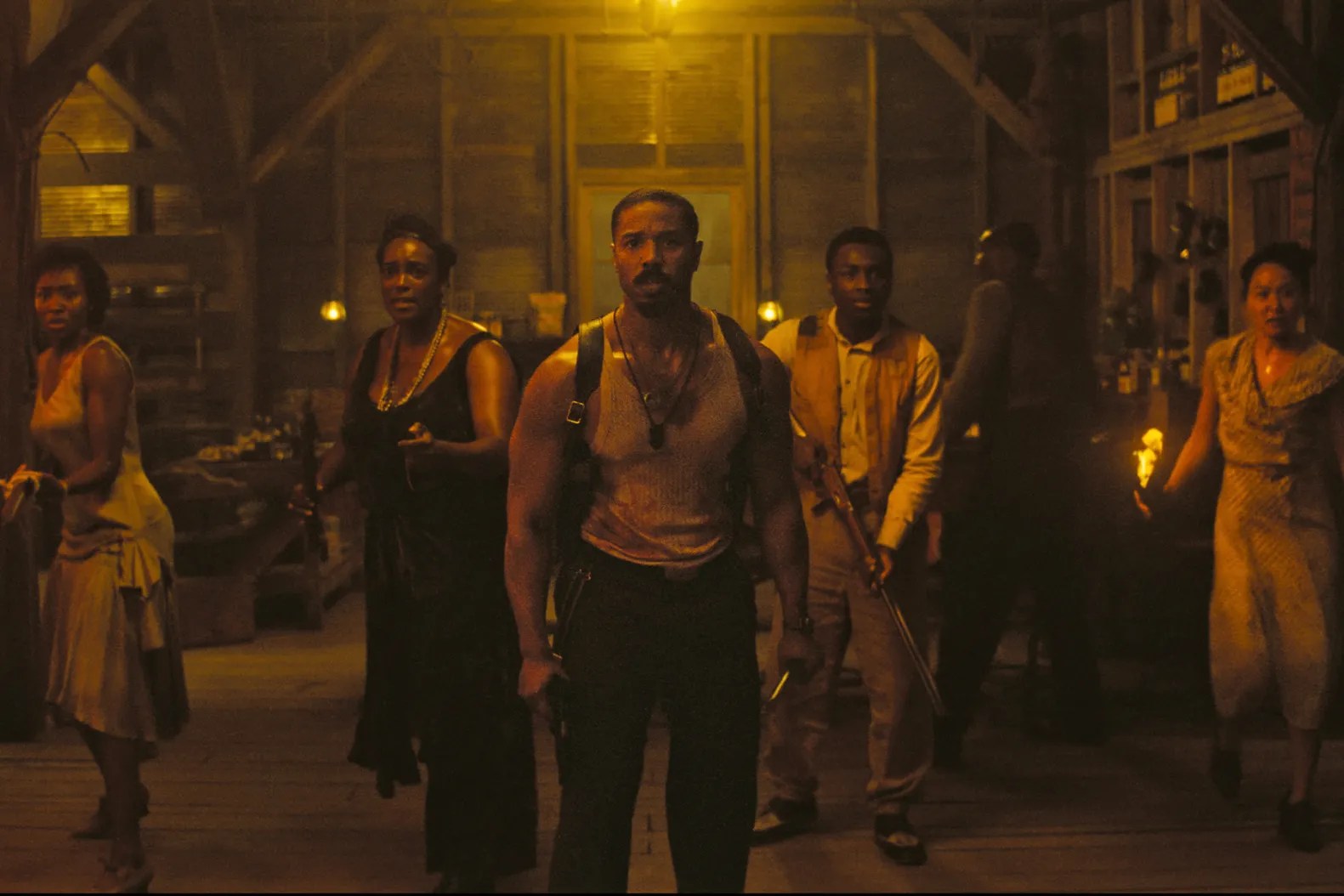
This is the film I’ve been dying for Ryan Coogler to make. I remember being a Creed evangelist, seeking converts wherever I could. And then reminding everyone, months before its release, how unique and special his Black Panther would be, rising above the grey Marvel molasses. I ached for him and his collaborators as they did their best with Black Panther II, a film truly about people doing their best to honor the fallen and persevere while still grieving. But that’s three films in a row operating in franchise mode, and Sinners is the first time Coogler gets show the breadth of his talent with an original story. It’s no surprise that the result is absolutely worth the long-awaited promise.
You can peel back layer after layer of thoughtful decisions in this film. Never have I seen the Deep South rendered this beautifully on the big screen. Autumn Durald Arkapaw’s cinematography brings everything to especially incendiary life, with the cotton candy pink sunsets following the baby blue skies, the shine of love next to the shadows of evil. Ludwig Goranson, one of my favorite composers working today, got nerdy writing most of the film’s music with a rare 1932 Dobro resonator guitar, resulting in a truly eclectic mix. And Coogler knew exactly how to once again bring out the best in Michael B. Jordan with his twin characters, leading to a well-deserved Oscar. Any film that allows Wunmi Mosaku to be an object of desire and gravity is going to get my attention. Even better when it fills out the cast with Delroy Lindo (wrongfully robbed of an Oscar for Da 5 Bloods – yes, I’m still salty about it!) and introduces the rest of us to Jayme Lawson and Miles Canton. Just riches upon riches.
What I come back to is the central metaphor: of people trying to build something they can call their own. And for that exclusivity to be a step too far for others with their own ticket through another door. Unfortunately in today’s America, we often see the ugliness that comes from those who are shut out of something not meant for them. And when that happens: you can only survive with those you built the magic with in the first place.
I don’t think Sinners is a perfect film. When the blood starts letting loose, ironically, the film seems to lose a bit of its thematic pulse. Maybe a rewatch will smooth those moments over. Maybe I’m just expecting too much. What I do know is that this is one of the most thoughtful films printed upon celluloid in 2025 and that it will be rediscovered and celebrated in the years beyond. I’m already salivating for whatever Coogler and his collaborators are cooking up next. But in this time of uncertainty – when Warner Brothers is potentially about to have new owners with highly questionable taste – I’m just glad a film like Sinners made it out.
7. K-Pop Demon Hunters

It’s so rare to be able to live through a genuine pop cultural phenomenon. Often, we’re trying to shepherd our friends and children towards a franchise we’re nostalgic for (Mario, Jurassic Park, Star Wars, etc), hoping they might find a train worth catching onto. But to be there in the very beginning? And to see it only grow? And deservedly so? It’s the rarest.
The beauty of the iterative process of animation is that the story is often refined for clarity and efficiency. Trying to explain the premise over FaceTime to my mother made me realize how bizarre and unexpected it is. But I got it within the opening minutes, and understood the stunner of a twist the first time we saw Rumi’s markings. It was only when I explained it later to other friends and family that I realized how crazy this story sounds. It shouldn’t make sense! And yet: it flows so well that my daughters watched it on repeat for what felt like months and I never, ever got sick of it. Everything about it feels so fresh each time around: the personalities, the humor both silly and subtle, the hint of darkness, the avoidance of any toxic masculinity. And to top it all off: the songs. My god, the songs. Someone recently told me that “Golden” is this generation’s “Let It Go” and while I entirely understood the point, it felt like it massively undersold the power of the music. “Takedown”, “How It Goes”, “Soda Pop”, and “This Is What It Sounds Like” are all permanently wired in my brain. Not even the best of Disney animated classics could claim 5 absolute earworms in one film.
What makes these songs stick are what I imagine makes K-Pop so infectiously popular: each song has so much dynamism, with so many sonic layers; each time through, you hear a little something new. And when you think you’ve heard it all, the layers change so often that a relisten never bores. It sounds simple, but it certainly isn’t easy. The hard work by the soundtrack’s team clearly paid off. KPop Demon Hunters as a film embodies that DNA with its own dynamic shifts within the film, and with layers of humor, personality, and well-designed action that make this a tirelessly repeatable watch.
6. The Secret Agent
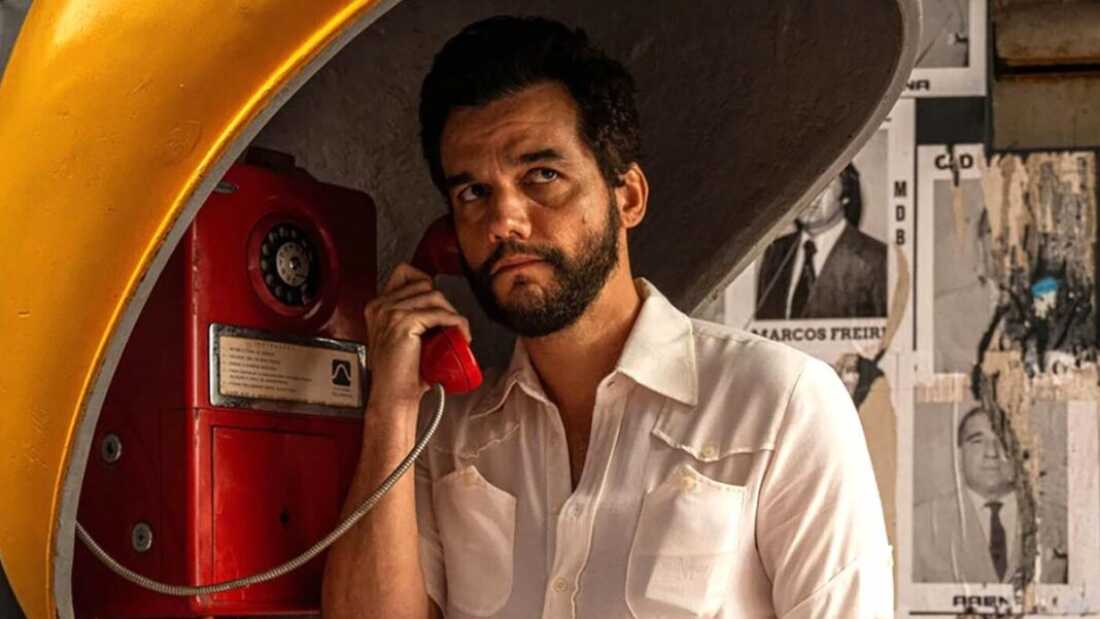
There’s a moment about halfway through the film where I started to think about the title of this film and what it actually means. Up until then, I had been under the impression Armando (Wagner Moura) was some kind of man with very special, unique skills. That he was coming from far away in his delightful yellow Beetle, staying in a very quiet, flavorful little hotel room – all for the purpose of laying low until his mission clicked into place, like some Brazilian James Bond.
But then he meets with two people in a secret room. You half expect someone to hand over a briefcase with more fake ID’s and mission details. There are Fake ID’s involved. But they are not for the mission you imagine. They are to safely leave the country. Here, Armando is informed he has a target on his back. Men are actively looking for him. The only crime he has committed is that he’s got technology he’s developed and that he’s refused to simply give away for free to a corrupt owner. It doesn’t make sense nor does it feel remotely fair. But it doesn’t matter: Armando must make some tough decisions if he wants to save his life and keep his son alive.
And then the film clicks into place in the future, where you see two college students listening to recordings of these conversations. They are trying to piece together a bit of the generational puzzle for a research project. The question then becomes: who, precisely, is the secret agent? Armando, fleeing for his future? Or the researcher determined to fill in a family’s historical gaps and share information meant to be siloed? It takes a while for the film’s true message to lock into place, but when it does, it’s utterly unforgettable. Two and a half hours completely flies by and then hits you right in the gut. What a stunner.
5. Splitsville

When you’re making a film outside the studio system, you have to have something that excites you. You need a shooting star you’re comfortable wandering through the night towards, year after year, because there’s no telling when you’ll arrive at your destination – if ever. Director/writer/actor Michael Angelo Covino and co-writer/actor Kyle Marvin both expressed in an interview the two parts that got them the most excited – a brutal, hilarious fight and a swirling, complicated 360 shot later in the film – and their enthusiasm is abundant as theses scenes play out. It’s a sign of the movie you will get: something daring and heartfelt and hilarious all at once.
I didn’t quite know what to expect going into this film. I definitely did not expect to be laughing out loud in a way I haven’t with a movie in years. Like, just even thinking about the purposefully cumbersome, massively entertaining fight that happens early in the film brings a deep smile to my face. A phrase I’ve become more comfortable with this year is the idea that some years question and some years answer. This is a film that feels like it’s a giant question in search of an answer, stumbling upon a subtle realization that the pursuit of that answer might be the worthwhile pursuit to undertake.
This is a delightful film of characters making bad decisions with their own internal logic – making it all the more relatable – and of seeing just how the pins will fall after each bowling ball of drama makes its way through. It says a lot about the movie that even a late appearance of all 6’7″ of Cousin Greg (Nicholas Braun) didn’t jar the film; instead, it felt like a piece of a whole, a tone in which many things can happen but all with an emotional honesty beneath.
At the end of the day this is a movie about two men slowly realizing they’re still the same 12-year-old nervous wreck in a 40-something body and trying to impress the women who are a few steps ahead of them. I adored it and can’t wait to hear the reactions from the next friends I recommend it to.
4. No Other Choice

One thing you learn from teaching 5th graders is that they are brutal about details they have yet to fully understand. They have not yet approached the world of student loans, rising grocery prices, or the enshittification of every once-great piece of technology. So what do I get the most flack for? My four-and-a-half-year old iPhone 13 Mini. They cannot understand how it’s so small. Or how it’s even usable. Or how it’s something that a grown adult would willingly buy.
But it is with this much-ballyhooed phone that I finally got around to watching Park Chan-wook’s absolute corker of a film, propped up upon a little stand built into the new Alaska Airlines plane seat, and without any sound. Running at 2 hours and 29 minutes, I didn’t know if I could make it all the way through without reaching for my laptop and a larger screen.
I never reached for it.
I found myself so wholly engrossed in what might be the best-shot film of 2025. Every single camera movement and frame is motivated and tells its own story. You don’t realize how much you don’t see movies quite like this anymore until they are playing two feet from your face on a screen your 5th grade students find comically small. And yet the absence of sound leant me further into what Chan-wook is doing with this tale and with his completely game actors.
Lee Byung-sun is, to me, like Leo Dicaprio in One Battle After Another: an endlessly elastic center for the film, like the tree a tied-up dog can stretch far from but never escape. So many emotions cross Byung-sun’s face throughout the entire film: desperation, pride, fear, joy, everything. You believe him as a man who cannot get his shit together just as much as you believe him as a man intent on performing the horrible crime of dismembering a person with a hacksaw before choosing a lesser fate of burying them like a tree (yes, this is very specific because, yes, it does happen). He is smooth at times and utterly, hilariously awkward at others. And you buy all of it.
Perhaps no scene illustrates what makes this film so special like a fight between 3 characters, all reaching for a pistol just outside their grasp. It starts simple, with Byung-sun breaking into a home to shoot a man he desperately needs to disappear, not realizing the wife of the target is approaching from behind. What ensues is a kind of brutal slapstick with elevating tension, just one little set piece of a story about the desperate methods we take when we feel we have no other choice.
And that ending? Whew, that ending. I will be sitting with that one for a long time.
Perhaps the best thing about watching this movie so intently on such a small phone is that it’s the first Chan-wook film I’ve ever seen. His name has floated around the film circles like a hawk, gliding above so many conversations, and yet I’d never seen any of his films (Oldboy, The Handmaiden, Decision to Leave). And now? I want to see them all. What a masterful director. What a timely treat of a film.
3. Sorry, Baby

“But, sometimes, bad stuff just happens. That’s why I feel bad for you in a way. That you’re alive, and you don’t know that yet. But I can still listen, and not be scared. So that’s good, or that’s something, at least.” – Agnes
You may think you’ve seen this kind of movie before, a cutesy little indie about a grad school writer figuring out her life. The trailer showed bits and parts of strong emotions and, of all things, a very tiny, very cute cat. I had no idea how something could be so profound and moving until I saw the full thing. But holy shit. What a movie.
Very, very little makes sense to Agnes in this life. And the way writer/director/actor Eva Victor structures this makes it especially powerful. We first see her a few years after The Bad Thing happens – even though we don’t yet know what the bad thing is – and she makes a promise to her best friend (Naomi Ackie) that she won’t kill herself. We get a great glimpse at the relationships between her and her former roommate, who she is clearly so excited to see. And then we go back in time to where things began, where they started to unravel. And the way Victor lays it out is revelatory.
There’s a scene deep in this movie where Agnes is at jury duty. Anyone who has been a part of any legal process knows that the system, as straightforward as it can seem from the outside, has uncomfortable grey areas. But as the lawyer leads the group through questions, Agnes starts asking questions of her own and can’t seem to decide if she should be dismissed from jury duty because the logic of what happened to her – and not wanting her attacker’s son to have his own family destroyed – is overriding the feeling of being isolated and left to figure it out. There is so much that doesn’t make sense. And Victor plays it beautifully, laying out the knot of emotions with stunning clarity.
This movie ascends the more I think about it. The little bits of wisdom and careful choices made. The way we never see the Bad Thing but only hear it from Agnes’ explanation. The bullshit they have to deal with at the doctor’s office and with the school administrators. The way nobody quite gets or every will get what is going on. And the way even the guy we are allowed to love – Lucas Hedge! All-around good guy actor! – suggests a life that turns Agnes’ warm bath water suddenly cold.
It’s very hard to make a movie about this subject feel so alive and funny, and yet Victor succeeds. The way she talks to Hedges about only having two hot dogs and no room for visitors. The way she lies about sneaking in a stray cat. How just when she hits a moment of clarity – that there is no way the professor actually liked her because he doesn’t respond like that to someone he actually respects – only to find out that he slept with a student he definitely does not like and can’t stand, and that he did it consensually. It’s an incredible way to show a low point, of someone seemingly out of the woods only to spiral from watching her house of mental cards – the one she constructed to help build herself back up from – completely collapse. It’s all in the little details, and Victor organically constructs them all so memorably.
And yet I still think about the final act, when her bestie comes back to visit with a baby in tow and Agnes – surprising herself – agrees to watch him. We don’t ever see her suddenly discover a motherly instinct, a too-cute ending that wouldn’t feel authentic. Instead, we see her become what the baby’s mother has always been this entire film, this entire story for Agnes: someone who will listen to her when bad things happen and simply be there. Bad things will happen, Agnes tells this little boy, but she will be there to listen and to sit with him alongside the way. Just like her best friend did. Just like Pete (John Carrol Lynch) with his offered sandwich. Just like the jury duty lawyer who, mid-conversation, recognized a wrong that had yet to be righted and gracefully got her released. Life is really lived in all the small, hidden places. And what a collection of places this astonishing film makes a home for.
2. Twinless
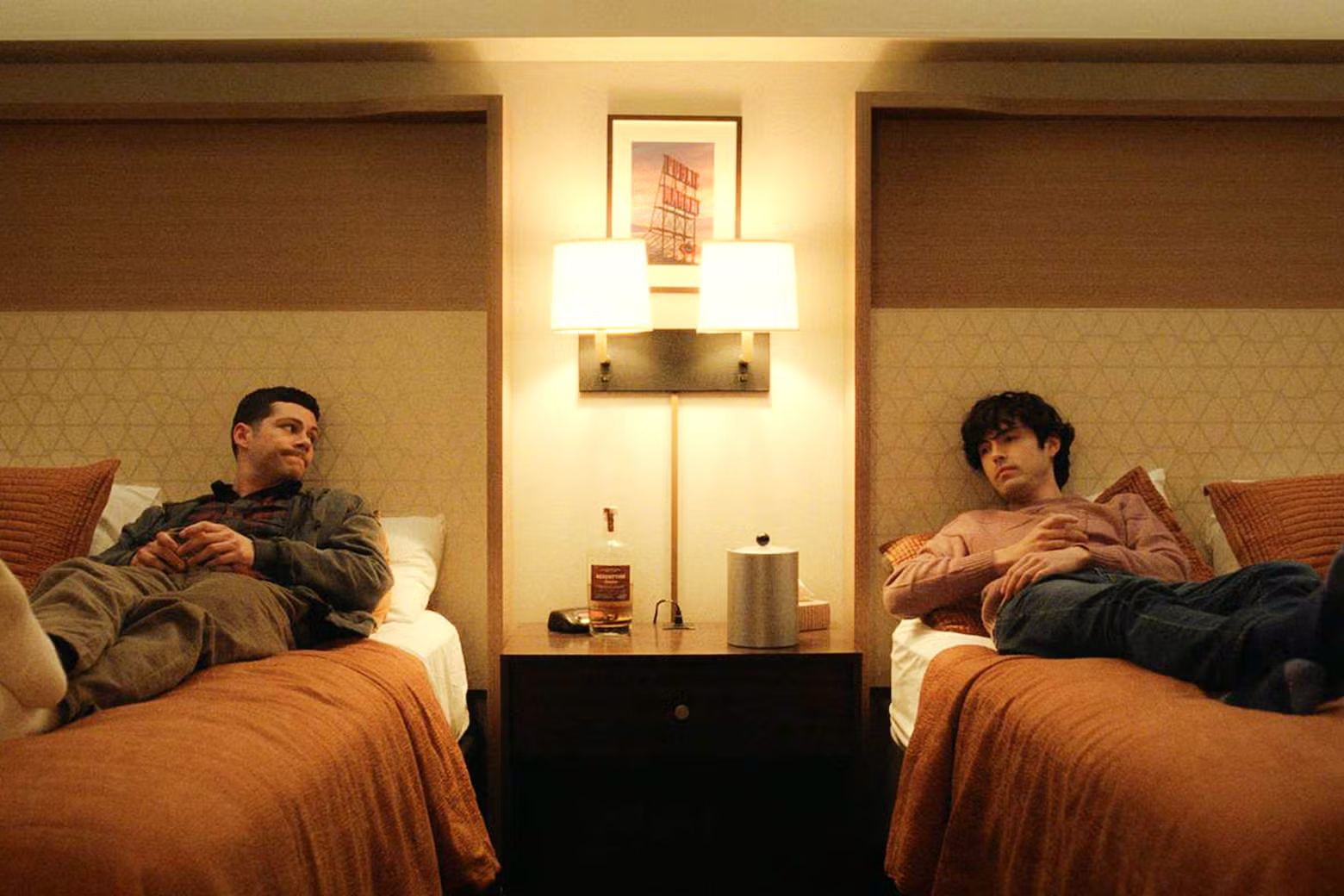
“You know how people say ‘just be yourself’? Like, what version of me? I hate most of them. But the version of me that was just hanging out with you, I… I wanted to be him all the time.”
As confident a movie I saw all year, from first frame to last. What really propels this film into something special is the mesmerizing way Dylan O’Brien plays both twins. We can see the hills of one while we ride through the valleys of the other. It’s delicate, vulnerable work that requires an actor to get it and O’Brien brings as memorable a performance as I’ve seen all year.
The story alone is fascinating, but writer/director James Sweeney isn’t content to let it rest just there. He finds ways to elevate everything with careful shot design and incisive editing. Case in point: there’s a shot near the middle of the movie – the point of no return – when Roman (O’Brien) and Dennis (Sweeney) arrive at a party and go two different directions. The screen splits with them, taking turns with showing dialogue and action. We see Dennis fall flat with a man every bit as adventurous as he is timid. And we see Roman meet the woman that will change his life for the better. You know this isn’t something that is going to end well for Dennis, and yet the split screen makes it clear they are going to meet. We see Dennis’ head poke up above the second floor and as the frames start to blend, where you think it will end and where it begins is not quite the same thing. And yet. It’s blends perfectly. The way that split frame coalesces into a collision of release and heartbreak was enough to make me internally pump a fist and shout “Movies!” That’s what makes Twinless so good. A narrative of escalating conflict that somehow completely earns an ending I didn’t see coming.
The best films I saw this year reminded me of the power of efficiency – of how to tell a story that gets its fangs into you in as few scenes and locations as possible. Regardless of the budget level here, everything is maximized. And actors, fully understanding the assignment, all come ready to play. You can see in real-time a very fine actor like Sweeney slowly leveling up his game to match O’Brien’s big-hearted performance. And this movie is funny. Masterfully structured and plotted. Heartbreaking. And ending on note that makes you believe there is room for healing and community beyond our wrongheaded yet well-intended decisions.
1. Sentimental Value

There’s a moment deep in the film where you see a character you’ve learned to care deeply about move towards a decision you can, unfortunately, see coming. It’s a portrait of someone living within a generational echo without realizing it. You almost want to reach out and interrupt it just as much as you realize this was perhaps inevitable. And then you see her wait behind a door, listening, and you realize this is the project the character initially rejected being a part of. This is the bridge, the apology, the leap of faith. This is everything her own father could muster, even if it looked self-serving on the outside. This is art that can heal.
I can’t say enough about the acting in this film and the process it must have taken to get all these actors to where they are, let alone for Joachim Trier and his cinematographer Kasper Tuxen to survey so much genuine emotion from all involved. Trier used to be a champion skateboarder and has said that he loves nothing more than setting a camera on his shoulder and filming handheld, which he estimates to be at least 60% of how Sentimental Value was shot. You can imagine his director’s eye swerving through the locations, forever curious with his actors while respecting their space and process. Stellen Skarsgård, Renate Reinsve, Inga Ibsdotter Lilleaas, and Elle Fanning all do incredible, brutally honest work throughout. You only get here by trusting the artists and the process.
I still think about the first time we meet Elle Fanning, playing the fictional American actress, Rachel Kemp, and desperate to break out of the confining rom-com box of her young career. She’s at a retrospective at the Deauville Film Festival for an aging director, Gustav Borg (a never-better Stellen Skarsgård), and as the lights come up at the conclusion of one of Borg’s films, she is absolutely soaked in tears. Just truly flattened. It’s only one shot, but it says it all: this is someone gobsmacked by the material she’s longed for, by the kind of stories she’s yearned to tell, and here it is, the opportunity right in front of her. Fanning continues to amaze in the way she makes it clear Rachel is not quite the level of actress Gustav’s new film needs, but she’s curious enough to ask the questions help the project reach the impact it seeks.
Later: Kemp is reading a key monologue, her voice building and breaking in equal turn as she brings it to tear-soaked life. It’s an actress pushing herself out of the shell previously built for her, a shedding of an exoskeleton once too constricting. Fanning completely devastates and Skarsgård expertly shows how deep this story really runs within him. And then later, the same monologue is read by his daughter Nora, whom it was always intended for. Riensve begins it like reading a news article, walls up and prepared for any bumps. But then she slows and lingers and when it finally gets to her, the emotion catching up to her? Cinema. Absolute fucking cinema.
What I still think about all these months later is something I initially felt was a fault: a fade to black between scenes that my brain, for whatever reason, wanted to instead lead to smoother, more fluid cuts. Perhaps I wanted the story to connect in a way it was never attempting to. But in the days after seeing it, I realized those fade-to-blacks are one of the most powerful decisions that Trier makes. Because in starting over after each fade, we don’t know if the next scene is in the past, the present, or the movie within a movie. Sometimes it’s not clear until nearly the end of the scene. It is enveloping us within this generational echo before we realize it. These are people trying desperately to break out of grooves while finding themselves eternally stuck.
What an incredible collection of performances, of writing that allows us to see the way life echoes art and art echoes life, and to tie it all up with patient, thoughtful editing and intimate cinematography. I didn’t really know at the end of this film if it would chart this high on my list. I needed time to digest it. But I haven’t been able to shake it or stop thinking about it since. It is, for me, the film of the year.
