ADAM MEMBREY

  • ABOUT ME
  • FILM
  • MUSINGS
  • BOOKS
  • DRAWINGS

Adam’s Top 11 of 2021

April 23, 2022 by Adam Membrey

Parenthood does wild things to your brain. You may have noticed it’s nearly May and I’m just done writing about movies that came out in the 2021 calendar year, a time that ended nearly four months ago. I used ‘nearly’ twice in the previous sentence. Time is relative these days. So is my amount of working brain cells.

Another example of parental brain warp: I struggled initially to come up with enough movies to fit this list. Admittedly, many of them came in the opening months of 2022 as I tried to catch up with all I felt I missed. And there are still many more films I have yet to see and will surely be talking about in the future, including: The Green Knight, Drive My Car, Nine Days, The French Dispatch, West Side Story, Nightmare Alley, Titane, to name a few. Yet as I set up this lighthouse of a list, stray ships slowly came in from the fog. I had, it turns out, seen more than I realized. I found small joys in the big things and big joys in the little things.

I’ve heard it said that parenthood doesn’t make you necessarily feel anything new, just the same things even deeper. Your mind plays over all the ways things can go wrong and the devastating despair accompanying it. And then you have moments where your daughter sits there, looking at you, a look of love and calm no island vacation could ever compete with. Some of these movies made me cry harder than I ever in my life. Some of them made me laugh so hard I was sure I discovered the center of my body, the place where my contracting abs finally hit a wall. And some of them baffled me in ways I could only grow to appreciate because the world looks so different – both simpler and more complex – when you see it through the eyes of a parent. There is no going back to the way I saw movies before. This is the new norm. And it’s pretty dope.

A Dress of Delightful Excess: House of Gucci 

Everything about this movie is too much. It may be too long. It tries to squeeze a lot of disjointed story into its movie sleeve. It’s got one of the weirdest sex scenes I’ve seen in a long time. Jared Leto successfully disappears under layers of makeup. Everyone wears delightful outfits. Lady Gaga gives it everything and her accent is a choice I nevertheless greatly appreciated. The entire cast is clearly enjoying their time making this film, clearly enjoying the pageantry and scenery of it all. And then Ridley Scott just makes it all move at such a clip that you don’t realize until the end you’ve seen just about the wildest fashion house story ever told. 

Embracing the Inner Child: Godzilla v Kong 

This is the rare blockbuster franchise film that seems to get what many others of its kind don’t: sometimes the most logical thing to do is to embrace the child logic we’ve long abandoned. The coolest part of Transformers as a kid was not the 20,000+ moving CGI parts we could see but never comprehend onscreen (as you can see in any of the last 5 Transformers). We didn’t need an explanation or realism; it just looked cool. The best Transformers film of the last ten years is actually Pacific Rim, which embraced simple concepts with gorgeous complexity, all while never forgetting these were giant, thudding machines and beasts beating each other up.

There is no better use of awesome child logic than when Godzilla fires a blast of atomic breath straight from the Earth’s surface to its center, opening up a passage to Hollow Earth. It makes no goddamn sense, and yet: I cackled with utter, complete glee. There is surely some in-universe explanation for all this (being drawn to power sources and blah blah blah) but all I could think of was an increasingly petty, increasingly insecure Godzilla just done with Kong talking shit about him.

The absurdity of it all only increases from there as Kong discovers a Battle Axe built by his common ancestors, furnished with a torn-off atomic dorsal plate of Godzilla’s ancient kin. Like, did I really just see a major blockbuster film suggest a wild ancient history of titanic creatures fighting each other in ways only dinosaurs could dream of? This is a film that gets it. Sure, there’s bizarre narrative dressing involving (mostly delightful) human actors, all doing their best to make the film feel a little more weighty than it really needs to be. But God Bless Warner Brothers and Legendary for allowing a film with two 300-foot plus behemoths to be this wild and weird.

The Lost World Award: A Quiet Place Part II

Three years after the monster success of Jurassic Park, Steven Spielberg arrived with its sequel, The Lost World. The dinosaurs became even more front and center, with ever-improving CGI and animatronics. Spielberg cranked the action up by several magnitudes, with an unforgettable trailer cliffhanger, weaponized jeeps chasing fleeing, desperate dinos, two T-rexes tearing a man apart, a gymnastics-inspired raptor fight in an abandoned building, and a rampage through San Diego. It’s a movie that perhaps took the wrong lessons from the first film and blew everything else up. Yet so hypnotic is the result it took me over half my life to realize I kept falling asleep during the movie because it wasn’t that great.

Writer/director John Krasinski is very much channeling more-is-more TLW Spielberg with the way he repeats the structure of the original and uses the sequel as an exercise in showing his filmmaking muscles, going bigger and wider and louder. I just wish he went deeper. 

Everything about this movie can be summed up in a chase scene early in the film. Desperate to escape a chasing monster, the entire family runs through an abandoned barn towards the camera, debris falling behind them. Notice how I said ‘behind them’? That’s because there’s no sense of danger. Yes, there’s a monster jumping and throwing its weight around. Yes, there are scaffolds and platforms and bits of metal and concrete falling. But it never feels like Emily Blunt or her kids are ever threatened. It reminded me of the sequence in Peter Jackson’s King Kong – another instance of a new blockbuster director draped in excess – where the entire team tries to outrun a desperate, sprinting stampede of dinosaurs. The actors are doing their best to sell it, but the iffy composite work breaks the illusion: we know they’ll live.

It was maddening in the first film how often the ASL would get cut off by the frame. This happens several times in the sequel, and it feels like a metaphor of sorts. The aim to scale up the scope and craft pretty images ends up handcuffing the story it may be trying to tell. Just like with Lost World, the actors absolutely give it their all, drawing you into a deeper film that’s not quite there. And just as Lost World moved beyond Isla Nubar to the show fresh destruction in San Diego, Part II finds an island it nearly just as quickly destroys.

You know it’s a sequel when they Millicent Simmonds use her makeshift CI against a bigger speaker for a bigger signal across a bigger expanse of land. This isn’t the first sequel to repeat an original’s structure while dialing up everything else, and it certainly won’t be the last. But for a film franchise so obsessed with sound, it would be nice to see it return to finding the unmistakable, emotional signal amidst all the noise.

Try So Hard, Die So Hard: Space Jam: A New Legacy

You can see the thinking: bring on LeBron James – the man argued on a daily basis to be either the Air Apparent to Michael Jordan or everything MJ isn’t, depending on which side of the generational divide you talk to – and bring in a producer like Ryan Cogler, the writer/director behind the immensely successful Black Panther, and try to make a movie that’s actually good and not ironically good like the original. 

But sometimes the problem with having too many good intentions in the kitchen is that you overdo it: you make a meal so large and varied, no one could possibly enjoy it. Space Jam: A New Legacy is the filmic embodiment of a food coma – too much to absorb in the moment, and something you won’t remember the next day. 

You can follow the film’s logic. It wants to be hip to the audience, thinking itself especially clever for coming up with a villain that’s literally an algorithm. But what it seems to show in self-awareness feels to be a complete lack of it. It wants to be meta without understanding the meta its chasing is deeply unflattering. At times I didn’t know what movie it was trying to be: a good one, a clever one, or a shameless plug for HBO Max. There are elements of a good film here, with the way the conflict between LeBron and his tech-loving son plays out, the way the final game relies on LeBron himself accepting his son isn’t like him and should be allowed to pursue his own thing. But it will never not be disorienting to see the Night King, the It Clown, and the A Clockwork Orange gang cheering from the sidelines of a supposed kids film. In the end, the villain isn’t the algorithm; it’s Warner Brothers’ own hubris, assuming the algorithm knows us better than we do ourselves. But we’re not fools: we recognize when we’re being played. 

A Hopeful Beginning: CODA 

I love Twitter for the variety of takes it exposes me to. It helps me see my own blind spots and sometimes violently disagreeing with something helps me clarify my own thinking. But sometimes there is such a thing as reading too many takes. Where the topic is so sensitive and complicated that you can’t help but feel Twitter has hooked you into a kind of Brain Matrix, where you cannot separate your own thoughts from the Twitter hive mind. 

This was CODA for me. From the minute the first trailer hit, much of Deaf Twitter had a strong opinion, to say the least. It felt like the film would lean into harmful stereotypes we’d been working for ages to dispel. By the time the film rolled around, months later, the matrix had bored its way deep into my brain. In the months after seeing it, leading all the way up to the Oscars, I fluctuated between feeling like I was being too hard on it and, at other times, like I was being too passive and gentle. 

I choose instead to look at CODA as a beginning. It gave us our first Deaf Oscar winner since Marlee Matlin 35 years ago, paving the way for Troy Katsur and Youn Yuh-Jung to give us one of the most touching Oscar moments I can ever remember. Writer/director Sian Heder winning Best Adapted Screenplay gave her a chance to be a true ally and bring an interpreter on stage with her for her acceptance speech. And the many ways Heder and her team did their best to create an accessible set for her Deaf stars hopefully sets the standard for Hollywood from here on out. Let’s hope this is just the beginning and we’re well on our way to ‘narrative plentitude’. 

WTF Twist of the Year: Malignant 

There is a very, very specific tone this film carries through the first two-thirds of its runtime. James Wan and writer Akela Cooper know how to keep the scenes serving as building blocks for a narrative while doubling as possible clues to the final twist. When it finally comes, it literally unleashes a particular brand of hell delivered with utmost glee and confidence. This is a show delighted to exist and clearly fun for everyone involved to make. The energy is infectious, all the way through its batshit crazy final minutes. 

Return for a Better Grade Award: Zack Snyder’s Justice League 

There was no reason for this to exist. At no point during Joss Whedon’s 2017 version of Justice League – a film he took over after Snyder had to step aside to deal with a family tragedy – did I feel like the film had been wronged. Truncated, maybe. A weird hodgepodge of styles, yes. But a genius project deprived of enough air to truly soar? Seemed unlikely.  

Warner Brothers set a horrible precedent in spending many millions on allowing Snyder to go back and fulfill his vision. Way, way too many film journalists were harassed, doxxed, and harassed some more by fervent, deeply misguided fanboys in their pursuit to “Release the Snyder Cut”, a cut that, for all intents and purposes, did not actually exist. It’s one of the most toxic campaigns ever conducted. It should have been ignored. But desperate for some top billing streaming content to debut with its new app, HBO MAX, Warner Brothers gave in, to the tune of $70 million. I still think this should never have existed. However.

Two things can be true at once. 

The way this previously two-hour film got blown up into four-hour, six-part film, showing in bizarrely letter-boxed 4:3 ratio, often feels far too much like a student redoing and returning an assignment for a few extra points. They were never gonna get an A, but at least the effort will be rewarded with a slightly better grade. There is far more CGI, of varying quality. The villain is redesigned because more is more. The story is shifted and significantly restructured in parts. I’d be useless to tell you how much has really changed since the original was so deeply unmemorable beyond Henry Cavill’s CGI mouth. 

And yet.

A lot has been written about Whedon’s behind-the-scenes treatment of Ray Fisher and his Cyborg character, which felt marginalized in the original film. A lot of reporting has brought to light just how toxic a dynamic Whedon created on-set, for Fisher and for many others. So it’s pretty nice to see Cyborg’s role restored to its beefier status as the beating heart of the team, and for Fisher’s committed performance to truly get a chance to shine. You can imagine how demoralizing it must be to win a role you’re convinced will level up your career, only to be pushed off the screen and fighting a battle in the press for some accountability of the way you’ve been treated. The best story of Zack Snyder’s Justice League isn’t the one onscreen, but the ones along the margin it restored.

The Icarus, You Brave, Crazy Soul Award – Annette – written by Sparks (Ron & Russell Mael); directed by Leos Carax

I am so glad a movie like Annette exists. I don’t know that it’s necessarily a good movie. But it is an amazing movie. It matches the high-brow – great actors like Adam Driver and Marionee Cotillard – with the possibly lo-brow in a simple story of love poisoned by fame and jealousy. Oh, and there’s lovechild puppet, played completely for real. 

I thought a lot about Carax’s last film, Holy Motors, and how it was one of the last pure cinematic experiences I could remember. Aided by Alamo Drafthouse’s No Phones Allowed policy, we all sat in the dark, both narratively and literally, awaiting the craziness. I know for a fact none of us in the audience would have appreciated the movie the same had we watched it from the comfort of our own home. The claustrophobic nature of it all kept us so locked in so we could hum along with every bit of this fever dream of a film. 

Annette, for the most part, had to be seen at home. And you can feel how badly it needed to be seen in a theater. I applaud Carax for his bold vision and for Cotillard and especially Driver going absolutely full-tilt in their roles. Also: “Stepping Back in Time” is a total banger. 

Reclaiming the Narrative: The Matrix Resurrections – written by Lana Wachowski, David Mitchell, and Alexsander Hemon; directed by Lana Wachowski 
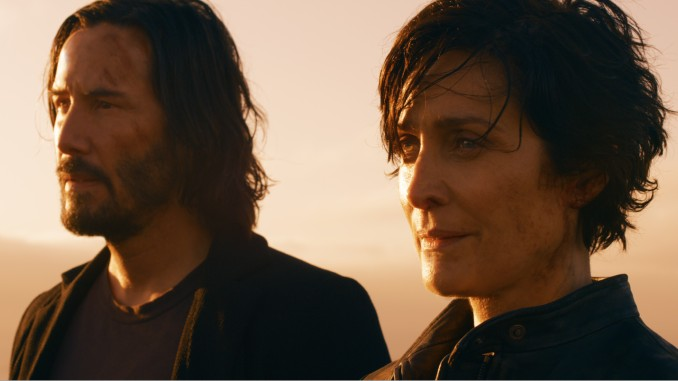
Perhaps it’s just my exhaustion from the daily fanboy whining and entitlement I see on Twitter everyday, but few things delight me more than an artist who reminds us, as we should be reminded, that they do not owe us a single goddamn thing. The way Lily Wachowski destroys all your expectations in every aspect of this film is something that still brings a smile to my face. She saw the way the franchise had been purposefully misunderstood and weaponized by some of the worst people around, and how it would only continue to sink further into the moral morass if she didn’t do something about it.

This is a film made by a voice emboldened. You can tell she wants to wrestle back ownership of the narrative once taken away from her and her sister, and she’s going to cauterize every wound in pursuit of a clean, satisfying ending. The door is open for more, you could say. But I felt like this was a filmmaker who rediscovered purpose in her life – after suffering significant loss – and could only smile, after being so long in the dark, at the open sunshine ahead of her. 

The Arrival Award: Pig

It did not take long for Arrival’s first trailer to convince me I needed the whole meal of a film as soon as possible. By the time I finally saw it, I was coming straight from a long day of teaching. I figured the popcorn and constant munching would keep me awake. It failed. Perhaps it was the conditions created from the AC coolness and the new and very comfy theater seats. I have no idea. I just know that, despite my best efforts, I passed out for a chunk of this movie’s middle, only to wake up just as the incredible story turn takes place. You know, the one that makes you go, “Oh. My. God. This is the best movie ever.” And here’s the thing, the only reason I did not declare it the best movie ever afterwards is because I felt like a judge who stared at his phone too long before looking up for the figure skater’s final, dazzling move: my authority just wasn’t there. What if what I missed wasn’t that great? What if I fell asleep for reason not contingent on the theater but for the movie itself?

(Spoiler: it was definitely my fault.)

A very similar thing happened with Pig, a movie perhaps irreparably harmed by the misconception this was just gonna be John Wick but with Nicolas Cage and a dead pig. I kept waiting for the film to shift into something more in line with expectations, and yet it impressively fought me at every turn. This is such a deeply soulful film. So, of course, I had to succumb to the comfort of the couch and pass out through a small chunk in the latter half. Yet, as with Arrival, I woke just in time to see the climatic scene where the film finally lays all its culinary and thematic cards on the table. It’s so vastly different an ending than I ever expected, and one rich in metaphor and emotional depth. It’ll remind you of how good food can be just as much of a memory-packed time capsule as music, books, or film. Art you can and should truly digest. 

11. Barb and Star Go to Vista Del Mar – written by Kristin Wiig & Annie Mumolo; directed by Josh Greenbaum

My wife and I first watched this less than a month into being new parents. We were sleep-deprived. I remembered really enjoying this film, but felt most struck by the adorable, enduring friendship between Barb (Annie Mumolo) and Starr (Kristen Wiig). The thing about being a sleep-deprived parent is you’re likely to forget a lot of plot details and only the essentials will remain – if even that. So I went over Wikipedia to remind myself of the actual plot of this story and, whew. They sure packed a lotta plot into this thing. But they also had a blast doing so. Wiig plays a truly bizarre, totally effective weirdo villain by the totally really name of Sharon Gordon Fisherman. Jamie Dornan shows up and kills it. Even Reba McEntire has a hilarious running gag of a role as Trish, the water spirit. 

You can tell the entire cast had a complete blast making this inspired bit of absurdity. But what I keep coming back to is Barb and Starr. It’s hard to believe it’s been over a decade, but Wiig and Mumolo earned a well-deserved Oscar nomination for the BRIDESMAIDS script they co-wrote. The true key to that film’s runaway success was the film’s central friendship, between Wiig and Maya Rudolph, clearly modeled upon Wiig and Mumolo’s. It’s really sweet to see them aging up the friendship while keeping the same bond in Barb and Star and daring themselves to go even weirder than ever before. Who knows? I have no idea what their next film with a central female friendship will be about, but I hope it goes as inspiringly, delightfully weird as this one.

10. Luca – written by Jesse Andrews & Mike Jones; directed by Enrico Casarosa 

At some point, it gets old to see corporations fund stories that work harder to save the planet than the corporations themselves. Disney has insane cultural, technological, and economic power, and yet: it will probably plant a million more trees for Avatar 2’s release in December and then will go about its way perpetuating some of the worst impulses of capitalism. Sometimes I wonder if there’s a mandate in the highest of corporate offices that at least 75% of the big-budget films (which is all Disney seems to make these days, anyways) must be about saving the world, just so that the audience may be lulled into thinking that, actually, guys, everything will be fine no matter what cruelty of indifference the moneyholders show the rest of us. All of this to say: I’m so glad to see a movie with such small stakes again. The world is not in danger of ending, but a friendship is – and the beauty of Pixar is how they make both scenarios equally terrifying to consider. 

I will never forget the moment Luca exposes his friend and yells “Monster!”. The look of betrayal on Alberto’s face could crush a thousand hearts. It’s awful. And you’re fully aware in the moment of just how mean it all is. The central sea monster metaphor may get muddled at times, but the way the story can go from that cruel moment to its warm, heartfelt ending is a bit of Pixar magic.

9. Encanto – written by Charise Castro Smith & Jared Bush; directed by Jared Bush, Byron Howard, and Charise Castro Smith

Among the many things to admire about Encanto – the stunning and inclusive variation in character models, the earworm music – I keep coming back to the way it personifies the fracturing of a family. We’re told for so much of the film that Mirabel doesn’t have a talent, even though we know she’s going to turn out to have one. She has to! This is the Mouse House, after all, the Kingdom of Happy Endings! But I did not expect the film to curve further and further inward until you couldn’t help but feel everything it wanted to say. Mirabel just wants her family to be happy. She wants the status quo. She wants peace. But she cannot stand the idea of her being the reason for it being broken. The way the whole family heals whole again, all from the efforts of a determined Mirabel, is as inspiring a story as anything Disney has been a part of. 

8. Raya and the Last Dragon – written by Qui Nguyen & Adele Lim; directed by Don Hall, Carlos López Estrada, Paul Briggs, and John Ripa
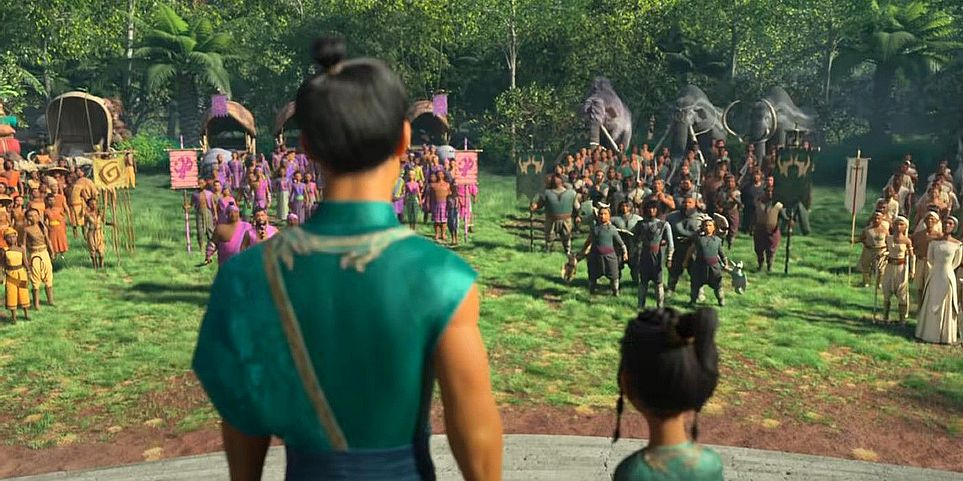
We’ve all heard the phrase “in these divided times” far too much. And the many variations spun out of it only make it more nauseating. We know. We get it. And yet because there’s so many capitalistic forces working above us as we toil below, it can be easy to feel defeated and to feel like that’s just the way it’s been, it is, and it always will be. And yet. Sometimes seeing how simple things fracture allows us to see how they can – one day – be brought back together. Sometimes, a little trust is what thaws the coldest heart.

I hoped, after the way Disney and Lucasfilm absolutely did Kelly Marie Tran dirty in Rise of the Skywalker – really, it did a lot of fine actors dirty – that they’d throw their full synergistic corporate energy behind Raya. And yet it had the misfortune of being stubbornly released in the thick of the pandemic, when vaccines had just been released and people were still unsure of the movie theater. 

It’s a true shame because once the film gets past the aggravating Awkwafina AAVE, there’s so much to treasure about it. The way it opens and ends with the same event, separated only by the one side of betrayal, hurt, and loss, and the other with renewal, trust, and community. The way it allows people to have a change of heart. It’s not easy to make a movie about trusting others in such fractious times as we live in now, but the team pulled it off. And through it all, there’s a powerful heart beating beneath it, unafraid of grief and not having all the answers. All of this leads to a cathartic ending that hurt my chest and left a stubborn, yet welcome lump in my throat.

7. The Suicide Squad – written and directed by James Gunn 

It’s so bizarre to see James Gunn – once considered the heir apparent to Joss Whedon (yikes) as the Chief Architect of the MCU – having such a blast in the DC sand. It took a pretty unfair firing (for some admittedly terrible tweets from over ten years ago) from his third Guardians of the Galaxy film to set this all in motion, but after some time away from the spotlight of Twitter and the muckraking press, Gunn found himself with a golden opportunity to reignite a Suicide Squad that was once DOA after David Ayer’s 2017 version made more of a dent in merchandise than a favorable impression on anyone. 

The glee is palpable from the get-go, from the way Gunn has fun with shadows and angles in a sun-drenched prison to a beach invasion gone horribly, hilariously awry. From there, it only builds with the typical Gunn skill in deepening these goofy characters into something we cannot help but deeply empathize with. This is perhaps no more apparent than in a truly absorbing shot midway through the film where King Shark, the lovable, often-confused CGI wonder he is, sits in a van at night, staring longingly at his reflection in the window. These are broken people, we’ve been told. But only because they’ve been put in increasingly inhospitable situations. It’s not like anyone thought it would be a good idea to give a shark arms, legs, and board shorts. Even characters as ridiculous-looking and sounding as Polka Dot Man are given their own running gags with emotional payoffs. 

It all comes together in a final act showdown with – of all things – a truly massive starfish. You know you’re always going to get some good, darkly humorous one-liners in a Gunn film, but it was great to see him bring the other half of his formula – the heart – in such a wide, colorful variety of ways. 

6. Power of the Dog – written and directed by Jane Campion 

Benedict Cumberbatch has a voice. We often talk about the celebrities we could listen to read a phone book, but Benedict? He could read the blandest, most pathetic lines and his voice alone would make them sound like something stumbling upon Shakespearean. This places him in that special British actor class of Alan Rickman, Jeremy Irons, Michael Caine, and many others. I still remember seeing the otherwise forgettable Star Trek Into Darkness – the one JJ Abrams kept swearing didn’t have Khan in it only for Benedict to most definitely be Kahn – and sinking into the reverberation of Cumberbatch’s voice through the theater’s overwhelming sound system. His character may have been a dumb misdirect, but the man sold every syllable of it. 

So believe me when I say in a movie full of numerous superlatives – the golden hour, silhoutte-rich cinematography, the delicate yet assured editing, Campion’s open-hearted yet closed-fist direction, the entire extraordinary cast – the one that still strikes me the most is the way Cumberbatch cracks your heart. Even more of a marvel is how it has so little to do with his voice. Sure, he luxuriates in a bit of an American cowboy drawl, but we come to learn how much of it is a cover, a costume. Phil Burbank is a man bruised by time and loneliness, and the way we see a hurting man dare to feel hope again, all through Cumberbatch’s face, is what lifts this film into the unforgettable. There is so little room to be vulnerable in this American West, room that is rapidly shrinking. Power of the Dog possesses one of the year’s Top 3 Hidden in Plain Sight narratives (alongside Righteous Gemstones and Succession), and I’ll remember it most for the way Dr. Strange came under a heartbreaking spell he didn’t see coming. 

5. The Last Duel – written by Nicole Holofcener, Ben Affleck, & Matt Damon; directed by Ridley Scott 
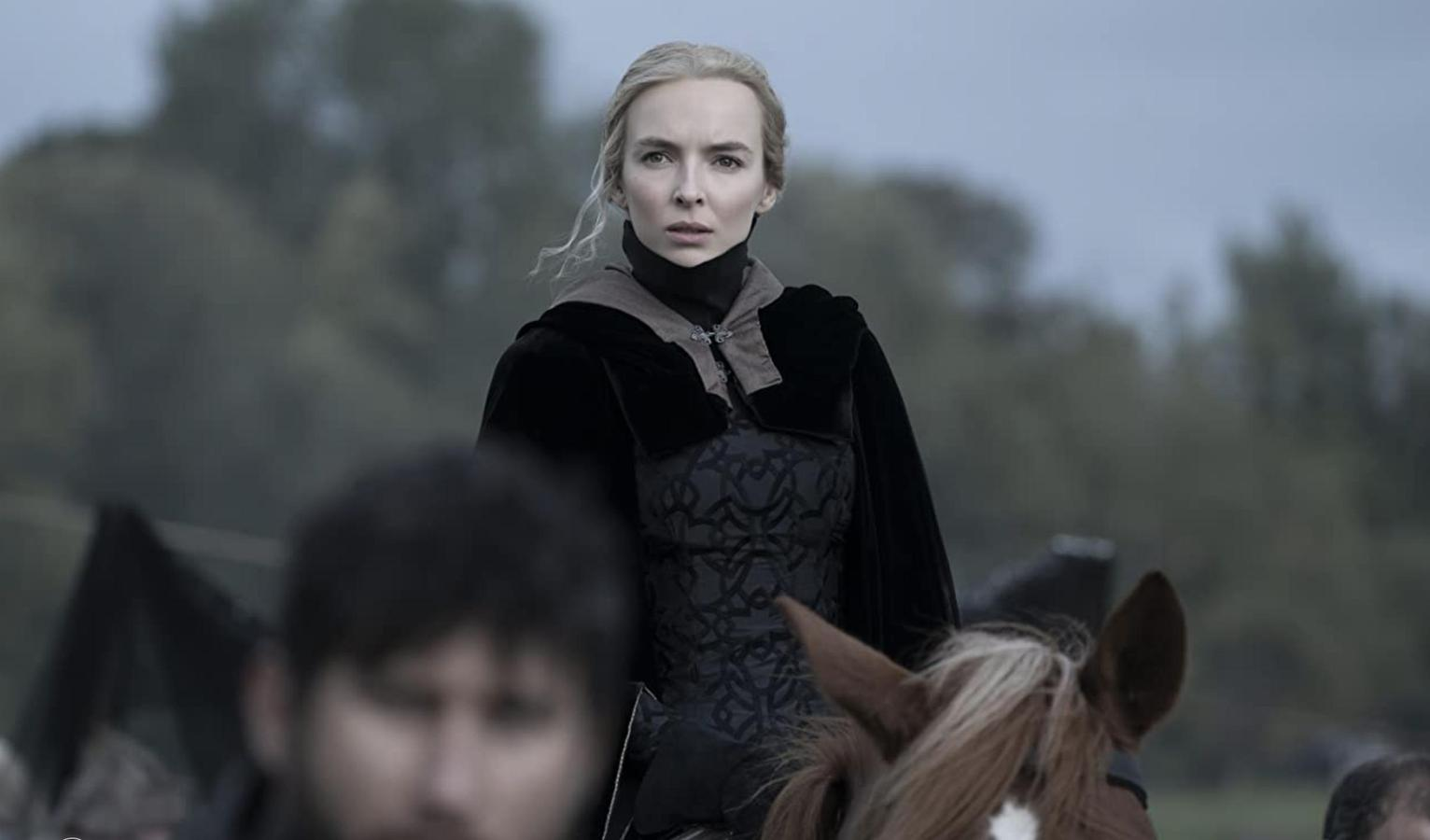
It sounded horrible from the beginning. A movie based on the true story of a 14th-century French woman sexually assaulted and the resulting duel that took place between her perpetrator and her husband, each fighting for their own truth of what happened to her. In other words: two men fight out what history records of a woman’s sexual assault.  And it’s gonna be made by three men: director Ridley Scott and writers Ben Affleck and Matt Damon. As much as I respected the filmmakers involved, I had to say: yikes. Even when news broke of the involvement of Nicole Holofcener (Please Give, Enough Said) – a truly underrated writer/director I’d love the non-Twitter crowd to more readily embrace – I wasn’t totally sold. Without knowing the structure, it sounded too much like she’d been brought in for damage control. 

But guess what? This is a truly fantastic film. While it initially came and went, a product of Hollywood’s ever-changing release strategies in these wild times, Film Twitter eventually course-corrected. People finally saw the actual product. And they, far more often than not, came away disciples. Count me as one of them. It’s got epic scale, bruising action, and, believe it or not, is quite funny – and not just because of the haircuts. Also pretty crazy: Ben Affleck has bleach-blonde hair and a bleach-blonde goattee and he’s one of the best parts of the film. 

What’s brilliant about this film’s structure is giving Matt and Ben the first two acts and Nicole the third is definitely going to make you think it’s a bandaid job by everyone involved. Except that’s totally the point. The first act follows Jean de Carrouges (Matt Damon) and when my wife remarked how stilted the dialogue sounded, I knew something exceptionally clever was afoot. Carrouges is not an educated man. He does not read books. He has a kind of brutish pride clearly hiding his own insecurities, perhaps even over his awful haircut. And its perfectly dramatized in the way everyone responds to him and the he comes across as the heroic underdog. When the film shifts into the second act, it follows Jacques Le Gris (Adam Driver), an educated, flirty man – so the dialogue becomes more playful and sophisticated. But Le Gris is also the man who has committed the horrible crime against Marguerite de Carrouges (Jodie Comer), an act that appears in all 3 sections of the film. By the time we roll in the third act, I was already laughing at the way Holofcener repaints everything we have seen through Marguerite’s eyes. Immediately, holes are poked in the puffed chests of all the men we’ve seen before, and their lies are laid out in the sun to shrivel. 

Scott has proven his skill at filming brutal battles before, and here he’s in top form. These men aren’t just fighting for their lives. Le Gris is fighting to preserve the punishing patriarchy he’s clearly profited from whereas Carrouges is fighting for his wife’s truth and his own pride. It’s an ugly, exhausting battle, where Scott makes us feel every punch, push, and stab. But the trick of it all is the most brutal fight doesn’t even happen in the arena. It takes place before, when Marguerite is on trial, a hall full of old men and obeying women. Fighting through tears, sobs, and a restricting corset, she begs to have her evidence and pleas considered. The only responses she gets are ones Holofcener knows are deeply recognizable to women – the accusations disguised as questions and punishing contempt disguised as conspiracy theories – and Comer, in a performance criminally overlooked by the Academy, absolutely sells the inner and outer turmoil of it all. Kudos to the Scott, Affleck, and Damon for having the humility to recognize where to let Holofcener and Comer take over the story and remind us how seven centuries of time can collapse and lay bare truths we’ve still yet to truly confront. 

4. The Lost Daughter – written and directed by Maggie Gyllenhaal 

For most of the film’s beginning, Gyllenhaal’s camera follows the face of Leda (a beyond exemplary Olivia Colman) as she sets up her vacation in a sleepy Italian coastal town. Leda doesn’t say much, and what she does say is largely perfunctory and evasive, meant to keep people at a safe distance. But Colman shows it all in her face: something is clearly consuming Leda, especially as she watches a young girl and her mother play, chase, and sunbathe along the beach each day. It feels like Leda is holding in a lifetime of tears. You keep expecting to find out one of her two mentioned daughters died at a young age, or something equally irreversible. 

Instead, Gyllenhaal skillfully sidles flashbacks to a younger Leda alongside the present, like a heavy boat pushed away, only to slowly drift back and bump up against her. It’s such a skillful way to show memory and the cost of our choices in a way, one that reminds me of Jean-Marc Vallée and Nick Hornsby’s adaption of Cheryl Strayed’s Wild, with dialogue and images torpedoing their way into the pain felt both past and present. It turns out no one died, but rather that Leda made a choice to pursue her dreams for a few years, childless. For her children, absence may have been as painful as death. Everything that’s come after is a desperate attempt to amend what may never be fixed. 

As the memories start to flood in in her first days at the villa, Leda goes to eat an orange in her room’s fruit tray, only to turn it over and see it’s rotted from the inside out. It’s a deft visual symbol of something clearly eating at her. Later, Gyllenhaal returns to the orange. After an entire film’s worth of Leda making decisions she doesn’t fully understand, controlled by forces and memories she feels little ownership over, she retires to the beach, orange in hand, and calls one of her now-adult daughters. It’s a chirpy conversation, one she’s going to ride as long as she’s able. As she caresses the phone with between her ear and shoulder, she peels the fruit. It’s ripe. It’s healthy. Perhaps it’s a sign Leda just needed to soften her own exterior, to forgive herself a little more often. Perhaps, instead, it’s a sign that the orange may be fresh for now, but will surely spoil later in just a few days, just like the one she found in her room the first time. We don’t know. They mystery is left in. It’s a sign of a mature, patient filmmaker in Gyllenhaal and one I’m eager to see make more films in the years to come. 

3. Jackass Forever – written by Eric Andre, Colton Dunn, Spike Jonze, Johnny Knoxville, Bam Margera, and Steve-O; directed by Jeff Tremaine 

Nearly eight years separates my younger brother and I. The difference felt surmountable when we were kids because we were, after all, a family unit. But as I graduated college and began moving beyond my comfort zone, it became more and more difficult for my brother and I to relate. We read different things. He liked playing repetitive racing video games, whereas I wanted platform adventures and variety. He loved hockey and, despite my lifetime of playing soccer, I could never understand how offsides worked in the rink.  I remember at one point getting a glimpse into our family phone plan’s data usage and seeing how my brother spent 95% of his data on social media while I spent 95% of mine on Safari, reading article after article, chasing rabbit holes until I reached the bottom of the internet. 

But one thing we truly shared is Jackass. We watched the first film together, feeling a bit scandalous without our parents around, and laughed ourselves into tears. Jackass Number Two only cemented that warm, elemental feeling of laughter further. And when Jackass 3D came around, I absolutely took a break from my twenty-something post-college ennui to join him in watching a dildo fly right towards us, daring to break the movie screen. 

I always tell people that despite the age difference between my brother and I, nobody – and I mean nobody – makes me laugh like he does. At some point it becomes a chicken and the egg thing. Does he make me laugh so hard because we broke into something deeper while watching the first Jackass movies, or did his cracking me up over the years prime me to be infected with that infectious Jackass fever? It doesn’t matter. The movies – and my brother – compel a laughter in me very few things can match. It feels, in many ways, like something sacred I never wanna lose. 

All this to say I was absolutely primed for this movie and yet found myself as deeply affected by it as any of their previous entries. The stunts are just as hilarious. The gross-out factor has been turned down a notch – they had to turn down something after the dangerous highs of the last two films – and it’s all for the better. These are simply guys who truly love each other, who don’t know how to make anyone else laugh quite as hard as they do together, age only making the truth deeper. They cannot quit each other. They don’t want to quit each other. They’ve found something deeper than church: the pure joy of laughter that comes from chasing after the most life a body can handle.  

2. The Mitchells vs the Machines – written and directed by Michael Rianda and Jeff Rowe
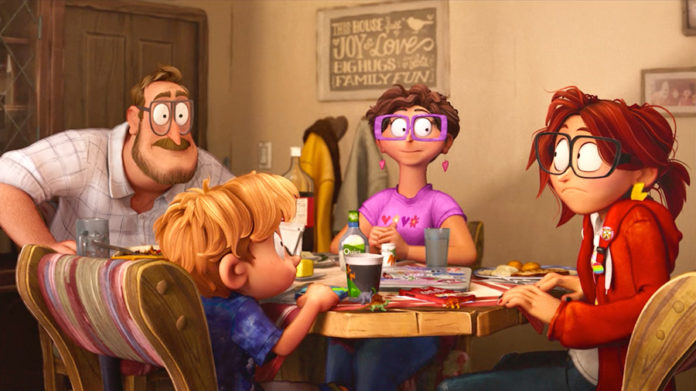
After the Summer of 2009 epidemic of Pixar’s Up making everyone cry within its first 10 minutes, I thought I was safe. No movie would ever shake out some tears from me that early in the game. They’d earn them in the end, maybe even in the middle. But certainly not before I’ve even had a chance to register the storyline. 

Then came along The Mitchells vs the Machines. 

Only months after my daughter’s birth, I knew my soft spots. For all the confidence I felt in myself as a parent and in creating a bond with my first child, I still felt the aching doubt that comes with knowing there is still so much ahead of you to screw up. There are arguments that may occur, words that may never be returned. I may, despite my best efforts, find her desperate to run away from home, headlong across the country, to pursue something I don’t understand. My point is: even the most confident of parents can be broken. And the first ten minutes of Mitchells is so deeply surgical in its story precision that it left me a sobbing mess. I cried tears I haven’t cried in forever, that I didn’t even know I had in me. And then we still had an hour and forty-five minutes to go. 

The highest compliment I can pay this film is that the rest of the movie never felt like a letdown, but rather a warm hug by some of the funniest, most brilliant people you know. There are so many lines tossed at you (and you’re bound to discover on repeat viewings) and just so many wonderfully personal things going on all over the screen. This is a film made by a team of people who loved what they were doing and wanted to make the best thing they possibly could. They have so much to be proud of. 

What many genre films get wrong is that they never move beyond the initial premise. They rely on the big monsters and the epic, sweeping events to carry it along. But the ones that stick with us the most begin as one recognizable movie before being interrupted by the genre as the next act kicks in. This is 100% true for Mitchells, which has a very recognizable beginning in showing a family unsure of how it will respond to a member leaving for college. The Dad doesn’t know if his relationship with his daughter will survive. The son doesn’t want his sister, his real best friend and biggest supporter, to be absent. And the mom is anxious at just what this new family chemistry will be like and just how will she absorb all the new sharp edges that come with it. Everyone is dreading the impact, but there’s no way to go but forward. I don’t know anyone who won’t recognize at least some core element of this setup. And then it’s all interrupted by a giant robot apocalypse. 

What makes Mitchells rise above all other sci-fi comedy fare is all the groundwork it lays in the initial act, drawing on the family’s conflicts to wring new laughs and pathos throughout. By the time Katie and her Dad again sing their ridiculous, too-cute song in the final act? Well, I didn’t cry as hard as the first ten minutes (those tears will take months – if not years – to replenish) but I felt it deep within my soul all the same. 

What a gift of a film. 

1. C’Mon C’Mon – written and directed by Mike Mills
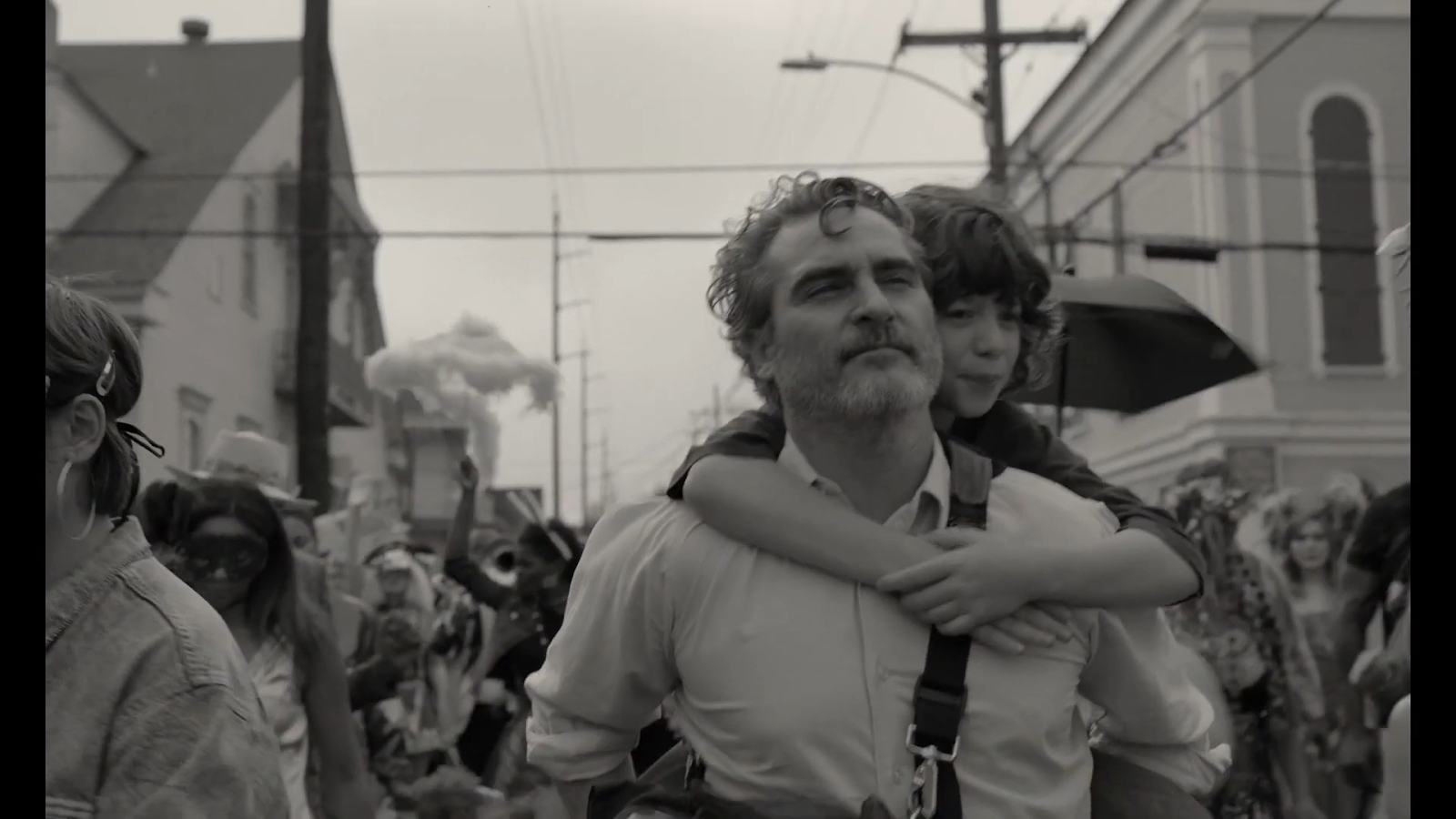
There is something that feels so effortless about C’mon C’mon. You relax into its rhythm, utterly absorbed by the symphony of sound, editing, writing, and acting. It takes a seemingly mundane situation – an uncle takes care of his nephew for a few days – and makes it feel like the most important thing you’ve seen all year. There is so much wisdom woven into the tapestry of this film, there for you to feel as it wraps itself around you. I found myself deeply in awe, almost unable to move, at the seamlessness of Mills’ overlaying of dialogue over image and voice over emotion. It’s completely masterful. 

Mills’ described his goal with this film as wanting to juxtapose the intimacy of a parent giving a child a bath or putting them to bed alongside the bigger, deeper issues of the day. Johnny (a fantastic Joaquin Phoenix) and his team of kindred souls go from city to city, interviewing kids about the same age as Jesse (a stellar Woody Norman), asking them about their feelings of the future. As the film rolls, you can’t help but think about how much this country fails its own people, time and time again, leaving those without power to pick up the pieces. It’s as simple an issue as Viv (Gaby Hoffmann, incredible) trying to figure out who can possibly watch her son while she helps her husband in crisis, only for us to hear young kids talk about the many ways they don’t expect things to change or get better because the people above them don’t care enough. That Mills’ can make this all feel of one piece is a tremendous accomplishment. 

For most films, one time is enough for me. The message is received. The skill is appreciated. And then I move on. But no film brought out a desire for a repeat, over and over, like this one. I want to re-see the unbelievable acting of Gabby Hoffman and Phoenix as they reconnect over each phone call, the way the screen acts like a window into their own rooms, sitting us right beside them. I want to hear the heartfelt score – both hopeful and melancholic – as it waltzes under the interview responses of concerned youth. I want to savor every exchange between Johnny and Jesse, two lost souls connecting at the time they need each other most. 

There is a cinematography trend that’s been building for a while now where the camera favors a shallow depth of field. The actors we see are in hyper-clear focus while the background is so hazy as to almost be pixelated. Perhaps it’s the Portrait Mode effect. We’re easily impressed by this artsy visual. Perhaps its COVID filming protocols reminding us we can’t keep too many people in the background. Whatever it is, it’s everywhere. Now every film, consequently, feels shallow. They struggle to stick. So much is dependent on the shallowest of things moving in front of the screen, forgetting an entire world beyond it. That, to me, is what makes Mills’ directing and Robby Ryan’s cinematography so utterly transporting: they play with depth in a way I haven’t seen in a long time. So many shots involve characters going from the back to the front, and vice versa. They pop in and out of frame. They show us there’s an entire axis of movement we’ve been ignoring and maybe, must maybe, somewhere in that area are the truths we’ve been looking for. 

At the end, Johnny shares a recording – a glorified voice memo – with his sister, and we see her play it for Jesse. These people clearly miss each other, all the more richer from the many conversations they’ve had in the past week or so. Johnny brings up the time Jesse asked if he’d remember any of this, this wild and crazy time they’ve shared together, and how he was convinced his nephew, destined to grow and move on to bigger and more impactful things, would forget. It’s an upsetting revelation to Jesse. “So I said,” Johnny continues, “I’d remind you of everything.” I hope to have this movie in physical form sooner than later because that’s all I want: to be reminded of the power of a single film and how it can slide in deep within you, filling a vacancy you never realized you had. 

Filed Under: FILM

Adam’s Top 20 of 2020

February 13, 2021 by Adam Membrey

2020 was a weird year for many things, and especially movies. As the pandemic hit, studios delayed many of their films into 2021. It would appear to make it a pretty catastrophic movie year. But guess what? Taking the big blockbuster boats out of the bathtub allows for the smaller ones to actually be seen. We collectively leaned a little harder on streaming services to fill in the blanks, allowing for a wider spectrum of cinematic voices to make their way through. This may be the most deeply empathetic list I’ve been together in all the years I’ve done this. No year taught me more, film after film, about experiences not my own while giving me universalities to connect with.

Before we get started: some awards! 

The 91% Alcohol Swab Award: Tenet

Tenet Review: A Spoiler-Free Look at Christopher Nolan's Latest - That Shelf

At one point this past Christmas, I had to hunt down 91% alcohol for a project. I’m still not sure which evaporates faster: a dab of 91% alcohol or Christopher Nolan’s latest, Tenet. To be fair, there’s much to admire about this movie. There’s the typical, still very cool Nolan commitment to using as many practical effects as possible. There’s some nifty editing here and there. There are some camera tricks that, bolstered by a giant studio budget, look pretty dang cool. But that’s about it. All of it in service of a story almost entirely explained between characters and yet still not quite adding up.

While 91% alcohol is about as distilled a solution you can find in stores, Tenet is the most distilled solution of Nolan yet. Everything you love about him – the big real-world effects, the mind-bending thoughts, the suits that look suspiciously like the ones he wears to set every day – is here. But everything you hate about him – the lone, thinly written female character, the use of characters as ciphers for barely-workshopped ideas, the screaming of dialogue over loud noises because of his commitment to live sound recording – is also here, distilled in its purest, most frustrating form. I wanted so badly to figure this movie out until my disinterest increased disproportionately with the amount of time left in the movie.

There’s an inkling of a cool movie there. It’s just a 70% solution of Nolan would have worked better – a little less of his obsession, a little more water poured on the growth of his characters – and made this the event movie he truly wanted it to be. 

Best Power Flex: Black is King 

Black Is King First Reviews: Queen Bey Drops A Masterpiece << Rotten  Tomatoes – Movie and TV News

If you look up just what this film is, the common (and rather boring) description is that it’s a visual companion to The Lion King: The Gift album Beyonce curated as part of Disney’s 2019 remake. And while this is accurate, it does absolutely nothing to give you a sense of what you’re in for. Working with directors, artists, and collaborators from all over the world, Beyonce used her clout to get Disney to invest in something they maybe didn’t fully understand. They did their best to make it an event, but the best they could do was place it on Disney+ with a few advertisements. If it weren’t for the pandemic, this would be in theaters and, rightfully, an event unto itself. 

Beyonce and her team go to great (and joyous) pains to portray Blackness as a spectrum and to reclaim Black heritage with style. They shot in Nigeria, South Africa, and Ghana and they worked closely with local artists and musicians from each of these areas. It is an 85-minute testament to the diversity of Africa – something many Americans could use more exposure to. After all, many of us here in the US still think of Africa as a country and not a continent of 54 countries with their own unique cultures. 

What I found quite astounding about this film is how it captured all the basic elements of The Lion King without ever explicitly stating them. The narrative arc and the emotional colors it brings are all here – but traced over the greater story of Africa. It would have been easy for Beyonce and her team to lean on the Disney money and make something they’re minimally involved in, using CGI backgrounds and sets. Instead, they took the opportunity to truly stretch themselves and shine a luminous light on culture so often left in American shadows. 

Best Groundhog Day Diversions: Palm Springs and The Old Guard 

Palm Springs' Review: Lonely Island Crashes an Endless Wedding - Variety

It’s fitting that both of these films came out the same day in July, as we sheltered from the summer heat and the pandemic. Perhaps Hulu and Netflix executives wanted to place a little behind-the-scenes bet on which could be a more perfect fit for Our Time of Quarantine. Palm Springs is a romantic comedy about two people stuck in a weird time loop and The Old Guard is a leaner action film about just how exhausting and devastating immortality can be. In both films, our main characters are struggling to find meaning in their predicament. In essence, they’re the perfect kind of escapist-with-a-side-of-emotion works for 2020.

Not only did both films come out on the same day, but both have Andy’s (Springs‘ Sandberg and Charlize Theron’s character) that need to learn something from those they bring up to speed so they can find their own strength to go forward. One Andy has resigned himself to a life of repeats. Another Andy is exhausted from the accumulation. They both need to believe there’s something more. 

The Old Guard movie review & film summary (2020) | Roger Ebert

In a way, these Andy’s represent our zeitgeist. They are who we imagine ourselves as: people exhausted by this pandemic yet needing something to have hope in. We need to believe there’s a future worth living in, just as much as need to believe real change has occurred so the same nightmares won’t be repeated. In the end; it’s in our hands far more than we realize. It’s our mission should we choose to accept it. 

Going To See Your Favorite Person’s Play Award: The Lovebirds

The Lovebirds Movie Review: Netflix Rom-Com Streaming Now

I love Issa Rae and her Insecure TV show. I love Kumail Nanjiani. I love Michael Showalter (Hello My Name Is Doris, The Big Sick) as a director. What makes this movie work is the comedic chemistry between the leads. Both Rae and Nanjiani are excellent actors in their own right, but you can see them struggling against the mechanisms of the story. Where it feels more effortless and deeply entertaining is when their legit comedic chemistry sparks to a smolder, either through comic timing or ad-libbed lines. They lean into the absurdity of each situation, still always trying to find the emotional truth behind the lines. It makes for a great Friday night escape flick, worth some chuckles and the joy of seeing two of your favorite comedic presences find new ways to bounce off each other. 

An additional fun bonus with this film: trying to figure out where Kumail was on his Marvel’s The Eternals training schedule while filming this. When I saw how director Bong Joon-ho kept hiding a too-buff-to-be-poor Captain America Chris Evans in a long trenchcoat in Snowpiercer, I realized how much fun was to be had with seeing Marvel actors and their directors try to hide all the cinematic muscle. After his Men’s Health cover came out in April 2020, which showed the word a Kumail absolutely ripped in a way we never knew possible, Slate did the investigative work for everyone.

Best Original Power Ballad: Frozen II 

We Need To Talk About “Lost In The Woods” - Nerds on Earth

I have no problem admitting it: I was one of those moviegoers genuinely shocked by how good the first Frozen movie turned out to be and considered myself a fan. I didn’t think it was begging to be a franchise, but billions of dollars worth of merchandise will sway a studio like Disney. Nearly seven years after the original (not a good sign), Frozen II arrived on Disney+ and…I was not a fan. For many reasons. But! It made it that much easier to spot my one true highlight from that film: Kristoff’s 80’s power ballad, “Lost in the Woods”. The song along is a true banger. But the song with the lip-synching reindeer and dramatic lighting? 100% fried gold. Lock it away in the Smithsonian. This is the best thing Disney will ever do for the next fifty years.

Best Polar Express Replacement: Jingle Jangle: A Christmas Journey 

Image result for jingle jangle movie

Watching Robert Zemeckis’ The Polar Express on a large TV screen with a thundering sound system this past Christmas reminded me of its original selling point in 2004: a CGI extravaganza rendered in 3D (hence the objects randomly thrown towards the screen). Sixteen years later, the animation holds up better in some places than others, but there’s a dark, rather creepy core to the whole thing. Maybe it’s having a homeless man giggling on top of a moving train. Maybe it’s the way every adult’s face just sets up camp in the Uncanny Valley and looks increasingly grotesque as the story goes on. All of it works together to create something rather exhausting and discomforting, buoyed by some show-stopping action pieces that remind us of just how great Zemeckis was at live-action directing before he built a second living inside the computer. 

David E. Talbert’s Jingle Jangle, on the other hand, accomplishes quite a few things in a delightful package bursting with color and imagination: it introduces a much better, more empowering idea of belief, and it does it with great actors, imaginative sets, and some genuinely catchy songs. It’s a smart cotton candy delight of a Christmas classic for the whole family and with none of the creepiness or Uncanny Valley treks found in Polar Express.

Most Unlikely Reminder That Octopus Are Dope: My Octopus Teacher

Who Is Craig Foster From 'My Octopus Teacher'? — Where Is He Today?

There are some unmistakable truths in life. Coke is better than Pepsi. Showerheads are cheese graters for water. Everything is improved with an Oreo in it. And octopuses are one of the most incredible, baffling, and inspiring animals on this entire planet. You know they’re special when Pixar, well known for making animals talk and bringing otherwise inanimate objects to life, spent an insane amount of time on research and development with Finding Dory because octopus arms were constantly breaking their animating brains. Or when they allow them to make World Cup soccer predictions.

There are so many ways this documentary could have sunk to the cinematic floor. The idea of a man obsessively following an octopus for a year? In this economy? But it’s a testament to Ehlrich and Reed that they sculpt such a genuine heart at the center of diver and filmmaker Craig Foster’s cephalopod friendship. The footage they’ve pulled together is astonishing in its own right, as intimate a look as we’ve ever seen at our eight-leg friends of the sea. But what makes this special is how Foster, exhausted and adrift and barely floating above a mid-life crisis, delicately explains the way this sea friend has revitalized his life. It buoys a rather sad ending, lining it with a golden hue of hope, not unlike the sunlight that snuck deep into the kelp forest Foster spent so much time in.

Best Superhero Film: Birds of Prey

Image result for birds of prey

Another example of how great a superhero movie can be when you put the women in charge, Birds of Prey skillfully adopted Deadpool‘s unreliable narrator structure and ran with it, complete in stylish heels and an egg sandwich. Bonus points to Yan and Hodson for putting their newly-formed team together in a funhouse, creating one of the liveliest, most creative third act action scenes in recent memory.

Best Reminder the Human Body is 70% Water: Onward

Image result for onward

By the time the final emotional notes hit from this film, I was reminded our bodies are just sponges holding in all the tears Onward had yet to squeeze out of us.

Onward is a testament to how much grace you can buy from an audience when you nail the key emotional moments of your story. Not everything about this movie really works. There’s a fantasy element that doesn’t feel completely thought through, a rare miss for Pixar. There are jokes that don’t quite swish the net, awkwardly rattling around the rim. But none of this quite mattered because goddamn, did Scanlon and his team nail down their emotional tracking. No movie in 2020 reduced me to a tear-stained mess quite like this one. There was an ache in my chest all the way through, a feeling I haven’t really had since 2015’s Creed and Inside Out. Keep the kleenexes close by as Chris Pratt and Tom Holland make you believe in brothers who need each other more than they even realize.

20. Boys State – directed by Amanda McBaine and Jesse Moss

Image result for boys state

This documentary is likely to leave you with two deeply conflicting feelings: hope in the future of American politics and utter despair at the white supremacy coursing underneath it. You’ll absolutely root for Steven Garza and his utterly genuine demeanor and for René Otero and his uphill climb to respect he rightfully deserves, and you’ll absolutely steam at just how close their experiences are to being toppled by the most rudimentary, yet insidious forms of racism and their teenage perpetrators. A fascinating thin slice of how America often plays out on the bigger stages.

19. Underwater – directed by William Eubank, written by Brian Duffield and Adam Cozad

Image result for underwater movie

For all the attention (and taxes) we pay to space exploration, I’ve often felt we’d be better off using our resources towards exploring the 80% of the planet’s oceans that remain a complete unmapped, unobserved mystery. Even further, it’s been estimated we haven’t discovered more than 90% of the ocean’s species. What Underwater does so well is tap into two things at once: the unexplored ocean and the mysteries of the dark, deep Mariana Trench. And then it uses the insane water pressure of the deep in conjunction with the imploding pressure of not knowing just what the hell is going on around you. And it does it all while allowing an extremely game cast to wear some weighty, utterly cool exploration suits.

18. Get Duked! – directed and written by Ninian Doff 

Image result for get duked! moie

17. Extra Ordinary – directed and written by Mike Ahern and Enda Loughman

Image result for extra ordinary movie

Extra Ordinary comes from Ireland. Get Duked! comes from Scotland. They are both similar in their structure, stringing along quiet, unique characters as they go through increasingly baffling circumstances before breaking open into highly memorable, highly hilarious final acts.

Extra Ordinary is a bit like low-budget Ghostbusters in a small Irish town, with spit-out ectoplasm, unusual ghosts, and a deranged Will Forte as a fading one-hit-wonder. Get Duked! mixes hip-hop sensibilities with the Scottish Highlands – a brew I’d never imagine dreaming up – to delightful results. Just be sure to keep on the subtitles to decipher those thick, wonderful accents.

16. Beastie Boys Story – directed by Spike Jonze, written by Jonze, Adam Horovitz, and Mike D 

Image result for beastie boys story

I’ve got a lot of cultural blindspots – everyone does – and a big one I’ve always wanted to somehow remedy is the Beastie Boys. I never grew up around their music. But I knew that I loved every crazy, quirky video they made, especially the ones they did with Spike Jonze, a director I dearly love. So when I heard they collaborated for this filmed special/documentary? I was so there.

It’s hard to talk about your own band for and hour and a half without it sounding a bit masturbatory, but Michael (Mike D) Diamond, Adam (Ad-Rock) Horovitz, and Jonze make it absolutely work. There is an utter genuineness from the opening minutes, a tone of celebration mixed in with the humbling that comes with failure, reflection, and untimely death. I grew to appreciate just how wild it was these guys made it big in the first place, how they great to hate their own image, and then how they burnt it down and build it all back up in a way they could be proud of. The music is always a reflection of where they’re at in their lives, allowing them to let the art speak for itself. And Mike D and Ad-Rock are disarmingly charming, owning up to their mistakes (like the party atmosphere and casual misogyny of the past) and expressing their deep gratitude for Adam Yauch’s impact on their lives.

If you’re a fan, this is a welcome parkour dash down memory lane. If you’re like me, curious but never quite getting their deal, this is as good a shot to your musical veins as you’ll get. Come for the dope beats and the hilarious side stories about Mike D’s failed film career; stay for the heartfelt themes of ownership, gratitude, and fighting for the right to your own party.

Also, the best dancing robot video out there on the interwebs.

15. I’m Thinking of Ending Things – written and directed by Charlie Kaufman 

Image result for i'm thinking of ending things movie

Audiences love it when you give them 2 and 2 and then let them add it up to 4 on their own (and not just because they may be insecure about their own math skills). But I swear the math equations Charlie Kaufman gives us are time-released, meant only to be solved as soon as the credits roll. And they usually involve the Quadratic Formula or Calculus or something quite complex.

What I’m saying is that I’m Thinking of Ending Things is maybe the most Kaufmanesque movie yet in that it withholds its true meaning through your entire first viewing so that it’s lodged in your brain for weeks after. Both my wife and I found ourselves liking the film more and more with each passing day, our brains finally solving rudimentary parts of the Kaufman Equation, sending out tiny shots of endorphins. The true genius of Kaufman’s work here is the way you still are entranced and drawn into a movie you don’t fully understand. You can feel your way around it, like your tongue searching for that stubborn piece of candy at the back of your teeth. For a while, I wasn’t sure if Kaufman himself even understood his own movie. But the meandering, as witty and heartbreaking as it is, is the point. It’s an ode to memory, to a life regretfully lived, that won’t be forgotten anytime soon.

14. Uncorked – written and directed by Prentice Penny

Image result for uncorked

Another Netflix movie that got buried beneath the layers of content and the initial shock of the pandemic, Prentice Penny’s debut film is much like the wines it nerds out so deeply about: sweet, rich, and full of flavor. What’s so special about this film is how Penny takes a very universal theme – fathers and sons who struggle to understand and respect their differences – and makes it something fresh and alive with the details that surround it. Just as we salivate at the Memphis BBQ joint the father (Courtney B. Vance) runs and wants to hand off to his son (Mamoudou Athie), we marvel at all the rapid-fire, priorly-unknown details of such a foreign wine world. By the time you see Athie studying late into the night about all the different wine regions around the world, you know there’s more to wine than just your friend’s Target purchase. 

13. Soul – written and directed by Pete Docter and Kemp Powers

Image result for soul movie

I have grown to rely on Pixar emotionally devastating me. Like clockwork, I can count on one of their movies just knocking every possible tear out of me, dumping out my inner water ducts so they can get whatever blockage they have out of their system. Soul had all the ingredients to do the trick. With Pete Docter – the emotional terrorist responsible for my biggest tearjerkers outside of Coco – at the helm, I figured I should keep a tissue box handy. But the movie was over before any waterworks began. I felt a little deprived. I wanted to cry, dammit. I expected it. 

But what I appreciate about Soul is the idea that sometimes there’s the things we want to see and hear, and then there’s what we need to see and hear. There’s enough to cry about these days. We can look at the news or grieve about the family time and experiences we’ve lost to the pandemic. But I needed to hear what Soul had to say. I needed to be reminded that single-minded pursuits of things I enjoyed were very much in danger of being a path of regret. It made me think about all the illustrators, so in love with drawing, who work backbreaking 16 hour days to finish work they get severely underpaid for. Or the screenwriters who spend years writing scripts that never get made, barely getting by. More than all of this, Docter and co-writer Kemp Powers are showing us that the wider river is the one that moves at just the right pace. We gotta expand our peripheral vision. We gotta see the detail off the to side we often overlook. And we gotta remember the people around us that hold it all together. 

I could rave about so many things about this movie. The exceedingly clever and perfectly-designed score by Trent Reznor and Atticus Ross. The typically-gorgeous Pixar animation now showing off its fancy natural lighting ability. The way this movie, as with so many Pixar films, just absolutely bursts at the seams with creativity and innovation. It’s all there. It’s a Pete Docter movie, after all. You know you’re gonna get something wacky and undeniably special. But what I will take away from this most is the deeply mature and wise message at the heart of it all: to remember why any soul would be jealous of our time on this crazy planet. 

12. Dick Johnson Is Dead – directed by Kirsten Johnson, written by Johnson & Nels Bangerter

Image result for dick johnson is dead movie

The premise sounds like a joke gone too far: documentarian Kristen Johnson helps her father prepare for death by moving him across the country and filming all the possible ways he could die. What keeps this from reeling off-track is the utter sincerity of everyone involved. They want to give Dick a safe end of his life. But they also recognize that as soon as his memory starts slipping, he’s not the same person and never will be. Johnson’s ending is one of the deepest arguments I’ve seen about losing people and what it means to say goodbye.

Johnson’s interactions with her father are colorful and hilarious, the repartee developed between two deeply good humans, and yet she never shies away from reality. As a longtime documentarian, it may be her most difficult subject yet. And by the time you hear a priest’s final, heartbroken blowing of the trumpet, you’ll realize just how much Dick Johnson means to those around him and how everyone has to let go in their own way.

11. Possessor – written and directed by Brandon Cronenberg

Image result for possessor movie

The premise is the definition of sci-fi high concept: an agent uses brain implant technology to inhabit others, driving them to assassinations at the request of high-paying clients. In essence: it’s the perfect crime. That is, unless you’re the person inhabited.

What makes this such a vital, nasty piece of film is the artful way Cronenberg imbues reality into everything. Perfect crimes never work out because the messiest possible conduits are at the helm: human beings themselves. We can see it in the way Tasya (Andrea Riseborough) frequently goes off-book for a more impulsive, far bloodier method of execution. And the film spreads its thematic wings when Colin (Christopher Abbott) realizes he’s being inhabited by Tasya and decides to fight back, a body truly at war with itself and the consciousness that keeps it alive.

Rather unexpectedly, Possessor reminded me a lot of 2014’s Wild, the way director Jean-Marc Vallée and writer Nick Hornby worked together to create a true audiovisual examination of the ever-intrusive presence of Cheryl Strayed’s memory. While Wild layered music and flashbacks over the narrative in exciting, accentuating ways, Cronenberg uses Possessor‘s visuals like he’s developing the film in his own dark magic lab, dipping and combining shots in all manners of material. The result is a phantasmagorical experience that feels as real and honest as anything that came out of 2020.

10. Da 5 Bloods – directed by Spike Lee; written by Lee & Kevin Willmott

Spike Lee's “Da 5 Bloods,” Reviewed: Vietnam and the Never-Ending ...

Hollywood has produced a great deal of Vietnam movies over the years. Many of them are quite good. But there’s a piece of it that’s been missing for 50 years: the experience and contribution of Black veterans. This is a movie that started out as a script written by white writers called The Last Tour, following white veterans who head back to Vietnam in search of a former squad leader they left behind. When the project stalled out and Spike Lee and his co-writer Kevin Willmott got their hands on it, they not only made the veterans Black, but they saw an opportunity to weave in the history Americans had long ignored. 

This is a film with so much to say. Lee packs the frame with archival footage, differing aspect ratios, and plays with elements of magical realism and memory. He has a group of great actors bringing their characters to life, Black men in various stages of life who are determined to find gold they buried in Vietnam and bring back the bones of their fallen comrade, Stormin’ Norman (Chadwick Boseman). While it was initially a decision decided by budget, Lee keeps the same actors in flashbacks with Boseman, a decision that only pays off as the film goes on. We can see how much their love is bone-deep for Norman and how much their loss has affected them. We also get to see how complex war really is, when Norman and the other four Bloods gun down Vietnamese soldiers having a simple conversation and only making the mistake of being in the wrong place at the wrong time. 

Da 5 Bloods' Review: Black Lives Mattered in Vietnam, Too - The ...

There is a lot to process and absorb throughout this film’s 156-minute run time (though any complaining about it too much should wonder why we didn’t say the same with similarly long-running times from the likes of our highly-regarded white directors) but what Lee and Willmott so effectively illustrate is how these men are a part of the one long war of systemic racism. While they’re fighting in Vietnam, they’re already marginalized and have to listen on the radio to the protests that take place for their own rights in America. When they come back from the War, they’re still marginalized in a number of ways. That’s why the buried gold has so much promise to them. It’s a chance to tip the balances in their favor for once. To get ahead and reshape the narrative of their own lives and the generations ahead of them. And while infighting takes place over who gets what throughout the movie, it’s absolutely no mistake that the one man who threatens to blow this whole plan apart wears a wardrobe very reminiscent of our current president. 

NetflixFilm on Twitter: "Hey, I'm Robert Daniels @812filmreviews ...

In a film packed with great performances, Delroy Lindo’s Paul towers over them all. It’s a character we haven’t seen before – a Black Trump supporter who’s tired of always being ignored and overlooked. The further they get into the Vietnamese jungle, the more he loses his grip on reality. It’s terrifying and enthralling at once. Lindo is the angry, confused soul at the core of the film while an outstanding Jonathan Majors as Paul’s son provides the heart, trying to keep his father tethered to some kind of reality and help him find some kind of peace.

Near the end, there’s a scene where Black Lives Matter protestors and advocates gather together at a rally. Many wondered how Lee could film something and inject it in his film so quickly. But the revelation that it was filmed more than a year before doesn’t prove Lee to be prescient – instead it proves he knows all too well that the war the 5 Bloods fought is the one still being fought today. 

9. I’m Your Woman – directed by Julia Hart; written by Hart & Jordan Horowitz

Image result for i'm your woman

In a pretty bleak year for humanity, this film gave me a shot of optimism. It’s a rather simple story about a housewife suddenly tasked with taking care of a baby in the middle of an unfolding criminal situation, suddenly have to fend for herself as she holds onto a new child and a bagful of ever-expanding questions. Hart and Horowitz blew me away last year with Fast Color, another movie in which we watch to see if the stronger, kinder human instincts will overcome the darker, more aggressive ones. This film leans just as much into the emotional muscle, in the quiet moments in which characters share some of their deeper fears in front of a cup of midnight coffee. From first frames to last, it’s quite the journey for Jean (Rachel Brosnahan) in which she can only watch and run for so long before she’s gotta fight back at the life being taken from her. A deceptively simple candle of a movie that burns long after its final notes. 

8. His House – written and directed by Remi Weekes

Image result for his house

Horror is an incredibly elastic genre. It can make room for any number of ideas and issues. It can use jump-scares or psychological terror. It can be a mad dash of jump scares or a slow-burn barnburner. In his debut film, Weekes takes two seemingly disparate issues – the trauma of the past and the desire to own one’s one home – and weaves them together in an unforgettable fashion.

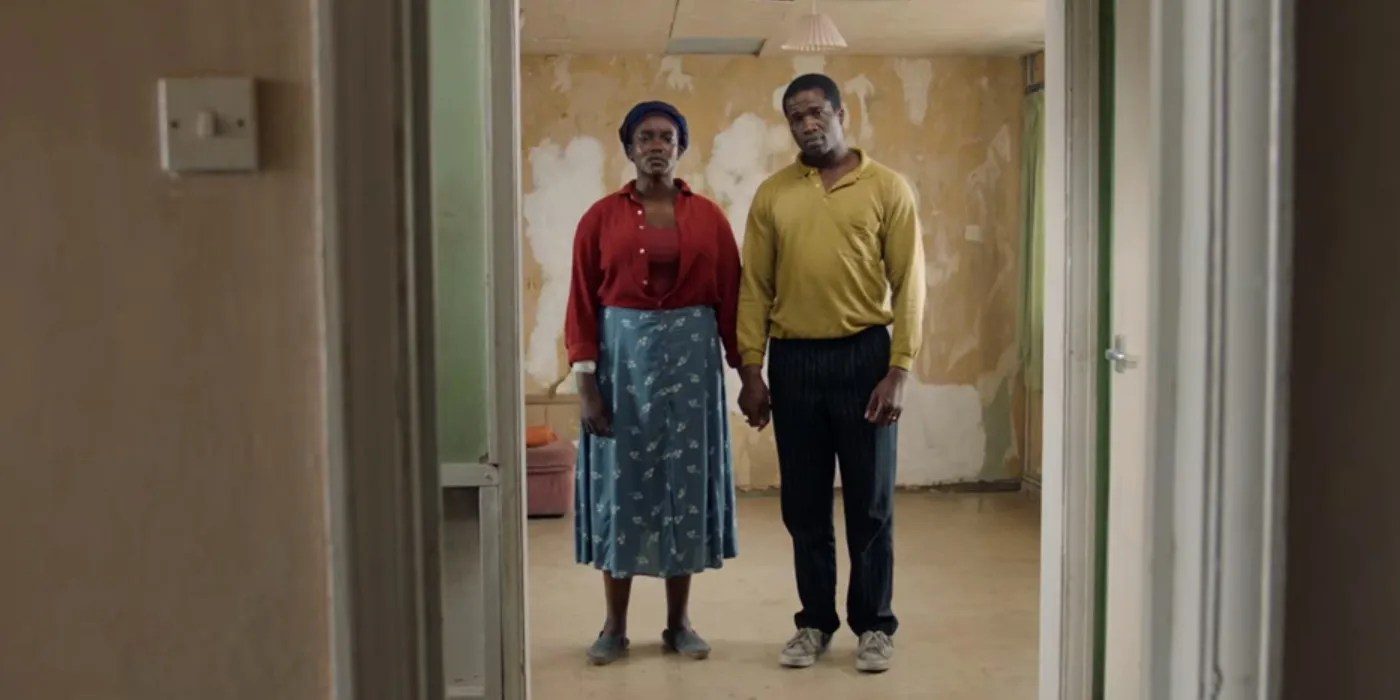
When refugees Bol (Sope Dirisu) and Rial (Wunmi Mosaku) escape their warring South Sudan community, they are granted probationary asylum in a house on the edge of London. It seems like their dreams have come true. They finally get to have a home! But then they arrive, and the reality sets in: it’s the definition of delipidated. Walls are torn and ridden with cracks. Weird sounds are everywhere. Nothing really works. And the neighborhood lady and her cat won’t avert their gaze.

But there’s something far more sinister bubbling within the walls of the house, and it’s here where the elasticity of horror and Weekes’ vision crackle to life as Bol and Rial’s trauma – which they’ve tried so hard to suppress – becomes impossible to ignore.

I still think about the final moments of the film, when Bol is trying to convince British officials that he and his wife finally have their house under control. “Your ghosts follow you,” he says, “they never leave. They live with you.” And it’s the next line he delivers – which I won’t spoil here – that struck me as one of the most profound bits of wisdom I’d heard all year, wholly a piece with the terrific movie that came before it.

7. Spontaneous –  written and directed by Brian Duffield, based on the novel by Aaron Starmer

Image result for spontaneous

Another deeply confident debut film, Duffield knows exactly what he wants to do with this story about high school seniors who, suddenly and without explanation, start combusting in horrifying, bloody splatters. You could say this movie is about a lot of things – about the senior year fears of the future, about the COVID pandemic, about the short-sighted view of the world we have in light of climate change and all number of other imminent disasters – but Duffield knows it only works if he gets you to believe in the characters. 

6. Sound of Metal – directed by Darius Marder; written by Darius and Abraham Marder

Image result for sound of metal

About ten years ago, I looked for community. I wanted to meet other Deaf/HH in Spokane and stumbled into a monthly coffeeshop gathering in which ASL students and Deaf intermingled. It was never a particularly complementary fit, with cliques forming as soon as they entered the shop, branching off into dimly-lit corners. And while I did make some friends, what I remember the most is the friend I bailed on: a woman in her mid-to-late 50’s who had just lost her hearing. She arrived and explained to everyone her situation in slow and erratic sign – the kind you would expect from such a late, panicked learner – and was quickly dismissed. The hearing crowd could never really understand her beyond offering pity. The Deaf crowd’s impatience grew in staggered lines. She became a puzzle piece no one quite had the empathy to offer a connection with.

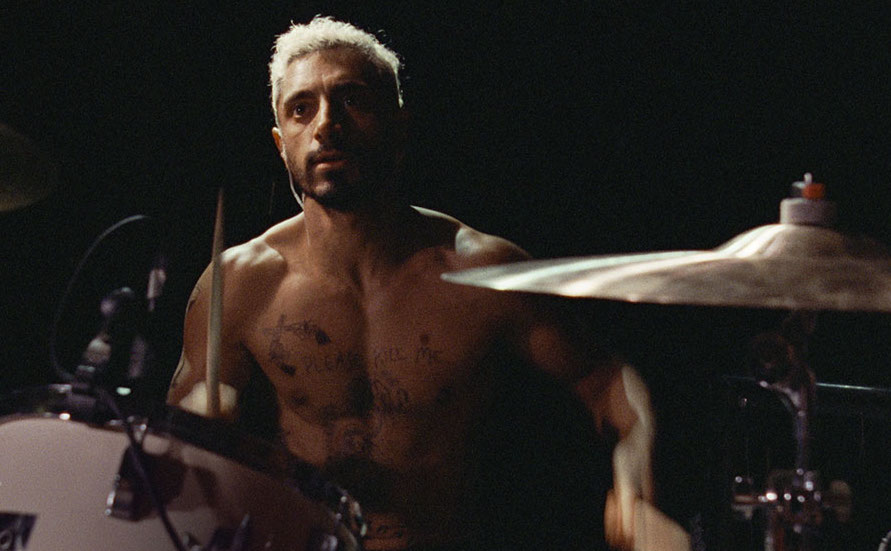
I thought about this woman a lot during Sound of Metal, a rather astonishing debut film from Marder. When I’ve talked with my Deaf friends about it, I go straight to the cochlear implant activation scene and how nothing sounds like we imagined, and a flicker of recognition and being seen streaks across their faces. When I tell my hearing friends and family about it, it’s an opportunity to see the other side. To let the incredible sound design build their empathy of what it may be like in Ruben’s shoes.

Sound of Metal is one of the more powerful empathy machines I’ve seen built. It forces me as a Deaf viewer to consider my own bias – both physically and culturally – towards someone like Ruben. It forces the hearing audience to sit with how a transformation would affect them. But what will last about this film the most, I hope, is Marder’s message of stillness. That no matter how much noise – external or internal – we have around us, striving to find peace and stillness within us is the most empowering pursuit of them all.

5. One Night in Miami – directed by Regina King, written by Kemp Powers a

Image result for one night in miami movie

All I could think about after Regina King’s stunning debut is the Lester Bangs quote from Almost Famous: “The only true currency in this bankrupt world is what you share with someone else when you’re uncool.” Writer Kemp Powers skillfully adapts his own award-winning play for the screen – never leaning into the temptation to artificially inflate the possibilities of film – and King leads and guides each actor into his own astonishing performance. This is about four very public and very popular Black men who realize what they’re up against. Powers quickly sketches for us just where each man is at the beginning of the film, and it’s beautiful the way he shows how vulnerable each of their positions are. Jim Brown (Aldis Hodge) is as popular as any NFL player and yet is still not allowed past a favorite coach’s front porch. Sam Cooke (Leslie Odom Jr.) is playing for white audiences who can’t catch onto what he’s capable of. Cassius Clay (Eli Goree) is still too wide-eyed and naive to really understand what’s working against him. And Malcolm X (Kingsley Ben-Adir) ties it all together as the man with perhaps the very most to lose. 

As desperate as some of these men were to leave the quaint hotel room and party, they couldn’t help but find themselves coming back to each other. They need each other more than they realize. The way Powers and King continue to find new layers in each combination – especially between Malcolm X and Sam Cooke – is as sumptuous a cinematic feast as this Oscar year has to offer. I keep thinking about how Denzel Washington won an Oscar for his portrayal of Malcolm X and how Ben-Adir still somehow finds a completely different take on it that feels just as essential and lived-in and perfect. 

By the time the last Sam Cooke song plays, it hits you just how far these men came in one night of conversation. One night to take measure of their responsibility to themselves and their own community. One night to think about roads untraveled. One night to show us as an audience just how beautiful friendship can be between four Black men at the height of their powers. 

4. Promising Young Woman – written and directed by Emerald Fennell

Image result for promising young woman

From the first frame to the last, Fennel knows exactly what she’s trying to accomplish. Not only does Promising Young Woman boast a powerful, incisive central performance from Carrie Mulligan, but Fennel makes the brilliant choice to surround her with all our favorite Nice Guy actors – Sam Richardson, Christopher Mintz-Plasse, Adam Brody, Max Greenfield, Chris Lowell, and a revelatory Bo Burnham – to challenge us the most as an audience. There are no false notes. No filler. Just one show-stopping scene after another, adding up to an ending I’m still thinking about today. 

3. In and Of Itself – written by Derek DelGaudio, directed by Frank Oz

Image result for in and of itself

When I think about magic shows – either on-stage or in the middle of Austin’s 6th Street during South by Southwest – I think about the look of astonishment on the audience’s faces. It doesn’t matter if they’ve seen something like it before. There is just something about seeing it live that sends endorphins straight up the most hardened of brains. But one thing I have not seen is a magic show that’s reduced people to utter, moppable tears.

Derek DelGaudio reminds me a lot of Mike Birbiglia. Both are pasty white guys with sincere motivations in their storytelling. While Mike uses comedy to color his storytelling, Derek uses magic to bolster his. They are remixing two genres to bring their individual flavors out even more.

In the final half of In and Of Itself, I can confidently say there may not be a more powerful 30 minutes I’ve seen all year. I don’t want to give anything away, but all I could think about are the roles we use to define ourselves with – both helpful and unhelpful – and how every, EVERY person has at least one emotionally-devastating and exceedingly cathartic letter yet to be written to them. Maybe you should be the author of it. Maybe you’re waiting to be written to. Both scenarios help us define who we are. It’s an incredibly insightful conceptual trick DelGuadio pulls, one that will stick with me for the rest of my life. 

This is both the perfect film for 2020 and wins the year’s All the Feels Award. It’s hilarious and full of great lines. It’s got confident, swooping cinematography. It’s got attitude and wit. It’s got some understandably and effectively awful explosion sounds that just hang in that negative sound space, waiting for you to be comfortable before unexpectedly exploding again. It’s got a gooey sweet, yet incredibly endearing love story at the center of it. It’s a full ride that’ll give all your emotions a good workout and close it all up with a message on living we all absolutely need to hear. 

2. The Forty-Year-Old Version – written and directed by Radha Blank 

Image result for forty year old version

There’s an inevitable period in every artists’ life – and it happens more than once – when it feels like time has passed you by. The moments moved on. There’s not much chance for you to hitch the train back to relevance. But the damning thing about all of it is how often it’s about perspective. When I’ve read pieces I’ve written ten years ago, I’m often a bit surprised that it’s better than I expected and yet, I look at it as if the skill disappeared out a window and didn’t leave a note. But the skill is still there. Maybe rusty, but it’s still absolutely, 100% there and colored deeply by the wisdom and experiences that have come since. 

What makes Blank’s extraordinary debut film so captivating is how it charts the embarrassment, frustrating, and imposter syndrome of feeling like a has-been while also dealing with the white gatekeeping of the artistic community she wants to break into. She’s got all these great ideas. But they have ideas for her – and they’re frequently accented with unconscious, distasteful racism. The way that Blank lays bare the constant overreach of well-meaning white people is as incisive as it’s heartbreakingly hilarious. 

Image result for forty year old version

But what beats at the center of all of this is the budding hip-hop career Blank stumbles into as an outlet for all her frustrations, and the producer she befriends. They start off as such an odd match. Then you see what he sees in her and what she’s too disbelieving in herself to see in him and you can see their bruised hearts slowly circling each other. 

This isn’t just a movie about aging or putting on a play when you feel you’re past your prime. It’s about navigating that hard part after your early, exciting 20’s when everyone goes every which way and the possibilities of life are both wide-open and terrifyingly narrow. It’s about taking a chance on something wild and weird while everyone else stands aghast. It’s about believing in the message more than the clout. It’s about fighting your way through whatever your Best Self might be to see who the Honest Self is, even as you have no idea what either actually look or feel like. It’s swimming through mud. It’s waltzing, misstep after misstep, through a burning room.  The only way out, as you learn, is through. 

Blank’s choice of black and white gives everything an intimate feel throughout, as if we’re documentarians alongside her as she explores just what’s truly tripping up this life she imagines herself someday having. And when it all turns to color at the very end? It’s one of the most joyful images 2020 had to offer.

Image result for the half of it

1. The Half of It – written and directed by Alice Wu 
Alice Wu could have kept things simple. She could have made her movie a teenage version of Cyrano de Bergerac (or Roxanne, if you’re a diehard Steve Martin fan) and just left it at that. She could have coasted on the charm of her cast, collected her Netflix money, and chilled for a few years. But that would involve acting like Wu didn’t write the line that stuck like a popcorn kernel in the teeth of my brain for nearly a year: that the difference between a good painting and a great painting is just five simple strokes.

I could write quite a bit about what I think those five strokes in this movie might be, but it’s more fun to let viewers find their own. For me, I keep replaying the thermal pool scene between Ellie (Leah Lewis) and Aster (Alexxis Lemire), or the quiet, heartbreaking conversations between Ellie and her father, or the stubborn, uncomplicated puppy dog energy of Paul (Daniel Diemer), or the hilarious friction between Ellie’s spirited verbosity and Paul’s limited utterances, or even the time Paul challenges Ellie’s father about how he sees his own daughter and he responds with a heartbreaking story entirely in Mandarin, of which Paul somehow picks up nonverbally enough to understand the heart of a father’s pained message. The final stroke Wu imprints on this film may be the most daring of them all, withholding the ending we think we want for the ending that truly loves its characters and the potential of their lives. There is no film I thought about or recommended more than The Half of It. Even looking back through this movie to spot some key details, I’m stunned at how alluring it remains. This one will stick with me – and hopefully a larger audience – long after the final ticks and sputters of Netflix’s algorithm break down and whatever new form of cinematic viewing surfaces.

Filed Under: FILM

The Thing That Gets You To The Thing: HALT AND CATCH FIRE + TED LASSO

February 3, 2021 by Adam Membrey

Halt and Catch Fire | Netflix

In the waning months of 2020, all television and movies became a grayish blur of mediocrity. I mean, how could it compete with the madness of a divisive election season held in the middle of a global pandemic arena? It was only when I stumbled upon a quote from a former Daily Show host that I realized what we all crave: 

“The enemy is noise. The goal is clarity.” – Jon Stewart

When we feel like everything is just pure noise, cacophonous and bright and demanding of our attention, we feel adrift.  But the beauty of clarity is it only takes one thing. One line, one show, one movie – just one. As we approached 2021, unsure of what the new year would bring, my wife and I were gifted with two doses of clarity from two very different, yet exceptionally-made TV shows: Halt and Catch Fire and Ted Lasso. 

From the first episode of Christopher Cantrell and Chris R. Rogers’ four-season masterpiece, we hear a line that will echo throughout: “Computers aren’t the thing. They’re the thing that gets you to the thing.” Through the first season, we see our main characters collapse together to go all-in on the pursuit of creating a computer twice as fast for half the cost. It’s incredibly ambitious, and HACF repeatedly shows us how many roadblocks must be overcome to get to the finish line. But what threatens to derail these advancements are not just engineering problems yet to be solved; they’re human relationships either starving for something or inundated with overcompensation. They all lead to the true engineering problem at the heart of us all: how do we lead a happy, meaningful existence? 

Watch Halt and Catch Fire Season 2 Episode 6 Online | AMC

What’s brilliant about the seasons that follow is that they all dance around tech problems we already know have been solved.  As a result, we know they will fail and we can instead focus on the cost of the relationships that are lost and built in the pursuit. When Cameron (Mackenzie Davis) fights to include a very rudimentary, Siri-like personality in the first season’s new computer, we recognize what she’s doing and just how right she might be. In the second season, when we see Cameron and Donna develop their own company and build Community, we can see the birth of social media and sites like Craigslist. When it goes even further in the third season with market valuations and privacy concerns, we know they’re dancing around the kind of things we commonly accuse Facebook and other media companies of not valuing. By the fourth season, we know they’re going to miss the event of creating something special. It’s the Halt and Catch Fire way: our characters might be fighters, but history is an undefeated foe. Instead of trying to invent something anew, the HACF team uses the forms of modern-day technology to show just how close so many people were to the winning idea. It is, as Rogers once said, a “tribute to the losers.”

How 'Halt and Catch Fire' Creators Improved the Show by Blocking Out the  Feedback

I’d argue computers are the thing that gets them to the human connection and safety they crave. And the deeply ironic thing the show so beautifully and heartbreakingly lays out is how a team of people can work so hard to connect others while pushing each other apart. We see a great deal of ideas destroy marriages, friendships, and business partnerships. And yet we watch as the same tools that destroyed them build them back up again. 

Ted Lasso' review: Impossible not to root for - The Hindu

When The Losers Get to Rewrite History

Across the pond, we got to see another delightful tribute to losers in Ted Lasso. I’ve long believed that sports are a safe arena for big emotions. While men are known to be more reserved for the most part, ‘reserved’ is not something you see when their favorite teams are losing in the final, shocking seconds of a game. Often you see sides of a person you’ve never before witnessed. Sometimes it’s exhilarating. Sometimes it’s deeply concreting. All of it goes to show that sports are the thing that gets many to the thing – which is actual human and emotional connection. 

When I think about the NBA, I still cannot tell you how certain plays are run. That’s not why I watch. I don’t particularly care about most of the statistics and what they mean. What I do care about are the players. And what makes the NBA a season that runs the whole year – the preseason, season, playoffs, and delicious off-season – is the human drama weaved through it all. Will certain players prove themselves? Will they get traded? Will they air their grievances on Twitter or upload a hilariously opaque post on Instagram? 

Ted Lasso review: Jason Sudeikis is pitch-perfect in Apple TV+ comedy |  EW.com

When Ted Lasso (Jason Sudeikis) arrives in England, the joke is already written all over it. The pilot is smart enough to acknowledge it upfront at a press conference: why is an American football coach being brought in to coach English football? It’s a joke that doesn’t seem to quite hold up to reality. It’s a premise that would never pass in the real world. But somehow TED LASSO makes you believe it. And it does it by instinctively understanding that sports – this special Richmond AFC team – is what gives people not so much what they want, but what they truly need. It is the thing that gets them to the thing. 

10-word TV review: Ted Lasso

For owner Rebecca Welton (Hannah Waddingham), she starts off committed to ruining the football team her ex-husband loved so dearly. She wants to run it so far into the ground it becomes the roots for her resurrection. But while she wants her team to be an embarrassment, what she needs to learn is her mission only goes to show how much power her ex still has over her. Her team isn’t her life. Her team is a way to motivate her to the unencumbered and well-intentioned existence she clearly craves. 

Ted Lasso arrives, all unassailable optimism and Midwest charm, it doesn’t seem like anything could possibly take him down. But we come to find out he’s in the middle of a divorce he cannot solve. There is no rah-rah-ing his way out of this one. No handy metaphor or clever pun he can use to make sense of it all. The team teaches him to let go of some things – such as his asshole of a star player – so that something better can grow in its place. 

Ted Lasso: Jason Sudeikis' Apple TV series is a feel-good show that  actually makes you feel good.

When a certain veteran player suffers an injury in what may be his final game, he’s determined to sit in the locker room alone. His new girlfriend, knowing he needs something he will absolutely fight against, comes down and sits by him, holding him close. The player does everything he can to tell her to leave, but his body tells a different story: it sits, motionless, desperate for someone to hold it and give it warmth. Roy needed the team to get him to what he really needed. He wouldn’t be in the healthy place he ends up in without them. 

I could go on and on with every character in this wonderful show. They all come in broken in some way, and they all end the season still a bit broken but broken together. The team is not the thing. The team is the thing that gets them to the thing – the true understanding of themselves and the human connection they need to ground them through their toughest challenges. 

How Failure Made 'Halt and Catch Fire' Great - The New York Times

Just as I grew to love Ted Lasso and his team (“Football is life!”), I grew to empathize and at times love our rag-tag HATC team of hotshot visionary Joe McMillan (Lee Pace), brilliant yet troubled engineer Gordon Clark (Scoot McNairy) and his equally brilliant yet deeply underrated wife, Donna Clark (Kerry Bishé), of hot-shit talented coder Cameron Howe (Davis) and her inability to get out of our own way. Rounding all of this out was Boz (Toby Huss), the coolest cucumber from the hot state of Texas. All five characters had long-spanning, deep-rooted character arcs. The Joe McMillian in Season One and in Season Four are almost unrecognizable to each other, but the core remains the same. 

2020 is a year that broke a lot of things. Records we didn’t want to break. Records that gave us hope. Spirits we are barely holding onto into a year of unknowns. But I am thankful, in the closing months of a wild, unforgettable year, we had Ted Lasso and Halt and Catch Fire to remind us, over and over again, the thing you want is just the thing that gets you what you really need. For them, it was human connection. For us, it was clarity amidst the noise; a reminder of the true meaning behind the whir of our lives. 

Filed Under: FILM, MUSINGS

In the Stillness, You Are There: SOUND OF METAL

February 2, 2021 by Adam Membrey

Sound of Metal (2019) - IMDb

Life during this pandemic has challenged us in many ways. It’s forced us to slow down their lives and remain in one place, which, for some of us, may be a welcome adjustment. For others, it’s forced us to confront the trivialities of our lives, the constant, whirring fluff we surround ourselves with. The emails we decided we had to answer and couldn’t wait. The extra trips to the store we had to make because we were too distracted the first time. The money we had to spend on subscriptions we forgot about. But being in lockdown challenges us to think about how we are now and how much we like the person we’re suddenly spending a lot of time with: ourselves. There aren’t as many distractions to hide behind. The true self is there, naked and out in the open.

Darius Marder’s Sound of Metal launches us into Ruben’s normal, as the drummer of a fictional two-piece band, Blackgammon. It’s loud and aggressive and very quickly things start to go awry. The tinnitus and ringing surfaces. Before long, Ruben’s lost 80% of his hearing. His entire creative life has been cratered in a way he cannot even begin to figure out how to climb out of. His pursuit of answers leads him to Joe (Paul Raci), who leads a recovery house for Deaf addicts. And it’s a struggle for Ruben from the very beginning because he’s so convinced – or at least he’s determined to convince himself – that he’ll return to something approaching normal. He’s decided he just needs to get these two cochlear implants and everything will be fine. Just an expensive, invasive ticket back to his Earth. 

In an interview with the Observer, director and co-writer Darius Marder nailed just why his movie is perfect for 2020: we are, like Ruben (Riz Ahmad), desperate to return to a normal that may no longer exist.  We keep dreaming of all the things we’ll do when life is the way it was before. But before may never come, at least not the way we remember it.  We have to accept and adapt or risk being left behind, tumbling into a cycle of frustration and regret. 

The Crack of Dishonesty

There’s a moment late in the film when Ruben (Riz Ahmad) has done the deed: he’s had the surgery for his cochlear implant yet hides his head. He’s conscious of the scars. He’s even more conscious of what the scars mean in his new home. But it’s not the surgery itself that’s truly the problem. There are many Deaf out there with the same implants and their own Deaf identity strong and intact. The line of demarcation, in this case, is not about choosing to gain some form of hearing. It’s about the dishonesty of it all. Ruben makes deals on the side and in the shadows, selling his RV and his recording equipment and anything he can get money for. The brilliance of the way Marder portrays this is we don’t quite know at first what Ruben is going to do with the money. He looks just as much like an addict desperate for another hit as he does a man desperate to return to his old normal as a hearing man.

Riz Ahmed drums up award buzz with transformative role in 'Sound of Metal'  | Datebook

When he returns, Joe is ready for him. Ruben knows he did this the dishonest way. He’s wearing a hood over his stitches the entire time. All his needs, he contends, is just to stay there three more weeks until his implants activate. That’s all. Just three weeks. 

But Paul’s seen this before. The nervous energy. The shame. The pleading. The dealmaking. 

Paul Raci On What It Was Like Filming His Final Scene in 'Sound of Metal' -  Awardsdaily - The Oscars, the Films and everything in between.

Prior to the surgery, Joe had tasked Ruben with sitting in an empty room each morning with nothing but some paper, a pen, and a cup of coffee. He wanted Ruben to get it out. To write everything that came to mind. To give himself a chance to see his own thoughts and patterns and be more conscious. He wanted Ruben to come close to, if not touch, the feeling of stillness. For some of us, the idea of an empty, quiet room to write sounds wonderful. To feel unbound by time and responsibility and to have the freedom to just sit with ourselves? That can be pretty great. But for Ruben, there’s too much clawing at him from the inside out. For someone desperate to leave and return to normal, that empty room might as well be a prison cell. It’s as suffocating as it is bare. 

“I wonder all these mornings you’ve been sitting in my study, sitting,” Joe says, “have you…had any…moments of …stillness? Because you’re right, Ruben. The world does keep moving and it can be a damn cruel place. But for me…those moments of stillness, that place, that’s the kingdom of God. And that place will never abandon you.”

What comes next physically pains Joe. Someone who once showed great promise has escaped his grasp. Stillness won’t be found with the walls of his program.

“As you know,” Joe continues, “everybody here shares in the belief that being deaf is not a handicap.“Not something to fix. It’s pretty important around here. All these kids…all of us, need to be reminded of it every day. And my house is a house built on that belief and built on that trust. And when that trust is violated, things happen. And I can’t have that.”

While some will (understandably) read this as Joe kicking out Ruben solely because he got a cochlear implant, I don’t think that’s the trust that’s broken. The trust is one of honesty. It’s something central to a recovering addict. It’s also central to building an identity. It’s not just the surgery for Ruben. It’s sneaking into Joe’s office to use his internet. It’s roping in fellow housemates to make deals for him. It’s spinning a web of deceit in which the central conflict is the inability to ever truly confront oneself. And in that avoidance, stillness is impossible. The internal noise is too much, too invasive and disruptive. 

Video Movie Review: SOUND OF METAL (2020): An Incredible Look at the Deaf  Community | FilmBook

Building the Empathy Machine 

Marder and his co-writing brother Abraham tie their main character and central predicament together like a taut, unforgiving rope. Ruben relies on his hearing entirely to do his job well. But Marder isn’t just interested in sound – he’s just as interested in finding peace. What makes Ruben the perfect character for this predicament is his status as a recovering addict. I would never claim to know the life of an addict, but I do know that stillness is something they constantly seek and struggle to find. There is always something gnawing at them, calling them and guiding them towards relief in the form of another drink or another dose. In the silence, you can hear all your demons. 

There is a point where it looks like Ruben is on his way to a happy story. He’s finally learning to sign. He’s making connections with the Deaf members in the house and taken to showing off a bit to the Deaf teacher he’s worked alongside. We can see where he can truly find some kind of new identity. But that wouldn’t be honest to Ruben’s core. At least not yet. 

When Ruben gets his cochlear implants activated, I recognized that look of fear. That look that says it can’t possibly be the thing you’ve dreamed for and expected. It just can’t. It sounds too weird and a few thousand miles too far away from what you once knew sound to be like. I remember getting my digital hearing aid for the first time. I could feel fear and anger and all kinds of things bubbling up within me. I wasn’t sure who to direct it at. So I just crumbled inward. I wasn’t going to be more hearing, like I was promised. The world was not going to make more sense, at least not initially. It wasn’t the hearing aid that was going to adjust, they told me – it was going to have to be me. 

As someone who’s heard the cochlear implant debate for so long, and who’s grown exasperated at all the delusions the hundreds of activation videos online show, I deeply appreciate the way Marder and his sound designers show the reality. He doesn’t tell us what happens, but instead uses the film’s two biggest empathy machines in its sound design and in Riz Ahmed’s incredible, deeply-felt performance. We can just see it in his eyes. We see the panic set in. The dream he has so nervously reached for has now arrived and it’s absolutely nothing like he imagined. Even worse: for him, there’s no clear way out. He can’t just smash a coffee cup and storm out of an empty room. He can’t just reverse the surgery and get his money back. The door to the life before his loss has shut behind him and locked itself. He can only look behind through the window, but he’ll never return to normal. The only way is forward into the unknown. 

What Hearing Loss Feels Like in 'Sound of Metal' - The New York Times

Chasing Stillness 

There’s a handful of subtle things this film does so well and with such intention – especially with the way it presents sound as it gets disrupted, pushed around, drowned, and laid out to dry. One of my favorites is the way the subtitles don’t kick on with the ASL onscreen until Ruben himself uses it. He doesn’t get to fully access the new world around him until he stops fighting it and just tries. Soon enough, he’s become a favorite, with his infectious personality and his deep-rooted energy. But we can tell by the way Joe offers him opportunities of stillness and he responds by smashing donuts and screaming into empty rooms. This isn’t a solution that’s going to last. 

When people ask me what I appreciate the most about being Deaf, they often assume it’s the silence. “You can just take your hearing aid out,” they say, as I talk about the things around me that are loud and that shriek in ways that warp my brain. But it’s taken me over 30 years to realize it’s not silence I’m chasing: it’s stillness. When I can walk around the neighborhood without my hearing aid in the morning, there’s a stillness present in me that allows me to think about whatever comes to mind. The noise of the world has, if only temporarily, been removed. Deafness has taught me stillness. It’s made it a muscle I exercise. It’s how I can sit in a coffee shop full of people and focus on the writing at hand; it’s also how I can become so severely disrupted by just the slight tinkering of a person in the kitchen as I try to work. Silence isn’t always in stillness, and stillness is not in every moment of silence. Like the digital hearing aid or the cochlear implant, silence is a tool that pushes you towards the stillness you really crave. That’s when you, like Ruben at the end of the movie, can finally take a deep, unburdened breath. 

Filed Under: FILM

A Dip in the Quarantine Stream: Film Edition

February 1, 2021 by Adam Membrey

In the early months of the pandemic, my wife and I had a bit more time to work with. While my Top 20 of 2020 list is coming, these are some of the older films we watched and enjoyed throughout the year.

Moonstruck (Amazon)

13 Enchanting Facts About Moonstruck | Mental Floss

You may expect to hear this from someone who was born the year before this movie came out, but: what a weird, utterly delightful movie. The whole thing feels heightened, as if characters are dealing with life and death when they’re really struggling with love and what it means to them. And maybe that’s the point: love, at its most aching and enthralling, feels like a rollercoaster through peaks of life and euphoria and valleys of death and heartache. It’s so confident in its style and cadence that you can’t help but admire and love it. 

Moonstruck Blu-ray | Godfather movie, Romantic movies, Cinema film

The final scene incorporates almost every character we’ve come to know and takes place around an increasingly-crowded kitchen table. It’s beautiful in its construction, the way Olympia empathetically tells her husband to end his affair and he grows quiet and teary at the grace of how she ties her forgiveness up in her demand; the way the doorbell keeps ringing and we think, “Oh God, another person! But to sit where?!”’; the way you keep thinking it’s going to be the most explosive, ugly conversation ever, that there’s no way this can possibly work out, and yet, when it’s all said and done, it’s gorgeous and freeing and they all take a rather heartwarmingly bizarre family picture together. 

Leave No Trace (Amazon Prime)

Review: 'Leave No Trace' Is a Very American Story About Survival ...

Director Debbie Kopnik arrived as a documentary filmmaker, and that careful, objective eye is evident. No one is ever judged. There are no villains. There is an awful lot of conflict, however, and it’s beautifully, patiently etched. We see it with the daughter slowly recognizing that what her father thinks is best for them may not actually be. That there’s worth in trusting a system he’s so deeply opposed to. That the world and community he fights and runs away from may be the one she actually wants to be in. The final exchange, wordless and heartbreaking, is one of the more gorgeous things I’ve seen all year, and not just because of the lush forest it takes place in. It’s a silent protest that flows into an acknowledgment and, finally, bittersweet acceptance. 

Juliet, Naked (Hulu)

Golden Ears Movie Series – Juliet, Naked – Vancouver Events

A spark is a dangerous thing. It makes pistons pump and cars run. It gives life to barbecues and satisfying grilled foods. It lights warm candles in the still darkness. But it also leads to fires, from the minor and quickly stomped out to the wild and disastrously destructive. I know this because I’ve been on both sides. I’ve seen the sparks in my life that have led me astray into crazy situations involving regrettable screenshots and multiple lapses of mental and emotional logic. I’ve also been a part of sparks that not just gave me life, but the kind of life I’ve often longed for. 

Juliet, Naked is about these sparks. For Tucker Crowe (Ethan Hawke), there are a great many sparks, short and attractive, that have led to a life of multiple kids with multiple mothers. They’ve led to a life tinged with regret and the desperation for one more invigorating spark, and yet the quiet resignation that it’s not only something he won’t experience, but that he probably doesn’t deserve. For Annie (Rose Byrne), the spark is something sorely needed, but one she worries is a good ten years too late. She’s as terrified of it as she is drawn to it. It could go either way. 

Based off Nick Hornby’s novel, there’s a beautiful collision of what happens when a person who’s lived too much meets a person who’s lived too little. They’re both struggling with their own accumulation. Tucker Crowe’s got more kids than he can keep track of, all with different mothers. Rose is plagued daily with the thought she’s wasted the last 15 years of her life, in a cycle of comfort and never, ever doing anything outside her comfort zone. What this movie shows more than anything is that it’s never, ever too late to connect.

Image gallery for Juliet, Naked - FilmAffinity

I think a lot about a short scene in the middle of the movie. Tucker has just hosted one of his daughters – who’s very young and very pregnant, repeating a cycle he’s been unable to break in his own life – for the weekend. Except it’s not even his house. It’s his ex-wife’s house. While he lives in a shack out in the backyard. There’s nowhere else for him to go and no other way to entertain her. So he does the best he can, which he knows is not nearly enough. As he drops her off on the bus, he calls her name. “Hey,” he says. “Thank you for coming to visit.” You can feel through Hawke’s great performance the full weight of the words. He’s genuinely grateful. He knows he doesn’t deserve the opportunity. And then: “Wish it was more fun.” Not for him. For her. That it was more worthwhile. That it would leave her feeling hopeful about her birth father and not slightly bemused or embarrassed or resentful. There’s a parallel universe he imagines in that moment in which he’s the supportive, loving father she wants him to be, and they’re having a great, laugh-filled weekend together. The pain in his words at the bus stop is the sound of knowing that universe isn’t the one you’re currently living in.

 I deeply admire the way Jesse Peretz keeps this wild story from giving the too-safe, unrealistic ending. Both characters have to acknowledge the trickiness of the future. The best romances we see onscreen may always feel like time is running out; but the ones that give us hope are the ones that show us that it is never too late to hold something worth fighting for. 

Valley Girl (Amazon)

Five reasons why Valley Girl remains one of the best teen films ...

Clearly a product of its time, it’s a fairly formulaic story about the girl who falls in love with the guy from the other side of the tracks. What elevates it to something special is the absolutely electric chemistry between newcomers Nicolas Cage and Deborah Foreman. Seriously, find someone in your life who looks at you the way Foreman looks at Cage. Even your most loving animals cannot compete with her infectious smile. 

Broadcast News (Amazon)

Broadcast News (1987)

It’s always fun to revisit a movie you haven’t seen in ten years (a fun thing about memory is when you can’t even remember how long ago it was and don’t want to confront the fact that maybe it was even just a few years ago). I remembered the love triangle. I remembered Albert Brooks being the brainiac, talented friend and William Hurt the smooth dullard. I empathized deeply with Albert Brooks’ character. I knew the feeling of being that guy in love with a woman who just couldn’t quite cross the friendship line with you. Of representing everything they like and still somehow not being enough. But I also recognized the insecurity of just simply wanting to be recognized for the skills I had. 

It takes a very smart film to accurately depict stupidity

What I didn’t expect this time around is how much William Hurt’s character would resonate with me. I could feel it in my chest. That imposter syndrome where you know how to be honest about the skills you lack but can’t quite get people to believe just how real and deep those feelings are. Some of this comes from the masterful writing, but a big chunk of this comes from Hurt’s performance. There’s pain and longing in his eyes. He’s so desperate for approval by people he respects, but he’s so unsure of his ability to even pull it off. He wants to be a peer, but he’s terrified of the criticism that could come with taking a risk. He’s moved up through the ranks as the handsome, smooth guy not just because he can, but because being a good-looking face is easier to deal with than the crippling lack of self-worth. 

Which makes his turn at the end even more excruciating. In a weird way, I wanted Holly and Tom to work together so bad. I wanted them to go on vacation. To somehow make it work. To maybe not be their intellectual match for each other but perhaps an emotional one. 

I understood better Albert being so mean to Holly because when you don’t want to confront someone you love not sharing your feelings, you want to push it away as much as possible. And because you inevitably change your minds – because you are human after all – sometimes the only effective way to do this is to be truly mean. Because you can be mean in a way very few people can. You know where the deepest pains are to be found. (Read this excellent Bright Wall/Dark Room essay that gets into it further)
on Twitter: "here's the broadcast news (1987) holly hunter thread… "

What I also took away from this is just amazing a character Holly is. It’s such a beautiful mixture of Brooks’ writing and Hunter’s performance. When a producer comes by and tells Holly, “It must be nice to always believe you know better, to always think you’re the smartest person in the room,” and she responds with, “No. It’s awful.”? It absolutely kills me. It says so much about her as a character but it also says so much about women all over the world who regularly have to deal with mediocre white men making all the decisions or those some mediocre white men listening to their great ideas and brushing them off with a bit of mansplaining. It’s a lonely, depressing state to be in. And Holly Hunter makes you feel every inch of it. 

How Do You Know (Amazon)

Movie Review: “How Do You Know” - Daily Bruin

While Broadcast News is a testament to just how great a movie can be when James L. Brooks is firing on all cylinders with a great cast, his 2009 film How Do You Know shows just how quickly the train can get derailed. I remembered this film more for the headlines it created – the excessive bafflement at just how a simple movie with no action scenes or expensive CGI could cost $100 million to produce. I also remember how it seemed to fall off a cultural cliff despite starring Reese Witherspoon, Paul Rudd (before he became the Fountain of Youth), Owen Wilson, Jack Nicholson, and (the lone bright spot) Kathryn Hahn. I figured this was just a movie where famous, well-regarded people got paid a lot of money to just throw out something, anything. 

But the bizarre thing about this movie – and what may help explain how inert it is – is how hard Brooks worked at it. He spent over 300 hours interviewing professional and amateur softball players to learn about them. What makes them tick. How they deal with disappointment. How they move on from a historically short career. It all seems pretty cool until you realize just how little softball plays in the life of Witherspoon’s character. 

And then it just gets weirder from there. You can see Nicholson straining to make a character out of his lines and, uh, not quite getting there. You can see Rudd and Witherspoon trying their best to spark the movie to life and also not quite getting there. You can see the outlines of the story Brooks wants to really tell and the themes of disappointment he really wants to work with while his movie title is a question about how you know if the person is the person. When it comes down to it: the movie title itself shows how confused this movie is. It sounds like a question. But there’s no question mark. So what is it? 

But the thing about watching something by a titan like Brooks is that even while sifting through the trash, you’re gonna find something pretty neat. There’s a late scene in which a very pregnant Kathryn Hahn gives birth and her husband, as supportive as he can be throughout, decides to propose to her. What elevates this whole scenario is the way the husband asks Rudd to film the whole thing and everyone gets so swept up in the damn emotion of what’s happening that Rudd doesn’t even realize the camera is not recording. And then after some griping, they do something unexpected: they do it all over again. And it’s still pretty moving. To me, this is what Brooks does exceedingly well as a writer: finding the emotional heartbeat of comedic scenarios.

Ishtar (Prime)

Ishtar (1987): a recap (part 1 of 9) – the agony booth

I came to this movie out of sheer fascination. I had been reading about writer, actress, and director Elaine May and how she hadn’t directed a film since 1987’s Ishtar. Unfortunately, it’s not uncommon for female directors to be thrown in Director Jail for long periods of time for perceived misfires while their male counterparts can cost a studio hundreds of millions of dollars of debt and still get another big-budget job as if nothing happened. Adding further to the intrigue is how Warren Beatty and Dustin Hoffman both agreed to star in this almost as a favor to May, who had done a great deal of movie-saving, uncredited script work to some of their bigger hits (Beatty’s Heaven Can Wait, Hoffman’s Tootsie).

So what do you get when you combine all these elements with a blue-eyed camel, a Morocco film location, and the premise of two terrible lounge singers getting mistakenly drawn into an international crisis they’re only barely aware of? Well, you get Ishtar. It’s such a singular, bizarre mix of elements – both behind-the-scenes and in front of the camera – that enjoying it is an exercise in abandoning expectations and appreciating what happens when people try something new and original. It’s especially fun to see Hoffman and Beatty try to be deliberately bad at their lounge singing jobs, as it is to see a young Charles Grodin nearly run away with the whole movie.  

Tiptoes (Prime)

Revisiting 'Tiptoes'—and Gary Oldman's Bizarre Starring Role as a Little  Person | KQED

I…uh…I have no words for this movie. You ever see something so bizarre, so tasteless, so completely stacked of baffling decisions that you are far more interested in just how something like this got made than the actual movie itself? That is Tiptoes. 

So I will link you to an article that gives some explanation for your bafflement. Whew.

Crawl (Hulu) 

Crawl (2019) Movie Reviews | Popzara Press

The only thing more terrifying to me than being in close proximity to alligators is being trapped in close proximity to alligators.  Director Alexandre Aja and writers Michael and Shawn Rasmussen do a beautiful job in building on this foundation of fear.

This film follows a simple but effective structure. 

1. Give us a spunky, stubborn protagonist with a unique skill (swimming – which comes in handy)

2. Strand her stubborn father in a flooding house in the middle of a Category 5 hurricane. 

3. Lean into both of their stubborn natures so they’re both trapped in the house. 

4. Throw in alligators. Lots of them. 

Crawl' Amazon Prime/Hulu Review: Stream It or Skip It?

Aja really milks all the tension out of this premise, with blind spots, subtle movements, and a jump scare so bad I gave my wife a secondary scare from my reaction alone. Just when you think they’re almost about to escape, another wrinkle is thrown in. It all adds up to a pulse-pounding, highly-entertaining ride worth checking out on a dark, stormy night. 

Harold and Maude (Amazon Prime) 

10 Perfectly Paired Facts About 'Harold and Maude' | Mental Floss

I had no idea what to expect going into this 1971 classic. I especially had no idea what to expect after its first scene, in which an apparent suicide attempt is treated with mild indifference. Ninety minutes later, I couldn’t get the smile off my face. What an unexpected, absolutely delightful film. 

Colin Higgins’ script has a young, rich man obsessed with death (hence the playful suicide attempts) and deeply struggling with any point to his life until he runs into a wild old lady, Maude, who steals random cards and also attends the funerals of people she doesn’t know. To say any more would rob you of the discovery that comes with watching something so touchingly original and unorthodox. What makes it all work is the incredible direction of Hal Ashby. I don’t know how to describe it as any other way than treating his subjects with dignity and warmth. The slow, deliberate camera movement. The staging. The use of depth and space. It all ties Higgins’ script together in a warm, memorable blanket. 

Straight Up (Netflix)  

Straight Up | Strand Releasing

I’m really thankful my wife and I had seen 1939’s Her Girl Friday only a month before. Why? Because otherwise I would have said, “Wow, I haven’t seen a romantic comedy like this before.” And I’m well aware of just how annoying that genre of writing is where people watch old movies without context as if they’ve just stumbled upon new, alarming insight.  

Straight Up is a hugely entertaining callback to the screwball comedies of the ’30s and ’40s, in which female characters often dominate the relationship and challenge the masculinity of the male. This is exactly what happens with James Sweeney’s Straight Up. Sweeney plays Todd, a guy who’s not even totally sure he’s gay due to his extreme aversion to gay sex and, really, sex in general. He meets Rory (Kate Findlay), who not only connects with him but doesn’t seem to mind the lack of sex in their early relationship. It’s a fascinating dynamic that plays out over the course of the film, with its own ebbs and flows, and overlaid with that festive, rapid-fire dialogue of the screwball classics it honors. Sweeney and Findlay play their characters beautifully, equally hilarious and moving. This is a highly underrated movie lost in Netflix’s algorithm. It straight up deserves more. 

Total Recall (Netflix) 

Total Recall Movie Review - Schrödinger's Kuato | ReelRundown

We look back at TOTAL RECALL as a good movie and perhaps even the better Phillip K. Dick adaptation. But when seeing it in 2020, I’m struck by the sheer creative willpower it took to pull it off. The filming in Mexico City. The futuristic cars were made out of the local Mexican transportation. The impressive prosthetic effects, some of which took 15 puppeteers to pull off. This is not a movie you make when you want it done simply and easily. This is a movie you make because you believe in it. Because you want to do something wildly different. 

15 Things You Might Not Know About 'Total Recall' | Mental Floss

It’s also startlingly relevant today. To see a governing head willingly cut off the air supply of its population to maintain power? It’s not a far line to draw between that and the Trump Administration’s unwillingness to provide ANY kind of federal response or support to the ongoing COVID-19 pandemic. If you don’t believe that our government would willingly steal and hide a life-changing discovery from another race, well…maybe you need to read your history books a little more closely. It’s as American as apple pie, warts and all. 

Zardoz (Hulu) 

Sean Connery in Zardoz | Considerable

When my wife and I watched ZARDOZ, we had a perpetually stunned reaction throughout. Just what 100 minutes of fresh hell had we exposed ourselves to? But in the time since, where a quick Google search has greatly increased my understanding of the story, it’s grown on me. More importantly, it’s made me realize how much more I need to appreciate movies that go for broke in trying something new. They may be unsuccessful in their execution, but hundreds if not thousands of people gave it their all.  It distinctly feels like a movie that was written by someone who read the book, but greatly overestimated how many other readers were out there. Even writer and director John Boorman, more well known for films such as Deliverance and Excalibur, admitted he didn’t understand parts of what they were making. Should you endeavor to watch this film without the assistance of edibles or copious amounts of alcohol (this is not an endorsement), I will say Boorman shows off some impressive in-camera tricks at the end with reflections and light. You just have to get through the rest of the movie first. 

Easy Rider (Prime)

Cult Movie: Cult classic Easy Rider a road trip worth re-taking ...

Somehow I saw this movie as a kid and only remembered Peter Fonda and Dennis Hopper riding motorcycles on the open road. I thought it was pretty much just a road trip movie, apolitical and full of long, sweeping shots of Americana. I thought it’d feel like a relic of the past. 

Holy smokes. 

Somehow this film feels as timely as ever. There’s a lot going on in America that’s exposed the consequences of steep capitalism and systemic racism, where it can feel like you can never quite catch up to where you want to be. Sometimes it’s paying off a loan early and having your credit score dinged. Sometimes it’s watching the richest man in the world run away with his wealth, likely hiding in his secret lair in Mount Rainier, giving his bald head another shine as he pumps out a few more biceps curls. Quarantine has done a thing to our brains where we are more available than ever to see what’s going on in the world, scrolling through our social media feeds and looking for answers just as we step into new questions. But that availability has been matched with an unprecedented level of chaos, when a pandemic rips through a country not entirely convinced of it. As a result, there’s a half-hearted sentimentality of just wanting to get away from “it all”. To chase a freedom in which we can bet on ourselves and not be beholden to systems we violently disagree with. 

The premise of Easy Rider is simple in that Fonda and Hopper get enough money from their latest cocaine deal to take a long, leisurely ride through the Southwest and Deep South. They roll into communes. They camp out under the stars and smoke lots of weed. And then they run into people like George, an ACLU lawyer played by Jack Nicholson, in an insanely magnetic performance that actually awarded him his very first Oscar nomination. 

Easy Rider ushered in a new generation of filmmakers not born to ...

Towards the end of the film, after a great deal has happened, Fonda demises, “We blew it.” It’s never quite clear exactly what “it” is and Fonda in the fifty years since refuses to tell. But I could feel it in my bones. Here were two guys determined to be free, only to realize they were widely rejected in swaths of the country and that, one day, they were going to run out of money and have to get a job just so they could have a home to safely sleep in. They were gonna have to reinsert themselves somehow back into the system they had tried so hard to reject. 

Turner and Hooch (Disney+)

Turner & Hooch Premieres - D23

There was a time when McDonald’s sold VHS tapes in their restaurants. One of those tapes my family bought was Turner and Hooch. Seeing it again many years later, I’m struck by how well-designed the premise is. You got a cop who’s a neat freak and soon to retire. And then you throw at him a particularly complicated, sneaky case that involves the dirtiest, nastiest, drool-heavy dog you can possibly find at the tightest button of them all. It’s a classic setup of conflict – organized order meets chaotic mess – that’s elevated immensely by Tom Hanks’ performance and his hilarious, adorable energy with Hooch. There’s a reason this movie is looked back at fondly by many, and it has nothing to do with the crime that drives the plot. I still think about near the end (spoiler alert!) when Hooch is laying on the vet’s table, clearly not going to make it, and Hanks, reminiscent of his turn in Captain Phillips, pulls off that same stunned, emotionally-broken performance that inevitably drains my face of all its tears. 

Three Men and a Baby (Disney +) 

How Three Men And A Baby Was Inspired by a French Film | Den of Geek

After a particularly gnarly episode of Hannibal, my wife and I were looking for something fun and light to rinse out our brains with. Lo and behold: 1987’s Three Men and a Baby, directed by Spock himself, Leonard Nimoy (no joke). This is one of those movies I’d seen so many times as a kid that watching it felt like a memory test. Even further: my wife and I, now expecting, wanted to see what baby tips we could glean from this filmic venture.  

The setup is clear: the film paints all three popular 80’s actors – Tom Selleck, Ted Danson, and Steve Guttenberg – as the ultimate, responsible-free bachelors. They all live together in a giant NYC designed by Selleck. And, of course, all three main characters have jobs – architect, comic strip artist, and actor – that, while demanding, usually have pretty flexible hours. Handy! And then after a particularly packed birthday party, in which all at least two of the men have to gently turn down women who just cannot be more than six feet away from them, they are presented with a gift at their doorstop: an abandoned baby. 

Three Men and a Baby Movie Review

I had completely forgotten that Ted Danson disappears and doesn’t show up until over halfway through the movie (actors!). I had also completely forgotten about a very irresponsible drug bust that takes place in the middle. But what I do remember was only cemented further: this is a film with three highly-likable, charming leads with innate goodness. We want them to figure it out. We laugh at their mistakes and their deep misunderstanding of anything related to childcare and yet: it’s no less touching when we see at the end just how much little Mary has made an impact on their lives. They don’t care about the lack of sleep or the bizarre work hours. They just want that little girl to be safe and with a happy, supportive family. And that’s the most important lesson of all.  

Filed Under: FILM

  • « Previous Page
  • 1
  • 2
  • 3
  • 4
  • …
  • 15
  • Next Page »

Subscribe to Blog via Email

Enter your email address so you can get each post to your inbox. FRESH!

Join 20 other subscribers

Recent Posts

  • Adam’s Top 20 Films of 2025
  • Adam’s Top 10 Films of 2024
  • Adam’s Top 10 Films of 2023
  • Adam’s Top 10 Films of 2022
  • Adam’s Top 10 TV of 2022
  • INKTHINK #30: Slither
  • INKTHINK #29: Patch
  • INKTHINK #28: Crispy

Copyright © 2026 · eleven40 Pro Theme on Genesis Framework · WordPress · Log in

  • ABOUT ME
  • FILM
  • MUSINGS
  • BOOKS
  • DRAWINGS