ADAM MEMBREY

  • ABOUT ME
  • FILM
  • MUSINGS
  • BOOKS
  • DRAWINGS

Good Things Come In Threes: Overwrestling with AVENGERS: ENDGAME, WINE COUNTRY, and LONG SHOT.

May 13, 2019 by Adam Membrey

The last three movies I’ve seen are quite different from each other. One is an epic 3-hour capper to an even more epic 22-film saga with a near $400-million budget. One is a Netflix joint put together by some of our finest comedic actresses. The third is a $40 million mid-major romantic comedy Hollywood rarely makes anymore.

And I deeply enjoyed them all.

But a funny thing happened in talking about all three of these movies with my friends: I immediately felt like I needed to express my awareness of their possible shortcomings. I robbed myself of some of the joy in the event my recommendation would boomerang back to me in the appearance of a giant, blaring “How did you not see this?” question.

It took me a while to realize just how much I was doing this until I ran into this Twitter thread from Kate Leth this morning: 

With Avengers: Endgame, I greatly enjoyed it. Did some of the jokes fall flat for me? Sure. Did I find the time-traveling confusing, even as they were trying to preemptively convince the audience every other time-traveling movie was full of shit? Absolutely. Did I find myself exhausted at the idea of a massive 40-minute CGI-filled battle with big bad? You bet I did. And did I feel like they may have tripped at the finish line a bit with Captain America’s final moment by making the audience burn too many time travel logic brain calories when they should have been letting their own heart do all the work? Most definitely.

But I also loved so much about this movie. The ballsiness in chopping of Thanos’ head so soon in the movie (don’t worry; he still is in the rest of the flick). The glimpse into an MCU/Leftovers crossover. Smart Hulk with his hipster glasses and sweater. The truly clever, truly inspired time travel mission that allowed the characters to peek into their old movies and fight their older selves. The admirable way the screenwriters were able to structure this gargantuan movie and still find the time and intention to let Tony Stark have a conversation with his father that beautifully laid out the one true and necessary choice Stark would have to make himself.

So yes, I very much enjoyed Endgame.

I wondered before seeing Wine Country if it would be Amy Poehler’s response to Adam Sandler’s Grown Ups movies. Where they gather a group of comedian friends together at a nice location and make a barely-there movie fully of silly humor, quality be damned. Sure enough, Maya Rudolph at one point called Amy from the set of Grown Ups and basically said, “Girl, why can’t we make one of these hangout movies ourselves?”.

Did I find Poehler partaking in some of those typical first-time director moments of crazy shots that don’t flow with the rest of the cinematic language? Sure. Did some of the jokes fall flat for me? Totally. Did I squint for a good chunk of the last third of the movie at the screen, wondering if they were actually acting against greenscreen while my brain kept telling me they were shooting on location? Definitely.

Still, I thoroughly enjoyed this movie.

There is so much to celebrate. Everything about the Brene Brown cameo: the way they equated her as a Big Deal comparable to any other major film star; the specific questions they all asked related to her work; the way they all took the hint and quickly backed off when Brown mentioned ‘boundaries’. The way the few male characters are barely peripheral characters with no real impact on the plot (which we’ve seen done with women in so many male-driven comedies). The emotional punches the characters land throughout, and how they legit are grappling with real questions and struggles anyone can relate to. Paula Pell, who needs to be in a lot more stuff. And even if some jokes don’t quite hit, there’s an awful lot that do; it’s a very smart, hilarious group of women that make up the center of this film.

The first ten minutes of Long Shot play out aggressively, with a reality-breaking pratfall that just did NOT work for me. Beyond that, some jokes fell flat. Some story decisions felt kinda weird. I wasn’t sure I really needed to see molly used in ANOTHER movie (although the way it ends with Theron’s phone call is fantastic comedic acting on her part).

But guess what? I really, really liked this movie. It felt like a slightly-less elegant but nearly as charming American President for 2019. So much of it just totally worked for me: the chemistry between Theron and Seth Rogen. The soundtrack. Some truly inspired lines that I will remember for quite some time. A rather astonishing and hilarious turn by a barely-recognizable Andy Serkis. Bob Odenkirk giving us an American President torn straight from a Mr. Show sketch. O’Shea Jackson Jr’s revealing monologue reprimanding Rogen for being so damn assuming and judgmental.

Some of the knee-jerk defensiveness feels like having opening too many windows. Like our thoughts and feelings about things are an office high above the noise of the city, papers stacked upon an ever-expanding table. Each window that opens comes with the possibility of refreshing air – that feeling we get when we’re high on view-shifting conversation – but also with the possibility of a strong gust of wind that’s gonna blow all those papers into a confetti party. Sometimes we want the confetti, sometimes we want to keep things a little more under control. Sometimes we just wanna keep the windows closed and admire the view.

I suspect, once I log off of Twitter a little bit more and the dust dies down, these three movies are going to be talked about for a while. Not because of Endgame’s crazy box office haul. Not because Netflix won’t release viewing numbers on Wine Country. And not because Long Shot predicts anything of our 2020 election.

It will be because all three movies recognize the relationships at the heart of them and give them a great deal of attention.

Recently, through an episode of the (excellent) Scriptnotes podcast with screenwriters John August and Craig Mazin, I stumbled into an article about script doctor/producer Lindsay Dorin. To make a long story short, Dorin wondered for years why formula storytelling was formula storytelling, why certain movies connected with and satisfied audiences and others didn’t. After reading a book, Flourish, she stumbled into some clear-headed understandings about just how important relationships are in movies.

For example, Doran found that men and women processed the end goal differently. That the male view focused more on the specific goal/accomplishment (Endgame) whereas female relationship movies end with the characters realizing the relationships are more important than any accomplishment (Wine Country). Long Shot represents something that goes straight down the middle: the characters accomplish something together after recognizing the importance of and making sacrifices for their relationship.

What Doran also found is:

“…the accomplishment the audience values most is not when the heroine saves the day or the hero defeats his opponent.” Instead, she said, “the accomplishment the audience values most is resilience.”

Endgame is all about our heroes dealing with failure that left half the world missing and finding a way to get back up to bat. Wine Country doesn’t even pretend these women have it all figured out; just that they’re gonna try with a new focus. And Long Shot nearly wrecks the story (and movie) with quite a long shot of a story beat towards the end, which leads to our main, broken relationship bouncing back to life.

I can forgive a lot of time-travel bullshittery with Endgame because it truly understands how much it needs to land those emotional beats. And even if the dismount is not entirely a Perfect 10, it’s just close enough that we won’t even really see the feet moving or the slight buckle of the knees.

I can forgive nearly all of what doesn’t work with Wine Country because I so love all of these women and their relationships with each other. It’s pretty obvious the pizza place they all used to work at in the movie is a stand-in for the comedy world the actresses and writers all came up in. It’s clear these women have been close friends for a long time, and it’s beautiful how they recognize just how much they are hurting each other and themselves with what they’re not willing to confront. When they’re all in the hospital, making sure Maya Rudolph’s character makes a really important phone call she’s been avoiding the whole movie? That made the movie for me. I wanted to see them resolve – or at least confront – their personal and group issues. I wanted them to use their Brene Brown research and be vulnerable – to go together into the darker corners of life where the outcome isn’t known. And they did. And it was awesome.

Your mileage may vary with the relationship Theron and Rogen strike up in Long Shot, but I was in it all the way. I loved the way they challenged each other. The way they genuinely wanted to push each other to a better self they truly believed existed. I loved the way they honored the insecurities that such a situation would create and the messy way they navigate it. And by the end, when Theron is in Rogen’s apartment, tear-stricken and wanting them to repair what had been broken, I BELIEVED IT. I rooted for them. And the movie followed that up with the really smart thing of allowing us to see them share a very cool accomplishment together.

It’s more than okay to say you thoroughly enjoy a movie and not feel like defending it or pulling it apart. Just like it’s more than okay to say you love your family or your friends even if they drive you crazy in a bunch of different ways that you’d rather not get into. Living in an outrage culture of “I enjoy this, BUT” statements is exhausting and diminishes the joy and satisfaction we could feel. We can enjoy things despite their shortcomings. We can even enjoy these things because of their shortcomings. The love is still there, whether we feel like talking about it or not.

Filed Under: FILM

Drifting Together in Chaotic Waters: CATASTROPHE and THE BEFORE TRILOGY

April 19, 2019 by Adam Membrey

My freshman year of college brought me a lot of discoveries: how much weight I could gain from eating cafeteria food, how to nearly fail an English class, the wonder of Jim James’ voice. I went back and forth on how much I loved the Red Hot Chili Peppers’ excessive Stadium Arcadium double-album, and which of the two sides I loved more (this is still a debate I have not settled). I cackled every time I played ‘Knocked Up’, the opening song off Kings of Leon’s Because of the Times album in the family van, waiting for my very Catholic mother to flinch at the ‘I don’t know care what no one says, but she’s gonna have my baby…” (spoiler alert: she never noticed).

But one of my favorite and most lasting discoveries that freshmen year is stumbling into Before Sunset, the second film in Richard Linklater’s Before Trilogy. This was a solid six or seven years before I moved to Austin, unknowingly the hometown of Linklater himself. I had heard, based on a few reviews I had glossed over, that such a film was supposed to be short, compact, and absolutely worth a look. The premise – two friends/lovers who meet again after ten years – didn’t completely grab me. It didn’t need to. The plot, however thin, just creates the space for the story to fill up and nearly flood the emotional chambers. There was so, so much going on – each longing look, each pained joke – that I immediately seemed out the original Before Sunrise that started it all.

And like I went back and forth between the Mars and Jupiter sides on Stadium Arcadium, I went back and forth on whether I loved Before Sunrise or Before Sunset more. They both had their own way of holding me. Before Sunrise reminded me of the wide-eyed crushes I had in high school and college, when a short encounter – a dinner date, a Sadie Hawkins dance – would send my mind reeling at all the possibilities. And there was no way to know it, but Before Sunset would forecast the feelings I would grapple with in my early 30s, when the longer you live means the more you emotionally accumulate.

Jesse and Celine talked the way I imagined my conversations with my soul mate would go. Growing up the sole deaf person in a family, I frequently wished I could fully understand the conversations around me. I remember one particular night when my brother and sister and I were sent upstairs in the playroom so my parents could have an argument in relative private. I could hear their yelling and the cadence of their cases. But I could not make out enough of the actual words. I asked my sister, nearly four years younger, just what they were saying. They were not very nice things, she would tell me. But I didn’t care about the plus-minus value. I wanted to know the precise words. I wanted to know how the hearing world really talked to each other when they were very upset.

Movies (and the subtitles with them) gave me access to that conversation. Finally, I could understand what people were saying! Finally, I could see the actual words used in a real ugly, drawn-out argument. Or the awkward pauses when there’s nothing good to say. Or the cutting, sarcastic line that releases the tension and sends everyone into fits of laughter. I could finally be a part of this carefully-edited world these hearing people lived in, even if they were characters in filming locations, moving to director commands and separated by a big glass screen.

When I found out Before Midnight would be coming out in the summer of 2013, the first of the trilogy that I could actually see in theaters, I was hoping and praying it wouldn’t gloss over anything. I wanted to see all the warts, as sun-dappled by the Grecian sun as they may be. I wanted to be shown, “This is what your life could look like in another ten years,” and find a place of acceptance, if not hope. I wanted to know that two people I greatly loved and admired – however fictional – could get into an absolutely brutal fight and still find the reasons to remain together.

And boy, did I get it.

That final hotel fight in Before Midnight is still one of the most brutal things I’ve ever seen onscreen. You can see them digging in, alternating between saying the most hurtful thing they can think of, before backing off and realizing, “Oh shit, are we really going this far?”. It’s a delicate, masterfully written and acted moment. And I still doubted what would happen. I, for far more moments than I was comfortable with, wondered if they wouldn’t make it. The dream would be over. Reality would finally hit me upside the chin.

But Jesse finds Celine. And he makes a joke that brings them back to the beginning when they first met. And Celine holds out as long as possible, unconvinced that they can pull this off AGAIN.

As a time-traveler, he takes her back to that summer of ’94, the man who fell in love with her for the first time. And that’s what we all are in our stories: time travelers who live in the present moment while pulling out each memory we’ve built together, sometimes to lovingly pull us tighter together and sometimes to drive us a little further apart.


I thought about Jesse and Celine a lot as I watched Rob and Sharon move their way through Catastrophe’s fourth and final season. There’s a lot of similarities between the two sets of writer/actors, in that both would meet up and hash out ideas and write together before production (Linklater’s more direct writing/directing invovlement with Ethan Hawke and Julie Delpy the main difference). Both sets of actors drew from their own lives. Both seemed to be figuring out their own lives offscreen just as their characters were their lives onscreen. You can see what drew them together, in Before Sunrise and in the first season of Catastrophe. You can see where the cracks formed that would have to be sealed up between the two. And you can see just how they found their home stretch narratively, where they had to compromise, make some concessions, and be a little bit more forgetful about the past and a little more optimistic about the future.

Similar to Before Midnight, Rob and Sharon, in the last episode of the fourth season, have an absolutely brutal fight. Rob, most likely indirectly struck by the grieving of his mother’s death and a job offer to stay in America, absolutely tears into Sharon, saying the meanest things possible. Sharon is completely flabbergasted. She knows they’ve had a rough go of things, but damn. Even my fiancé said, “What the hell, Rob?”. Catastrophe has always done a great job of allowing their characters to have their human, unlikable moments. And they sure let Rob do so, with Sharon barely fighting back.

It’s so vicious and the situation so delicate, that we don’t know how they’re going to be okay again, even as the episodes – and series – ticks down to its final minutes. Except we remember all the other vicious fights we’ve seen (and this is where I realized just HOW MUCH they packed into four short seasons) from these two and how they’ve found a way to come back to each other.

I absolutely love the way this series ends, because it works on both a figurative and literal level. They pull over to a beach, finally beginning a vacation they’re almost not sure they can enjoy. Rob apologizes as Sharon assures him he really does make her happy. They both recognize a third child that’s on the way. And then Sharon takes off, discarding clothes with every few steps, beginning a swim she’s not sure Rob will share with her. Rob just watches all this until he spots a sign warning of strong currents and the generally very unsafe swimming conditions. Instead of screaming at her to come back, he discards his clothes and runs right in himself.

As he catches up to her she says, “Thought you didn’t want to swim.” And then Rob gives the real kicker of a response that wraps up the series so beautifully:

“I just didn’t like seeing you there drifting on your own.” 

They kiss. They enjoy each other’s presence as they barely keep their heads above water. The camera pans back to their clothes upon the rock. They’re physically and emotionally naked with each other. They’re all in. The camera pulls back wider and wider and we just see them for what they are, just like I saw with Jesse and Celine before: two people committed to swimming in this giant ocean of craziness because they enjoy each other and don’t want to watch each other drifting on their own.

Filed Under: FILM

Marveling at More Intimate Stakes: CAPTAIN MARVEL

March 23, 2019 by Adam Membrey

I’ve been far more impressed with than moved by Marvel’s 22-movie longform storytelling. Whatever emotional heft the films tighten in me tend to slack with the next board-resetting film. That dusty ending to Infinity War should have sent me crying a river deep enough to flood the theater. Instead, I shook my head in disbelief: of course they were killing off characters that had movies announced; this shit wasn’t going to stick.

But the bigger curiosity for me has been something else: where we will they go from their next movie, Avengers: Endgame? Where will they take the story after they’ve (presumably) defeated the biggest and baddest villain of them all, Thanos himself?

Villains are often poorly done in superhero movies, and it’s not hard to see why. They got to be powerful to challenge a superhero. They gotta do something dramatic. People probably have to die. Cities probably have to be destroyed. Something has to be done that – whether it makes sense for the story or not – allows the superhero to show off ALL their powers in their own chaotic, wonderful, visually appealing ways. This is fine when you make a few superhero movies each decade. But when you make more than a few each year, it leads to an endless ramping up of the stakes, where things get bigger and bigger and bigger until they lose all meaning again. After all, boiling water at 400 degrees is not going to make it any more boiled than it was at 212 degrees. It’s all excess, unnecessary energy.

But Marvel’s villains may be trending in the right direction. Black Panther sported one of the best villains of not only the MCU but the greater movieverse in Michael B. Jordan’s Erik Killmonger. He didn’t even have to destroy any cities for it! What made him so potent is the duality he shared with Chadwick Boseman’s T’Challa. They both wanted the same thing: their people to be taken care of. But they had widely different definitions of what “my people” and community were. And they had wildly different approaches for how to share that wealth with others. That’s what made Killmonger’s end so tragic. He wasn’t wrong. He had good intentions. He just didn’t know how to go about it in a better way.

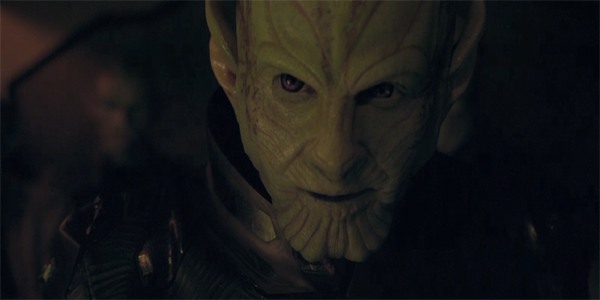
Captain Marvel’s team of writer/directors Anna Boden and Ryan Fleck (Half-Nelson, Sugar, Mississippi Grind) seem to have taken exactly these notes with their own villain. Ben Mendelsohn’s Talos appears at first to be another hammy villain role in which an incredible actor is buried beneath 4 hours worth of makeup (see: Idris Elba in Star Trek: Beyond, Oscar Isaac in X:Men: Apocalypse). But as the story goes on, we can see that Talos wants the same thing as Brie Larson’s Vers: freedom. They just have different definitions of it. And yet they both need the same journey to get there.

We’ve all been there. We’ve wanted the same thing as someone else – be it a job, money, or last seats into a soldout concert – and for different reasons. And often, when we want it bad enough, we resort to behavior that is atypical of us. We almost do whatever is necessary. We’re usually not proud of our actions afterward. The end justifies the means.

In Captain Marvel, Talos indeed appears to be one for those nasty, hellbent villains. He shoots people. He impersonates others (a special Skrull skill). He doesn’t seem to yield a gentle bone in his body until he comes face to face with a cat – even as he contends its actually a Flerken (spoiler alert: it’s a glorious Flerken). From that encounter on, we can tell something is different about this guy. He seems very interested in Vers. He seems even more interested in finding this light speed machine that can get him places. It’s just that the place he genuinely wants to go is actually pretty sweet: home. And he wants to help what’s left of his Skrull race achieve the same freedom.

I found it enormously satisfying that Captain Marvel’s most brutal fights take place in wide open spaces or in outer space itself. Whenever I’ve had someone describe my brain, “wide open spaces’ and ‘lost in space’ are two often-used phrases. And it’s true: the mind is a very, very elastic creature capable of expanding for any size of thought and intention. Throughout the movie, Vers’ most important battle is entirely internal. She’s simply trying to figure out her true identity. To make sense of all her flashbacks to some kind of previous life. And when she finally puts all the emotionally drenched pieces together? She’s brighter and stronger than ever. She tears through ships right down the middle. She fights off powerful bombs intent on worldly destruction. And she does it all with such glee. For the first time in the whole movie, she is truly, completely unburdened.

No cities are destroyed in this movie (London, New York, Chicago, and San Fransisco – y’all can take a breather until the next superhero movie). No love interests are forced. The heroine is disarmingly cocky and not full of stereotypical insecurities. The world-building and gap-filling to tie in with the larger Marvel story never feels forced. The cute animal survives. And the hero and “villain” both help each other to get what they want. How rare is that?

Filed Under: FILM

Sharp Focus in Blurry Darkness: A STAR IS BORN vs. BOHEMIAN RHAPSODY

March 11, 2019 by Adam Membrey

There’s a fun experiment that takes place after every year’s Oscars, where some of us, now able to easily rent these Oscar-nominated films through Redbox or seek them out on streaming platforms, think, “Well, let’s see what that was all about.”

So it made sense last weekend to not only to catch up a little bit, but to knock out two music-heavy movies together. While there are definitely differences between the two, I’m going to focus on one thing: the cinematography. And more specifically, how the cinematography gives you each movie’s mission statement, one shot at a time.

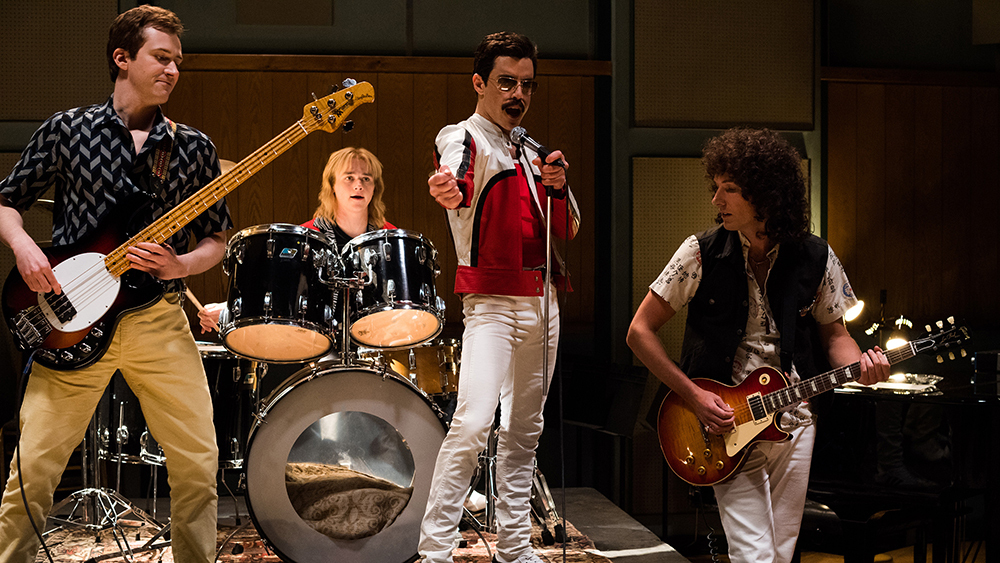
If you didn’t know Bohemian Rhapsody is about Queen, you might be fooled into thinking it’s another superhero origin story. All the shots are brightly lit and move in very, very slick ways. So slick, in fact, that you can see some serious trickery went into making the camera appear far more capable and smooth than it has any right to be. There’s a great deal of costumes meant to be retro but are rather expensive, excessively clean reproductions of the same thing. There are lots of wigs, too. Questionable ones at that.

So would it surprise you if you I told you Bohemian Rhapsody’s cinematographer, Newton Thomas Siegel, has worked with director Bryan Singer on all of his X-Men movies, including his Superman Returns? (that’s 5 big-budget superhero movies). He’s using his same slick, well-lit skillset from the superhero movies to bring the story of Queen to life.

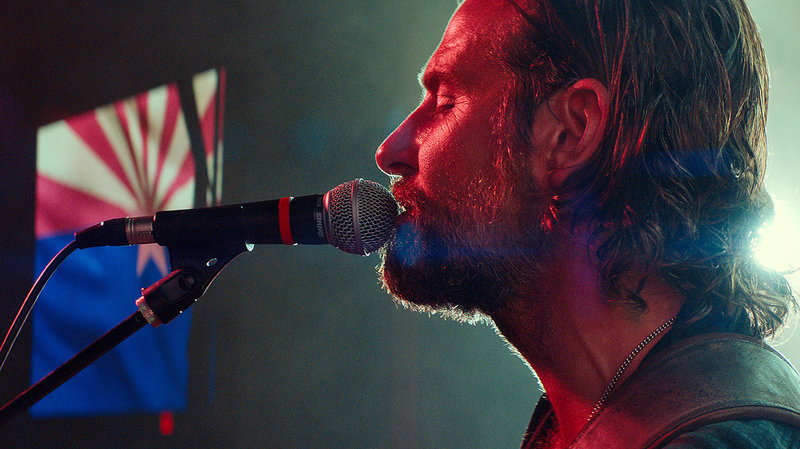
A Star is Born, on the other hand, shows the signs of a craftsman who’s worked with Darren Aronofsky, Jon Favreau, and Spike Lee alike. Matthew Libatique has always been an excellent talent who can do just about any genre. Here, he works with director Bradley Cooper to make some quite effective decisions. All the concert and music footage is filmed at the eye level of those on the stage. In fact, Libatique said they would shoot their music scenes as dialogue scenes. This makes total sense when you see just how intimate everything feels. The close-ups that capture the glances. The emotions worn deep and under bright light.


What I couldn’t get over with A Star is Born is just how crisp and detailed the low-light shots were. There’s always some kind of light – be it a stage light, a sun, or something other – fighting to break its way into the darker areas of shots. And even then, we see our characters in stark clarity. It’s an apt metaphor: a movie this focused on two people struggling to pull each other up is bound to be so clear in low light.

Bohemian Rhapsody can’t seem to decide at times what kind of movie it wants to be, so it does a little bit of everything. It touches briefly on singer Freddie Mercury’s life and choices, but it’s so quick as to barely register. Even the supposed animosity between Mercury and the rest of the band is manufactured. Everything about this movie, not unlike your average superhero movie, is designed to entertain. It doesn’t want to go to deep. It just wants to rock you.

You can’t go wrong with a soundtrack packed with Queen songs (and the Oscars for Sound Mixing/Editing are arguably deserved for who well they weave in the entire Queen catalog with bits of dialogue), but A Star is Born is absolutely no slouch. Everyone loves to talk about the breakout hit, ‘Shallow’, but I found “I’ll Always Remember You This Way” to be my favorite. It’s pretty clear how hard everyone – Lady Gaga, Cooper, Diane Warren, Lukas Nelson and his band – worked together to create something memorable, and something memorable they have absolutely achieved.

But it all comes back to the light. You can see it in the shot selection and the way the camera moves. One film is a superhero movie with heavy bass instead of groan-worthy punches and high notes instead of explosions. It’s smooth, fast-paced, and always glossy.

The other is a genuine attempt at depicting a man trying to rediscover his place in the world while the woman he loves is slowly creating hers. It plays with contrast and color. It shows us clear emotions and faces in messy light. It rocks us all the same, but in a different, deeper way that persists long after the lights go down.

Filed Under: FILM

Disconnect in the Art Museum: 2018’s WIDOWS

February 23, 2019 by Adam Membrey

I was so ready for this movie from the time it was announced. The premise – widows stuck with a debt left behind by their newly-deceased criminal husbands  – is undeniable. Yes, in 2019, I want to see women take back their narrative and show they can do everything just as good, and likely better, as a man can. Yes, I want to see women be badasses and vulnerable at the same time. Yes, I want to see director Steve McQueen have a little bit of fun after being known for such serious, heavy movies. Everything about it sounded prime to explode. A true firecracker ready to be thrown under the porch of America.

Yet it came out in mid-November 2018 and more or less disappeared.

When I first started my blog back in 2014, I wrote a recurring column called Redbox Ready. For a variety of reasons, I dropped it (Redbox’s cultural foothold beginning to shrink with the influx of streaming, the format itself too laborious to leave energy to write). But I happened upon one really key discovery that I still think about today: the discrepancy between the critical and the audience reaction.

When people are talking about the general response to a movie, they’re often quick to mention the Rotten Tomatoes scores. There’s a number of issues with that, such as how the scores are developed, how the website decides what’s fresh and what isn’t, etc. But it does, in the end, give you a general flavor for how critics across the country (and aboard) are swaying.

What I find more interesting, however, is when you look at Rotten Tomatoes and compare the Tomatometer (critics) with the Audience Score. Some movies have been certified Rotten (below 60%), but the Audience Score is much higher. A recent example of this would be M. Night Shyamalan’s superhero sortasequel, Glass. The Tomatometer rates it at 37% for the critical response, but the Audience Score is over twice that, sitting at 74%. Even more, that’s 330 critics vs. 8,660 audience members.

(Now, I’m not going to say anyone is right or wrong. Everyone approaches a movie differently. Some critics will judge a movie based on what they want out of it, some will judge based on what they believe the movie’s goal to be, and some will judge based on some Unmentionable Criteria of Perfect Movies they’ve been forming over the years. The audience is just as varied with how their approach. Some want a good, complex story; some want escapism; some just want an accessible tale they can follow. You never know.)

There are also times where the Tomatometer is quite high and the Audience Score is significantly lower. WIDOWS is one of those situations. The movie sports a stellar Tomatometer of 91%, but rather head-scratchingly, a much lower audience score of 62%. Now, there is no right or wrong – that’s entirely beside the point of going to the movies, where we ideally want a conversation about what we saw – but it does suggest a disconnect. In the time that I wrote my Redbox Ready column (RIP those FOUR columns I wrote), whenever I saw a much higher Tomatometer score compared with a much lower Audience Score, often the case was simple: the movie was greatly admired and respected, but it left a good chunk of the audience cold.

It’s very easy to simply say, “Well, it just wasn’t for them”. And that is very likely true. But there is also the very real possibility that, for a significant chunk of an audience, something is missing.

I count myself a part of that group.

I want to be clear that there is so much to admire in this movie. The expert craft of it. The bold, crisp visual style. The quiet, furious power of acting led by Viola Davis, and continued with an absolutely stellar cast including Brian Tyree Henry, Daniel Kaluuya (holy shit, is that a character), and Michelle Rodriguez. Elizabeth Debicki gets her best role since GREAT GATSBY as a vulnerable, slightly naive woman trying to stand up for herself for once. Every actor here brings their A-game, but that’s where the coldness starts to leak in.

WIDOWS was originally conceived as a British crime drama that aired between 1983 and 1985, two series (seasons) of six episodes each. A casual reading of the plot on Wikipedia reveals that a significant twist (you’ve been warned) at the end of the first series is in the WIDOWS movie. That means writer Gillian Flynn condensed 6 episodes of television into one 2-hour movie. Unfortunately, it feels like it. There are so many characters that would likely be bit parts except for the fact they’re played by major actors like Colin Farrell and Robert Duvall. When you have a character played by Brian Tyree Henry or Carrie Coon, I sorta expect them to be central to the plot; when they drop out, even as intended, it feels like something got lost in the shuffle. As a work of adaptation, they understandably had to condense the story. But this almost feels like an Ant-Man adaptation – hoping to keep all the parts so the shrinking only increases the density, thus retaining the strength.

In that case, the density is there. But it makes it nearly emotionally impenetrable. I know I’m seeing great acting and great direction (McQueen’s long shot atop a limo driving through Chicago while a volatile conversation is only heard and not seen is an especially inspired way to show how removed these people are from the city they’re trying to take hold of), but it’s not taking hold of me. It’s missing that connective electricity that shocks it to life.

The best way I can think of this movie is that it’s like someone took an entertaining paperback novel, injected it with some timely lines and images (you’ll know them when you see them), and then framed certain pages inside an art museum. It is a stunning, immaculately crafted work of art to walk through. Individual pages and moments will surely draw your attention (just as there are individual scenes I will remember, most of which involve Kaliuuya’s and Davis’ characters).

But we all know that feeling of going into an art museum in which the art is not speaking directly to you. It’s gorgeous and to be admired, but it’s not shifting anything internally. The more you walk around, the more you feel slightly wearied by it, hoping for something to jolt you into feeling. You can see where they’re trying to go with Davis, Debicki, and Rodriguez’s characters; it just doesn’t quite land the punch it should. Maybe it’s a result of not knowing enough about them or their husbands. Maybe it’s not having enough time to breathe, narratively. Whether it’s an overabundance of plot or what, something is dragging this film, preventing it from reaching a full, cathartic sprint.

At this time of the year, when the Oscars are incoming, it’s common for writers and audiences on the internet to point out “This is a movie y’all forgot and it’s great!” WIDOWS has certainly been mentioned quite often. Maybe it will register with others far more than me. But this may also be another instance where a movie came and went for a reason: a disconnect with an audience just wanting to feel something.

Filed Under: FILM

  • « Previous Page
  • 1
  • …
  • 5
  • 6
  • 7
  • 8
  • 9
  • …
  • 14
  • Next Page »

Subscribe to Blog via Email

Enter your email address so you can get each post to your inbox. FRESH!

Join 20 other subscribers

Recent Posts

  • Adam’s Top 10 Films of 2024
  • Adam’s Top 10 Films of 2023
  • Adam’s Top 10 Films of 2022
  • Adam’s Top 10 TV of 2022
  • INKTHINK #30: Slither
  • INKTHINK #29: Patch
  • INKTHINK #28: Crispy
  • INKTHINK #27: Spark

Copyright © 2026 · eleven40 Pro Theme on Genesis Framework · WordPress · Log in

  • ABOUT ME
  • FILM
  • MUSINGS
  • BOOKS
  • DRAWINGS